Reading guide
Content guideOverview
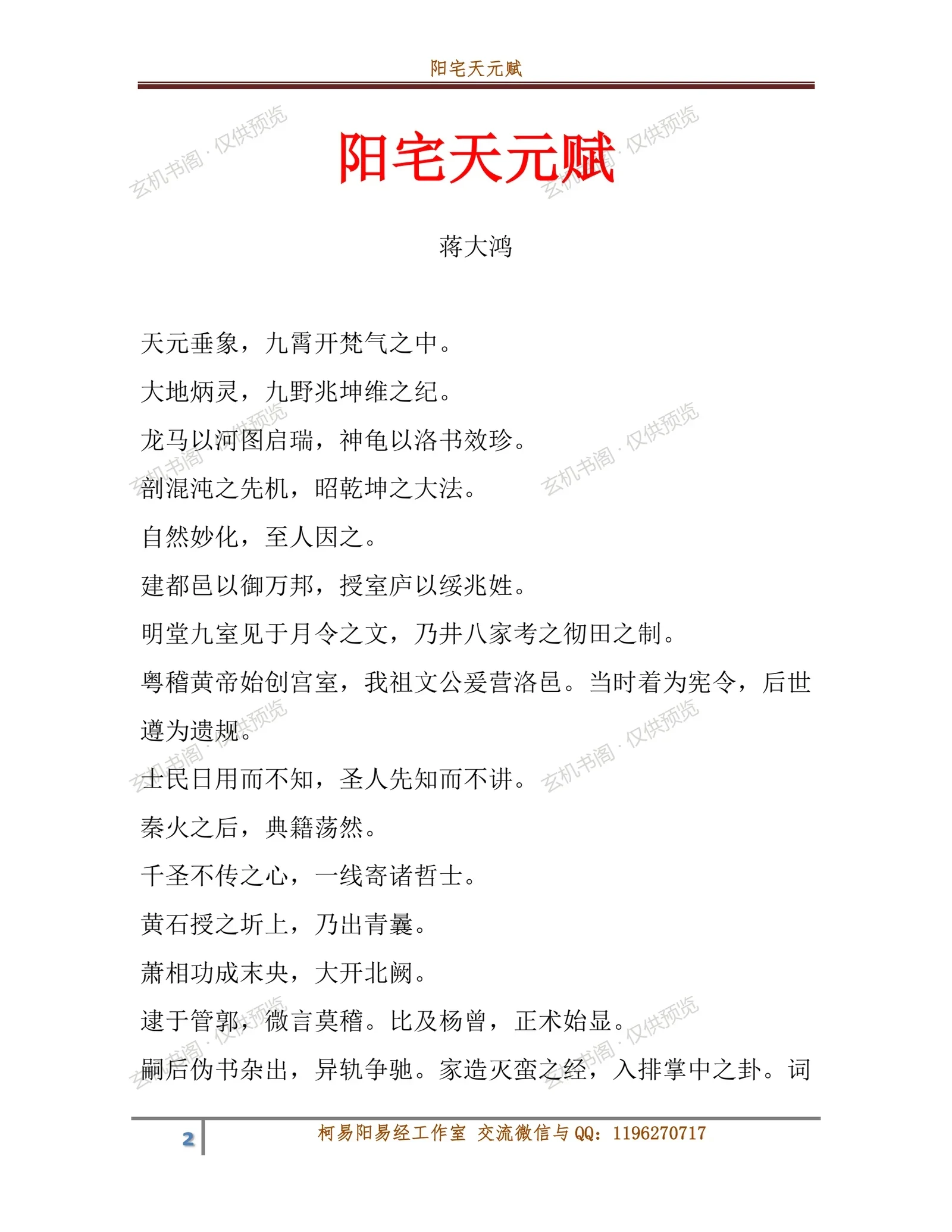
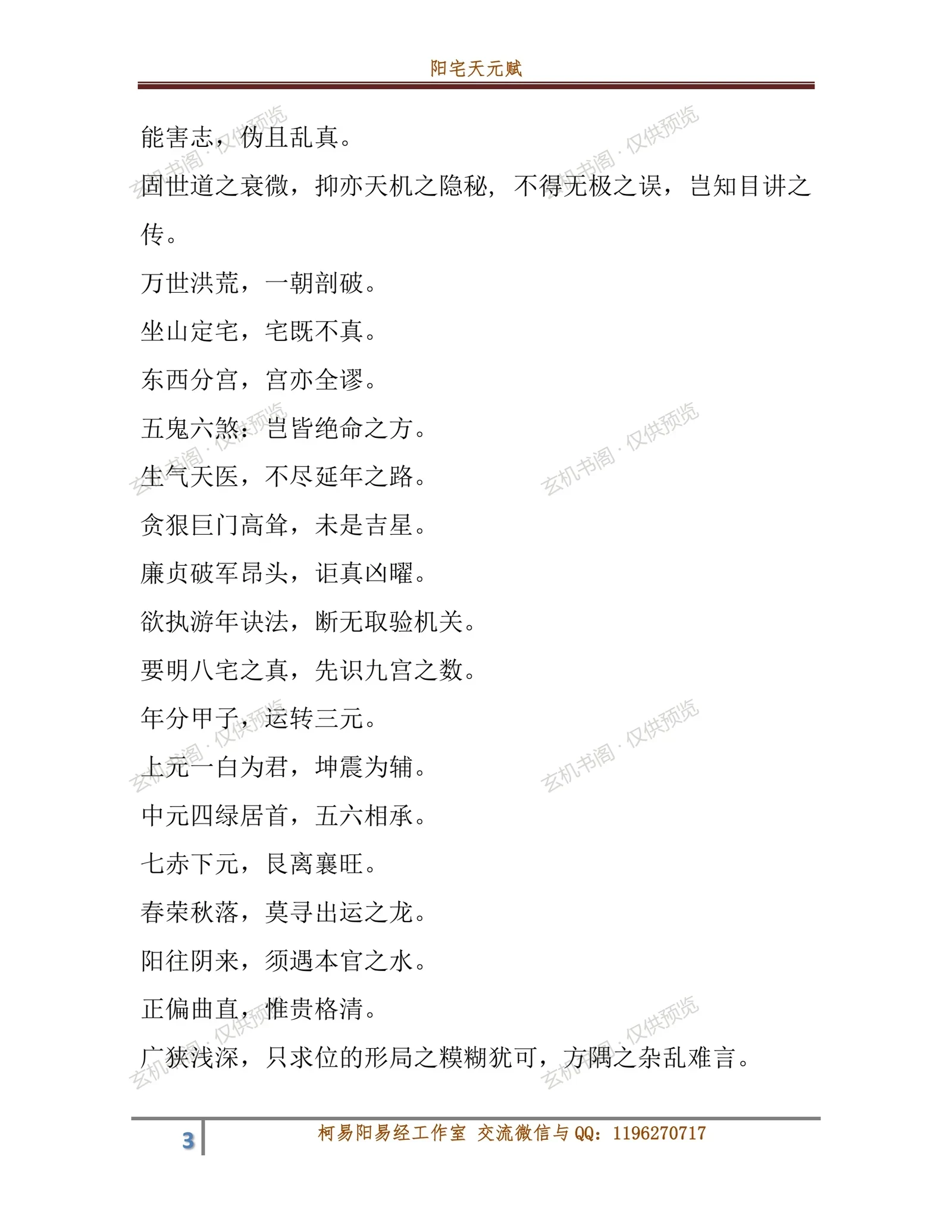
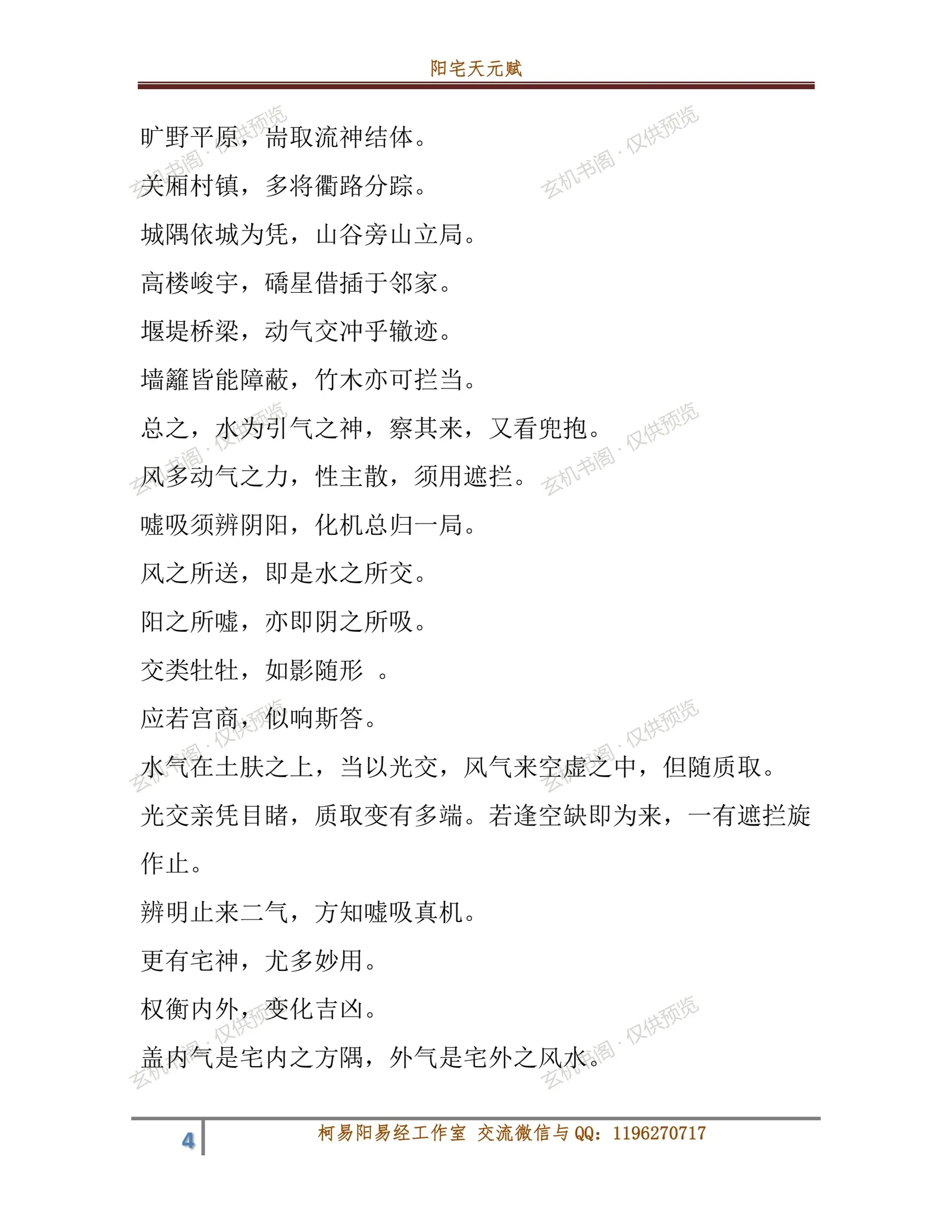
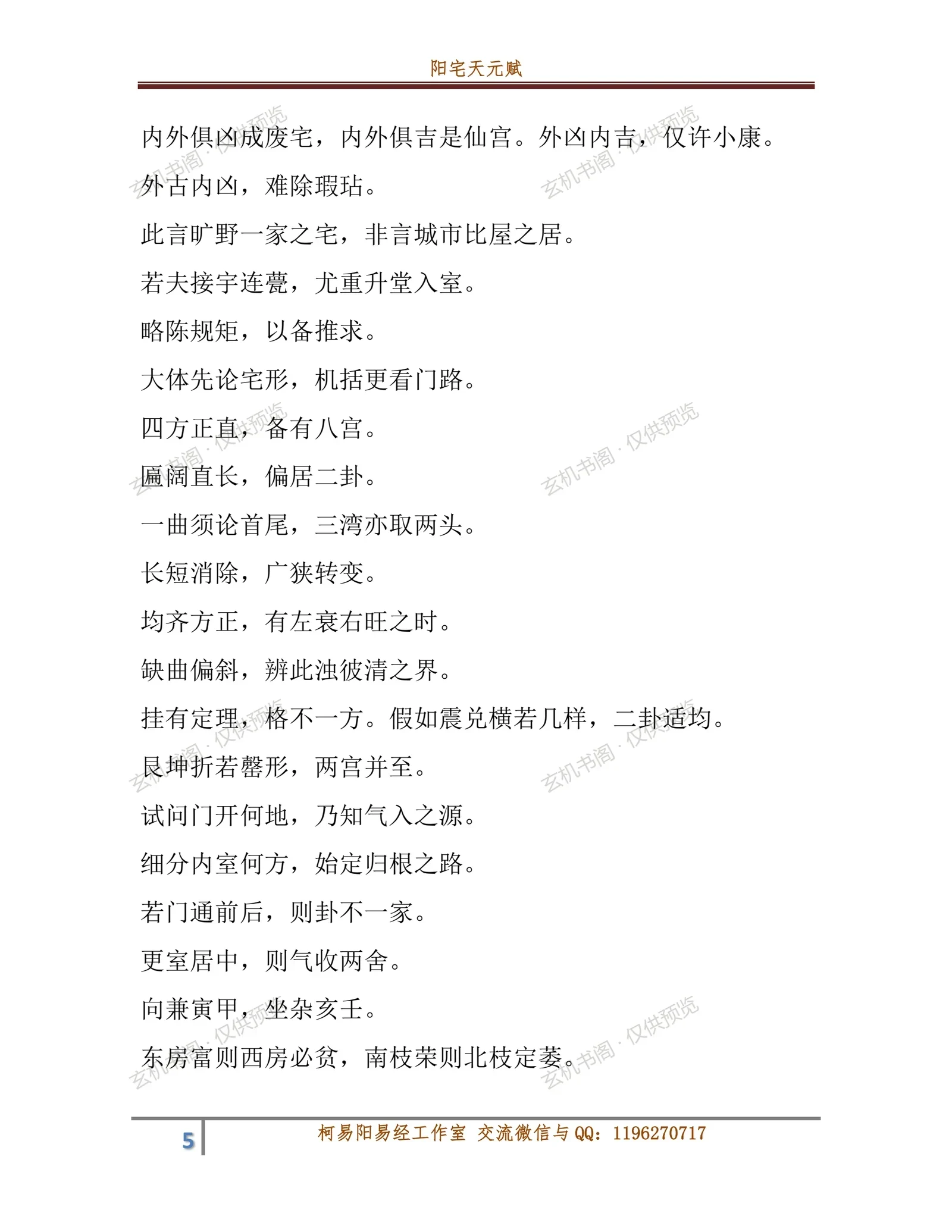
Tianyuan Rhapsody on Yang-dwellings is a verse-style feng shui text attributed to Jiang Dahong, issued here in a six-page edited PDF. After an empty table of contents, the main text opens with the He Tu, Luo Shu, the nine chambers of the Bright Hall and the ancient survey of Luoyang, then laments the loss of classical records and the rise of spurious manuals. It questions rigid readings of sitting-mountain siting, east-west palace division and the Five Ghosts, Six Killings, Life Qi and Heavenly Doctor stars, insisting that one must first grasp the nine palaces and the Three-Era succession of One White, Four Green and Seven Red. The latter half turns to landform: open plains, market villages, city walls and valleys each form their own configuration, while towers, bridges, walls and bamboo screen qi. Water is called the spirit that draws qi, wind is dispersing and must be blocked, and one must distinguish incoming from settling qi. The closing pages give rules for gates, inner rooms, irregular shapes and the rise and fall of east, west, south and north chambers.
Contents
Origins: He Tu, Luo Shu and the nine chambers
Critique of rigid siting and east-west division
Three-Era cycles: One White, Four Green, Seven Red
Landforms: plains, villages, cities, valleys
Water and wind: drawing qi and blocking it
Inner and outer fortune: house versus surroundings
Gates and eight palaces: entry and rooting of qi
Key Points
A verse text to be parsed line by line, not skimmed
Reads eight-dwelling theory through nine palaces and eras
Water draws qi; wind scatters, so screening matters
Landforms such as towers, dikes and walls alter qi
Separate rules for isolated rural houses and dense towns