Reading guide
Content guideOverview
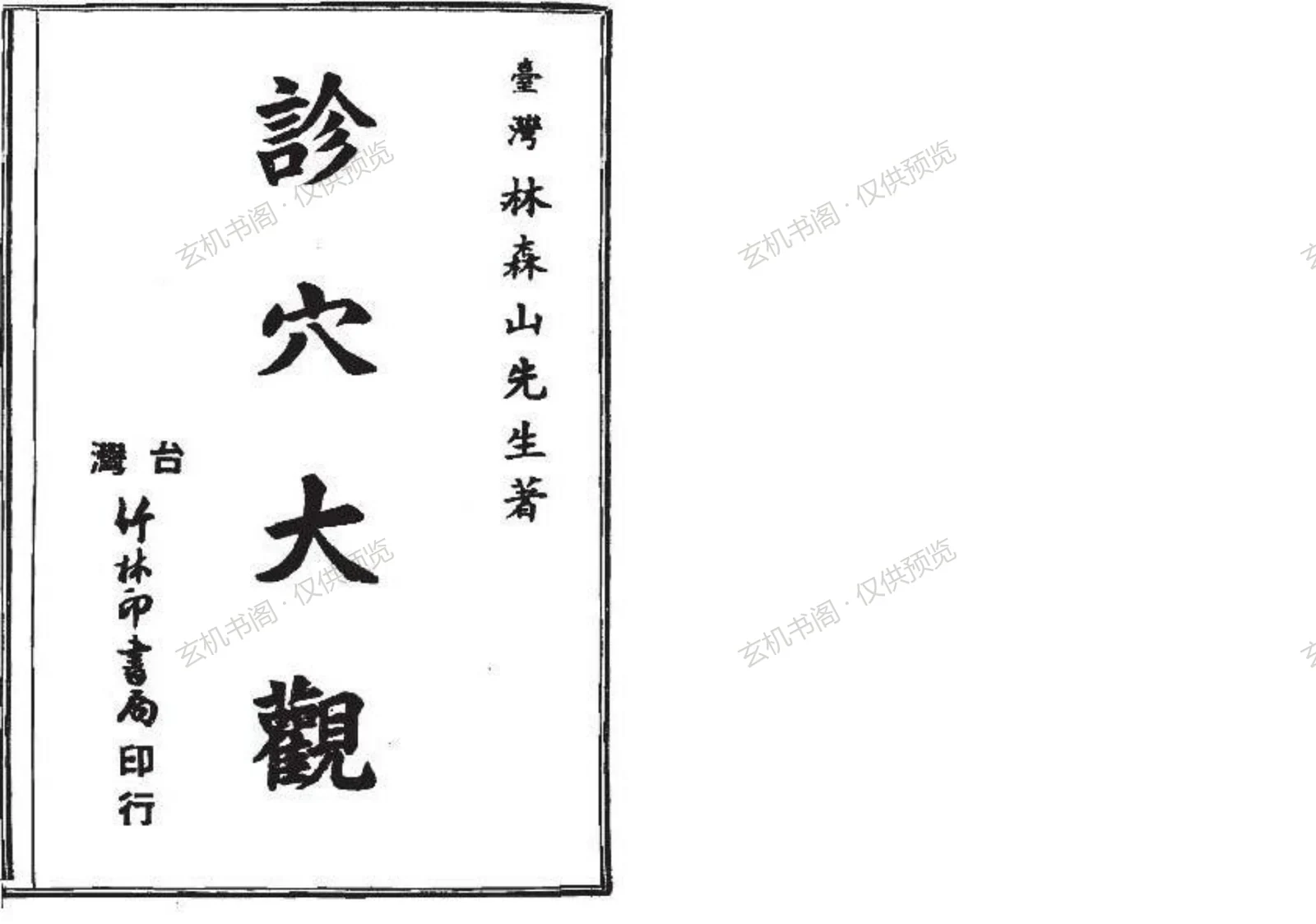
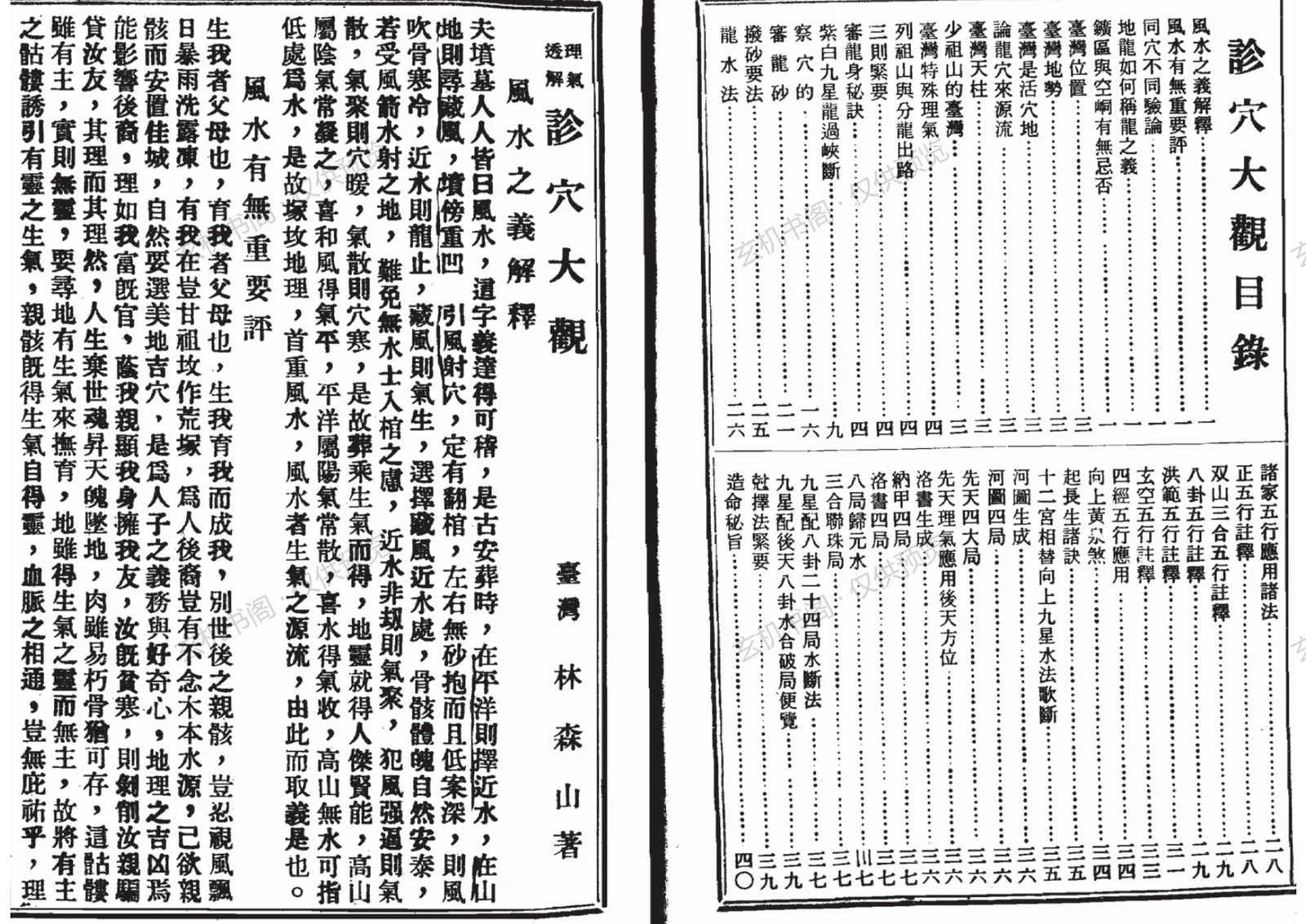
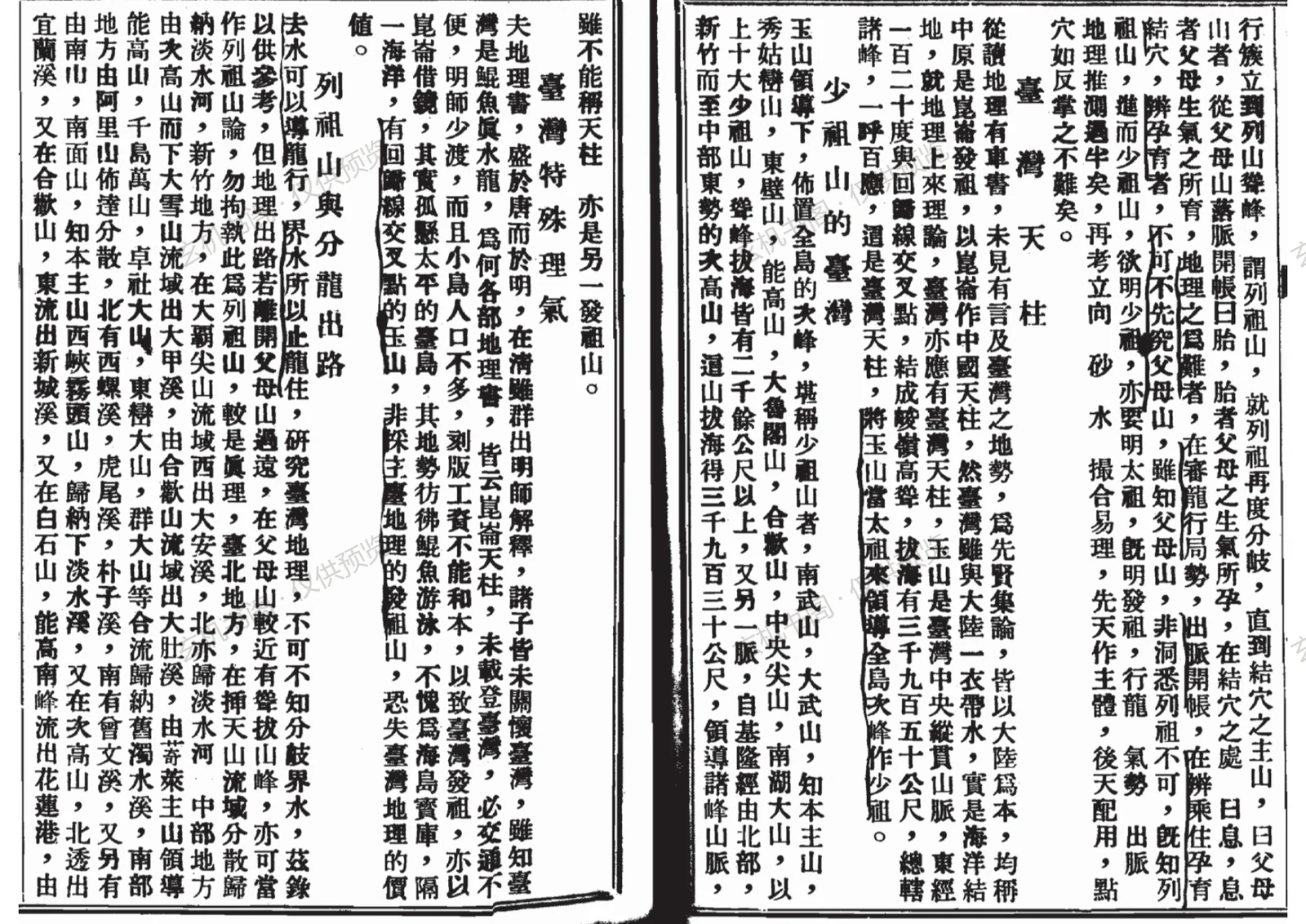
Titled Zhen Xue Da Guan (A Grand View of Diagnosing Sites), this book is attributed to Lin Senshan and presented as a comprehensive guide to geography. The visible table of contents and text show a landscape-school (luantou) approach to feng shui, centered on diagnosing sites: observing mountain and water forms, distinguishing true and false dragon veins, identifying where qi gathers, and judging burial locations. Chapters cover the meaning of feng shui, the importance of feng shui, why the same site can yield different results, the concept of dragons, whether mining areas and cavities are taboo, Taiwan's terrain, Taiwan as a living site, the origins of dragon veins and sites, a map of Taiwan, the lesser ancestor mountains of Taiwan, special formations, and the branching of ancestral mountains. The text repeatedly uses terms such as dragon, sand, water, site, bright hall, and facing mountains, and discusses how mining can affect earth qi. It is useful for readers studying early Taiwanese feng shui literature and form-school methods, but requires basic familiarity with dragon, site, sand, and water concepts.
Contents
Meaning of feng shui and its importance
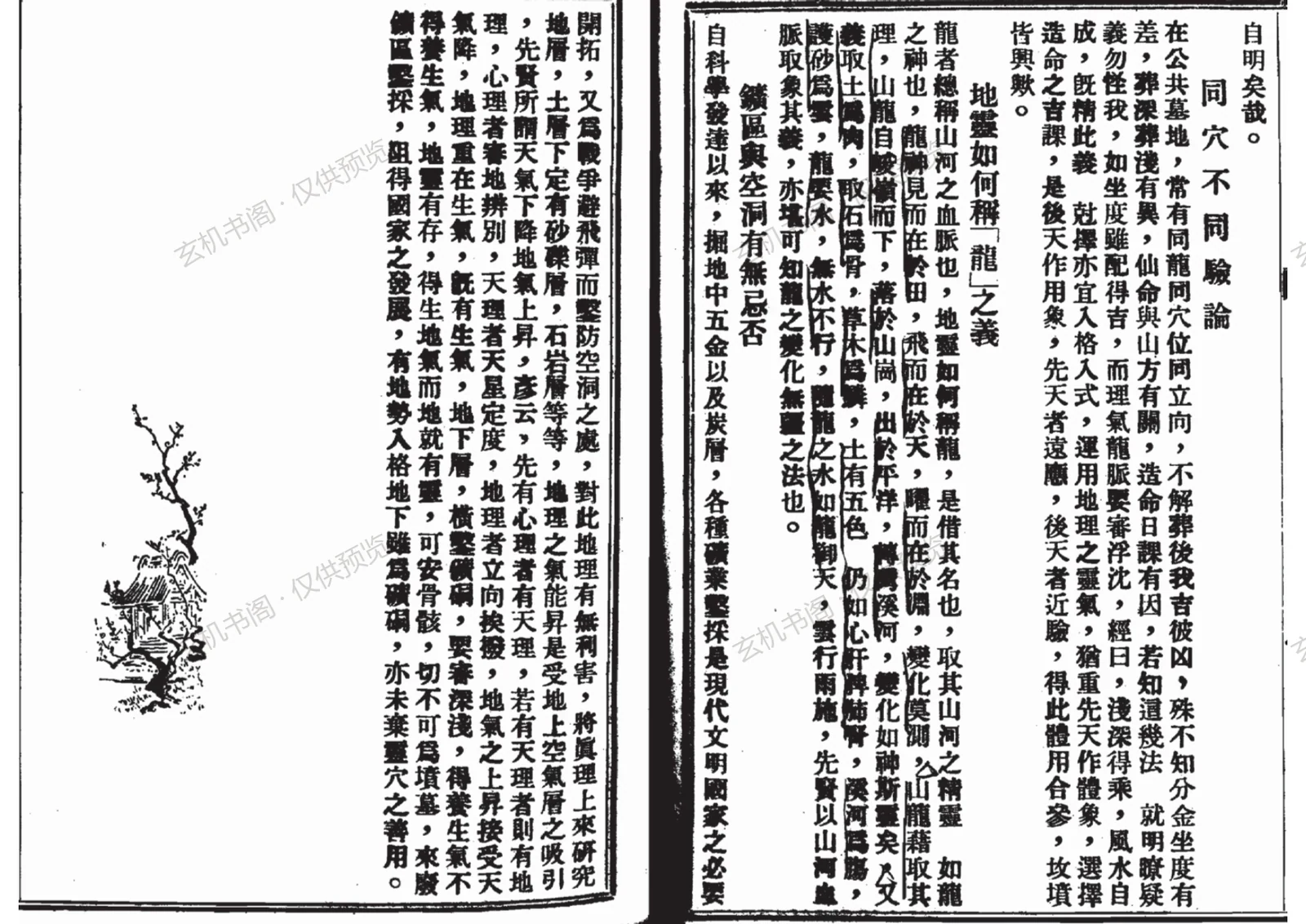
Why the same site gives different results
How earth qi is called dragon
Whether mining areas and cavities are taboo
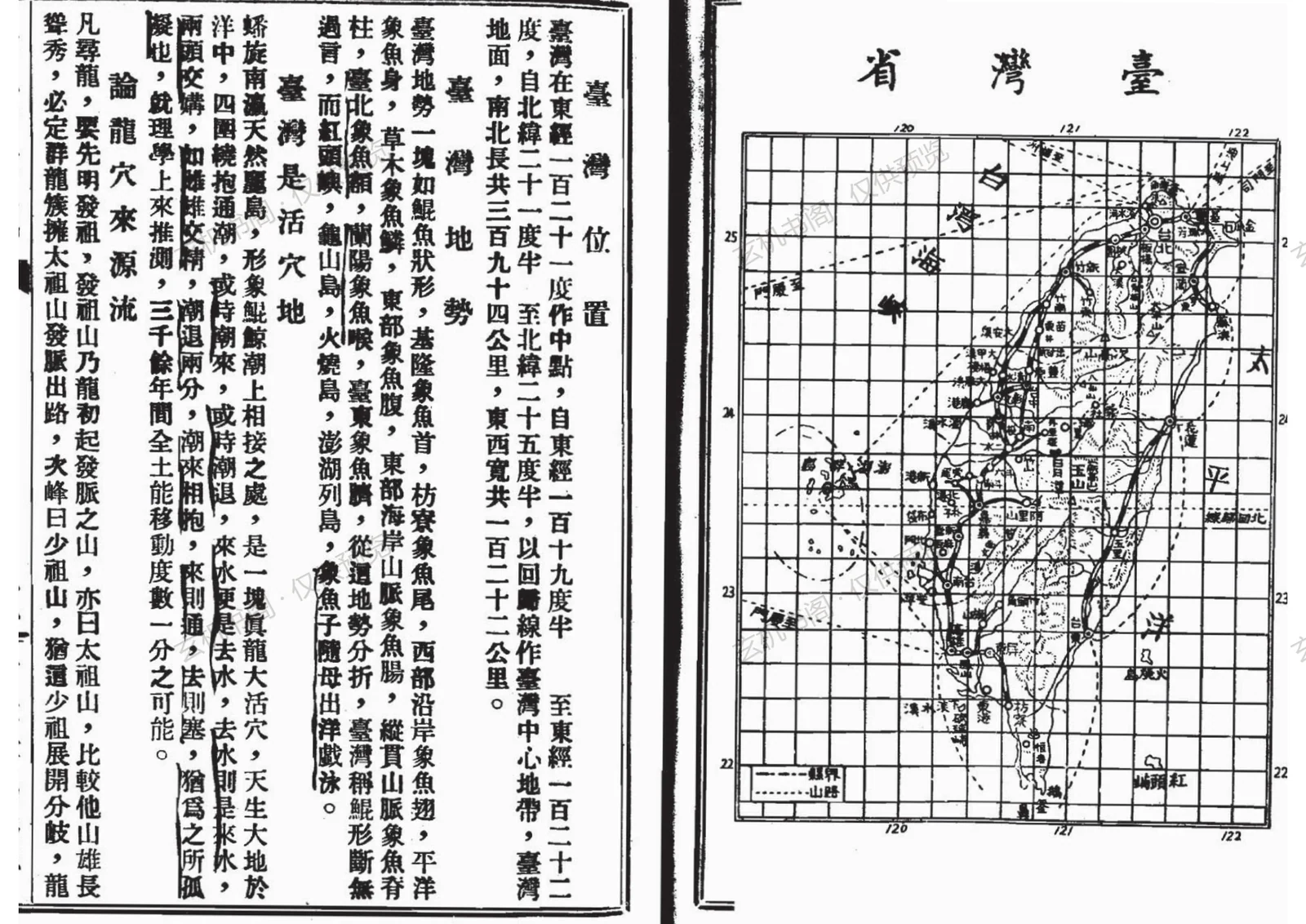
Taiwan's terrain and living sites
Origins of dragon veins and sites
Map of Taiwan and lesser ancestor mountains
Ancestral mountains and branching dragon veins
Key Points
Focuses on form-school methods: dragons, sand, water, and site selection
Uses Taiwan's mountains and rivers as the main case
Discusses same-site different-results, earth qi, and dragon concepts
Considers the effects of mining and cavities on earth qi
Includes a map of Taiwan for geographic reference