Reading guide
Content guideOverview
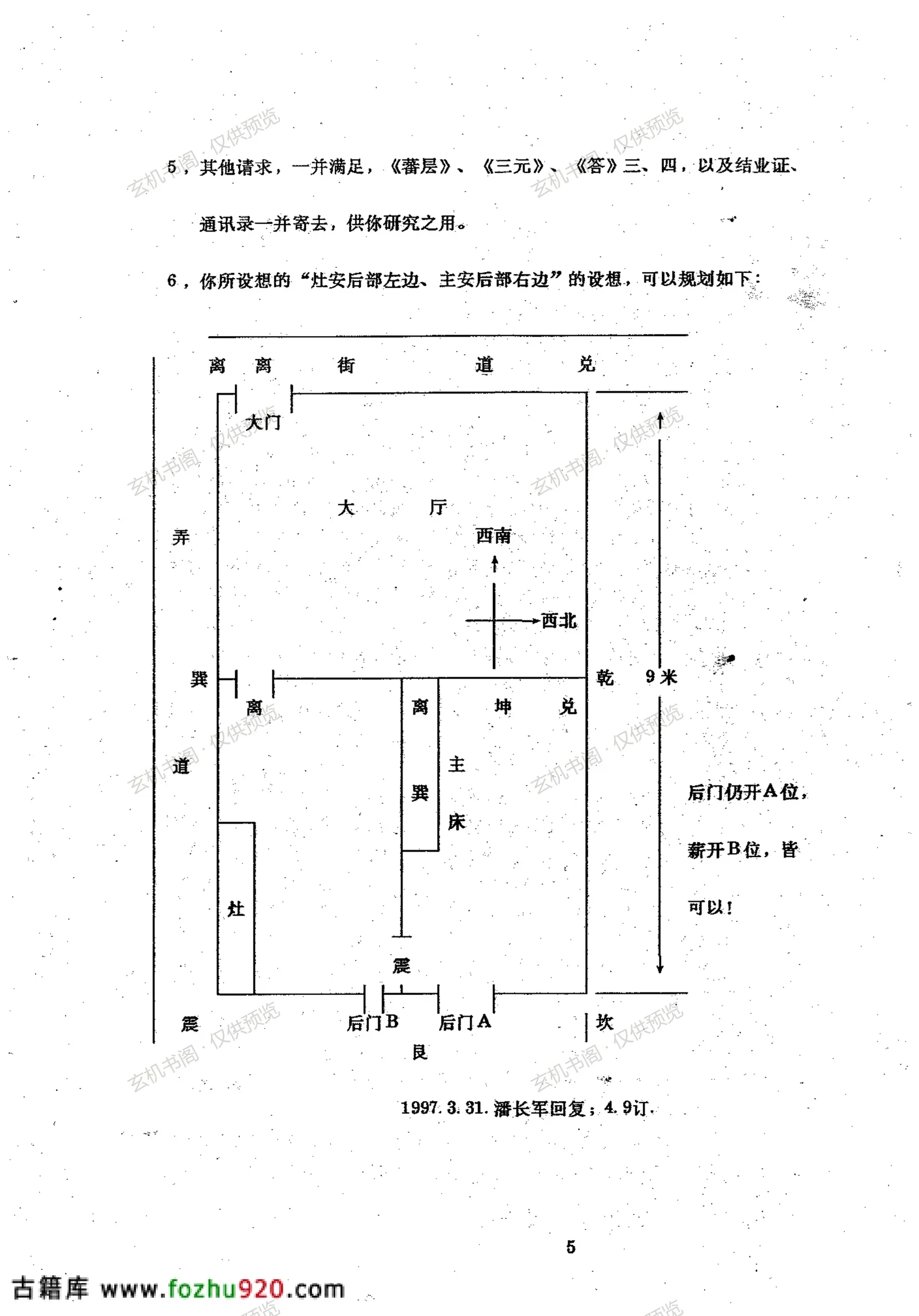
This is the seventeenth title in Pan Changjun's Home Qi Field Adjustment Series and the seventh volume of his Questions and Applications collection, dated August 1997. The main section reproduces a student's letter describing an old rectangular house (9 by 5 meters) and a family history of illness, early death and career frustration, asking for confirmation of the house's bagua sectors and advice on gate, stove and bed placement. Pan replies by explaining his "dimension division method," which dispenses with the compass and instead converts each side into a square, allocating 60 percent to the middle and 20 percent to each end, and by introducing the principle that qi entering at a corner is strongest. He then judges good and bad fortune at both the whole-house and individual-room levels and supplies several sketched plans for repositioning the gate, stove, bed and rear door. The book is a correspondence-style teaching aid rather than a systematic treatise, and is useful for seeing how eight-mansion feng shui was taught and applied in popular correspondence courses.
Contents
Part One: Replies to Students' Letters
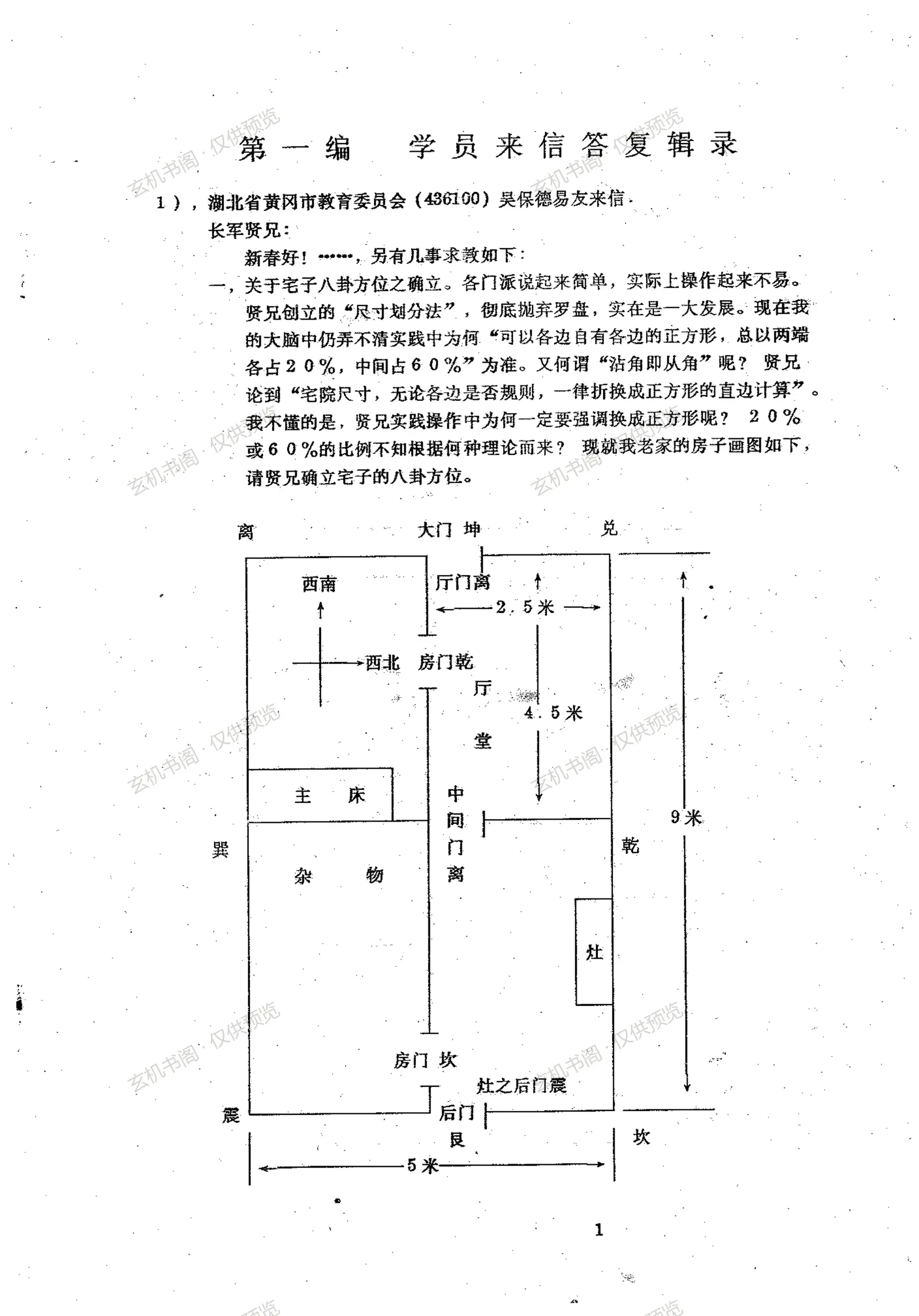
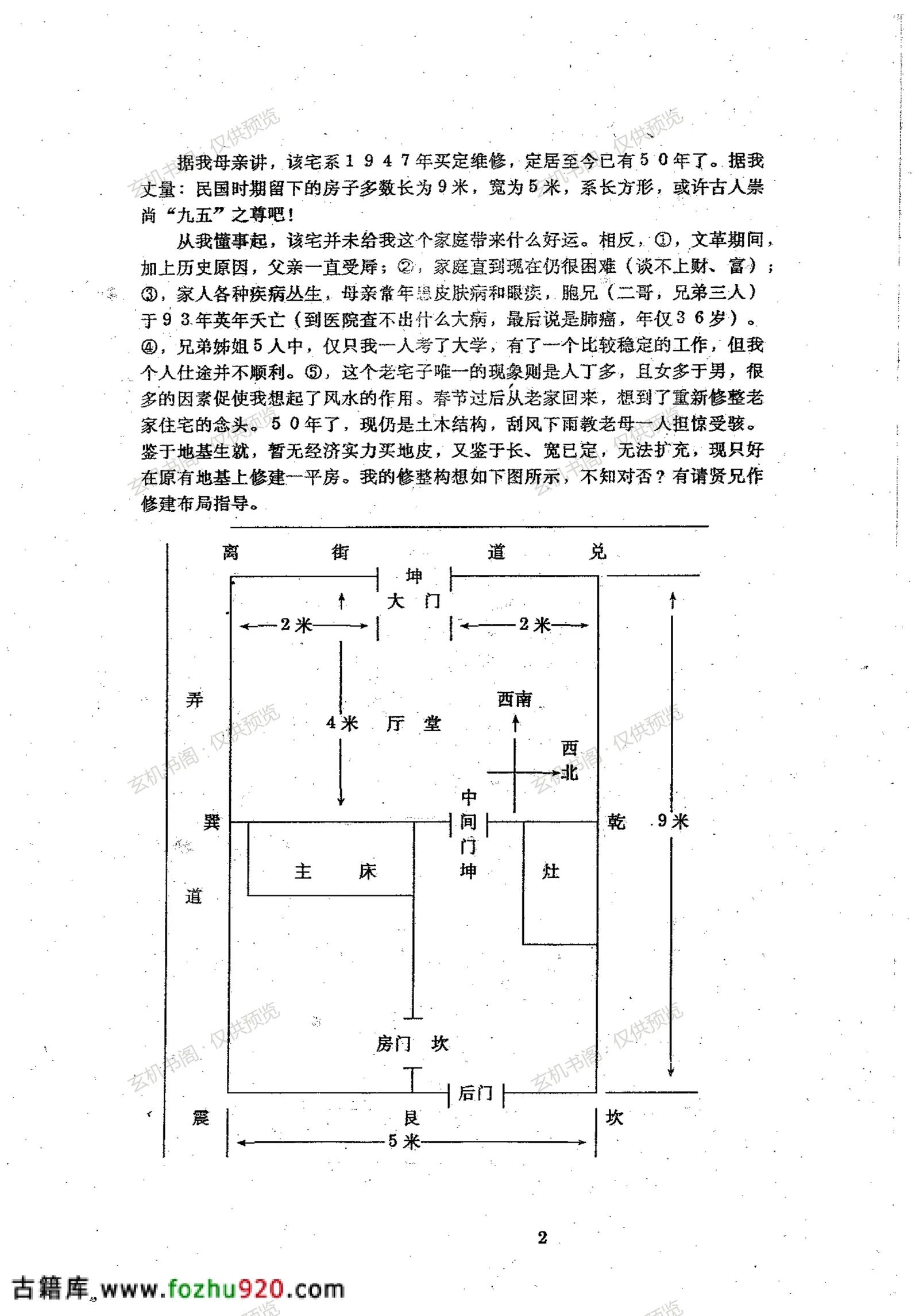
Student Wu Baode's house plan and family circumstances
Explanation of the dimension division method
Assessing gate, stove and bed at house and room levels
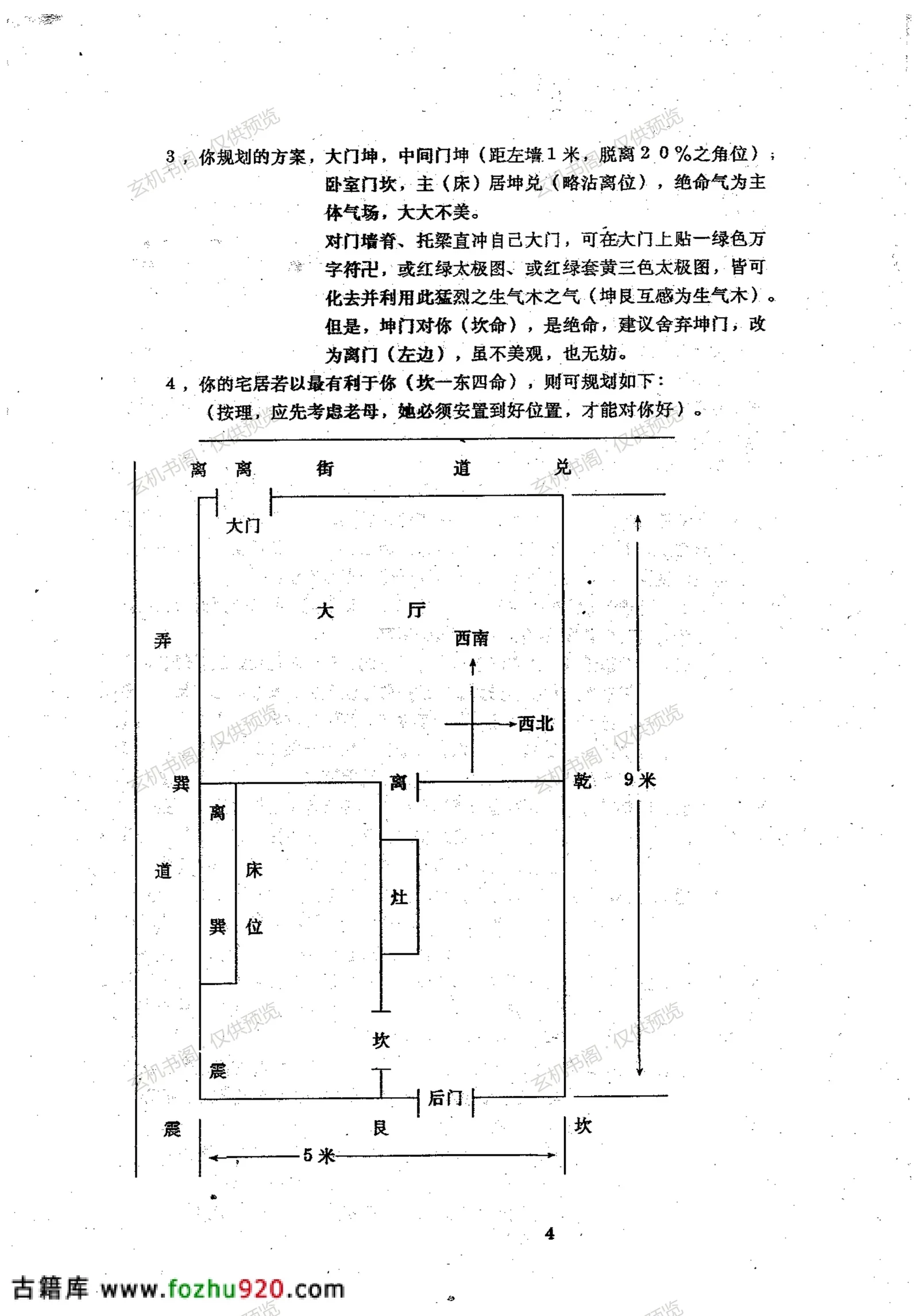
Plans for relocating gate and stove for an east-four life
Alternative arrangements for rear stove and rear bed
Key Points
Sides are converted proportionally into squares: 60 percent middle, 20 percent each end, no compass
Qi entering at a corner is considered strongest, shaping gate placement
Separate criteria for the whole house and for individual rooms
Uses east-four life matching to justify moving the gate, stove and bed
Hand-drawn floor plans show before-and-after layouts