Reading guide
Content guideOverview
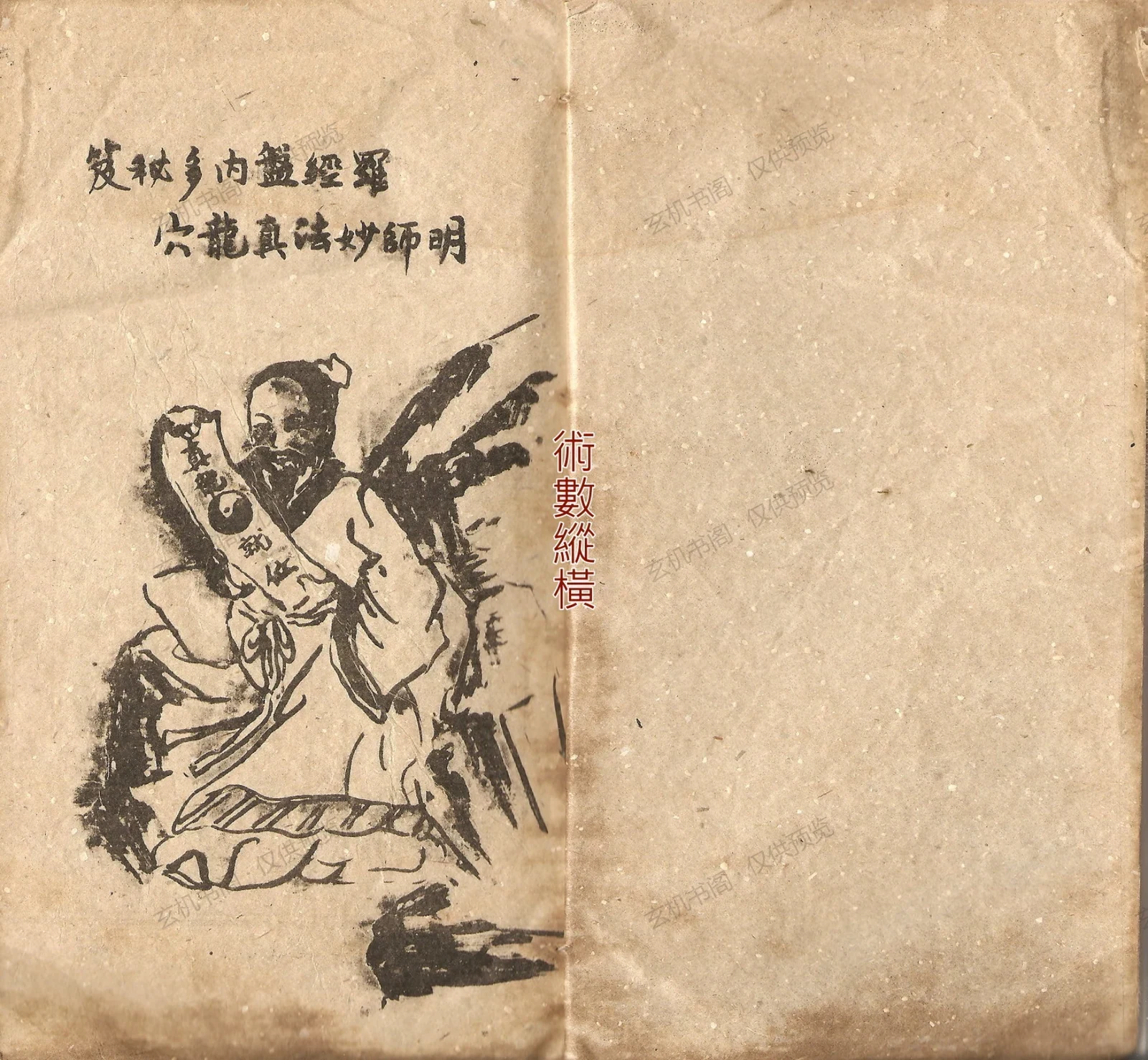
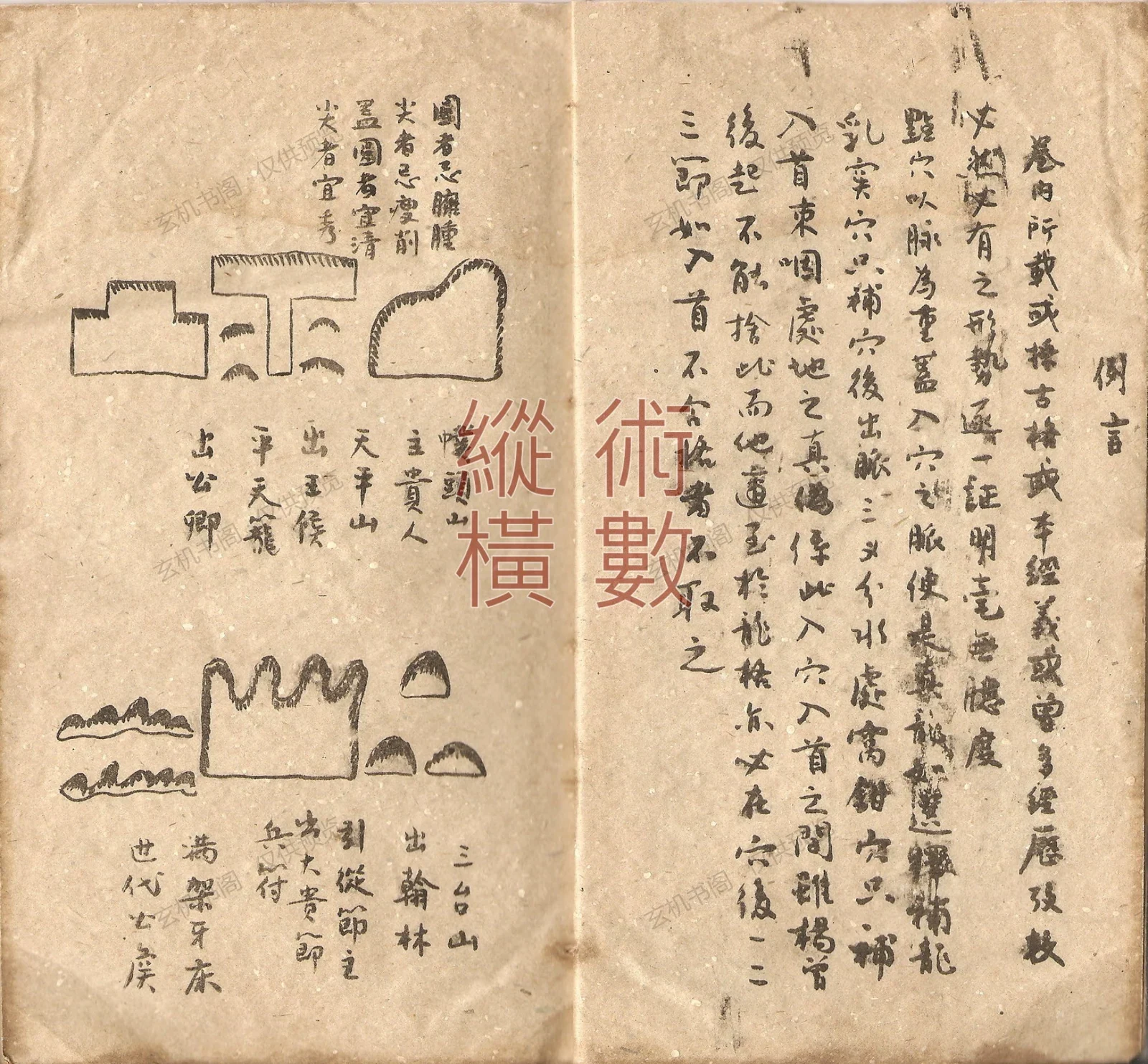
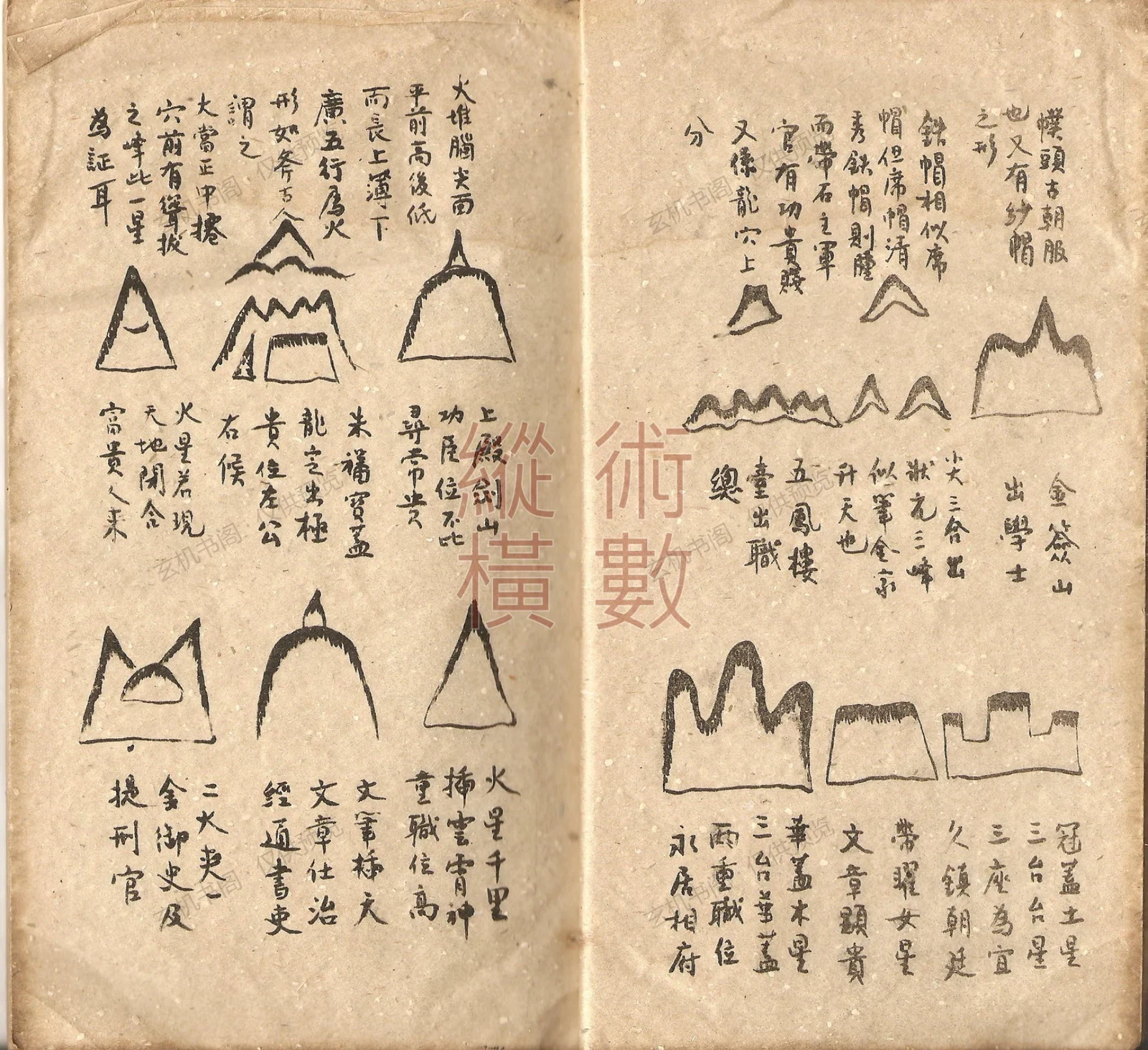
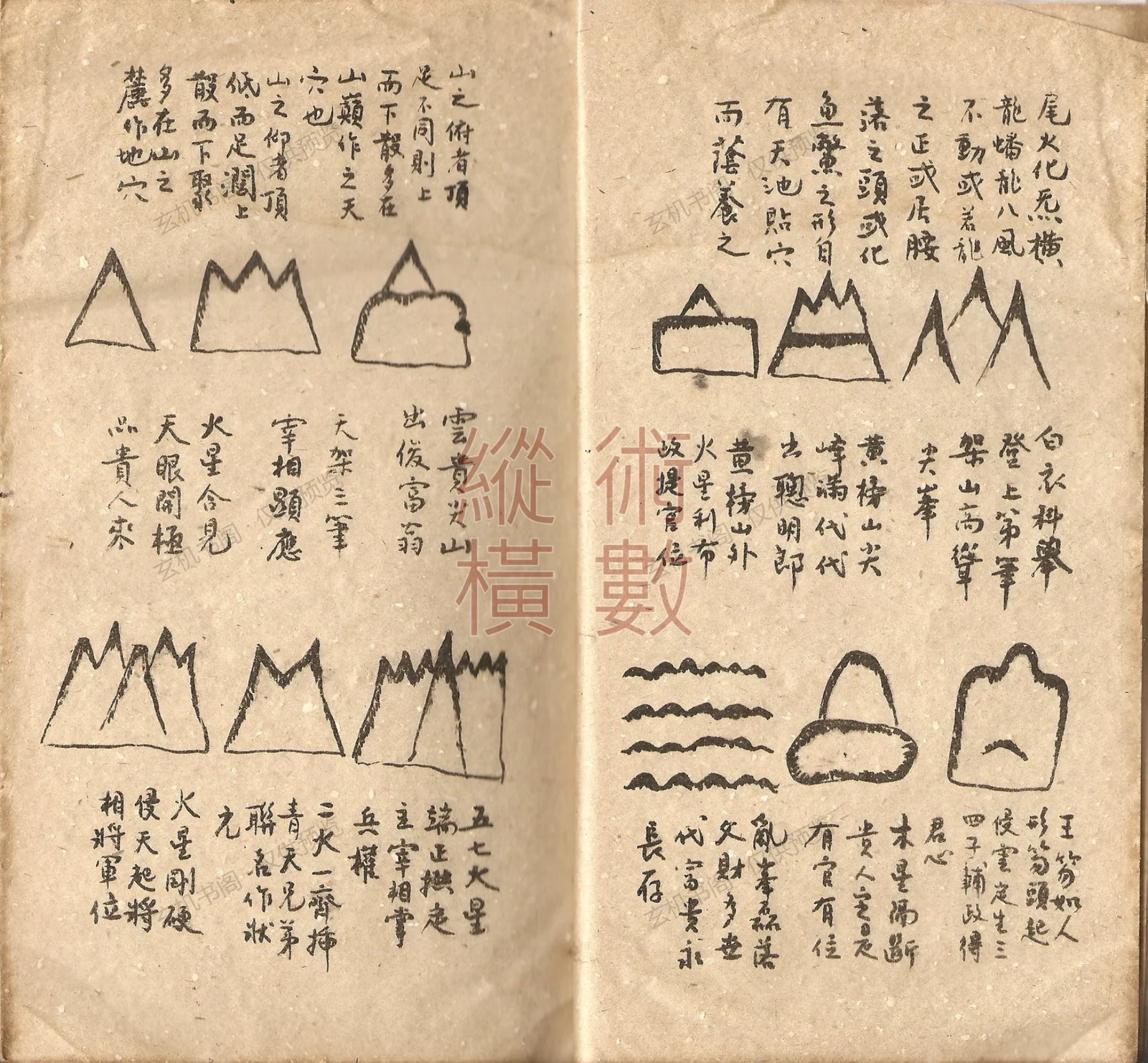
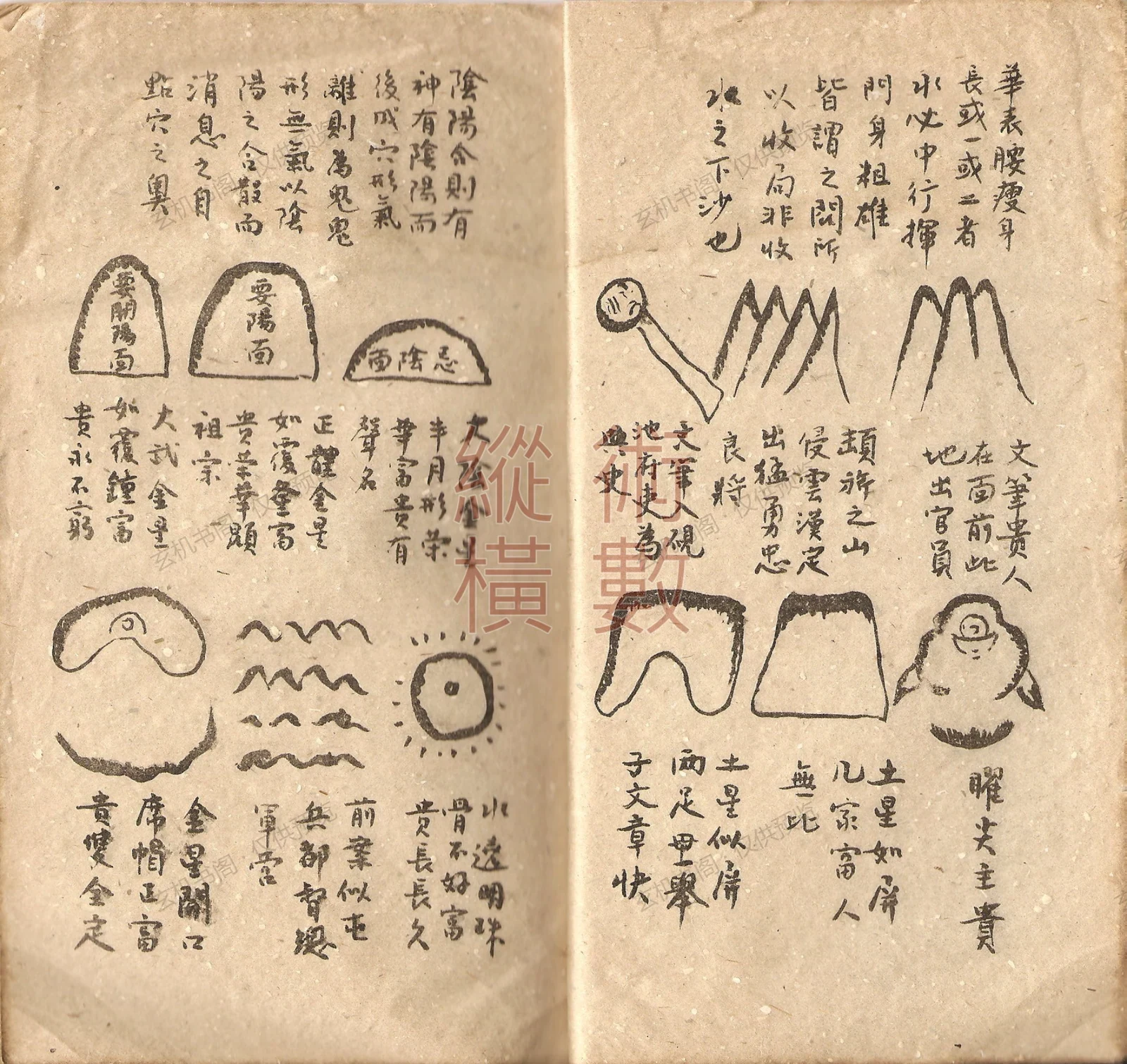
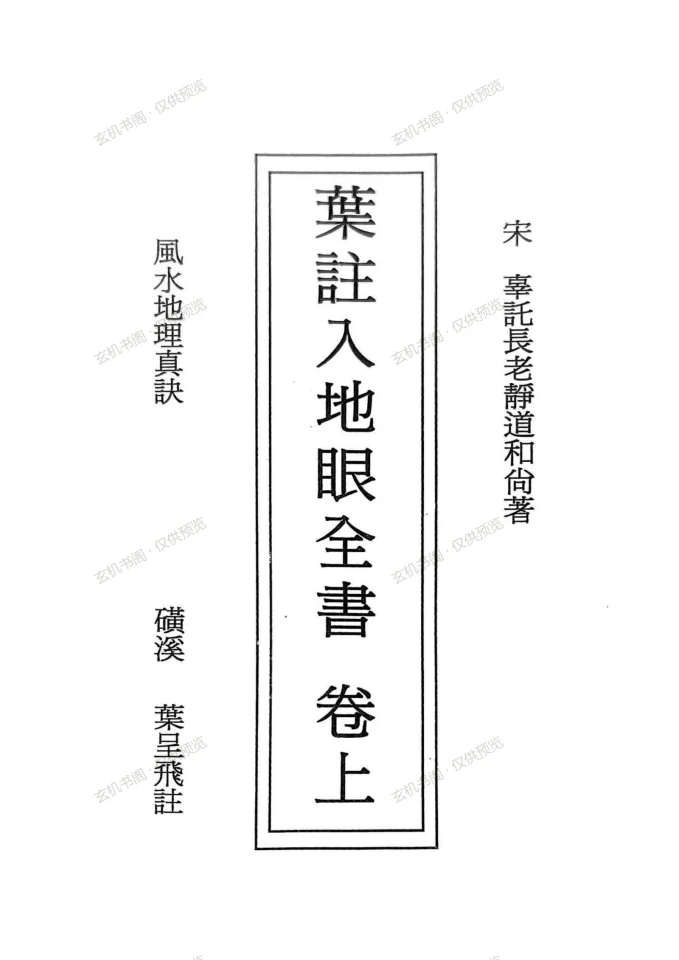
This is a manuscript copy of a Feng Shui text dated to the autumn of the 7th year of the Guangxu reign (1881) in the Qing dynasty. The core content revolves around the 'Luantou' (mountain form) school of Feng Shui. The illustrations present numerous hand-drawn mountain shapes—such as 'Tianma Mountain,' 'Santai Mountain,' 'Huagai Mountain,' and 'Ximao Mountain'—accompanied by textual explanations of the auspicious or inauspicious outcomes associated with different peak forms and their corresponding acupoints (e.g., producing high officials or great wealth). The book emphasizes the integration of 'form and qi,' examining both the external shapes of mountains and water (form) and the internal flow of energy (qi), highlighting key elements of acupoint formation like 'entering the head' (rushou), 'binding the throat' (shuyan), and 'protruding the lip' (tulian). Additionally, it includes 'drinking shapes' (hexing), a practice of likening mountain forms to animals or objects (such as 'Immortal Offering Palms' or 'Lion Rolling a Ball') to infer auspicious sites. Overall, it is a highly practical guide to terrestrial Feng Shui, suitable for readers with a foundational understanding of Feng Shui who wish to delve deeper into the techniques of site identification in the form school.
Contents
Preface: Explaining the relationship between form, qi, and fate
Illustrating noble mountain forms like Tianma and Santai
Illustrating auspicious and inauspicious sand peaks like Huagai and Ximao
Discussing yin-yang dynamics and conditions for acupoint formation
Illustrating acupoint forms associated with the Five Elements
Key Points
Illustrated explanations: numerous hand-drawn mountain forms visually demonstrate acupoint structures
Shapes as metaphors: comparing natural mountains to objects or animals to determine fortune
Focus on Luantou: emphasizes field observation of dragon veins, energy binding, and acupoint formation
Five Elements classification: evaluating mountain forms via metal, wood, water, fire, and earth