Reading guide
Content guideOverview
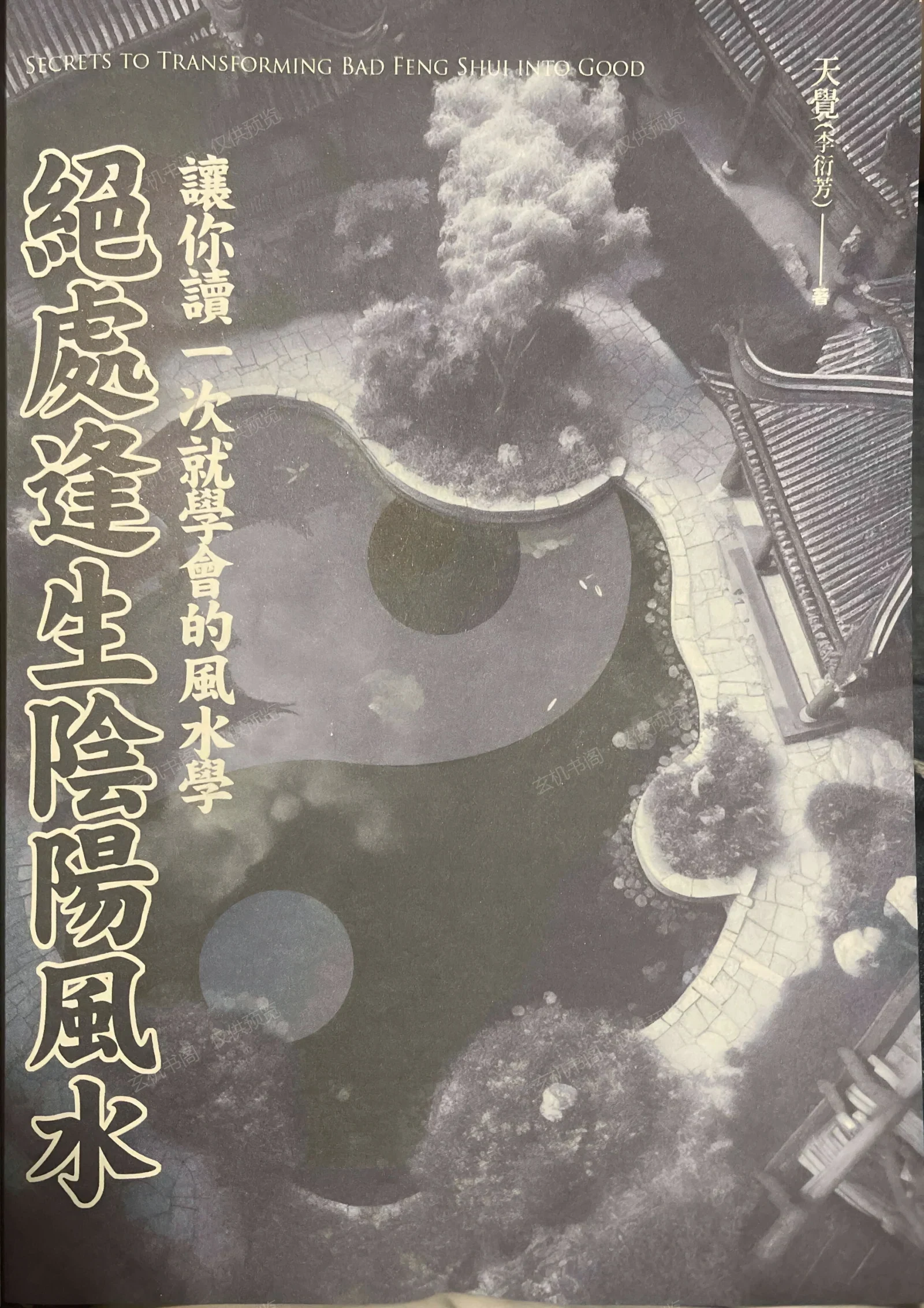
Written by Tian Jue (Li Yanfang) as a teaching handbook, this book presents feng shui as a practical, learnable skill rather than an abstract theory. The preface traces the author's nearly fifty years of involvement with the I Ching, fate calculation, and feng shui, and explains that the material grew out of class handouts and online study-group notes. The opening chapter states that the book emphasizes yang dwellings (homes for the living) and treats yin dwellings (burial sites) as secondary, reflecting modern cremation practices and limited land. The author reduces yin-yang feng shui to three key points: first, whether the building's magnetic field complies with cosmic principles, measured from the main door and the ancestral altar using the 72 meridians and 120-point division; second, “settling the interior and repelling the exterior,” arranging the main door, stove, bathroom, and ancestral tablet in their proper places according to Purple-White Flying Star diagrams; third, defining and transforming “grace” and “sha” in the external environment through 24-mountain diagrams and a simple “one tilt, two slants” remedy for turning misfortune around. With numerous hand-drawn diagrams, the book suits readers who want a fast, practical introduction to evaluating and adjusting home feng shui.
Contents
Preface: origins and fifty years of study
Yin-yang feng shui can be this simple
Key point 1: building field and 72-point division
Key point 2: interior arrangement and Flying Stars
Key point 3: 24-mountain grace and sha
Note: the “one tilt, two slants” emergency remedy
Key Points
Prioritizes yang dwellings and treats yin dwellings as secondary
Uses 72 meridians and 120-point division to measure door and altar
Arranges door, stove, toilet, and altar in their proper positions
Defines external grace and sha via the 24 mountains
Diagram-based and beginner-friendly, with practical steps