Reading guide
Content guideOverview
Written by He Qiyuan, Changing Fate: Breaking the Limits of Traditional Four-Pillar Destiny Analysis centers on the question of whether fate can be changed. The preface criticizes popular fortune-telling books for staying within fixed frameworks and using ominous stars to frighten readers, and proposes returning to the roots of destiny analysis. The table of contents begins with the philosophical question “Does everyone have a fate?”, discusses ancient wisdom and the origins of the sexagenary cycle, then moves to subjective and objective notions of a “good life,” methods for assessing wealth and poverty, and practical remedies such as finding benefactors, appeasing the Grand Duke Jupiter, resolving clashes, repelling petty people, gathering qi, and creating a “living foundation” (shengji). It also covers the relationship between Four-Pillar analysis and physiognomy, various schools of fate-changing methods, and classical mnemonic verses such as the Xuzi Ping Mingtong Fu and Zaigong Yaoue. Overall, the book attempts to bridge destiny analysis, feng shui, and life philosophy, offering readers a framework for understanding fate and pursuing change.
Contents
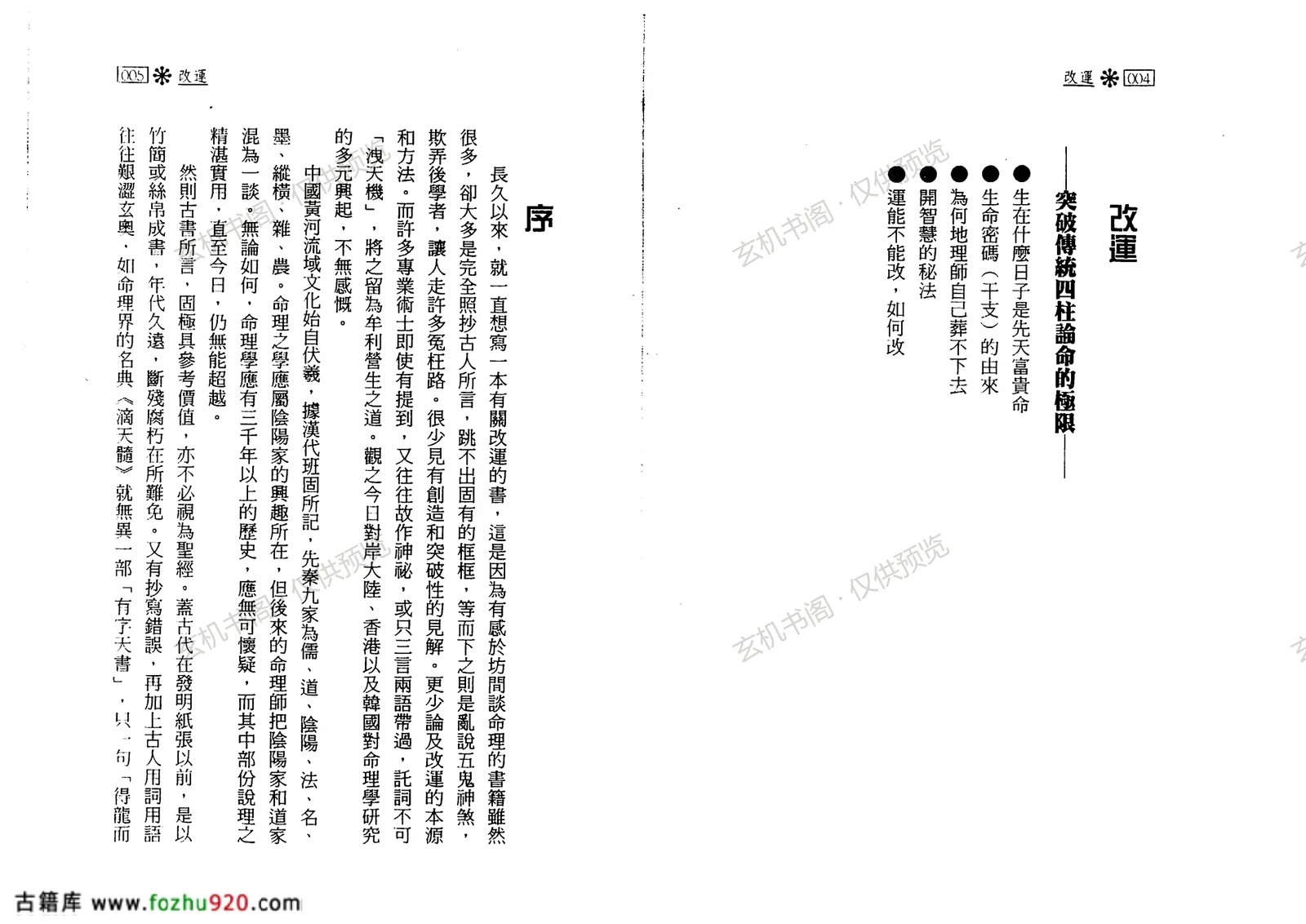
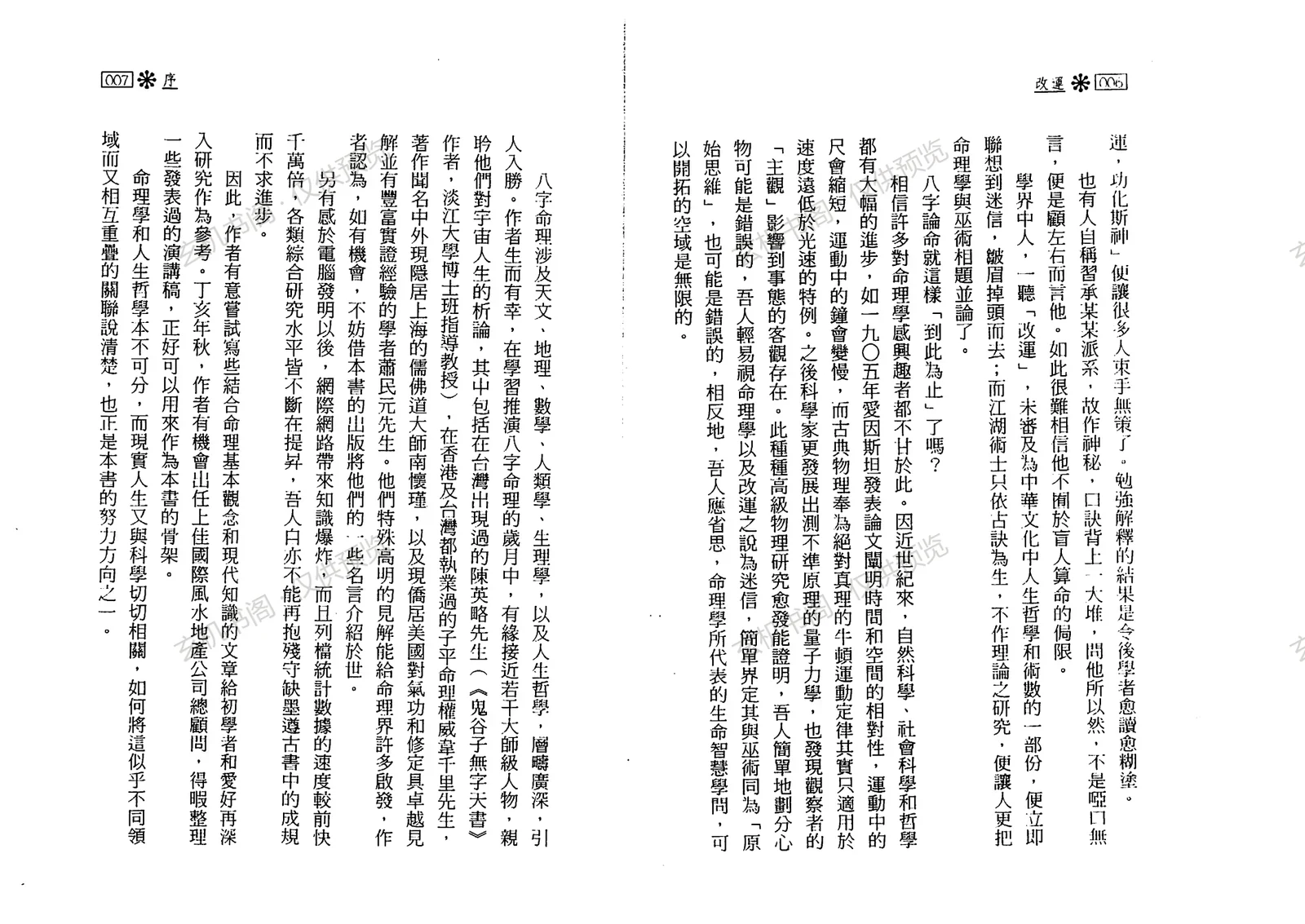
Preface: limits of traditional destiny analysis and the motivation for change
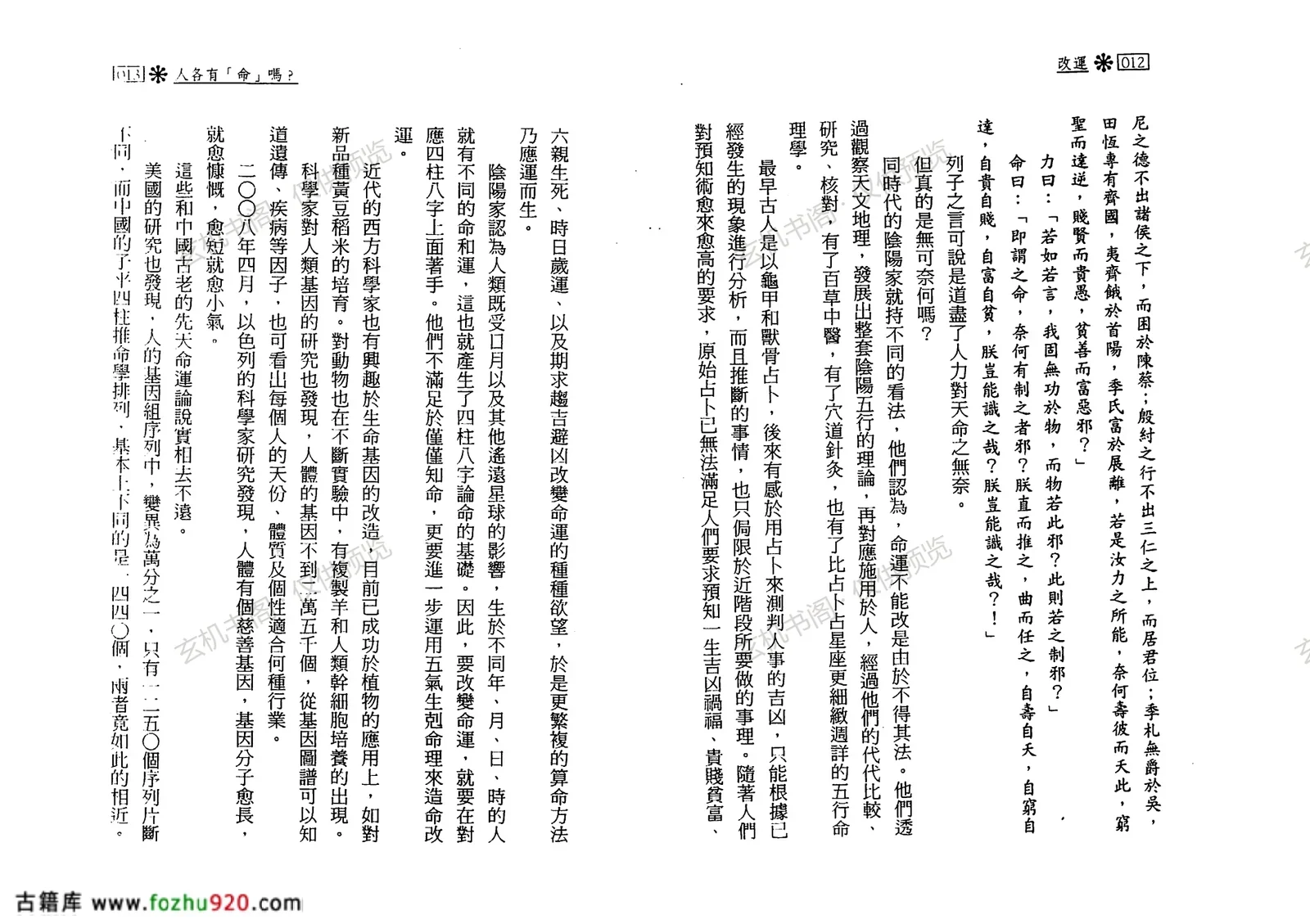
Does everyone have a fate? Ancient views on destiny
Origins of the sexagenary cycle and the code of life
Subjective and objective “good fate,” wealth and poverty methods
Finding benefactors, appeasing Tai Sui, resolving clashes, repelling petty people
Gathering qi, creating a living foundation, and practical feng shui
Complementarity of Four-Pillar analysis and physiognomy; schools of change
Classical mnemonic verses and special topics
Key Points
Asks philosophical and foundational questions about fate rather than relying on ominous star labels.
Discusses the limits of Four-Pillar analysis and advocates complementing it with feng shui and physiognomy.
Offers concrete fate-changing methods such as finding benefactors, appeasing Tai Sui, resolving clashes, and creating a living foundation.
Includes classical mnemonic verses like the Xuzi Ping Mingtong Fu and Zaigong Yaoue for advanced reference.
Juxtaposes destiny analysis with life philosophy and modern scientific ideas to broaden the field.