Reading guide
Content guideOverview
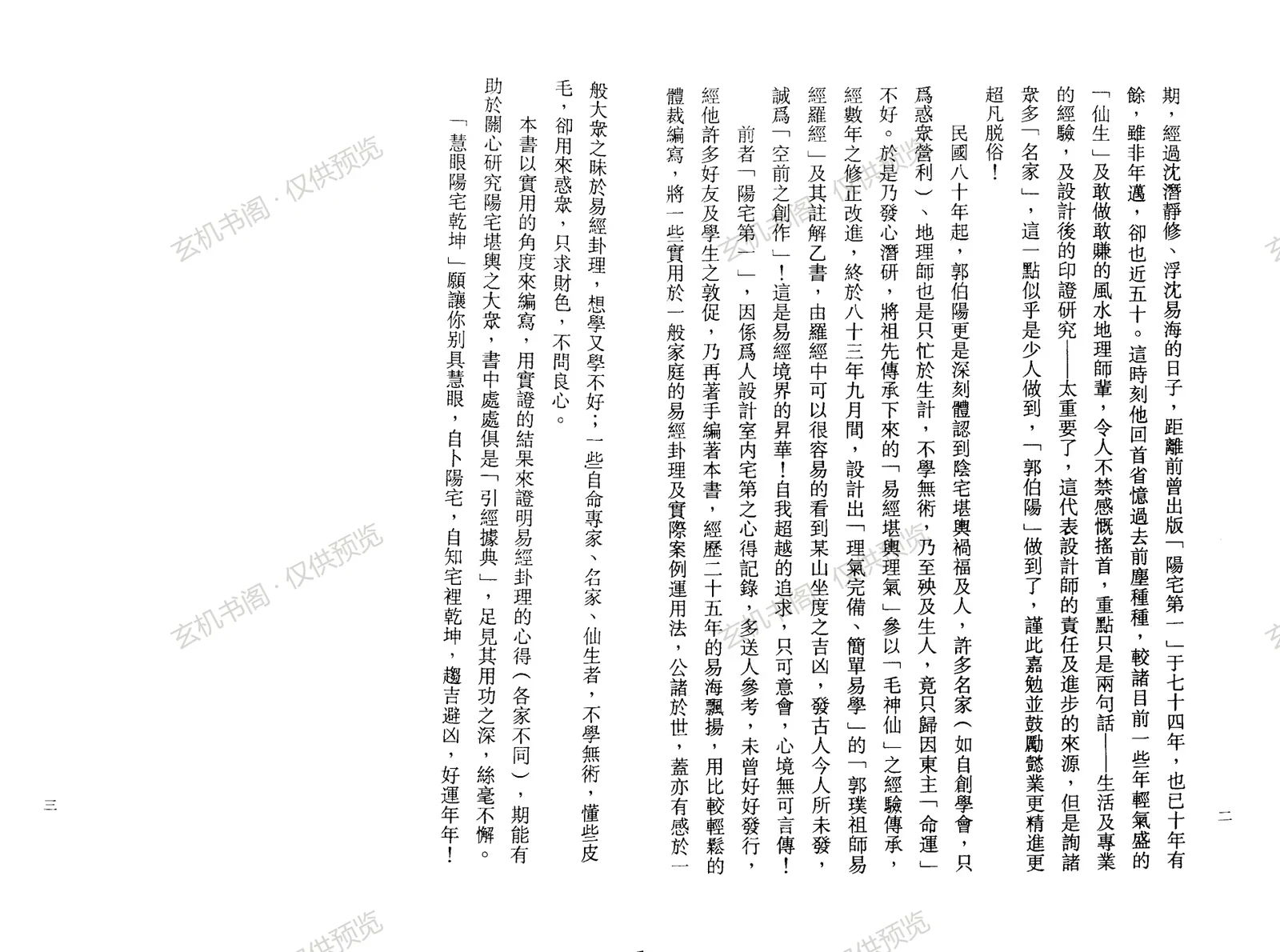
This is the first volume of Guo Boyang's series on yang-dwelling feng shui, subtitled Fundamentals, Classics, and Facing Methods. A preface by Guo Hongmo introduces the author's family background and decades of practice in applying Yijing hexagram theory to architecture and interior design, favoring adjustments to bed and desk placement over demolition or door changes. Part one sets out basic theory, including taiji, yin-yang, the earlier and later heaven bagua, and the five phases, forming a framework for establishing the center of a dwelling and judging orientations. Part two focuses on facing methods and the twenty-four mountains, tracing the origins and use of Guo Pu's Yijing luojing compass and discussing how a dwelling's facing direction is determined. Appendices gather classical materials such as the Tianyuan Five Songs on yang dwellings, the Tianyuan Eight Dwelling preface, and Guihou lu, along with tables of the sixty-four hexagrams' five-phase interactions, auspicious and inauspicious images, and changing-line transport. The book balances theory, classical reference, and practical application, and suits readers with some prior feng shui knowledge who want a systematic understanding of yang-dwelling facing methods.
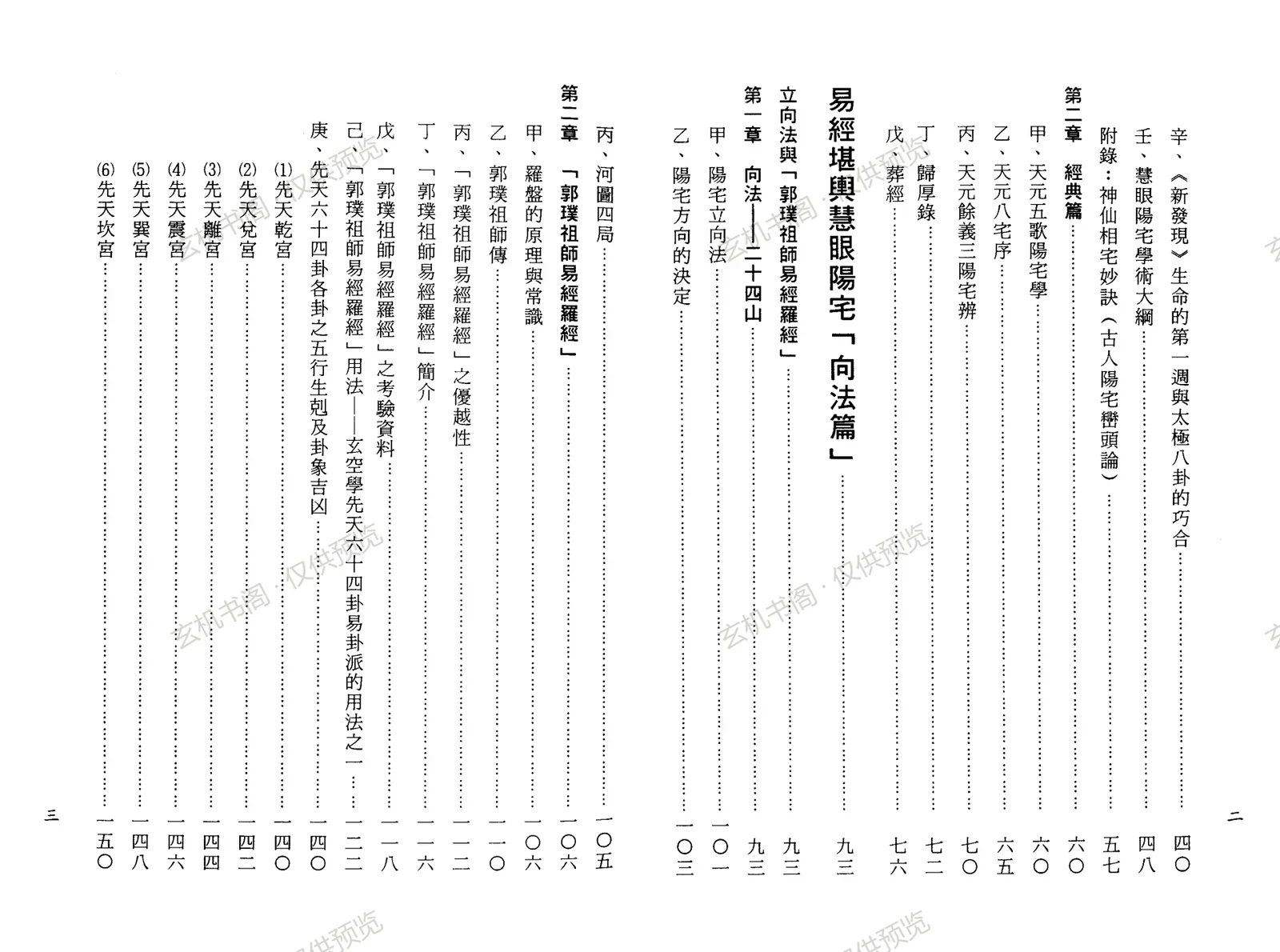
Contents
Preface: the author's family lineage and research
Chapter 1: fundamentals of taiji, yin-yang, bagua, five phases
Chapter 2: Guo Pu's Yijing luojing and compass principles
Chapter 1 of facing methods: setting facing and the twenty-four mountains
Determining a dwelling's facing direction
Appendix: sixty-four hexagram five-phase and image judgments
Appendix: changing-line transport tables
Key Points
Treats Yijing hexagram theory as the core of yang-dwelling study.
Explains the origins, compass principles, and common uses of Guo Pu's Yijing luojing.
Devotes a section to facing methods and the twenty-four mountains.
Collects classical texts including the Tianyuan Five Songs and Tianyuan Eight Dwelling preface.
Provides tables of sixty-four hexagram interactions and changing-line transport for reference.