Reading guide
Content guideOverview
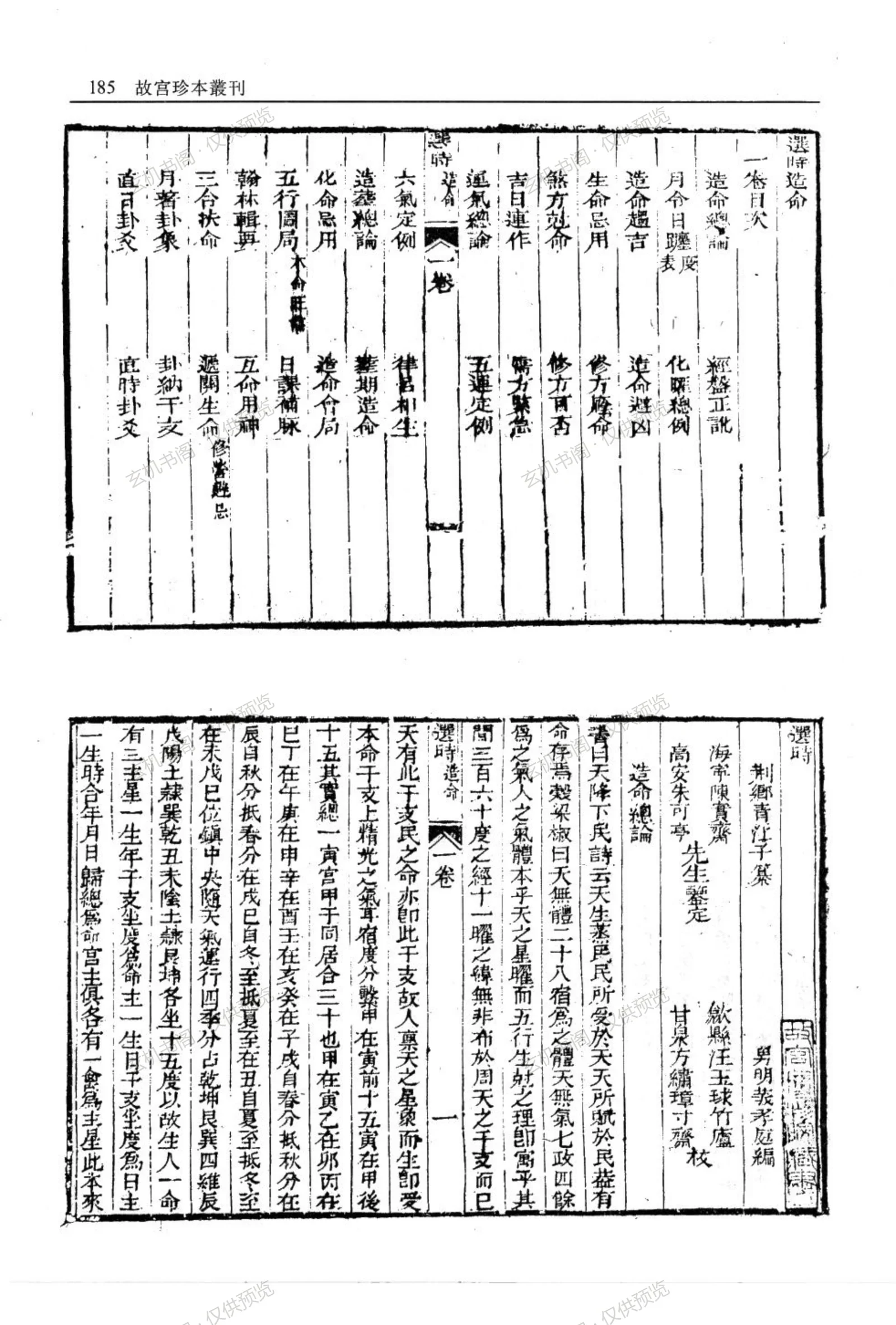
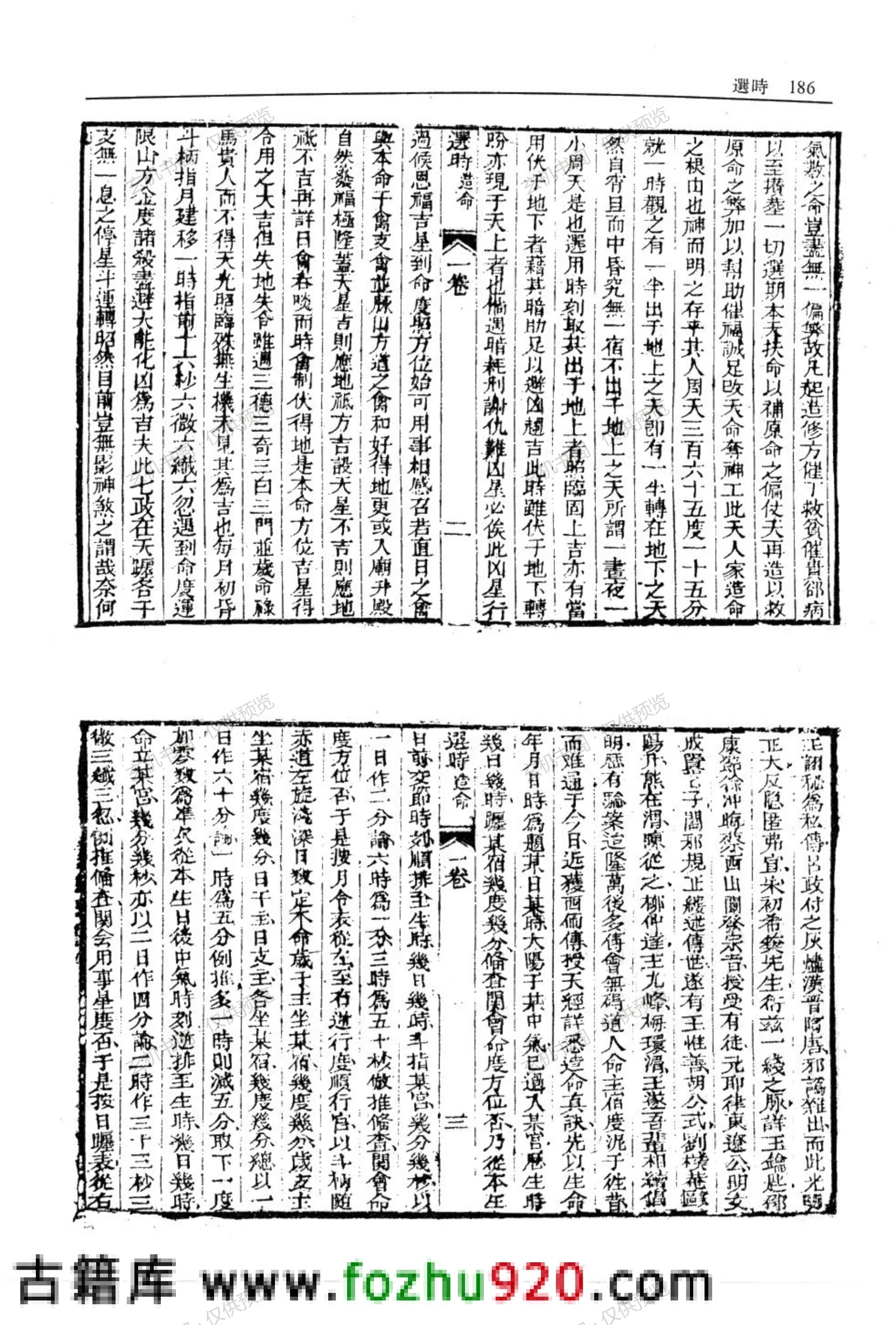
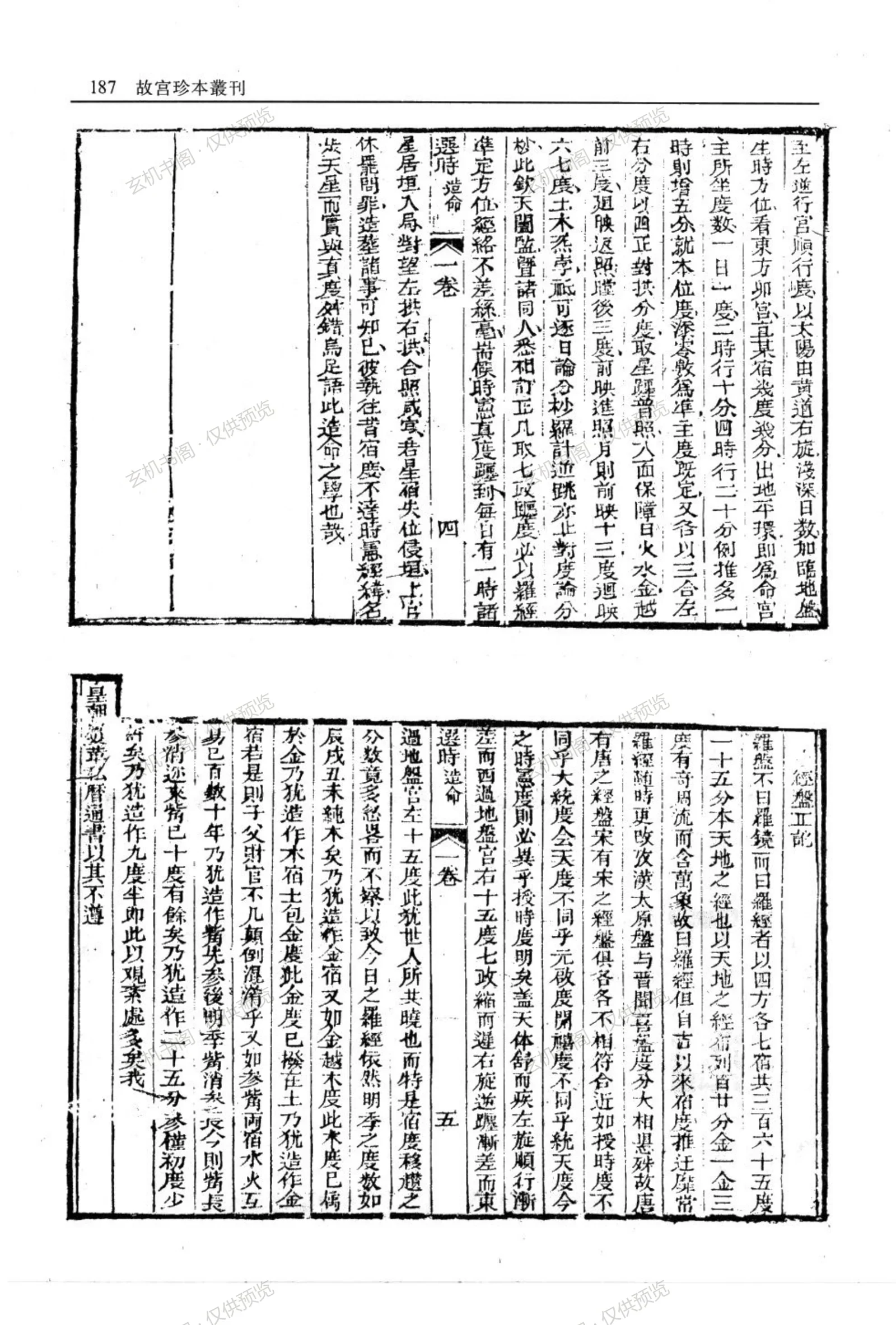
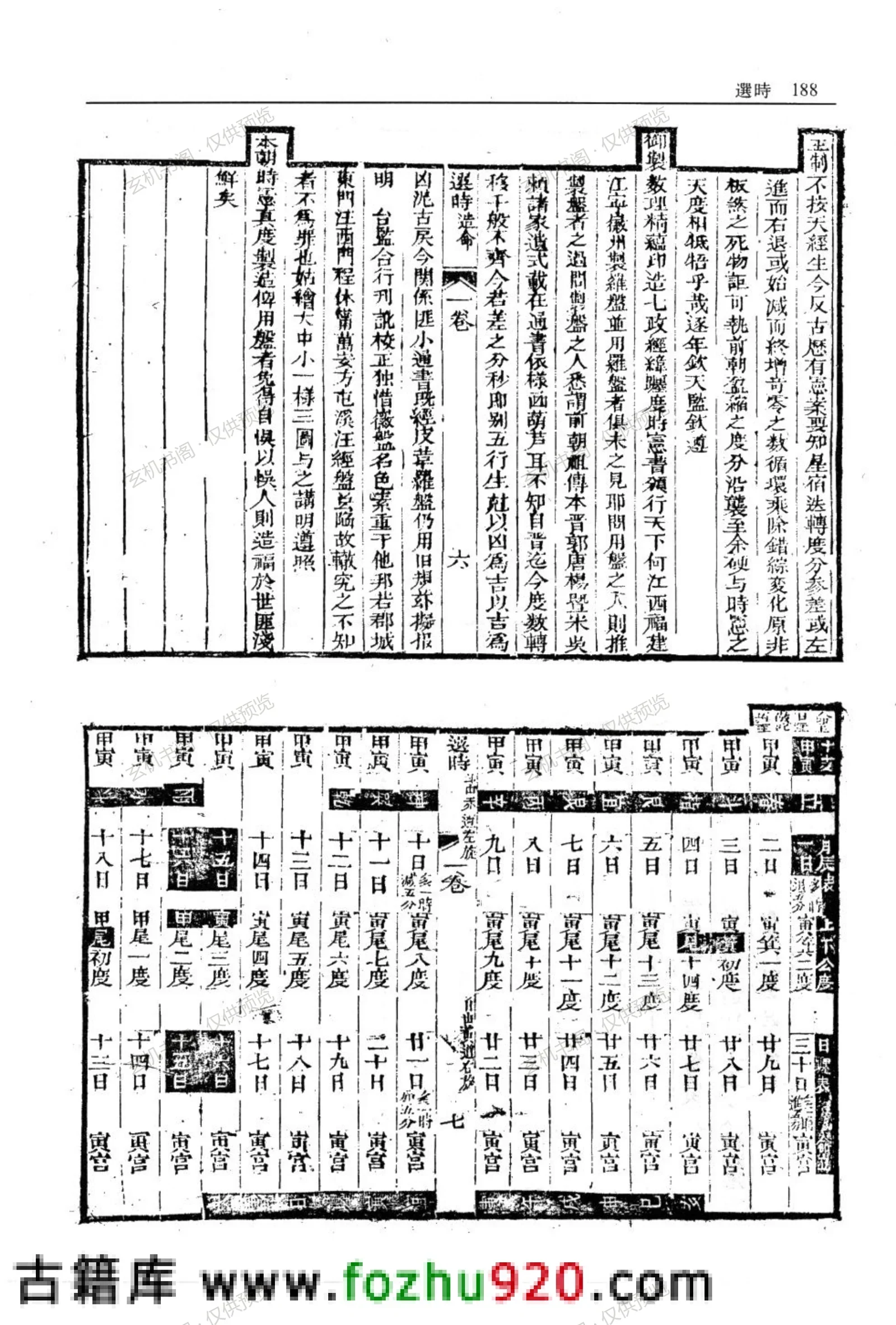
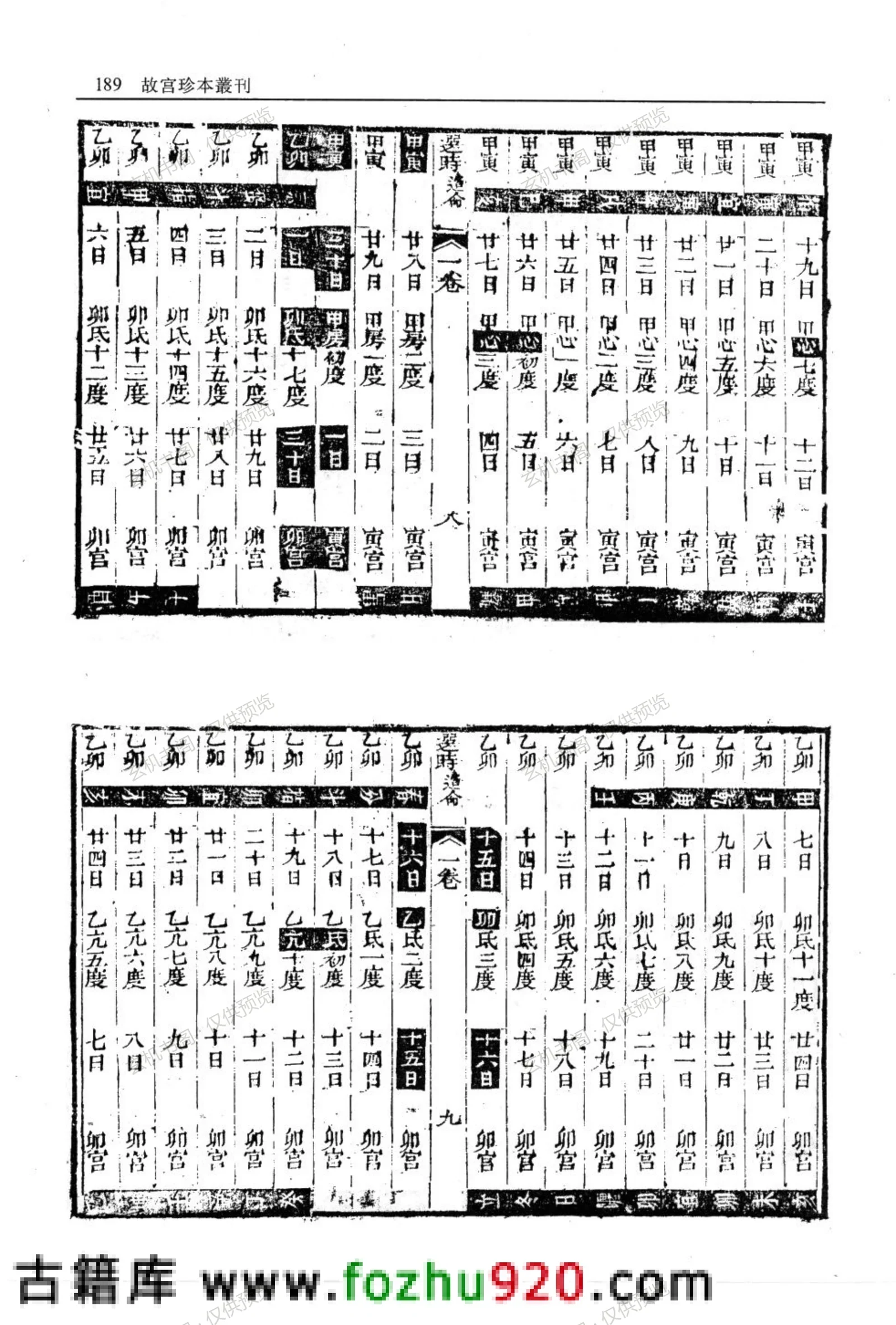
This is volumes one and two of the "Xuan Shi Zao Ming" (Selecting Times and Making Destiny) section of Yangzhai Dacheng. The text argues that humans are born of the qi of heaven and earth, so choosing an auspicious time should combine the client's sexagenary birth data with the movement of celestial bodies. Volume one contains the preface, table of contents, and a general discussion of destiny-making, citing classical sources to explain the relations among the five movements and six qi, the twenty-eight lunar mansions, the seven luminaries and four extras, and the birth year, month, day, and hour. It then lists topics such as the six-qi regulations, pitch-pipe generation, general rules for construction and burial, taboo days for transformed destiny, the five-phase cycle, day-course pulse supplement, triple-harmony destiny support, and useful gods of the five destinies. Volume two turns to detailed calculation, explaining the sun's movement through the zodiac, mansion degree divisions, the twenty-four compass directions, and time conversion, with tabular "sun-into-palace" layouts listing sexagenary days against stellar degrees. The language is classical and the terminology dense, combining theoretical discussion with calendrical computation.
Contents
Preface: on the rationale of time selection and destiny-making
General discussion and correction of the classic compass
Six-qi regulations and pitch-pipe generation
Construction and burial rules, taboo days, and five-destiny useful gods
Volume two: sun-into-palace and mansion degree divisions
Tables of sexagenary days against stellar degrees
Key Points
Uses the client's birth sexagenary data as the basis for time selection
Volumes one and two pair theory and itemized rules with calculation tables
Heavy use of lunar mansions, seven luminaries, and zodiac terminology
Tables list sexagenary days against stellar degrees for checking
Emphasizes destiny-making and pulse supplement over mere taboo avoidance