Reading guide
Content guideOverview
This is the second volume of Wang Tingzhi's Four Books on Dou Shu, devoted to annotated readings of two classical Zi Wei Dou Shu odes: the Bone Marrow Ode and the Women's Bone Marrow Ode. The opening prefaces trace the Zhongzhou school lineage and explain the textual history of the two odes, noting that the Bone Marrow Ode came later than the Tawei Ode and preserves many old rhymed formulas. The main commentary follows the Zhongzhou approach, beginning with general principles such as the prior and posterior transformations of stars, the priority of pattern over malefic stars, and the non-fatalistic nature of Dou Shu. It then examines numerous configurations, including the various jia (flanking) patterns, Lianzhen and Qisha reverse patterns, Tianliang's punitive quality, Wutan's drastic changes, Fujen and Tianxiang facing the court, Ziwei and Tianfu in the same palace, Sun and Moon together, Pearl Emerging from the Sea, Jade Hidden in Stone, Horse Head with Sword, and Combined Lu and Mandarin Ducks. Historical figures such as Li Guang, Yan Hui, Deng Tong and Confucius are used as illustrations. The latter part turns to the Women's Bone Marrow Ode, discussing female charts with Fujen and Tianxiang, Lianzhen's purity, Tiantong's clarity and guardianship, Ziwei and Taiyang's propriety, Jiju's instability, Yang Huo Chang Qu in female charts, Wuqu as the solitary star, and the shortcomings of Pojun and Qisha. Throughout, Wang stresses that old odes provide only outlines and must be understood through star systems and inference principles rather than memorized mechanically.
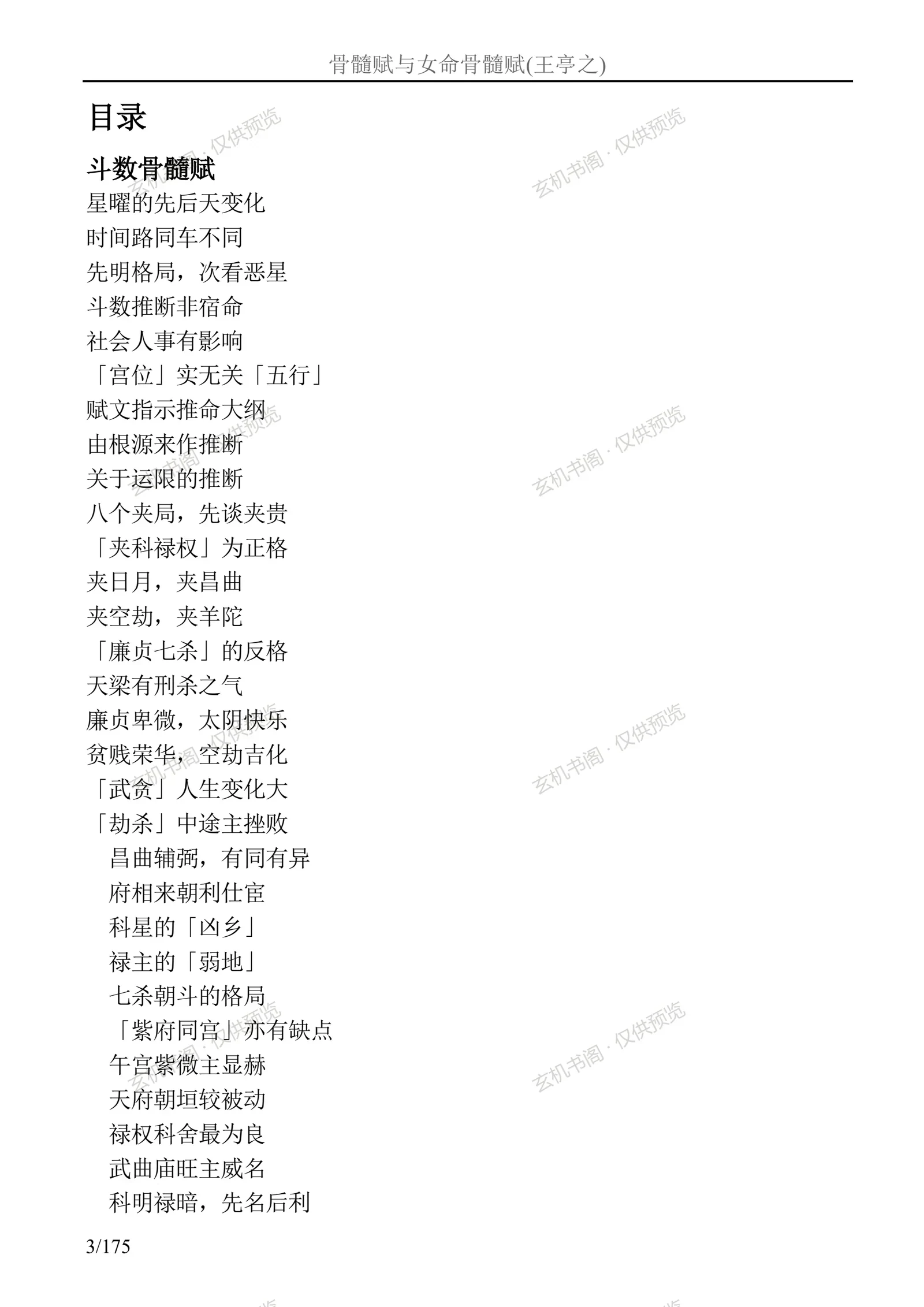
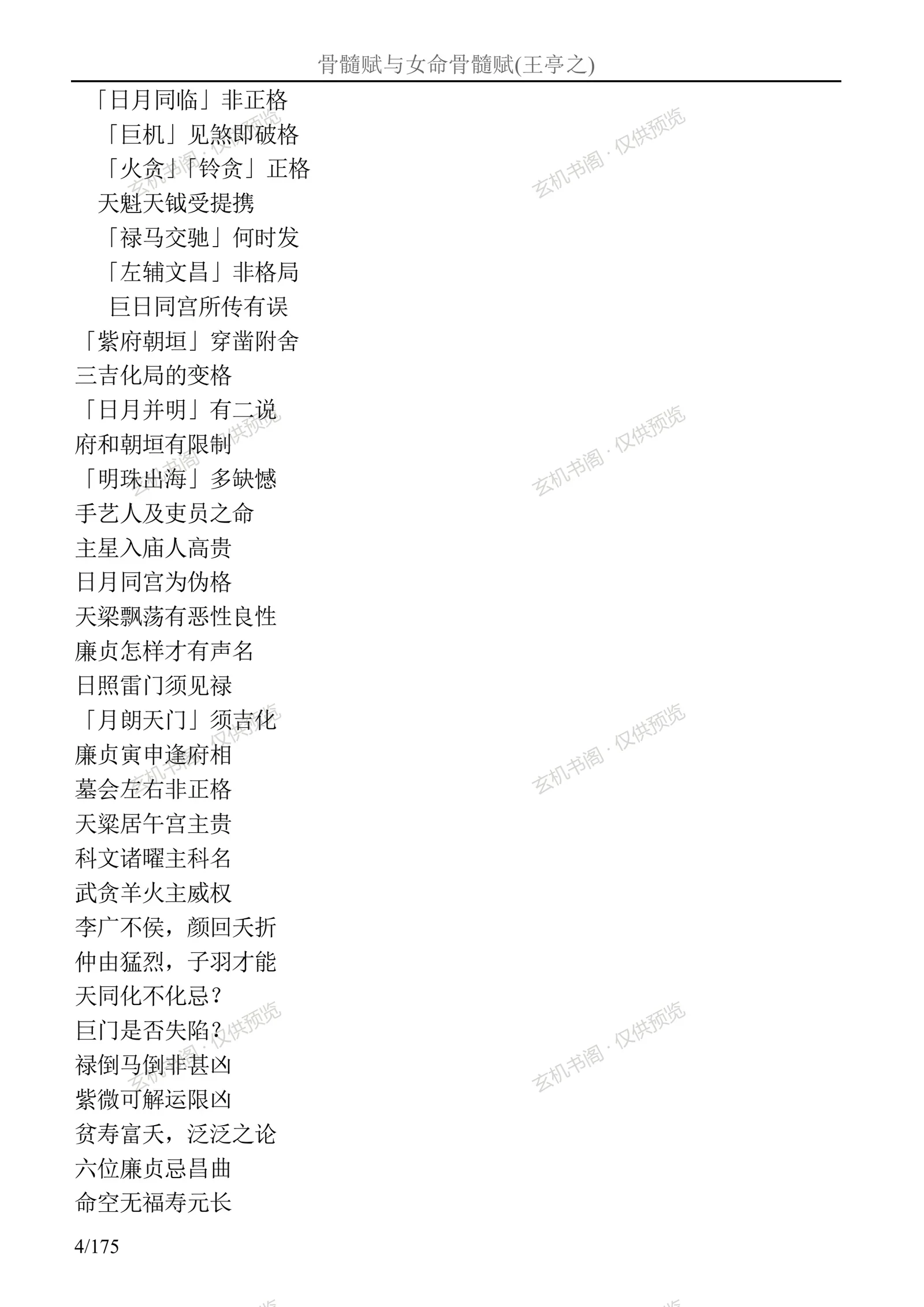
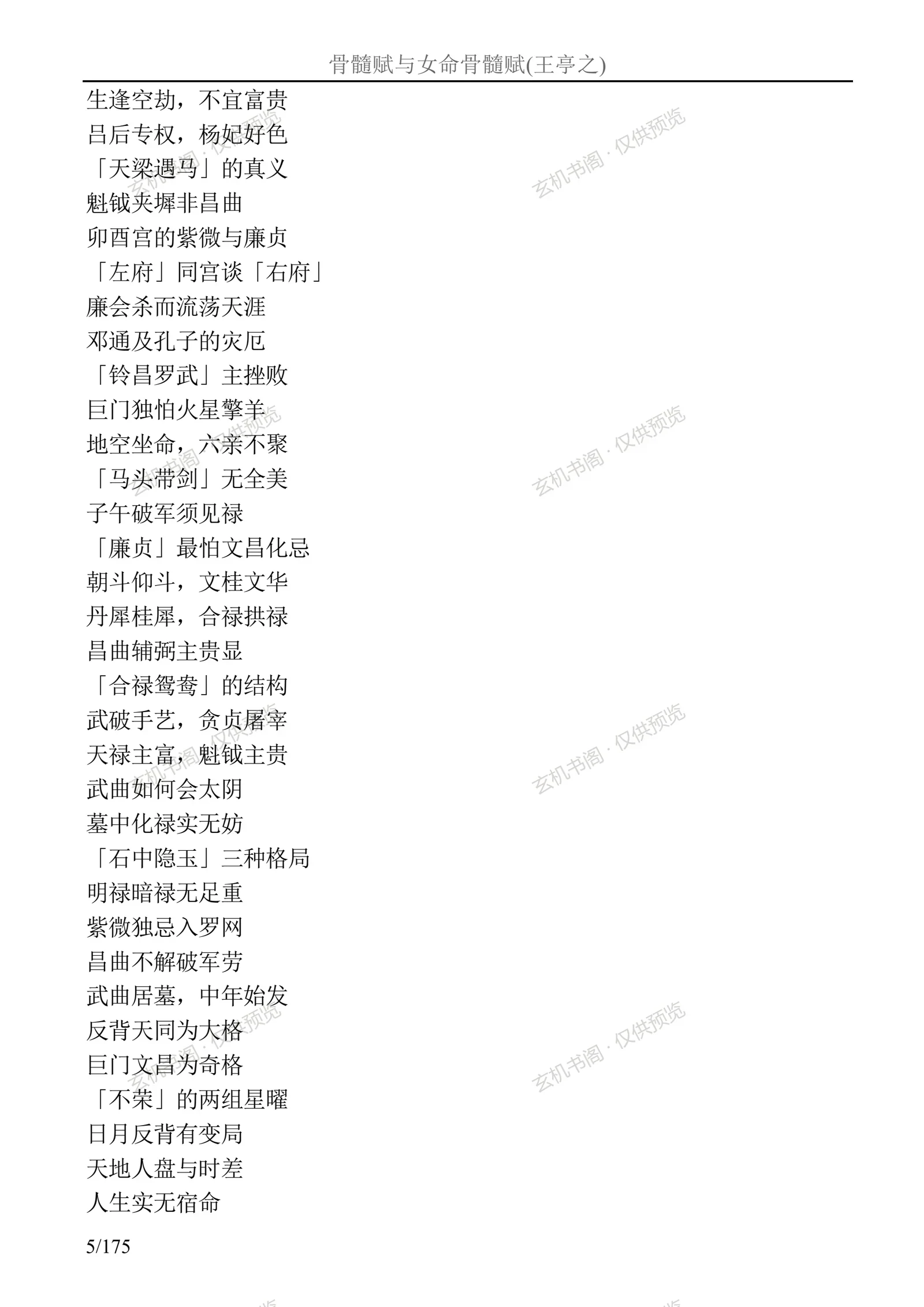
Contents
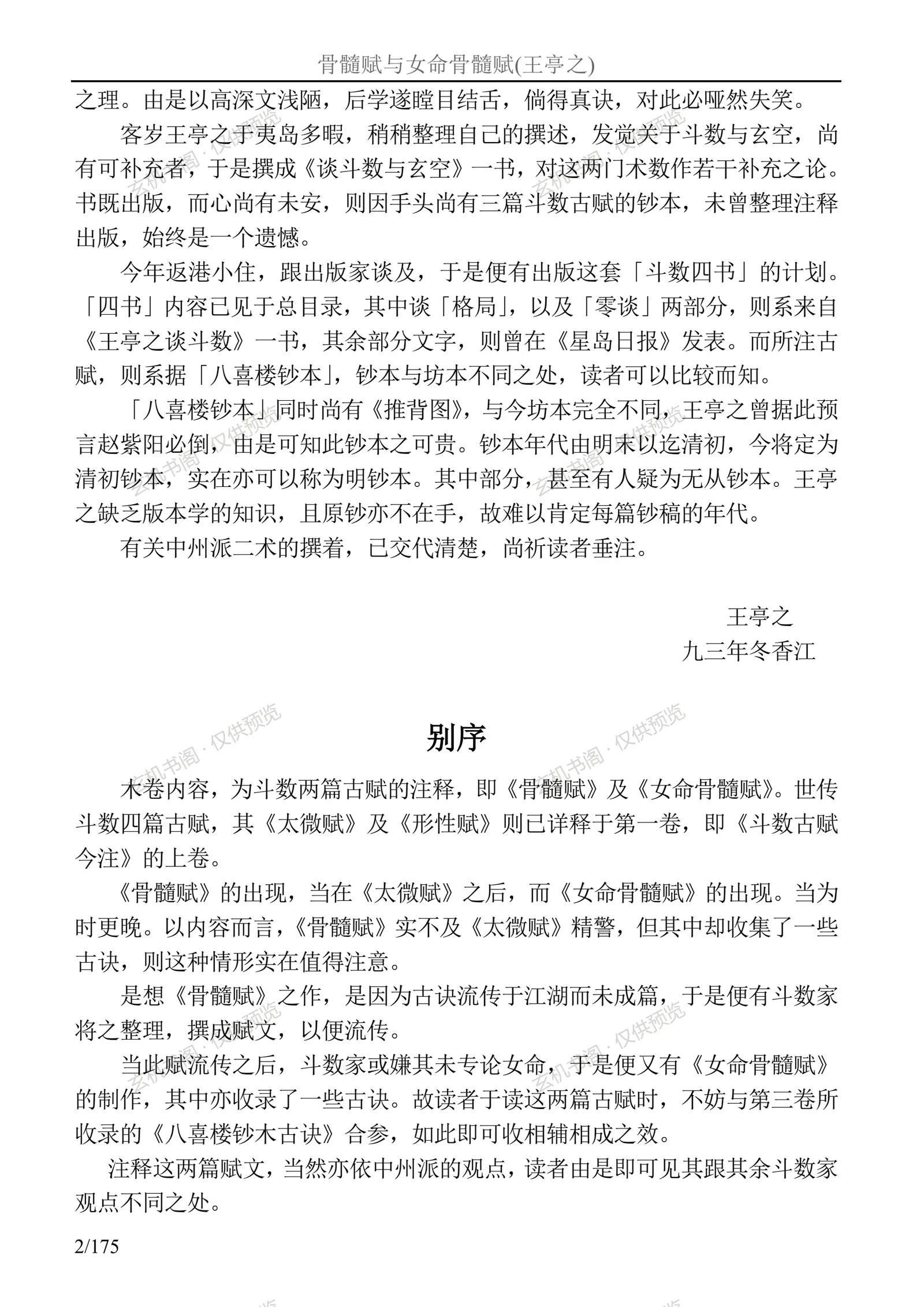
General preface: Zhongzhou lineage and Wang's Dou Shu writings
Separate preface: dating and manuscript issues of the two odes
Bone Marrow Ode: star transformations and general patterns
Flanking patterns, Lianzhen Qisha, Tianliang, Wutan and more
Patterns such as Fujen facing court, Ziwei Tianfu, Sun and Moon
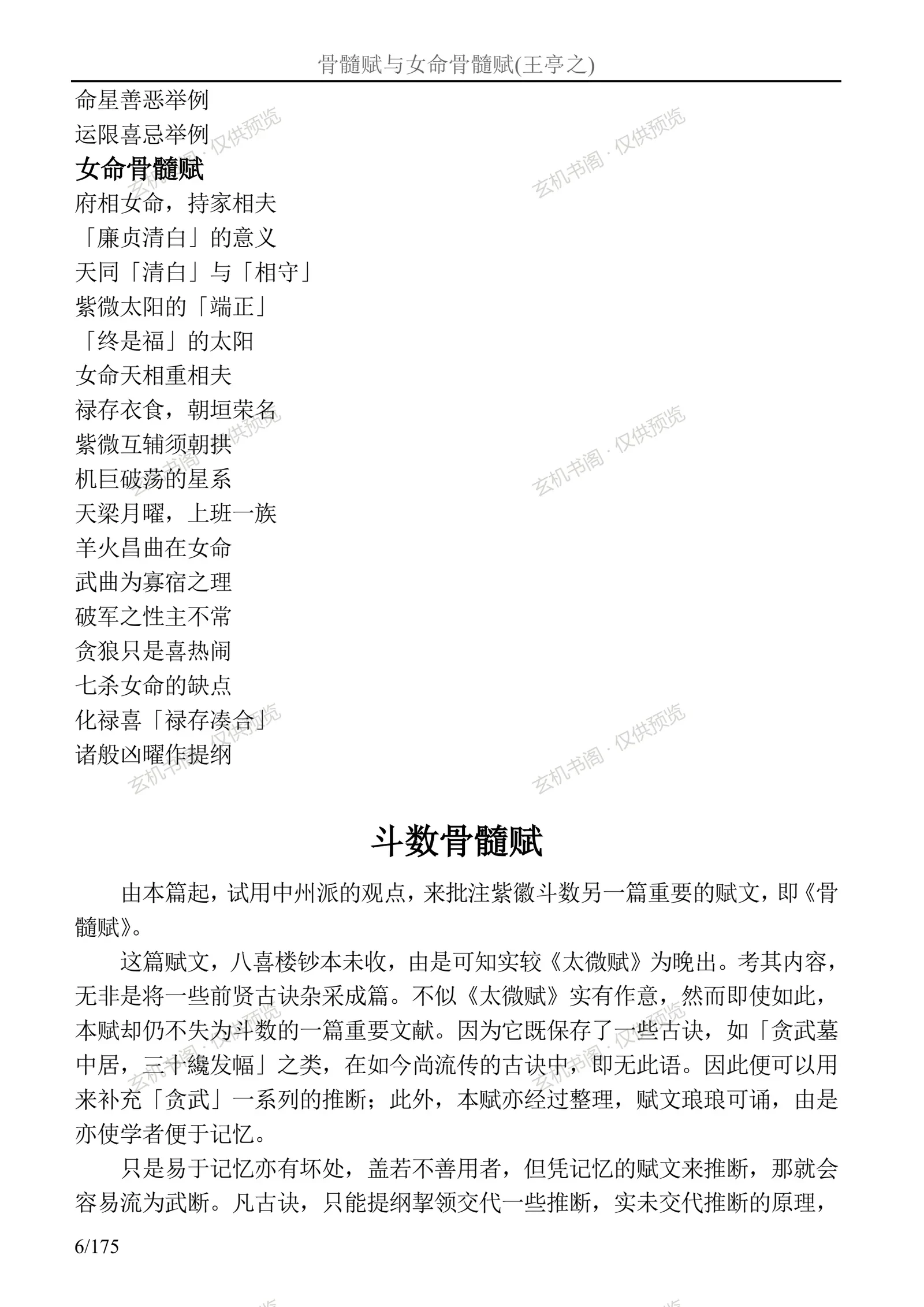
Women's Bone Marrow Ode: Fujen, Lianzhen, Tiantong, Ziwei
Female charts with malefics: Yang Huo, Chang Qu, Wuqu, Pojun, Qisha
Key Points
Annotates the Bone Marrow Ode from the Zhongzhou school perspective, prioritizing pattern over malefics.
Distinguishes flanking patterns involving noble stars, Lu Quan Ke, Sun Moon, Chang Qu, and Kong Jie Yang Tuo.
Discusses specific combinations such as Lianzhen Qisha reverse pattern, Tianliang's punitive air, and Wutan's drastic changes.
Argues that Dou Shu inference is not fatalistic and is affected by social and human factors.
The Women's Bone Marrow Ode focuses on female charts, from Fujen's domestic role to Jiju's instability.
Stresses that old odes give only outlines and must be combined with star systems and inference rules.