Reading guide
Content guideOverview
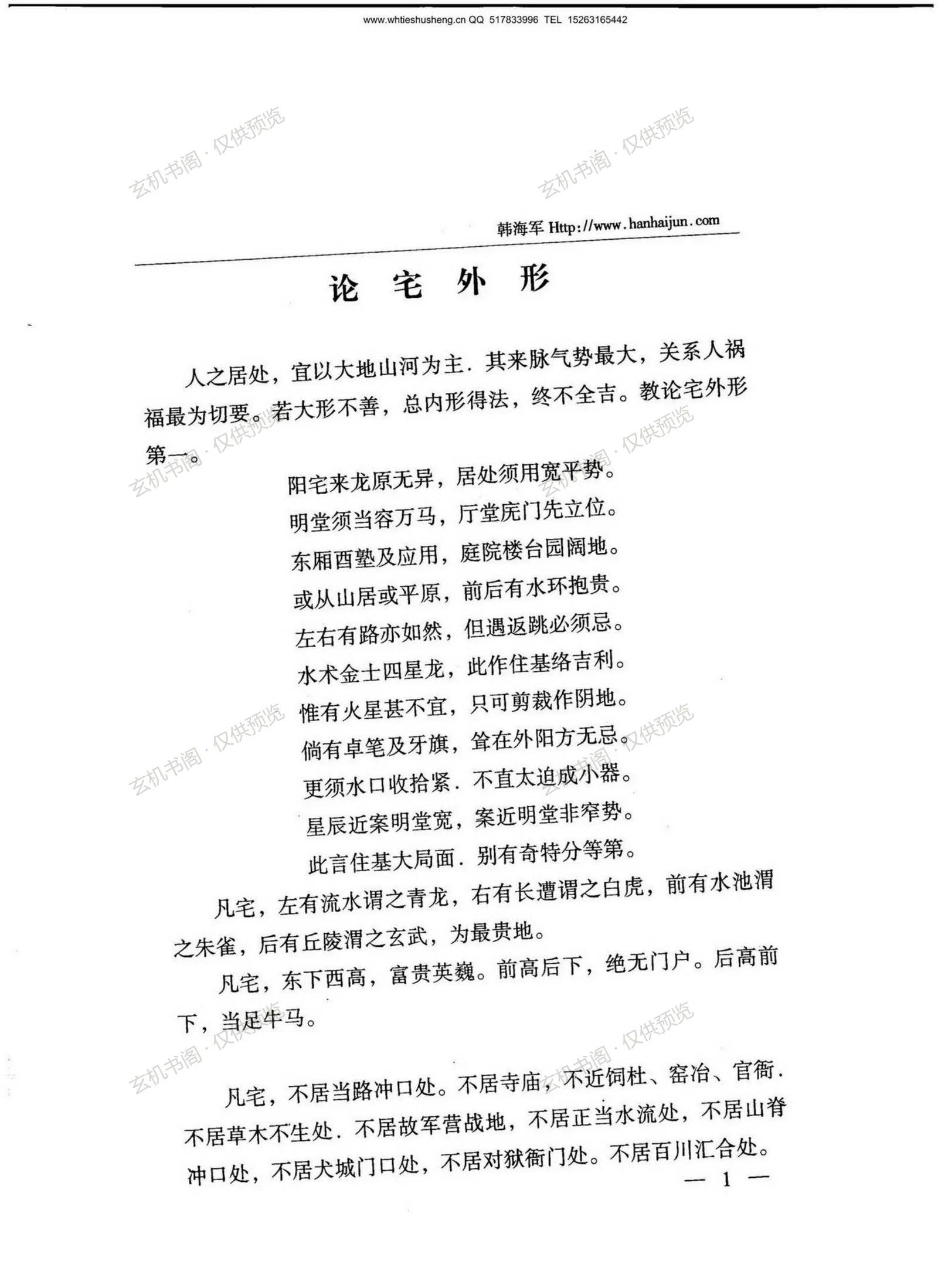
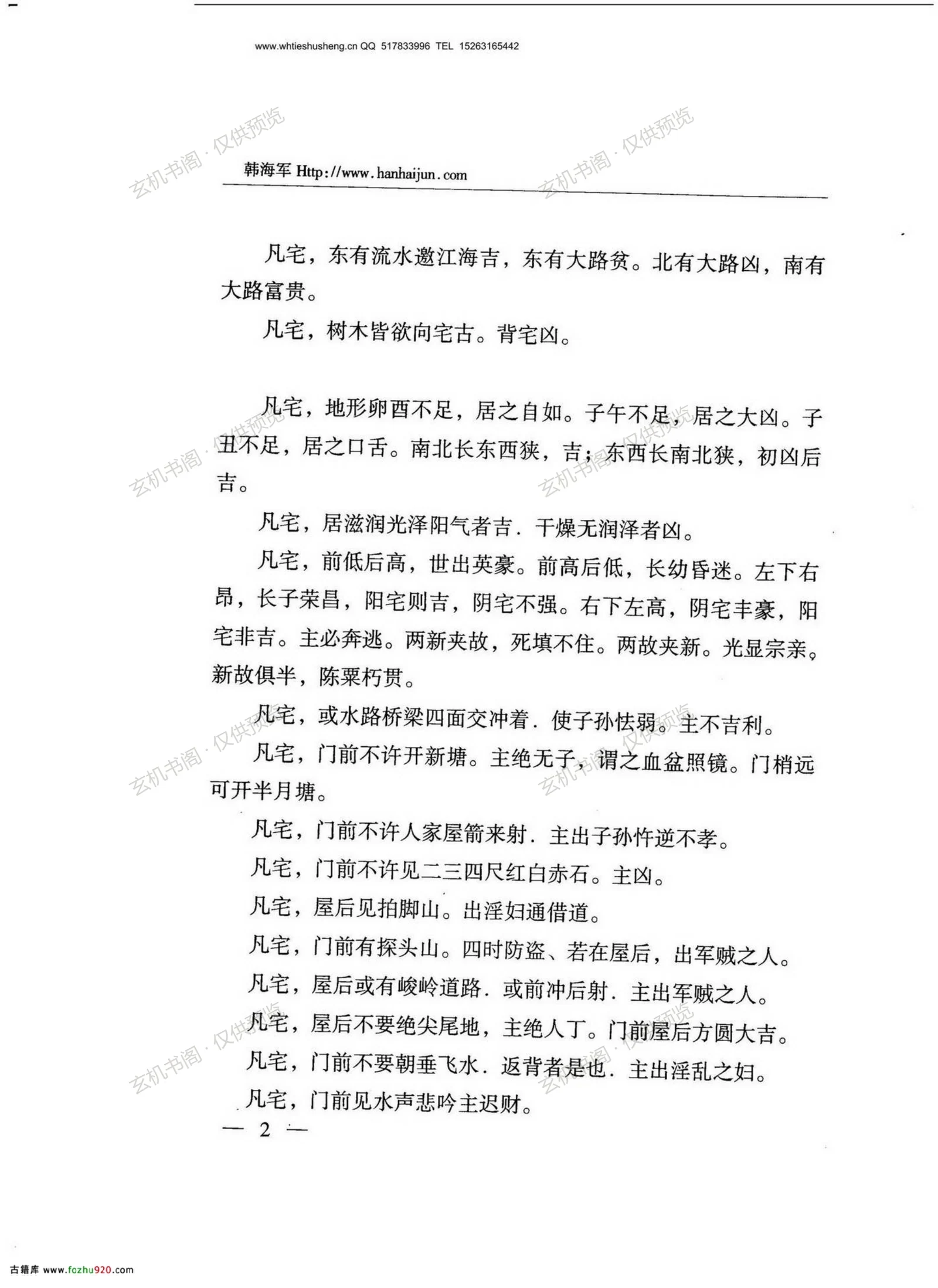
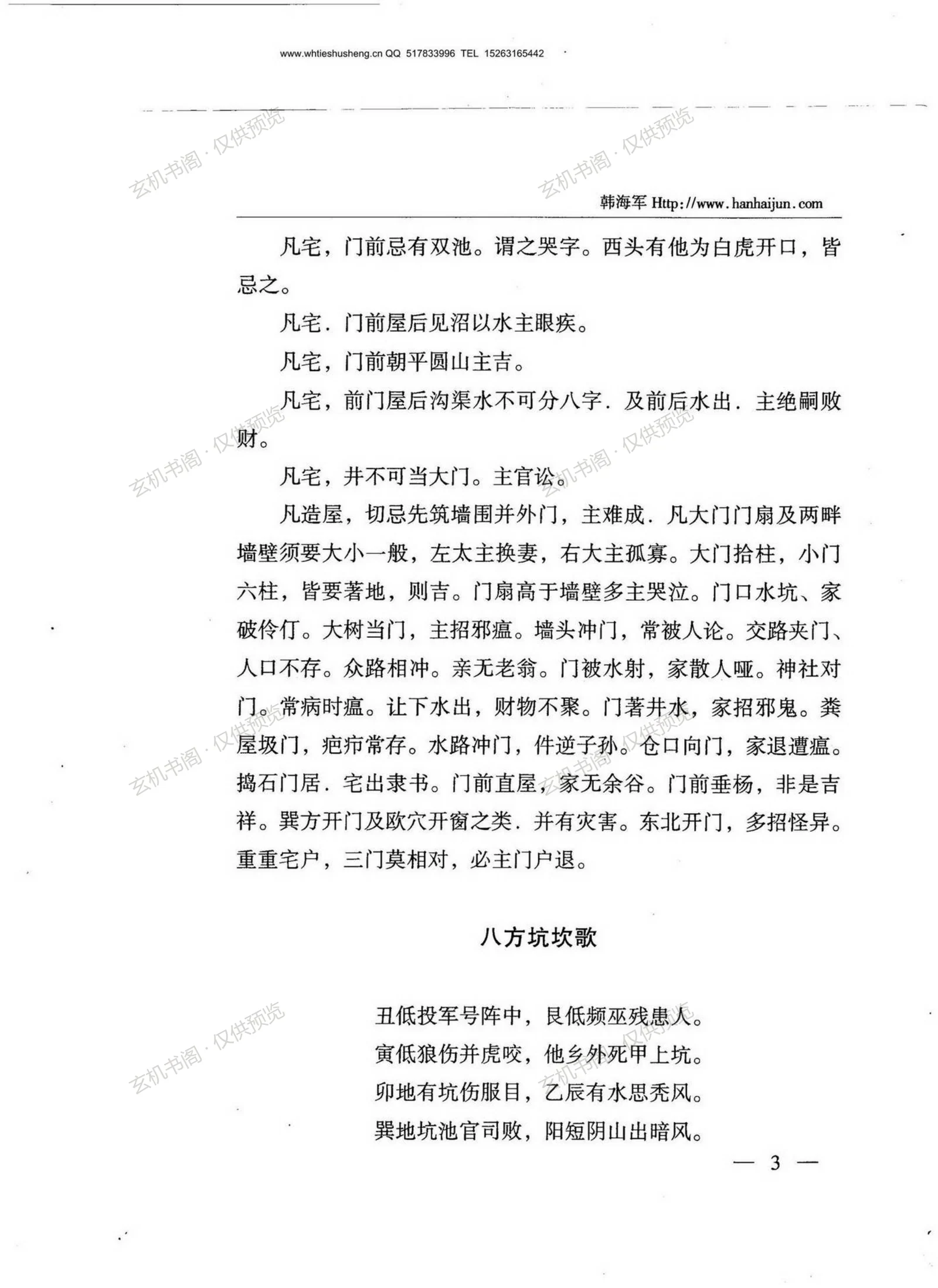
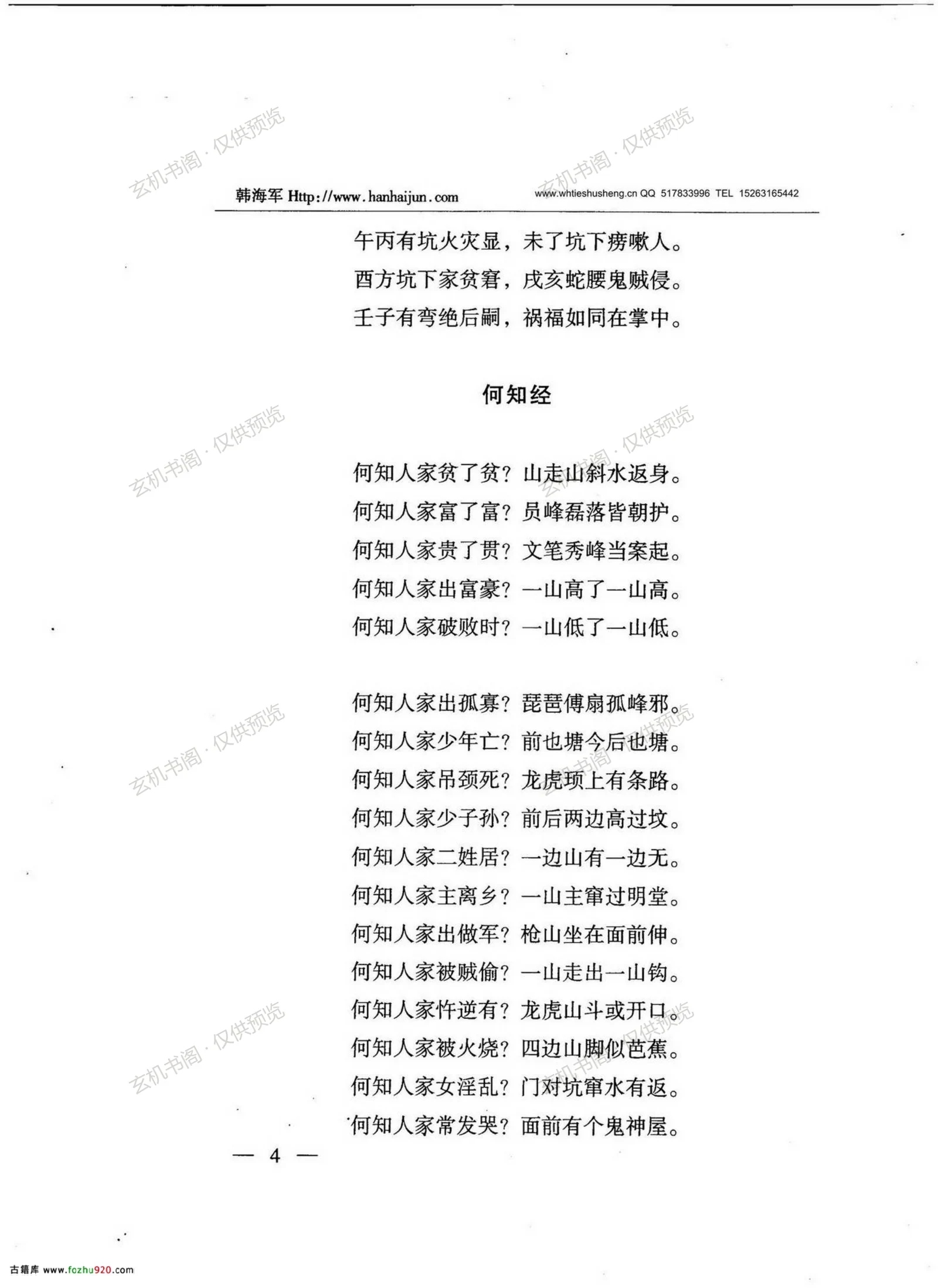
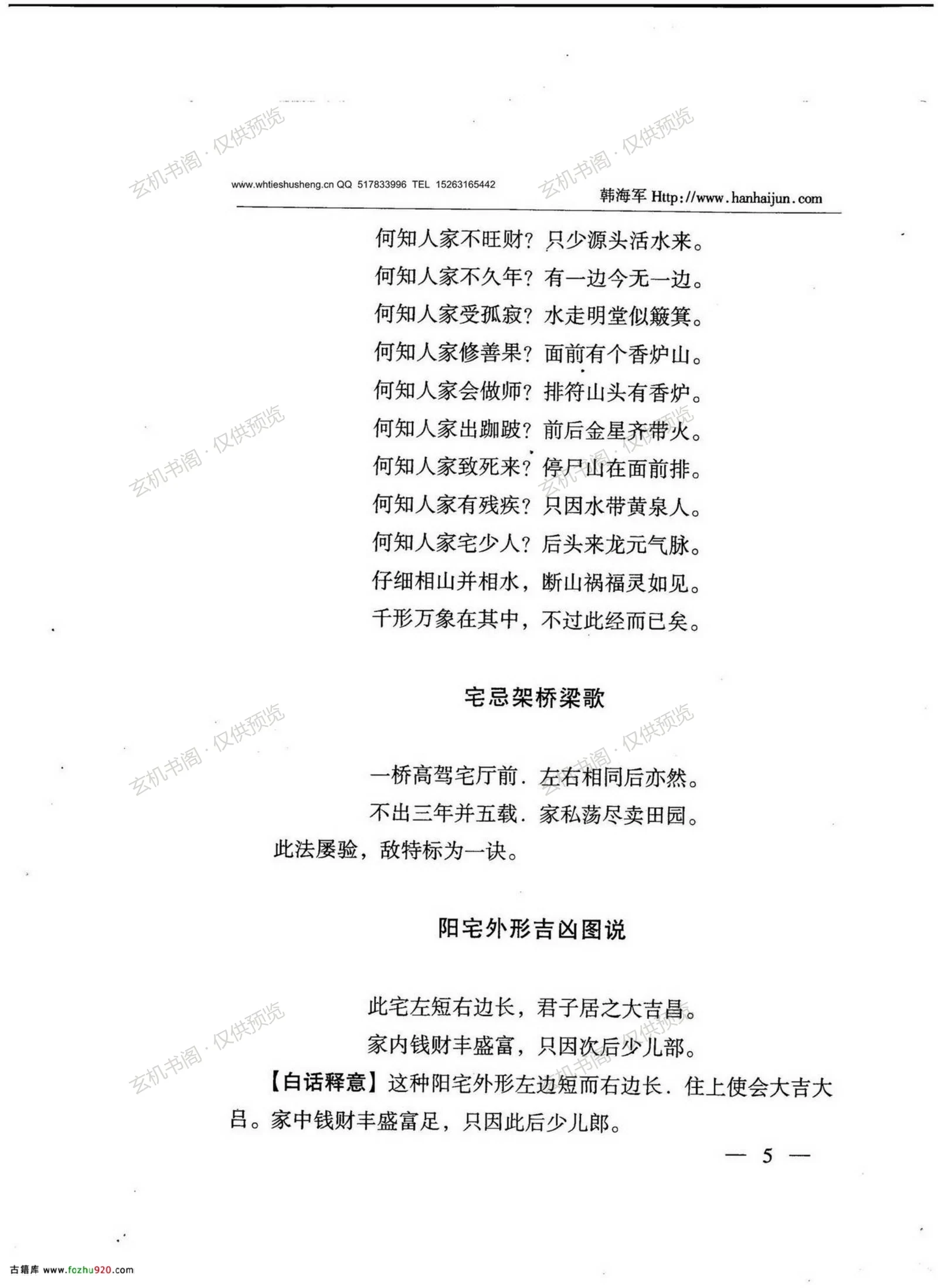
This is the second volume of Han Haijun's Secret Methods of Yang Dwelling Feng Shui, printed in July 2009. The visible pages open with 'On Dwelling Form, Part One,' which holds that a house's surrounding landscape and vein of energy matter most; if the outer form is poor, even a correct interior cannot fully remedy it. The text lists, in rhymed verse and short rules, judgments on site layout, the four animals (Azure Dragon, White Tiger, Vermilion Bird, Black Tortoise), terrain height, watercourses, bridges, and objectionable features before and behind the door. It then gives the 'Eight-Direction Pit Verse,' assigning fortunes and ailments to pits in each earthly-branch direction, followed by the Hezhi Jing, a question-and-answer litany inferring wealth, status, loneliness, illness, theft, and scandal from mountain and water shapes. It closes with a verse against bridges over the house and plain-language explanations of auspicious and inauspicious house forms. The book belongs to the form school of yang-dwelling divination, and its rhymed, itemized style suits readers with basic feng shui knowledge who want a reference for judging house exteriors.
Contents
On Dwelling Form: site layout and four-animal configuration
Rules on water, roads, trees, and neighbors
Eight-Direction Pit Verse: judgments by direction
Hezhi Jing: inferring fortunes from landscape
Verse against bridges over the dwelling
Illustrated auspicious and inauspicious forms with plain glosses
Key Points
Outer form outweighs interior layout
Rhymed rules catalog features before and behind the house
Pit verse links directions to illness and misfortune
Hezhi Jing uses Q&A to infer wealth and status
Plain-language glosses ease reading of the verse