Reading guide
Content guideOverview
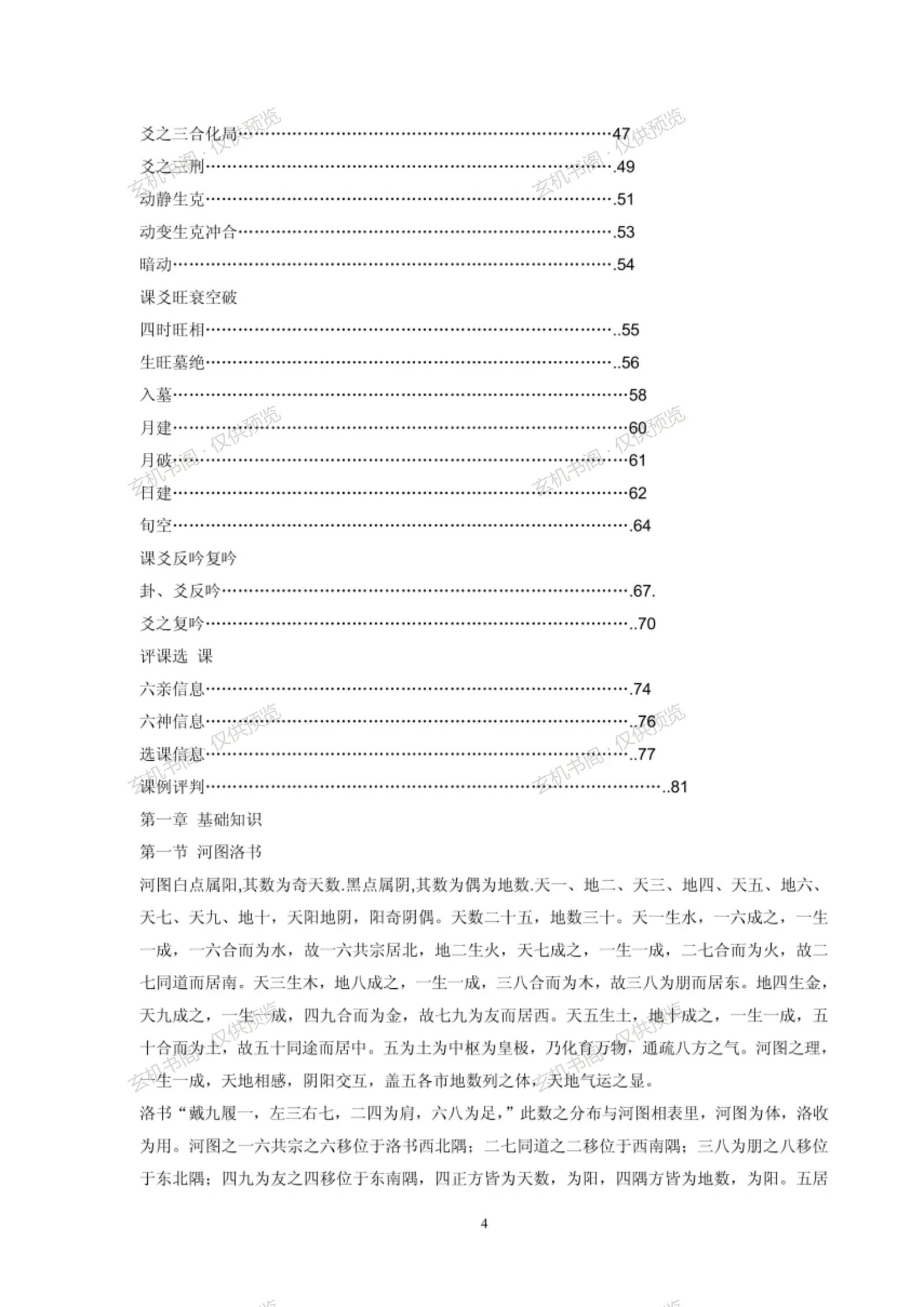
This book by Wang Yidao argues that date selection should rest on a consistent numerical foundation drawn from the Hetu and Luoshu, the Zhouyi, and Xuankong feng shui, rather than on the many competing methods it criticizes. The author says the method derives from Chen Xiyi's arrangement of the four pillars into a six-line hexagram by Hetu-Luoshu numbers, then combines it with Xuankong to obtain moving and changed lines. The contents move from basics—Hetu-Luoshu numbers, stems and branches, the sixty-cycle, and four-pillar construction—to forming a date hexagram, assigning the six relatives and six spirits, identifying the useful, original, and hostile spirits, advancement and retreat, flying and hidden spirits, then through generating, controlling, combining, clashing, punishment, harmony, seasonal strength, tomb and void, reverse and repeated chants, and finally to evaluating and selecting date lessons with worked examples. It is an operational manual for readers already familiar with six-line divination and feng shui.
Contents
Preface: advocating a fully reliable theory and method
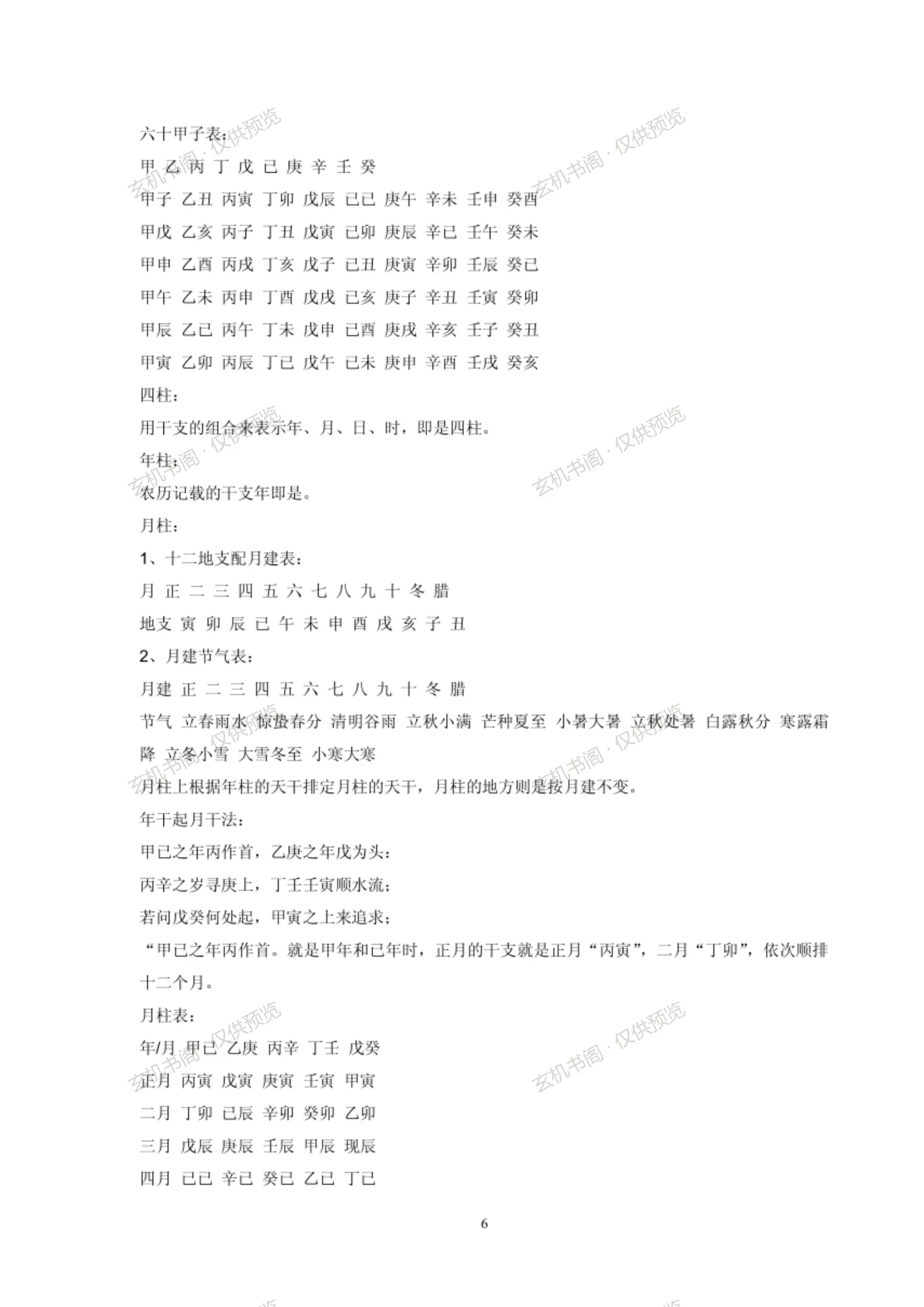
Basics: Hetu-Luoshu, stems and branches, four pillars, eight trigrams and six lines
Forming the date hexagram: number assignment and casting
Six relatives and six spirits: arrangement, activation, change
Spirits of the lesson: useful, original, hostile, advancing, retreating, flying, hidden
Generating, controlling, combining, clashing, triple harmony, punishment
Strength, tomb, void, monthly and daily markers
Reverse and repeated chants; evaluating and selecting lessons
Key Points
Insists date selection needs a consistent numerical basis from Hetu-Luoshu.
Core method arranges the four pillars into a six-line hexagram with Xuankong moving lines.
Covers six relatives, six spirits, useful and hostile spirits, advancement and retreat.
Details generating, controlling, combining, clashing, punishment, seasonal strength and void.
Ends with lesson evaluation and worked examples for practical use.