Reading guide
Content guideOverview
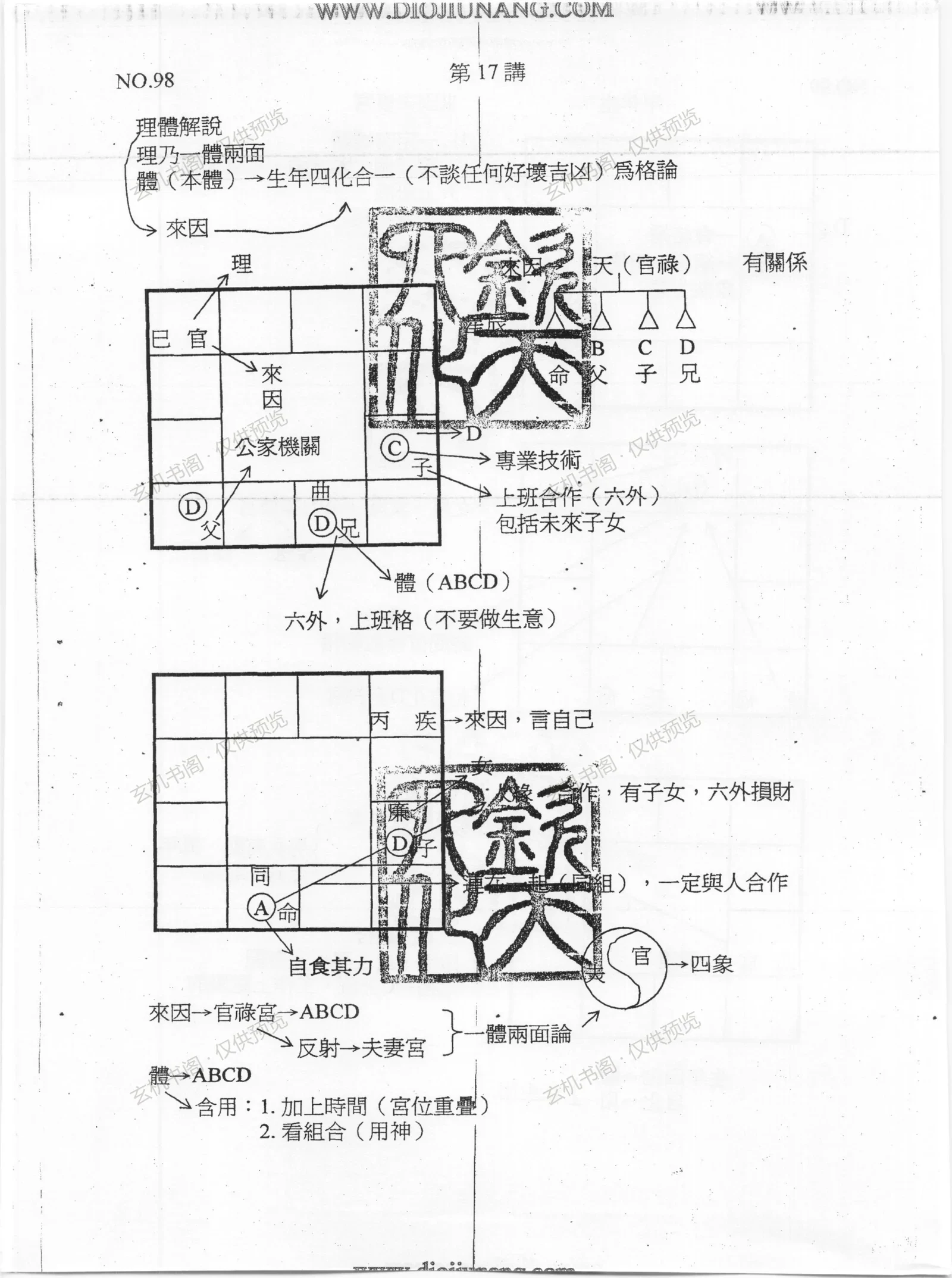
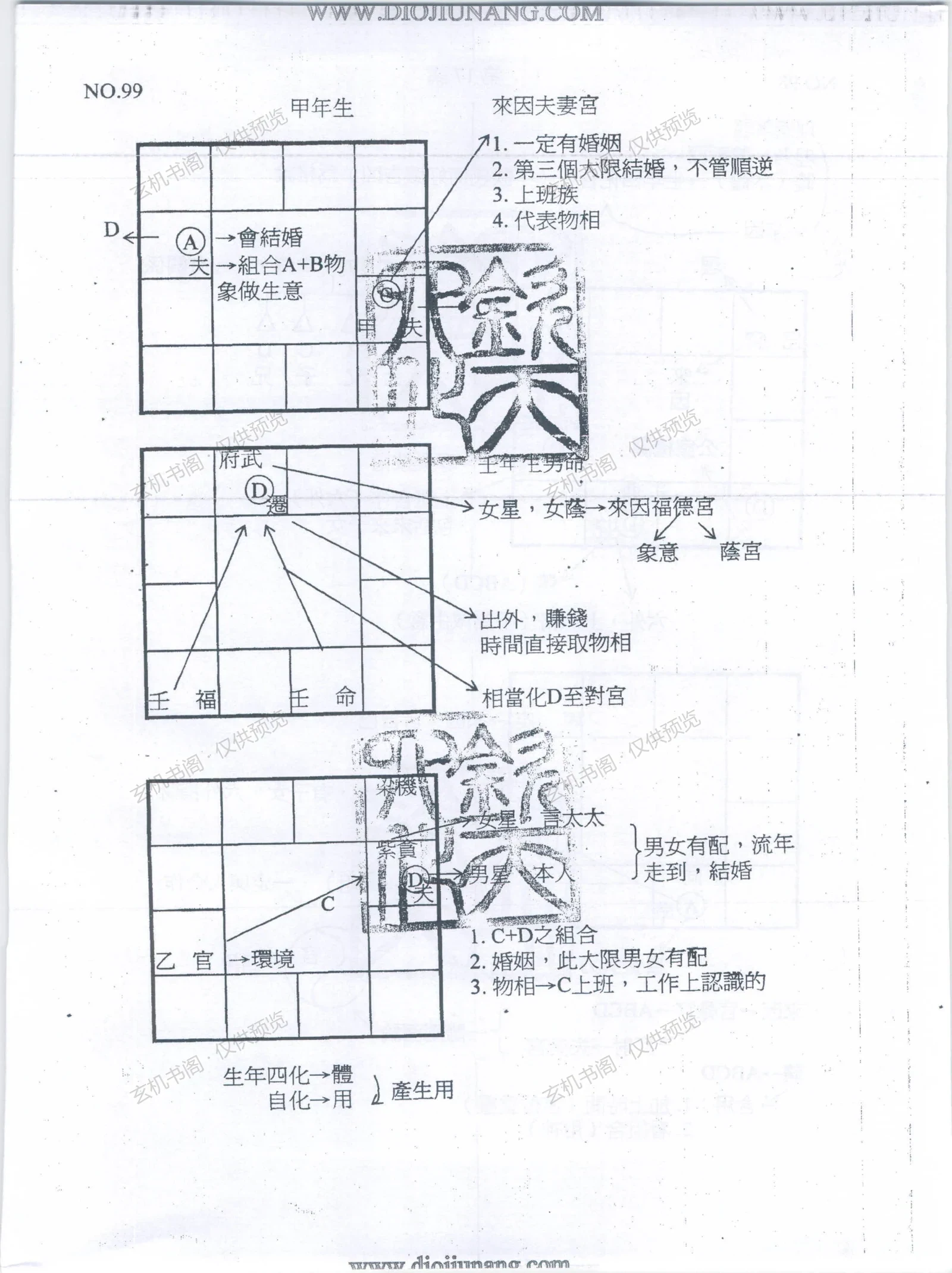
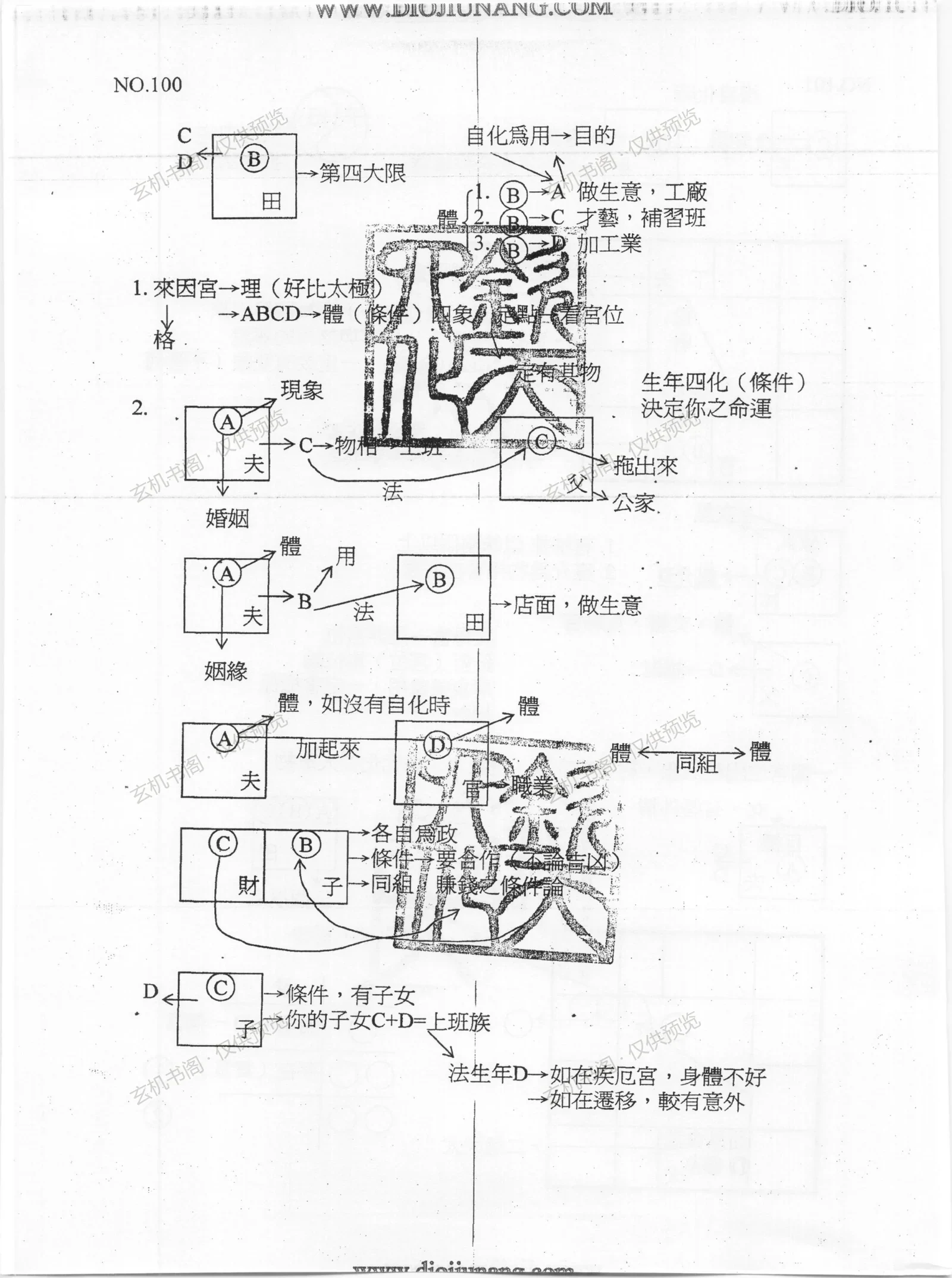
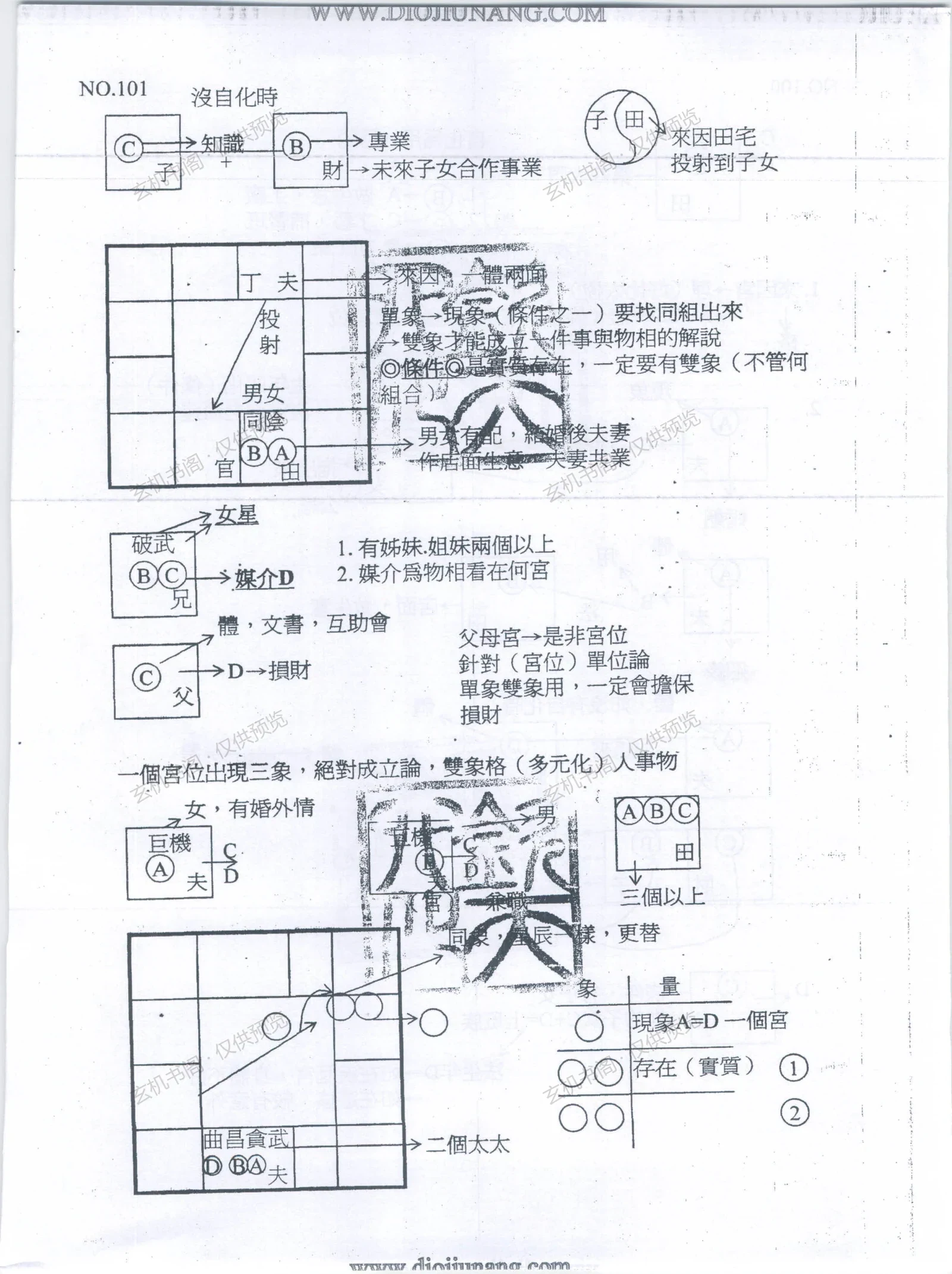
This is the middle volume of Zhong Mingxiu's Advanced Lectures on Huashan Qintian Four Transformations, a Zi Wei Dou Shu text focused on the Qintian school's method of four transformations. Opening with Lecture 17 on the theory of the body, it establishes the principle that one substance has two sides: the body generates the natal four transformations, which form the basic pattern, without judging good or bad fortune. Through numerous hand-drawn chart examples, the author demonstrates how natal transformations A, B, C, and D combine across the Life, Parents, Children, Siblings, Spouse, Career, and Property palaces, emphasizing concepts such as the cause palace, substance and function, self-transformation, method, image, and object-image. Specific topics include judging marriage from the spouse palace and major limits, career and wealth through the Career and Wealth palaces, public institutions versus self-employment, the six inner and six outer palaces in partnerships, and the rule that three images in one palace constitute a definite conclusion. Dense with terminology and diagram-based reasoning, the book suits readers already familiar with Zi Wei Dou Shu stars and four transformations, while beginners will find it demanding.
Contents
Lecture 17: theory of the body and pattern
Basic use of natal transformations A/B/C/D
Cause palace, substance-function, self-transformation
Spouse palace and marriage imagery
Career, wealth, and professional imagery
Six inner and outer palaces in partnerships
Three-image rule and dual-image patterns
Key Points
Natal transformations A/B/C/D form the body, self-transformation serves as function; establish the pattern first
The cause palace defines the source of events; substance and function run through the whole chart
The spouse palace judges marriage through major limits and combined imagery
Career and wealth palaces distinguish public office, employment, and business
Three images in one palace yield a definite conclusion; dual images read people, events, and objects