Reading guide
Content guideOverview
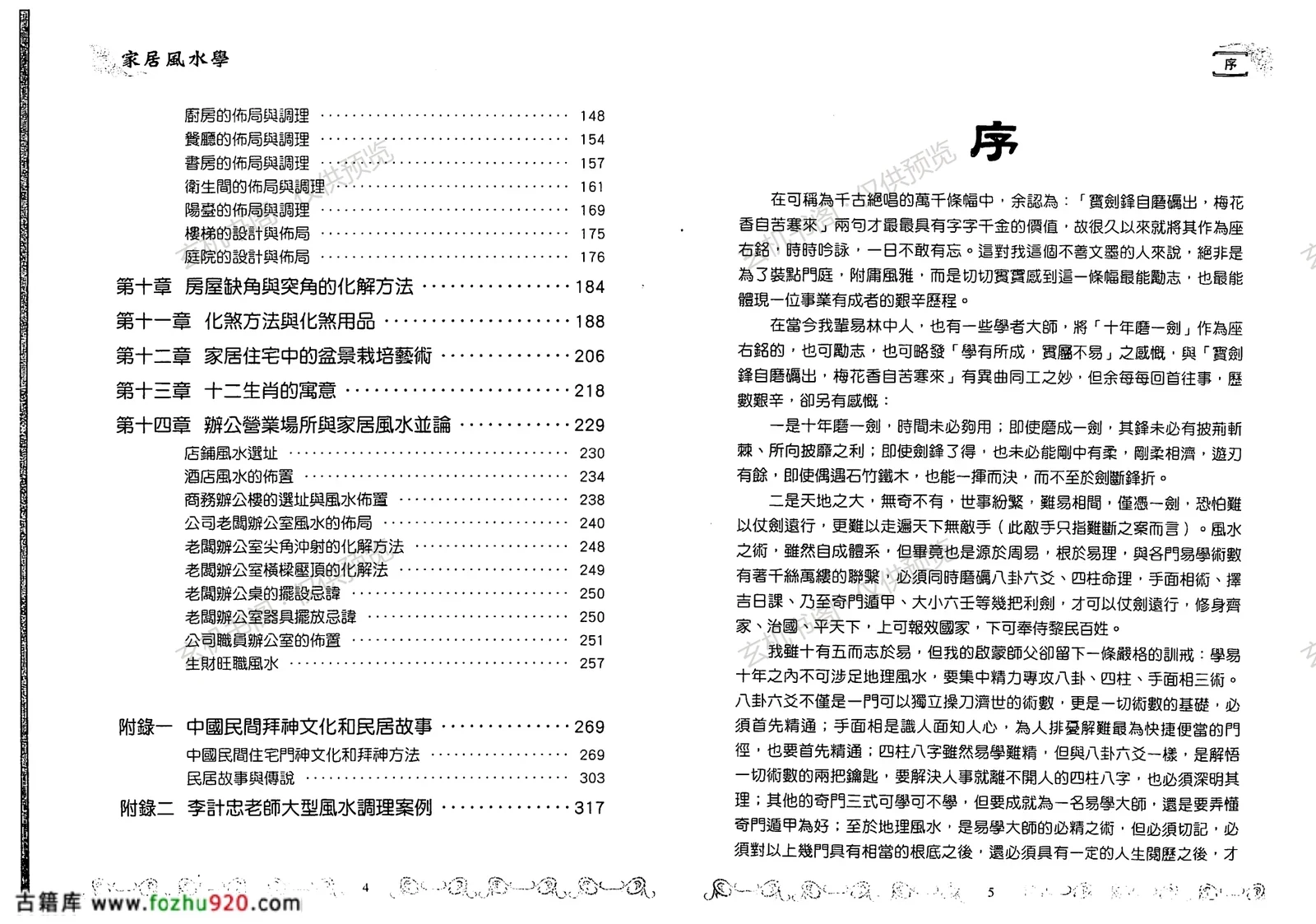
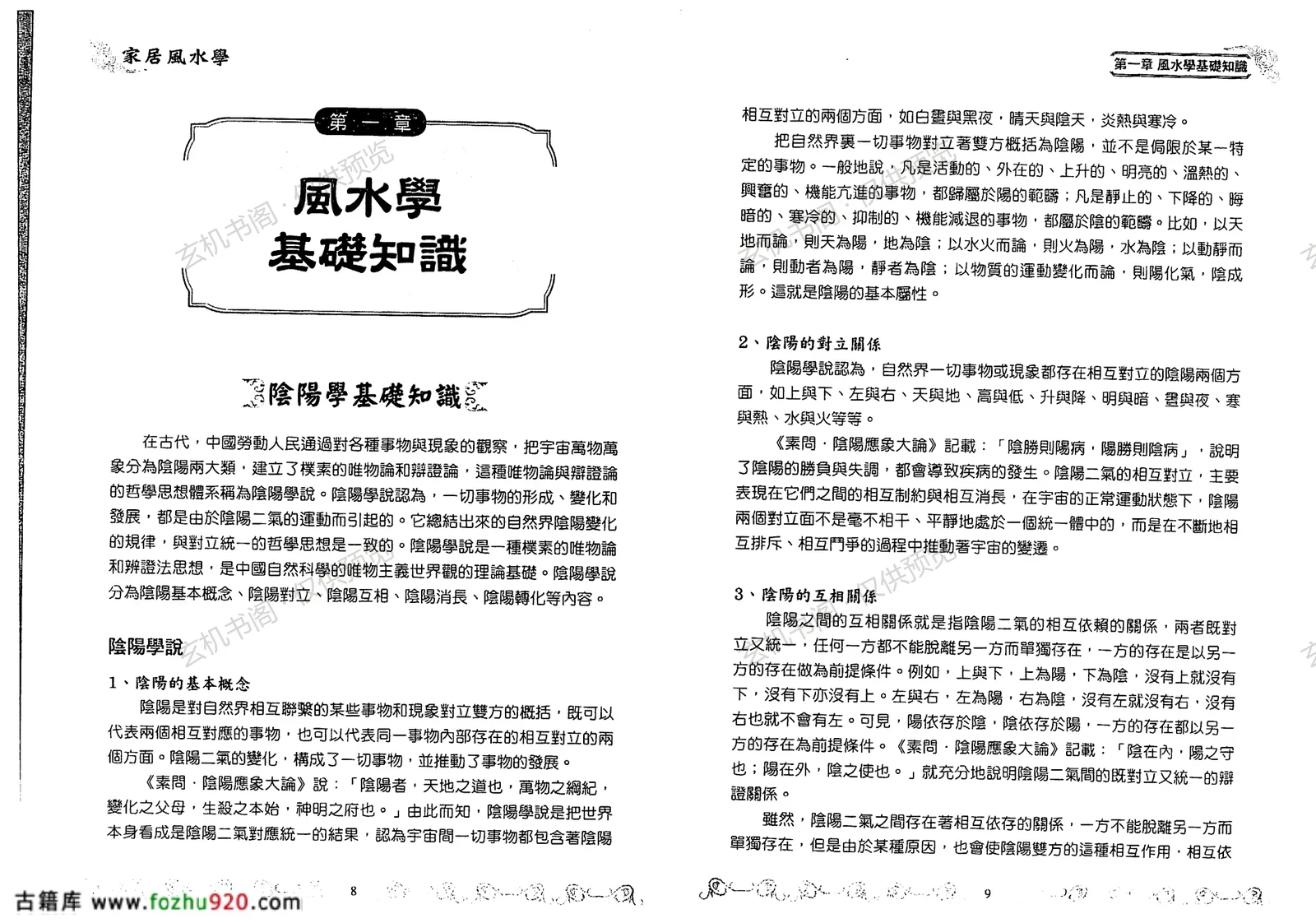
Written by Li Jizhong and published in 2009 as volume 27 of the Yili Qiankun series, this book adapts traditional feng shui to modern urban housing. It begins with foundational concepts: yin-yang, the five elements, heavenly stems and earthly branches, bagua directions, and the luopan. It then discusses choosing a residential environment, building forms, area and room counts, temperature and humidity, floor selection, matching occupants to a house, and how to place the luopan. The main body treats spaces one by one—entrance, living room, bedroom, kitchen, dining room, study, bathroom, balcony, stairs, and courtyard—with separate chapters on correcting missing and protruding corners, remedy methods and items, potted plants, and the symbolism of the twelve zodiac animals. It closes with office and commercial feng shui and appendices on folk deity worship and case studies.
Contents
Feng shui basics: yin-yang, five elements, stems-branches, bagua, luopan
Choosing the residential environment and building forms
Area, room count, temperature, humidity, and floor selection
Matching occupants to houses and placing the luopan
Interior layout: entrance, living room, bedroom, kitchen, bathroom, etc.
Correcting missing and protruding corners; remedy items
Office and commercial feng shui alongside home feng shui
Appendices: folk worship culture and case studies
Key Points
Grounds home feng shui in yin-yang, five elements, and bagua directions
Treats each space—entrance, living room, bedroom, kitchen—in turn
Dedicated chapters on missing/protruding corners and remedy methods
Covers floor selection, occupant-house matching, and luopan placement
Includes office/commercial feng shui and the author's case studies