Reading guide
Content guideOverview
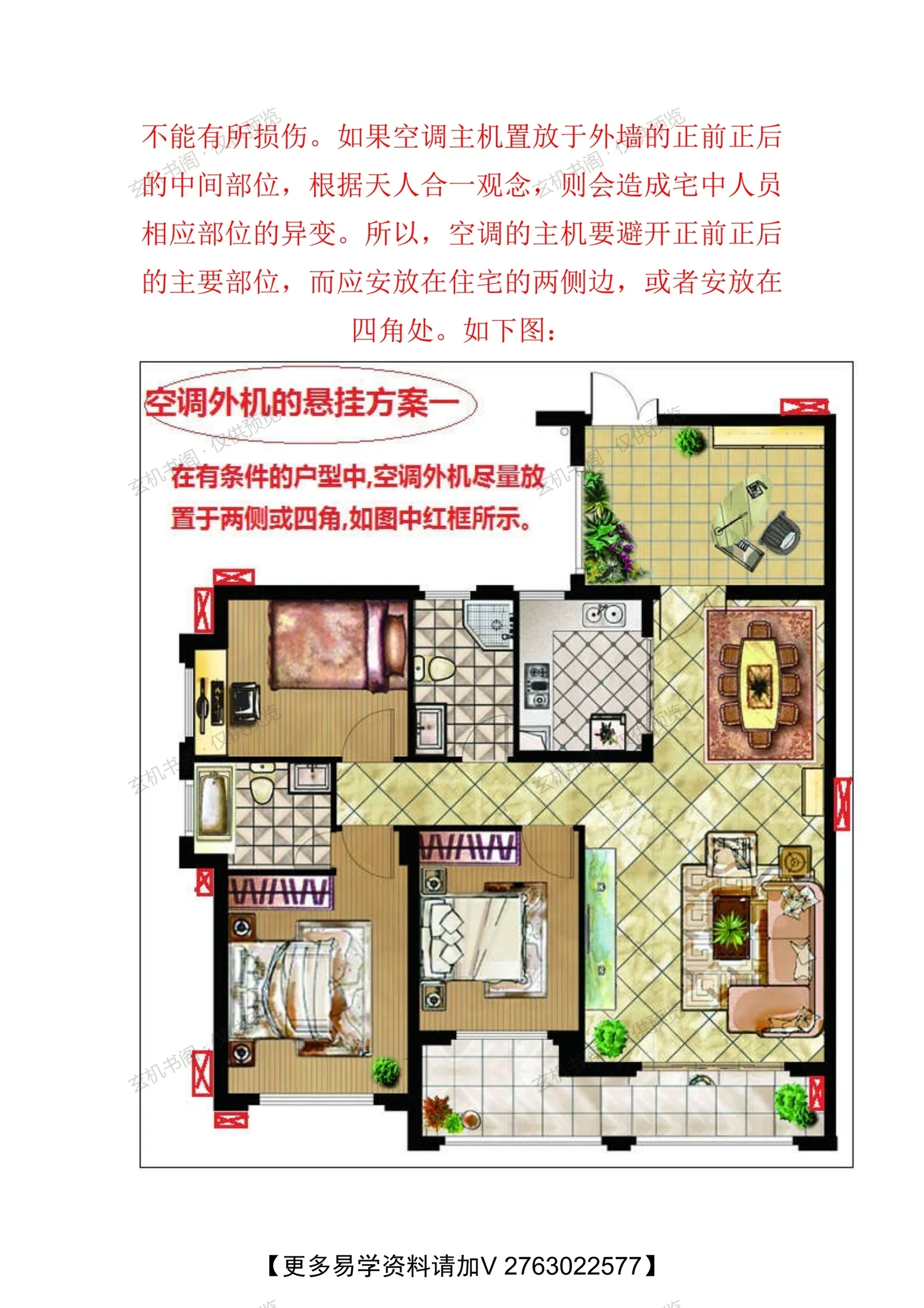
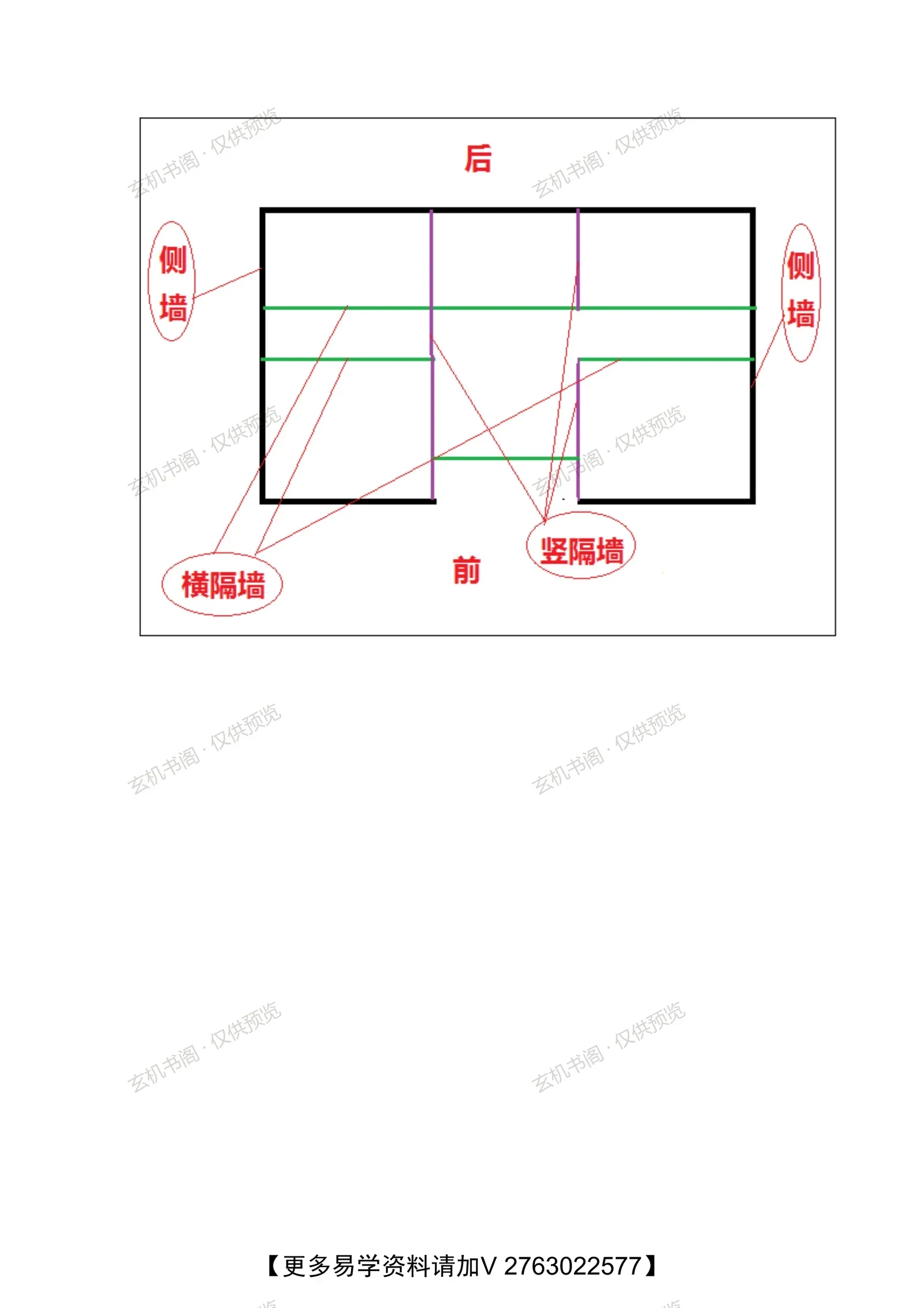
This practical home feng shui text examines the role of modern electrical appliances in residential layouts, with this section focusing on air conditioners. The author treats outdoor AC units, along with outdoor transformers and refrigerators, as 'anomalous bodies'—dynamic objects that generate energy shifts—while the indoor fan unit is likened to the Five Elements' water. Drawing on the concept of harmony between heaven and humanity, the text explains that the rear, center, and front of a home correspond to the body's trunk and should not be compromised. Outdoor units should therefore avoid these central positions and be placed at the sides or corners. When户型 and property management restrictions force a central location, the unit should sit in a corner where two walls meet and preferably be mounted on a vertical rather than horizontal partition wall, following the principle of using stillness to counter motion. Floor plans and wall diagrams are included to aid understanding. The content is practical and suited to readers interested in home layout and feng shui arrangement.
Contents
Role of appliances in feng shui and the idea of anomalous bodies
Distinguishing outdoor and indoor AC unit properties
Avoiding the home's three main body zones for outdoor units
Corner and vertical-wall placement for restricted layouts
Comparing horizontal and vertical partition walls
Key Points
Outdoor AC units are seen as anomalous bodies affecting health and fortune
Indoor fan units are classified as Five Elements water
Rear, center, and front of a home mirror the body's trunk and should stay unharmed
Units should go at the sides or corners, not central front or rear
When restricted, use wall corners and prefer vertical partition walls