Reading guide
Content guideOverview
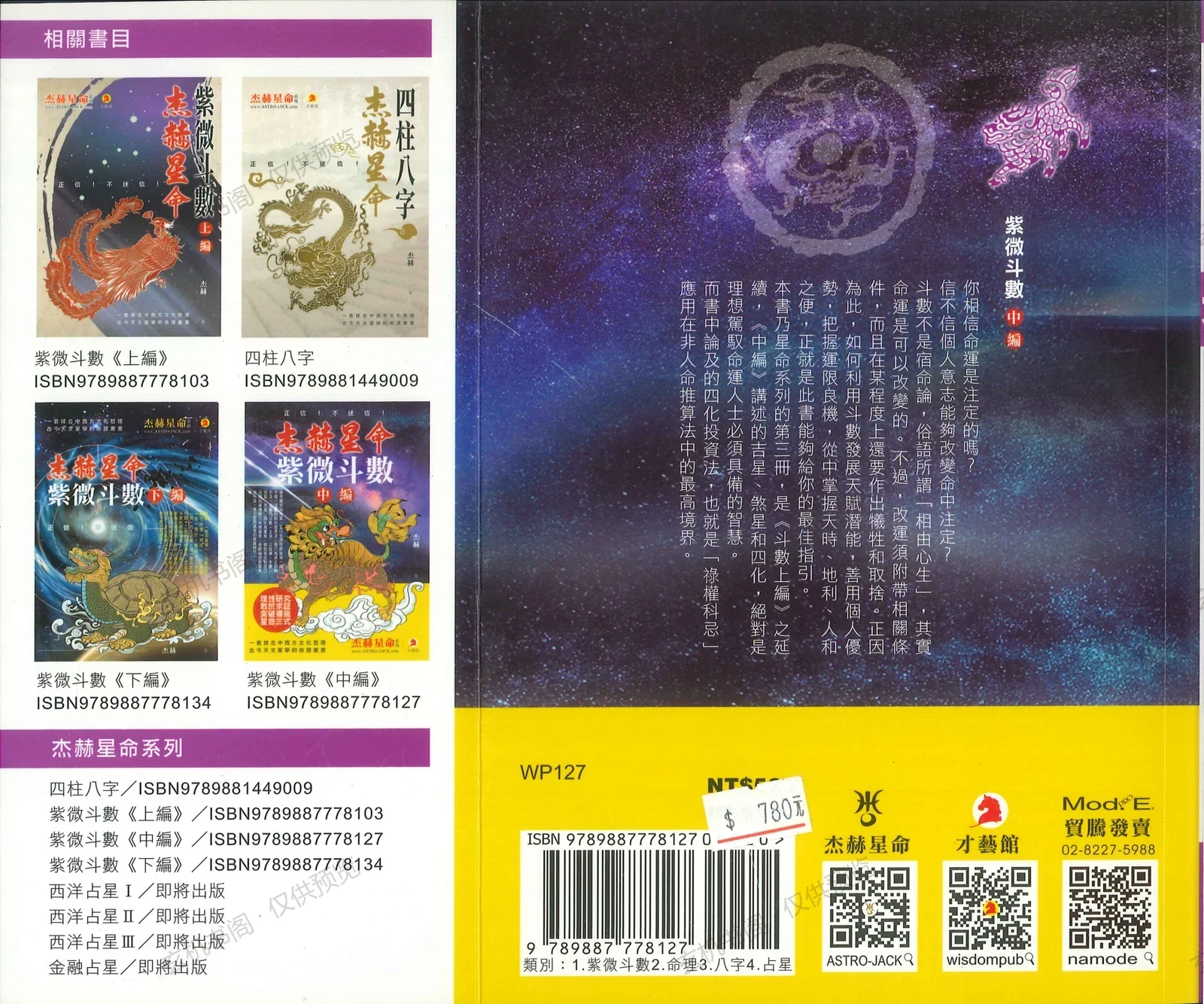
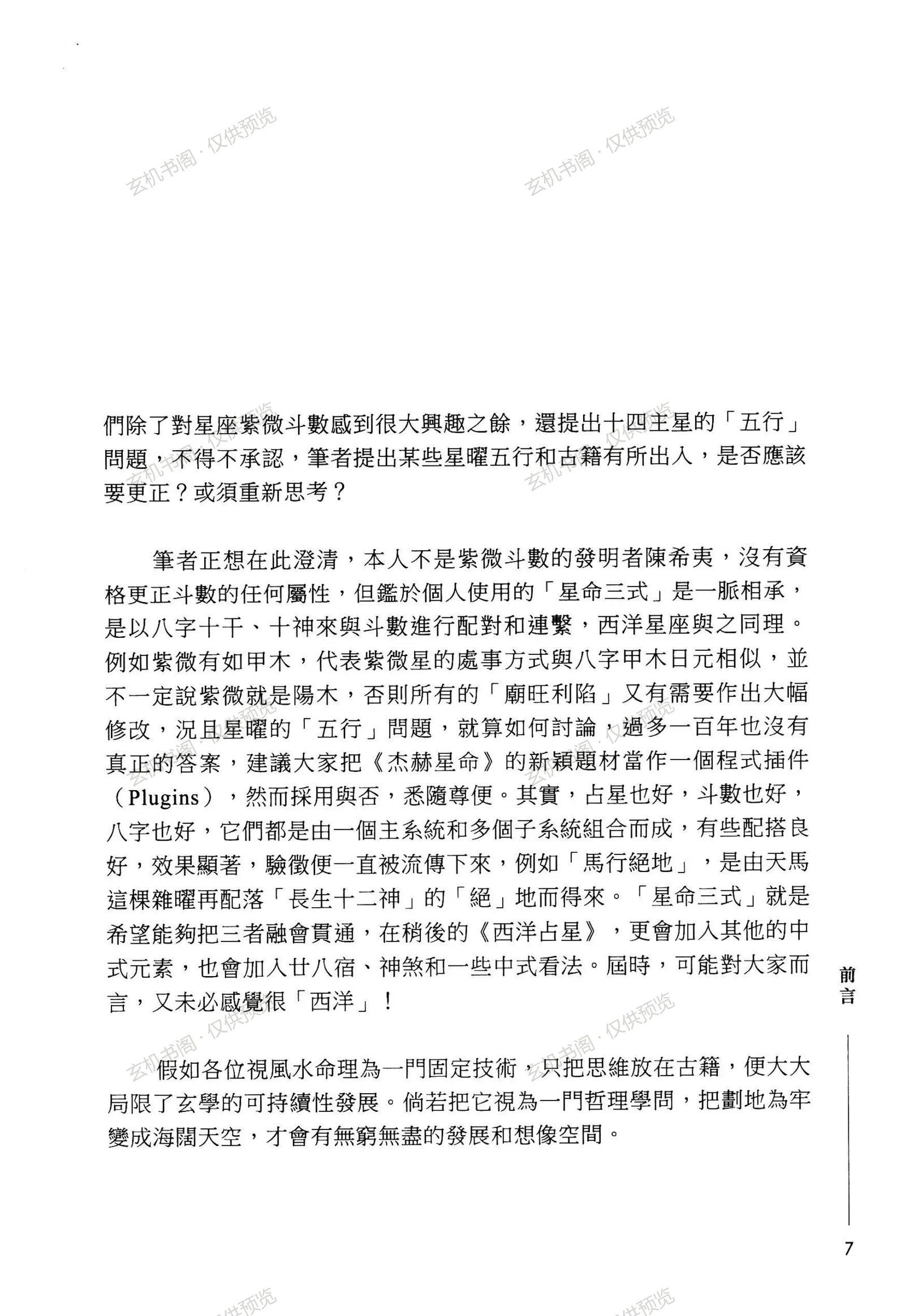
This is the middle volume of Jiehe's Zi Wei Dou Shu set. Its cover states that the previous volume covered the fourteen primary stars, sign pairings, physiognomic patterns and basic calculation techniques, while this volume concentrates on the nature of the stars and the methods of interpretation. In the preface the author explains his 'Three-Style Astrology' framework, which pairs the ten stems and ten gods of BaZi with Zi Wei Dou Shu and cross-references Western astrology, treating astrology as an expandable, testable system rather than a fixed body of old rules. The cover copy announces themes of nayin, four transformations and flying stars, and describes a move from the Sanhe school toward four-dimensional calculation. The back cover discusses whether fate is predetermined and how Dou Shu can reveal innate potential, noting that this volume continues the discussion of auspicious and malefic stars and the four transformations, ultimately pointing to the use of lu-quan-ke-ji beyond human fortune-telling. The visible pages are discursive and experience-based, suited to readers who already know the basic chart.
Contents
Review of the first volume: fourteen main stars and basics
Deepening the nature of the stars
Three-Style Astrology: BaZi and Dou Shu paired
Auspicious stars, malefic stars and four transformations
Four-dimensional calculation and the Sanhe upgrade
Can fate be changed? Limits of Dou Shu application
Key Points
Continues the first volume's main stars, sign pairings and physiognomy into deeper star analysis.
Uses 'Three-Style Astrology' to link BaZi stems and gods with Zi Wei Dou Shu and Western astrology.
Focuses on auspicious and malefic stars and the four transformations, extending to lu-quan-ke-ji.
Treats astrology as a philosophical system open to verification rather than fixed technique.
The author acknowledges departures from classical sources on star elements and invites discussion.