Reading guide
Content guideOverview
These opening pages of Fan Qiuzhu's Qintian Zi Wei Dou Shu training notes focus on the 'breaking-image' (poxiang) theory. A breaking image arises when a birth-year four transformation meets a self-transformation of the same kind or same group, producing damage and destructive force. The text ranks the strength of same-kind self-transformations by palace position—native palace, opposite palace, trine, six inner palaces, and Hetu-Luoshu positions—and illustrates with examples how self-transformed ke, quan, lu and ji manifest in the wealth, career, spouse and health palaces, including instability in income, marital troubles and body-part correspondences. Later sections discuss interference between same-group but different-kind self-transformations (AD, BC), magnetic strength, and distinctions between same-star and different-star self-transformations. Written as classroom notes, it is dense with lists and examples and suits readers with basic Zi Wei Dou Shu knowledge who want to go deeper into the Qintian four-transformation flying-star system.
Contents
Definition of breaking image: birth-year four transformations plus self-transformation
Strength ranking: native, opposite, trine, six inner, Hetu-Luoshu
Meanings of self-transformed ke, quan, lu, ji in key palaces
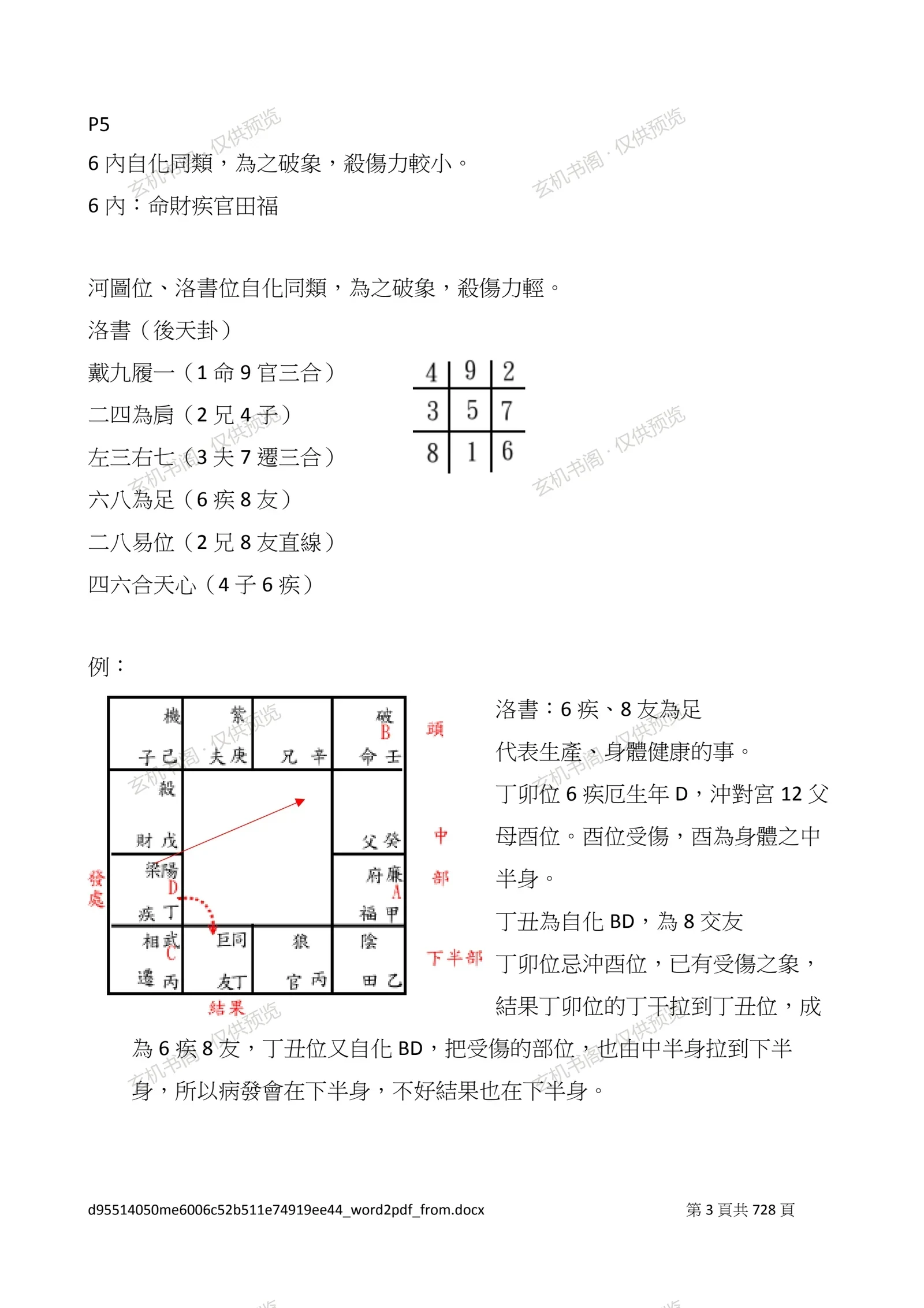
Hetu-Luoshu positions and body-part injury correspondences
Interference between same-group different-kind self-transformations (AD, BC)
Same-star versus different-star self-transformation distinctions
Key Points
Breaking image = birth-year transformation plus same-kind or same-group self-transformation
Strength: native palace strongest, opposite second, trine third
Ke relates to worry and emotion, quan to control, lu to wealth and contacts, ji to attachment
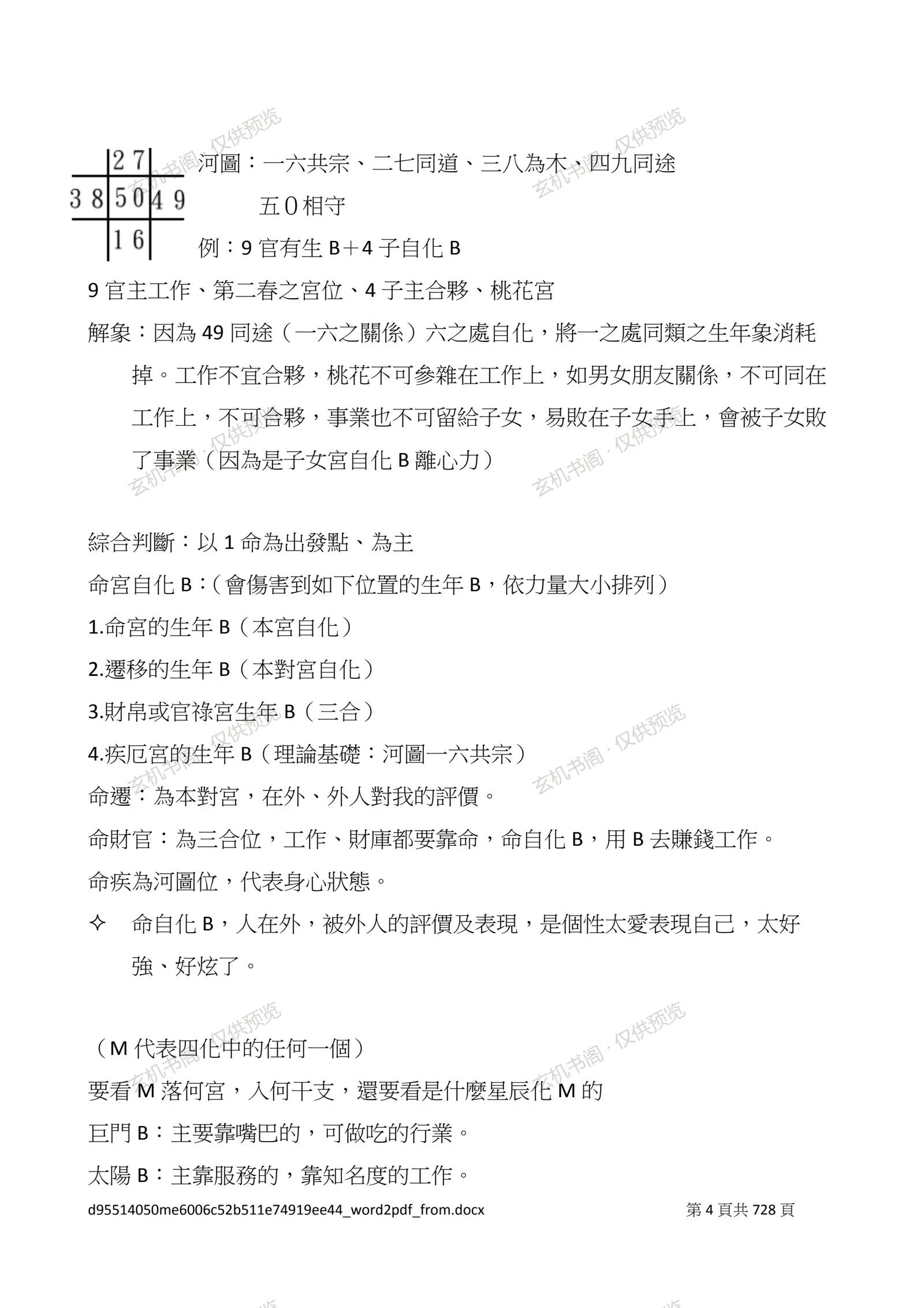
Hetu-Luoshu numbers map to palaces and body parts
Same-group different-kind self-transformations interfere; ji outweighs lu