Reading guide
Content guideOverview
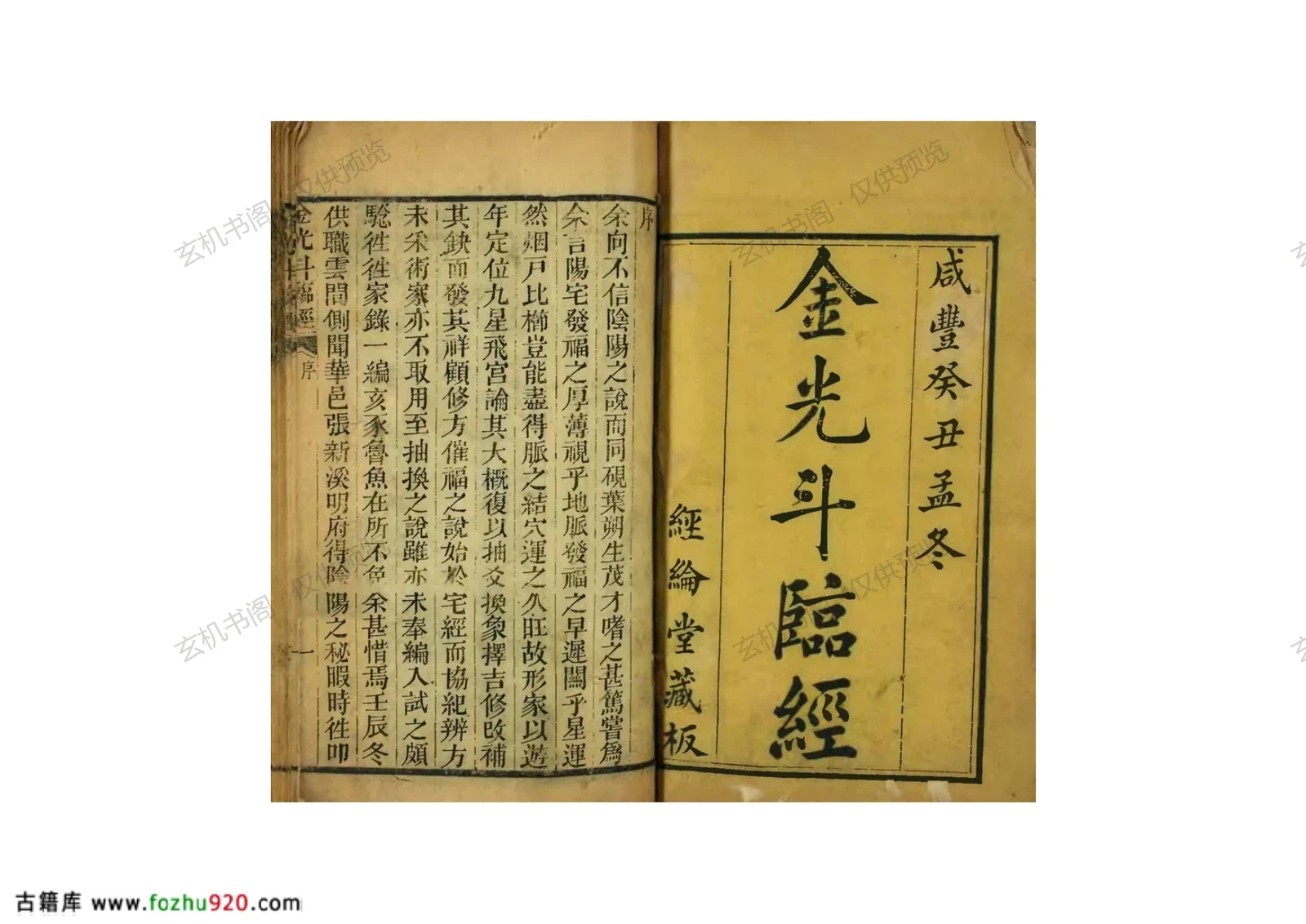
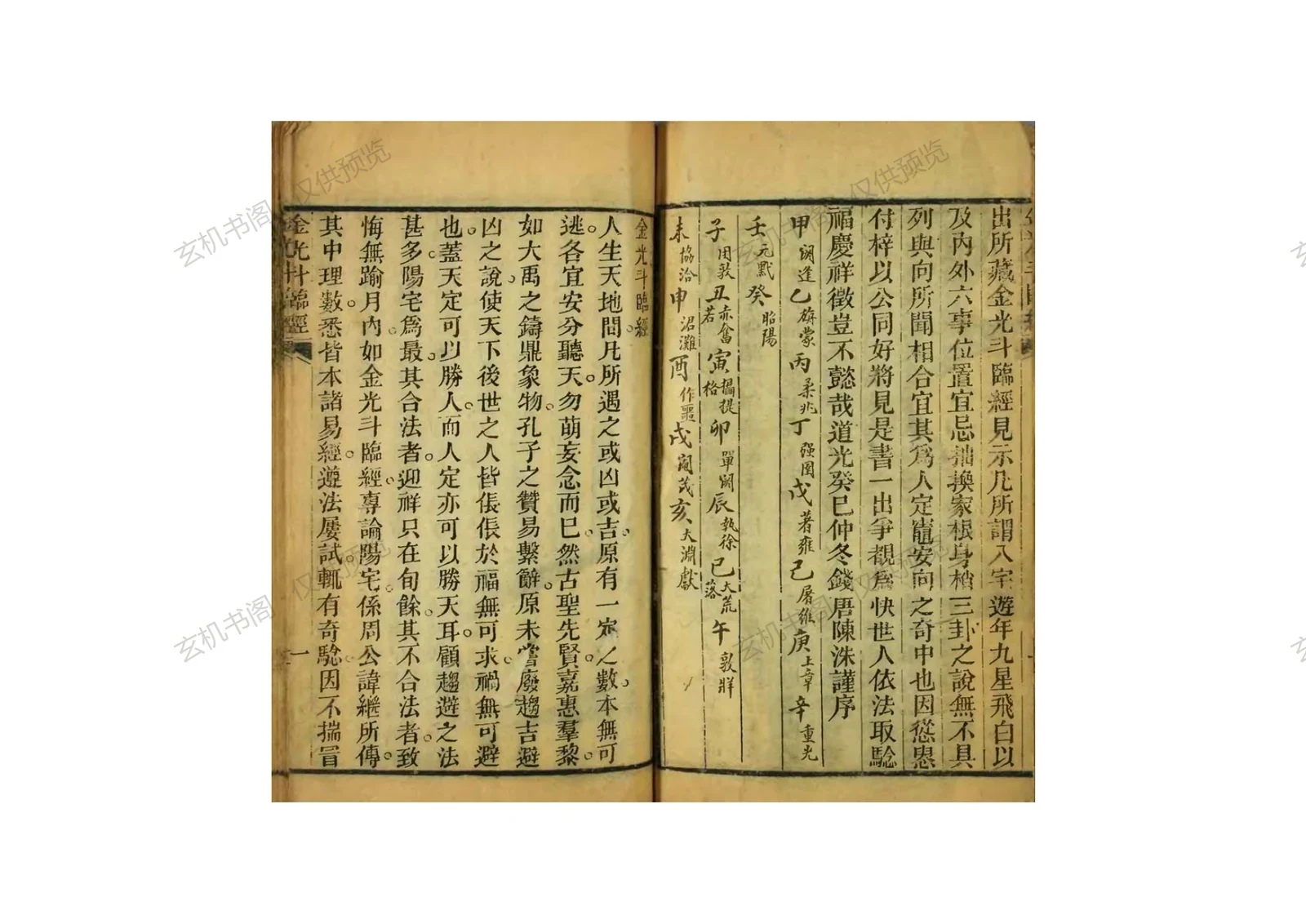
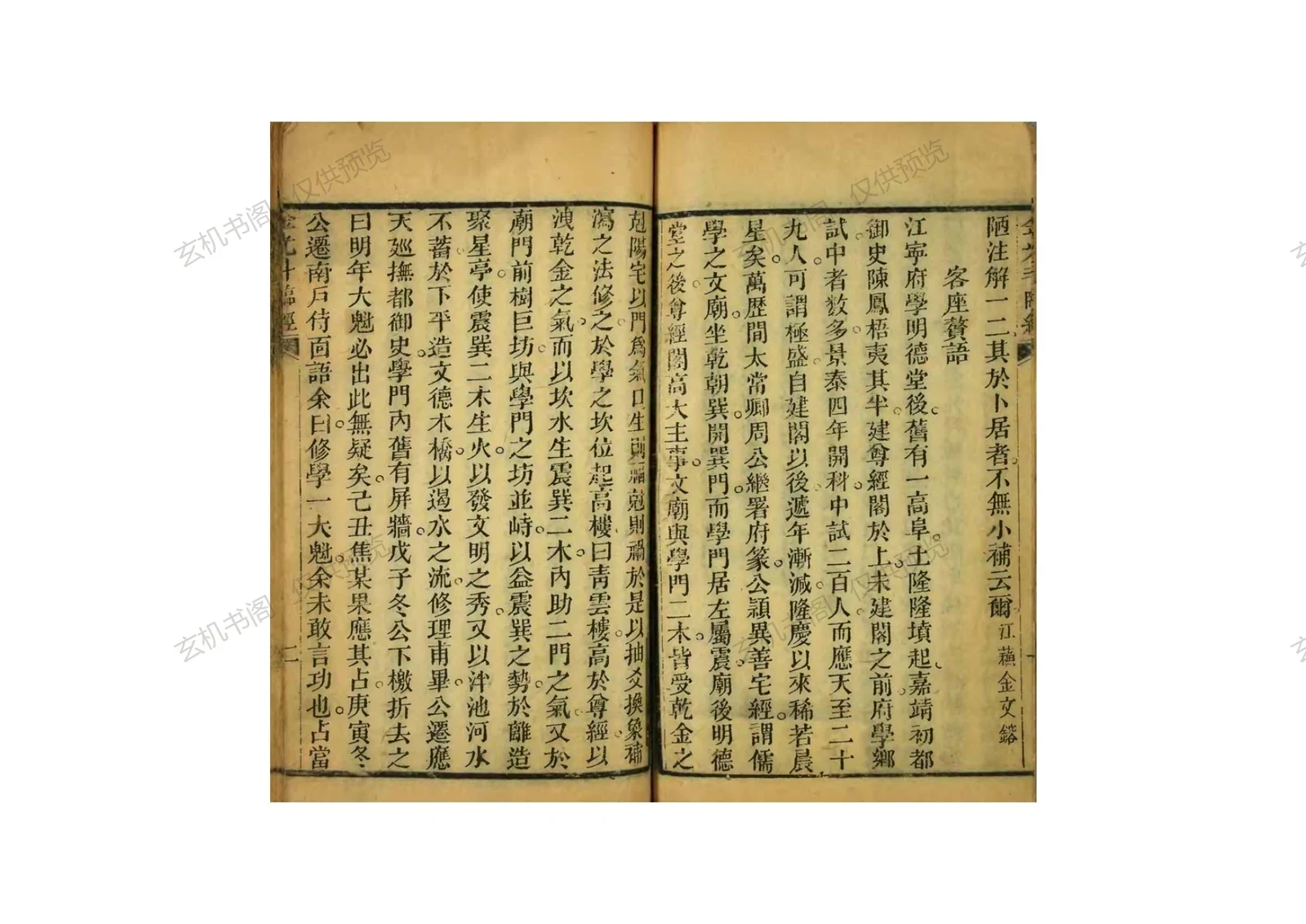
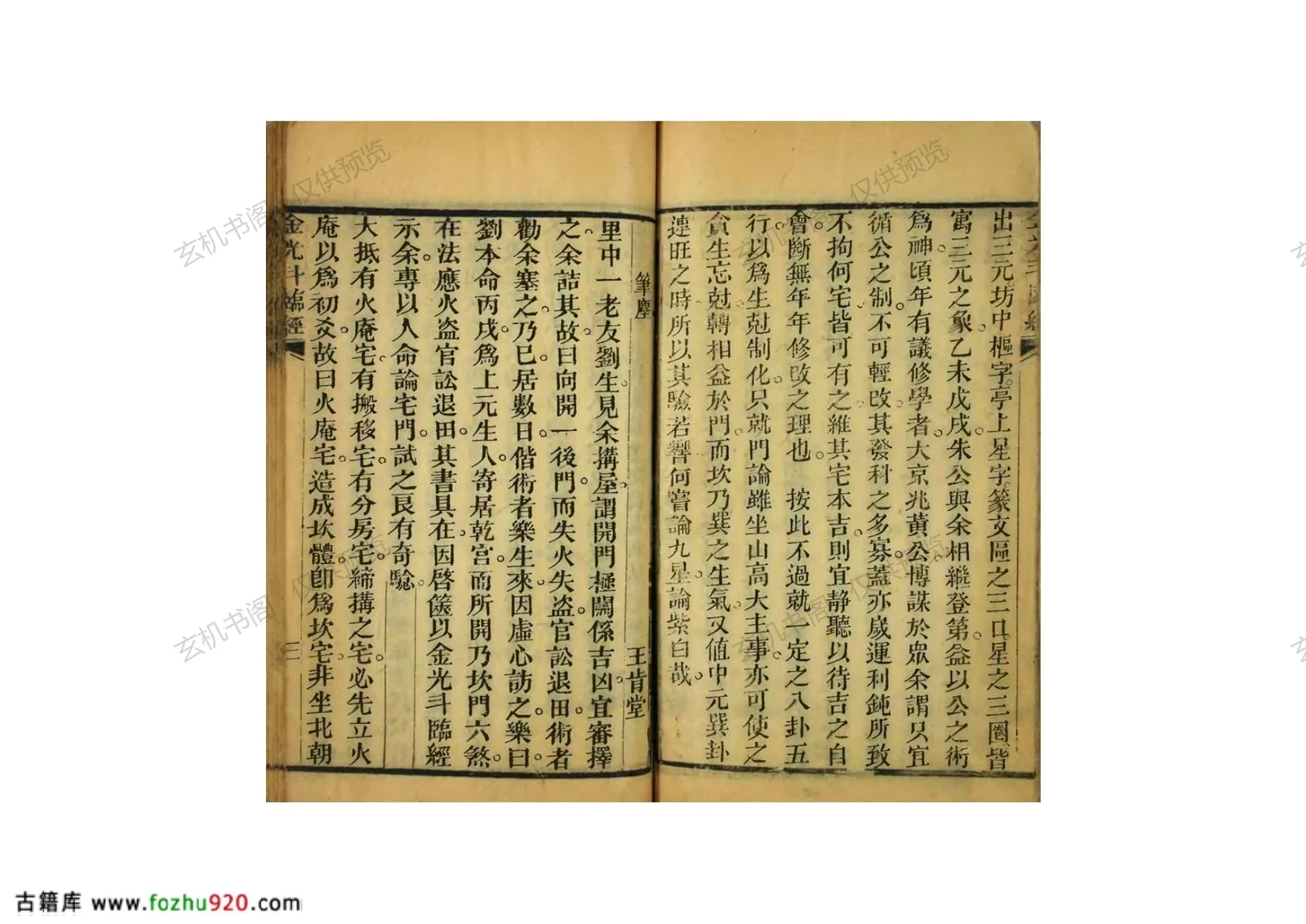
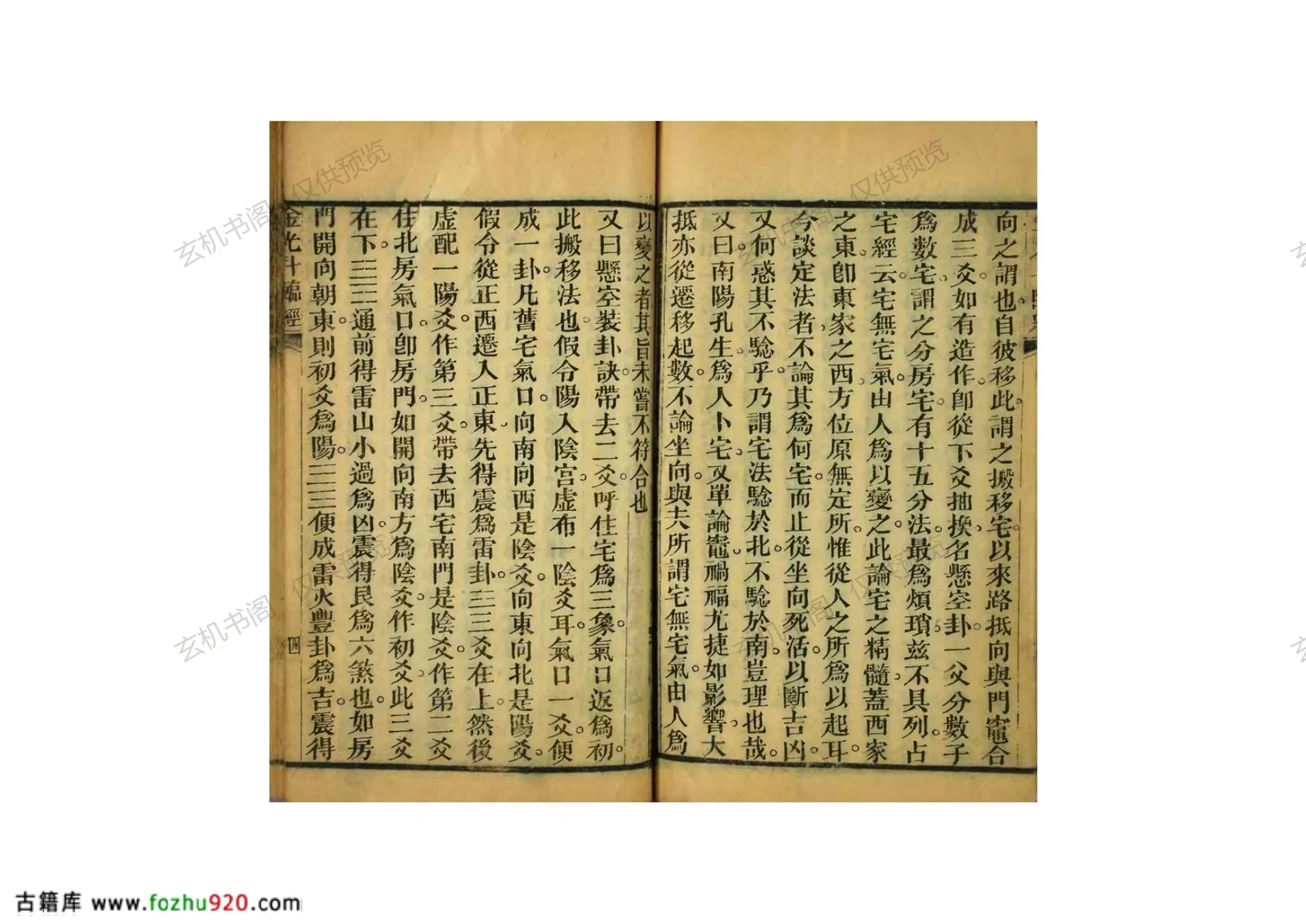
Jinguang Doulin Jing is a Qing-dynasty fengshui text published by Jinglun Tang in the winter of 1853. It focuses on yang-dwelling (residential) siting and auspiciousness, centering on the method of 'nine-star flying palaces' combined with the eight trigrams, five phases, and hexagram line exchanges. The visible pages include a preface, guest-table remarks, and main text discussing how the thickness of a dwelling's qi and the timing of its prosperity are judged, as well as the placement of doors, main halls, stoves, and other 'inner and outer six affairs.' Concrete cases, such as the Mingde Hall of Jiangning Prefecture School and a friend's case of fire, theft, and lost fields, illustrate how to infer fortune and misfortune through flying stars and trigram lines. The book also covers the methods of 'divided dwellings' and 'relocated dwellings,' arguing that dwelling fortune depends on human arrangement rather than a fixed 'house qi.' It is suitable for readers with basic fengshui knowledge and an interest in Qing-era yang-dwelling literature.
Contents
Preface on dwelling prosperity and nine-star flying palaces
Guest-table remarks: case of Mingde Hall
Main text on dwelling fortune and flying stars
Hexagram line exchange and directional remedies
Divided and relocated dwellings
Key Points
Uses nine-star flying palaces to judge dwelling fortune
Discusses hexagram line exchange for auspicious timing
Illustrates cases with dwelling qi and trigram lines
Covers divided and relocated dwelling methods