Reading guide
Content guideOverview
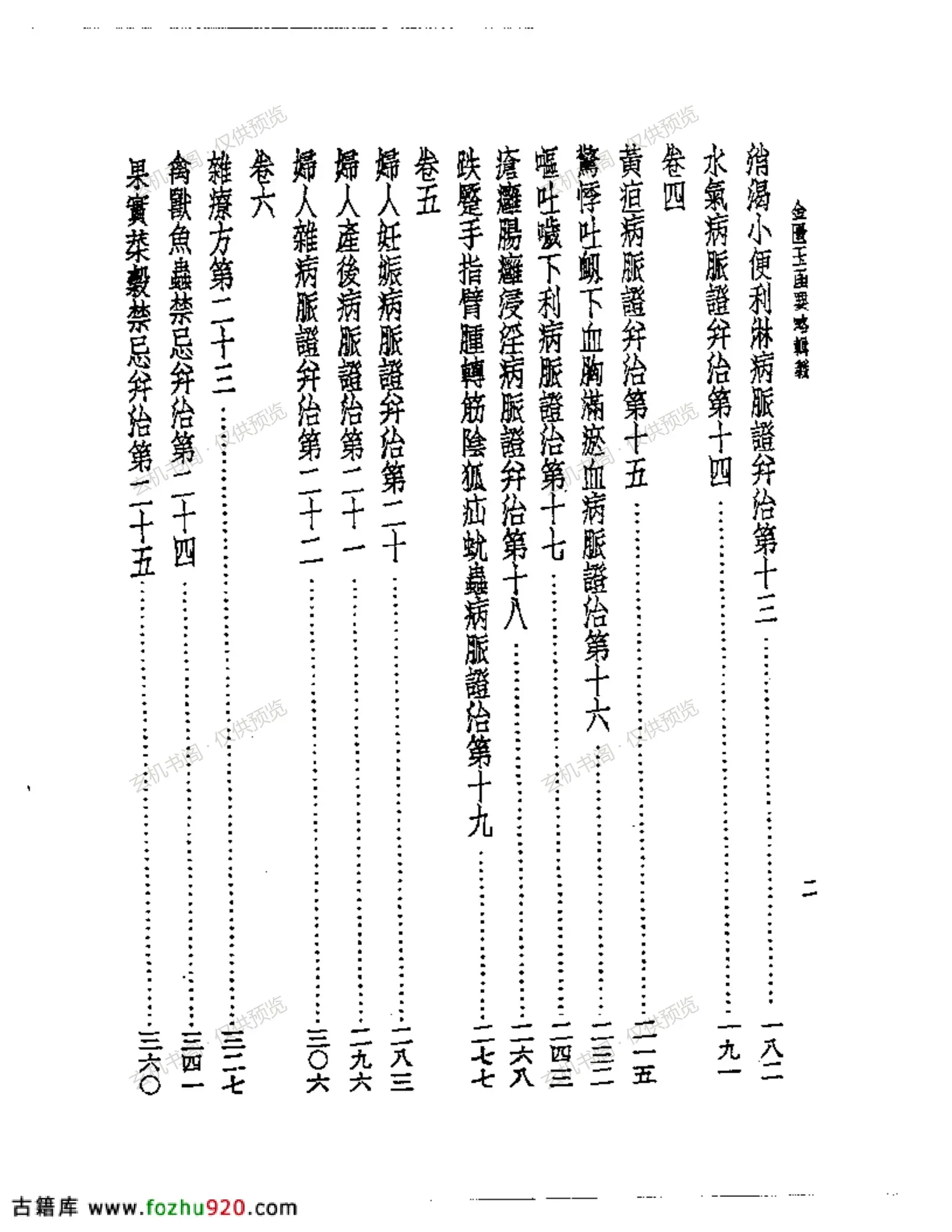
This work is the Jingui Yuhan Yaolue Jiyi, a collected commentary by the Japanese Edo physician Tamba Motoyasu (Danbo Yuanjian) on Zhang Zhongjing's Jingui Yaolue. The table of contents shows the book follows the original chapter order: volume one covers脏腑经络先后病, jing-shi-ye disease, baihe-huhuo-yinyangdu, and malaria; volume two covers blood bi and consumptive disease, pulmonary atrophy and abscess, cough and upward qi, bentun qi, and chest bi with heart pain and shortness of breath; volume three begins with five-zang wind-cold accumulation, phlegm-fluid cough, and further diseases; volumes four to six cover water qi, jaundice, vomiting and diarrhea, sores, women's pregnancy and postpartum disorders, miscellaneous remedies, and dietary prohibitions. The text first presents Zhang's original passages, then collects annotations from the Neijing and later commentators, interspersed with the author's own notes on pathogenesis, pulse patterns, formulas, and textual authenticity. It is a useful reference for studying the Jingui Yaolue and for research on classical Chinese medical literature.
Contents
Vol. 1: zang-fu and channel diseases, jing-shi-ye, baihe and yinyangdu, malaria
Vol. 2: blood bi and consumptive disease, pulmonary atrophy and abscess, bentun, chest bi
Vol. 2: abdominal fullness, cold hernia, and food stagnation
Vol. 3: five-zang wind-cold accumulation, phlegm-fluid cough, wasting-thirst and strangury
Vol. 4: water qi, jaundice, palpitations and bleeding
Vol. 4: vomiting and diarrhea, sores, hernia and roundworm diseases
Vol. 5: women's pregnancy, postpartum, and miscellaneous diseases
Vol. 6: miscellaneous remedies, animal and grain prohibitions
Key Points
Organized around the original Jingui Yaolue passages with collected annotations
Includes Tamba's notes on pathogenesis, pulse patterns, and formulas
Cites the Neijing, Nanjing, Qianjin fang, and commentators such as Cheng Wuji and Zhao Yide
Covers internal, external, gynecological, and miscellaneous diseases plus dietary taboos
Addresses textual authenticity and misplaced passages