Reading guide
Content guideOverview
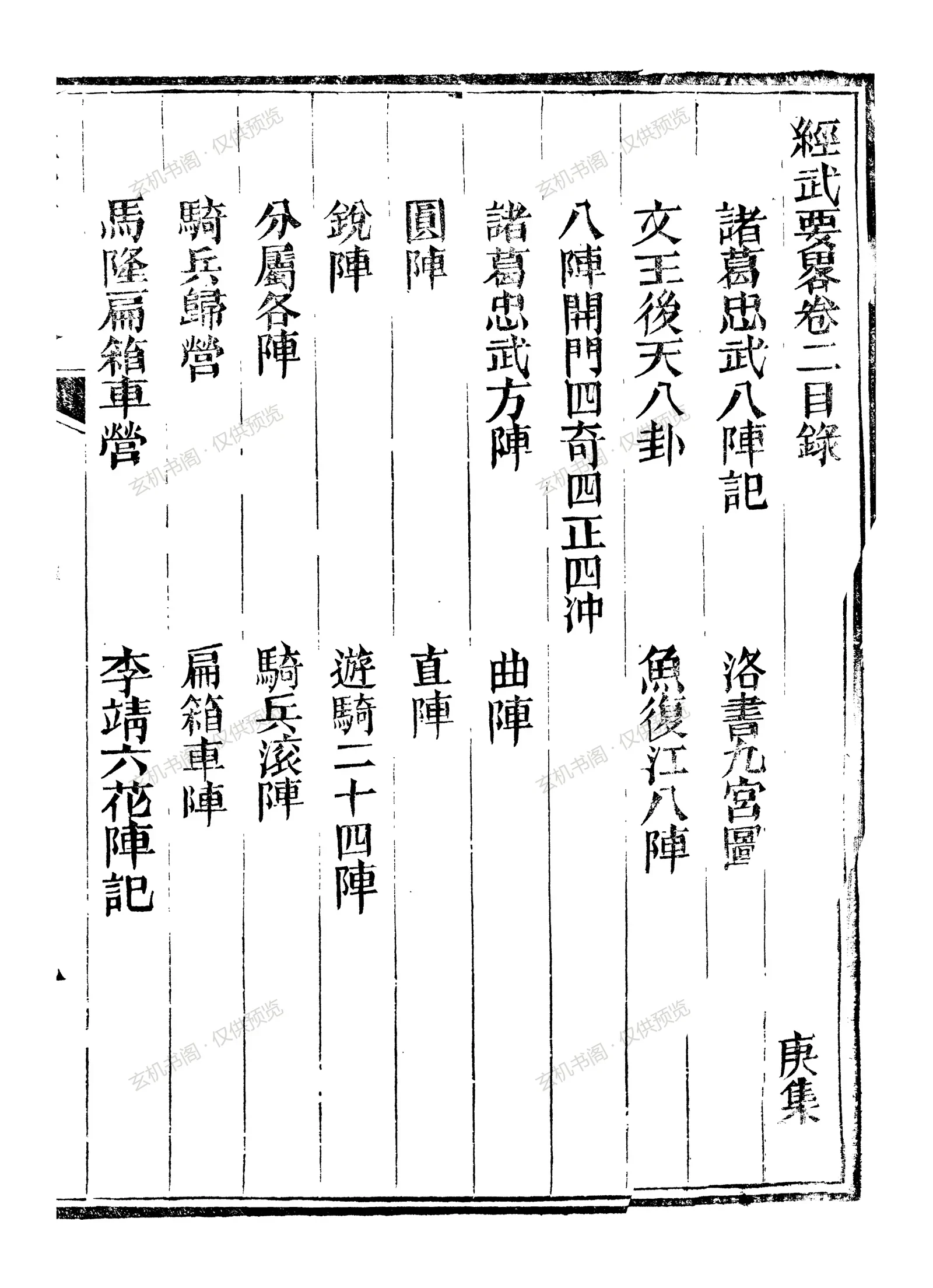
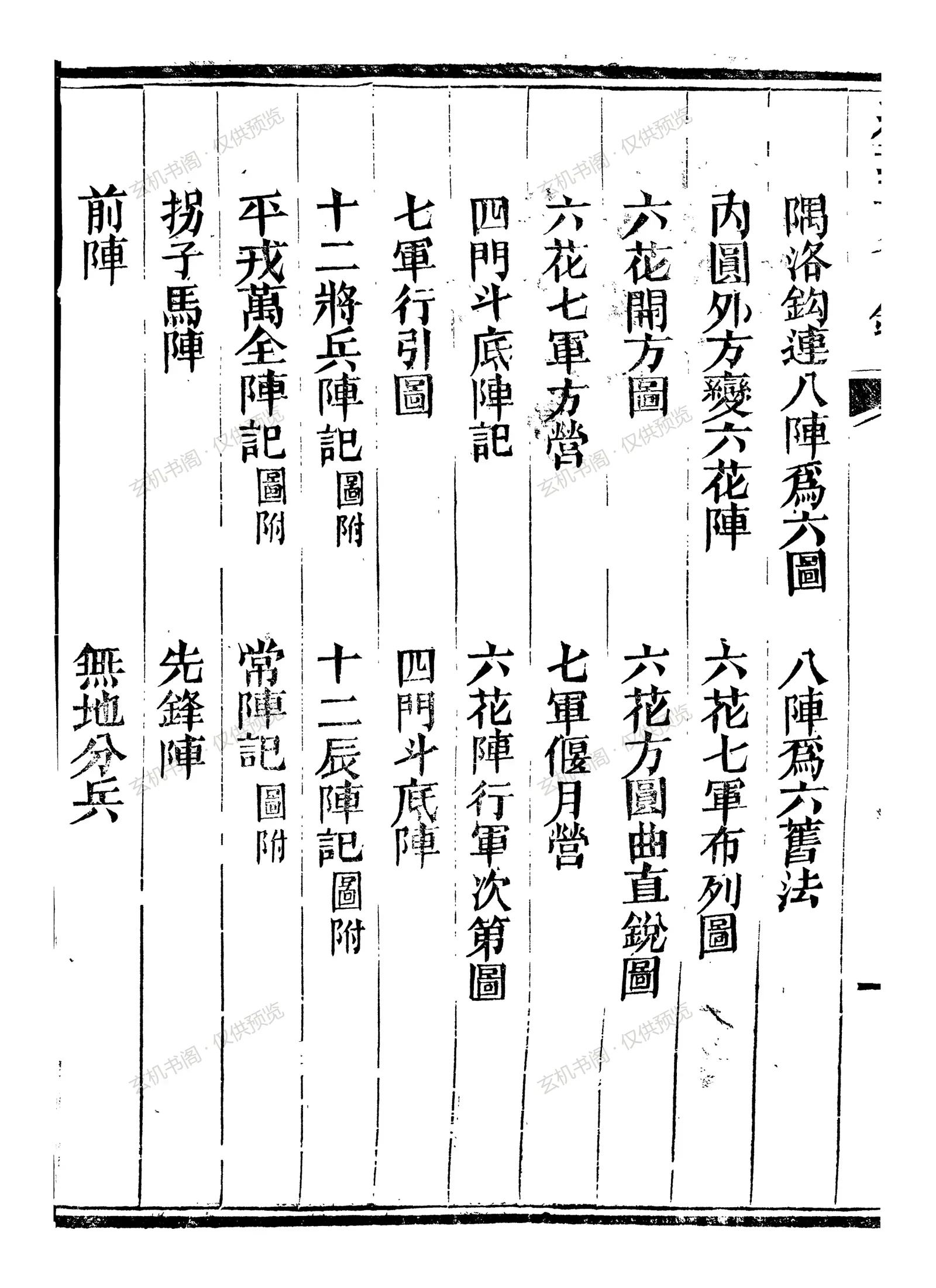
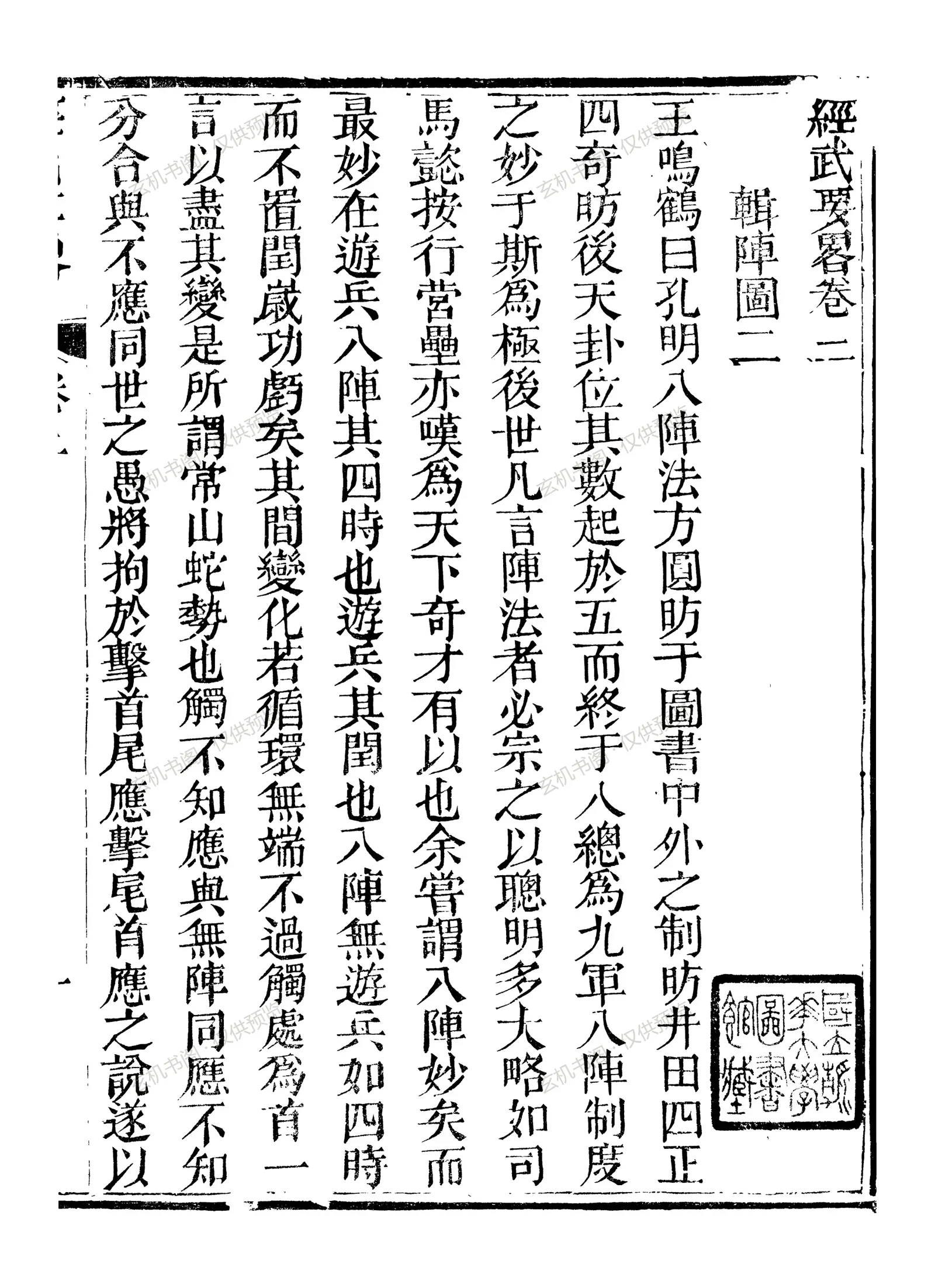
This is Volume Two of Essentials of Military Affairs. Its table of contents lists works on Zhuge Liang's Eight Formations, the Later Heaven Bagua, the Luoshu Nine Palaces, the Yufu River Eight Formations, and Li Jing's Six-Flower Formation, along with diagrams for round, straight, square, curved, and pointed formations. The main text cites Wang Minghe, arguing that Zhuge Liang's Eight Formations derive from the Hetu and Luoshu, with formations varying from five to eight and structured as nine armies and eight arrays. It also discusses roaming troops and the Changshan snake formation. The book combines diagrams and explanatory text to organize ancient Chinese battle-array knowledge.
Contents
Record of Zhuge Liang's Eight Formations
Later Heaven Bagua and Luoshu Nine Palaces
Eight Formations: Four Odd, Four Correct, Four Thrusts
Yufu River Eight Formations and square formation
Twenty-Four Roaming Cavalry Formations and five arrays
Cavalry camp return and troop assignments
Ma Long's flat-box wagon camp and Li Jing's Six-Flower Formation
Key Points
Centers on Zhuge Liang's Eight Formations and related diagrams.
Uses Luoshu Nine Palaces and Later Heaven Bagua to explain array positions.
Distinguishes round, straight, square, curved, and pointed formations.
Preserves materials on Ma Long's wagon camp and Li Jing's Six-Flower Formation.