Reading guide
Content guideOverview
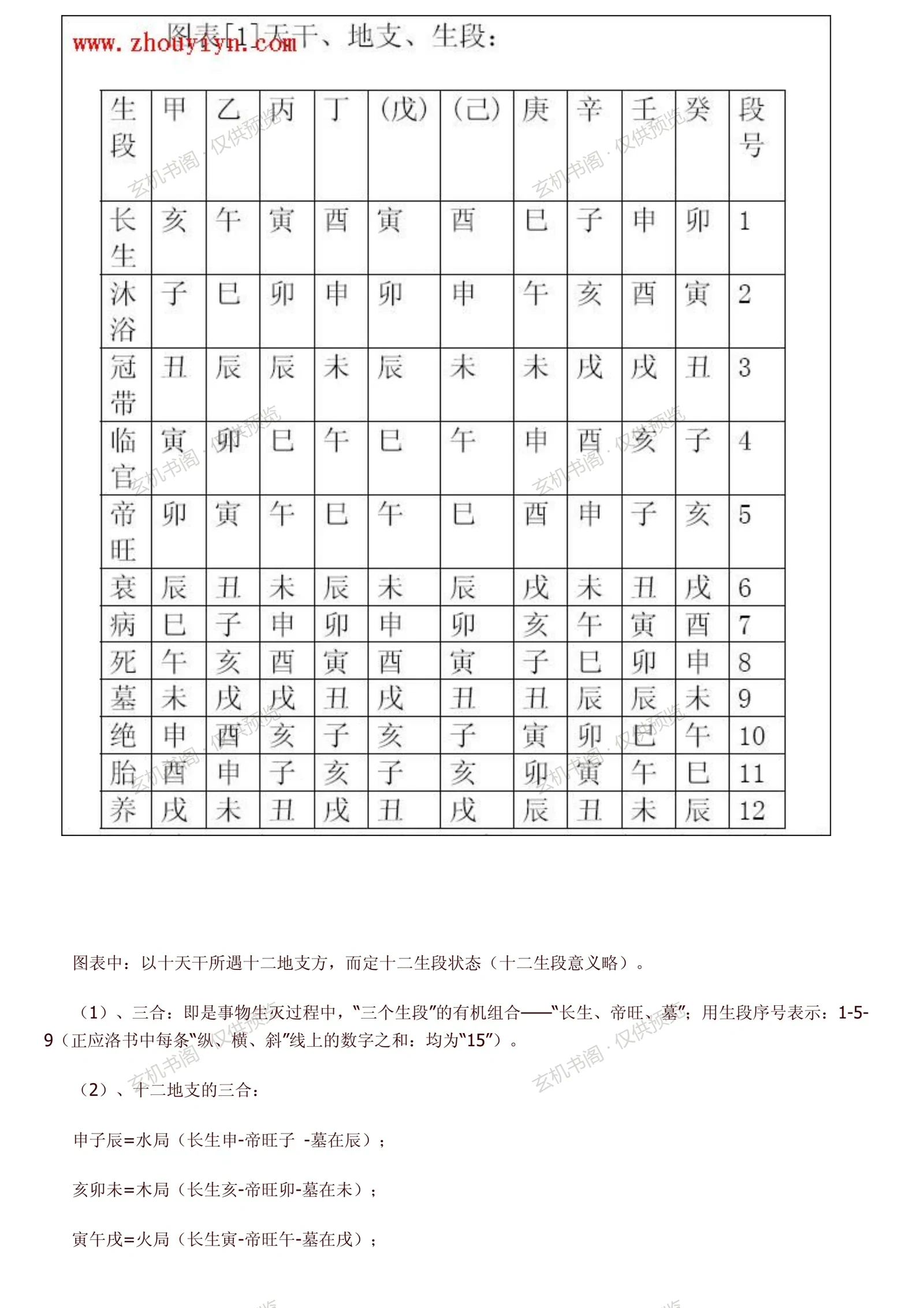
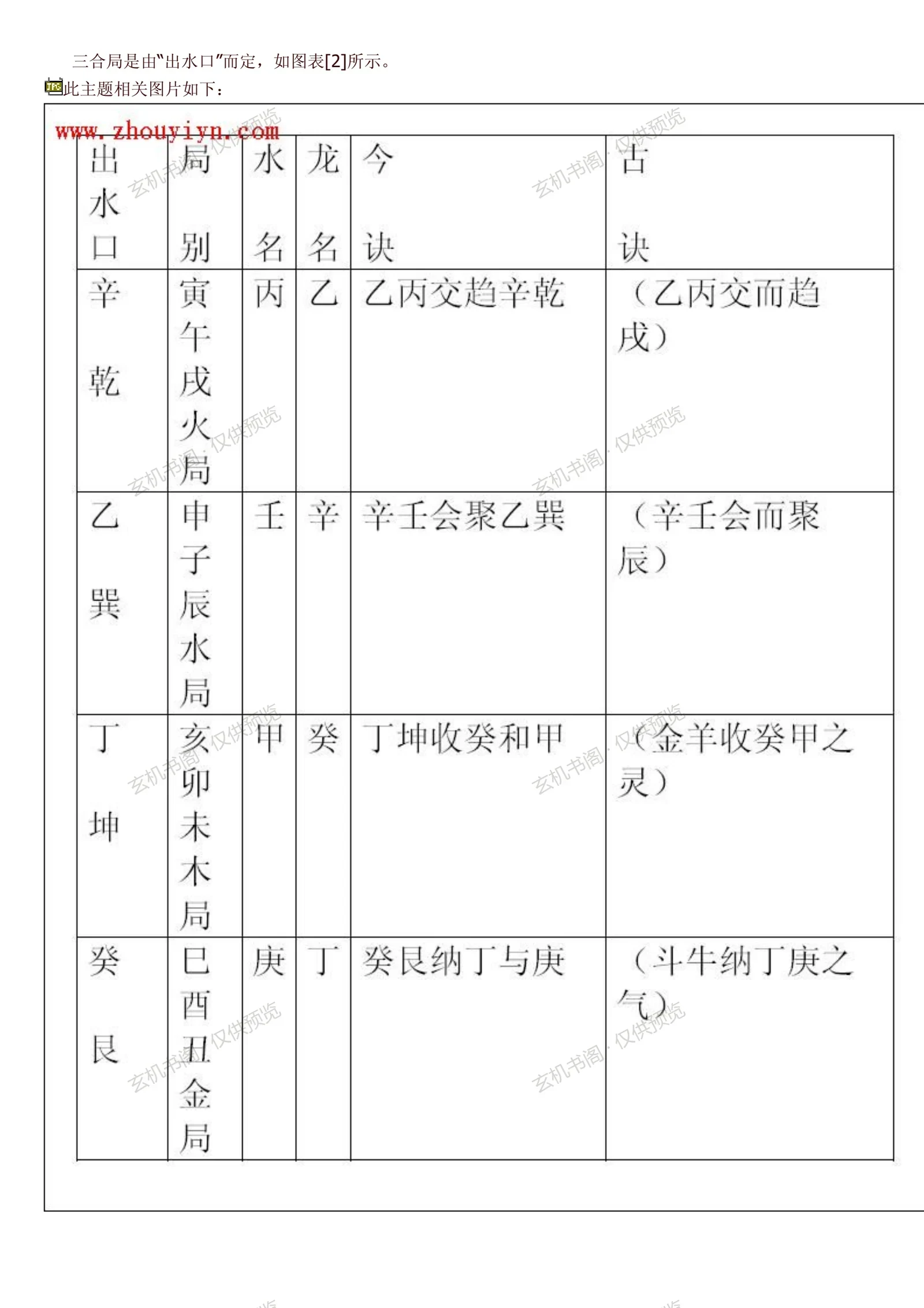
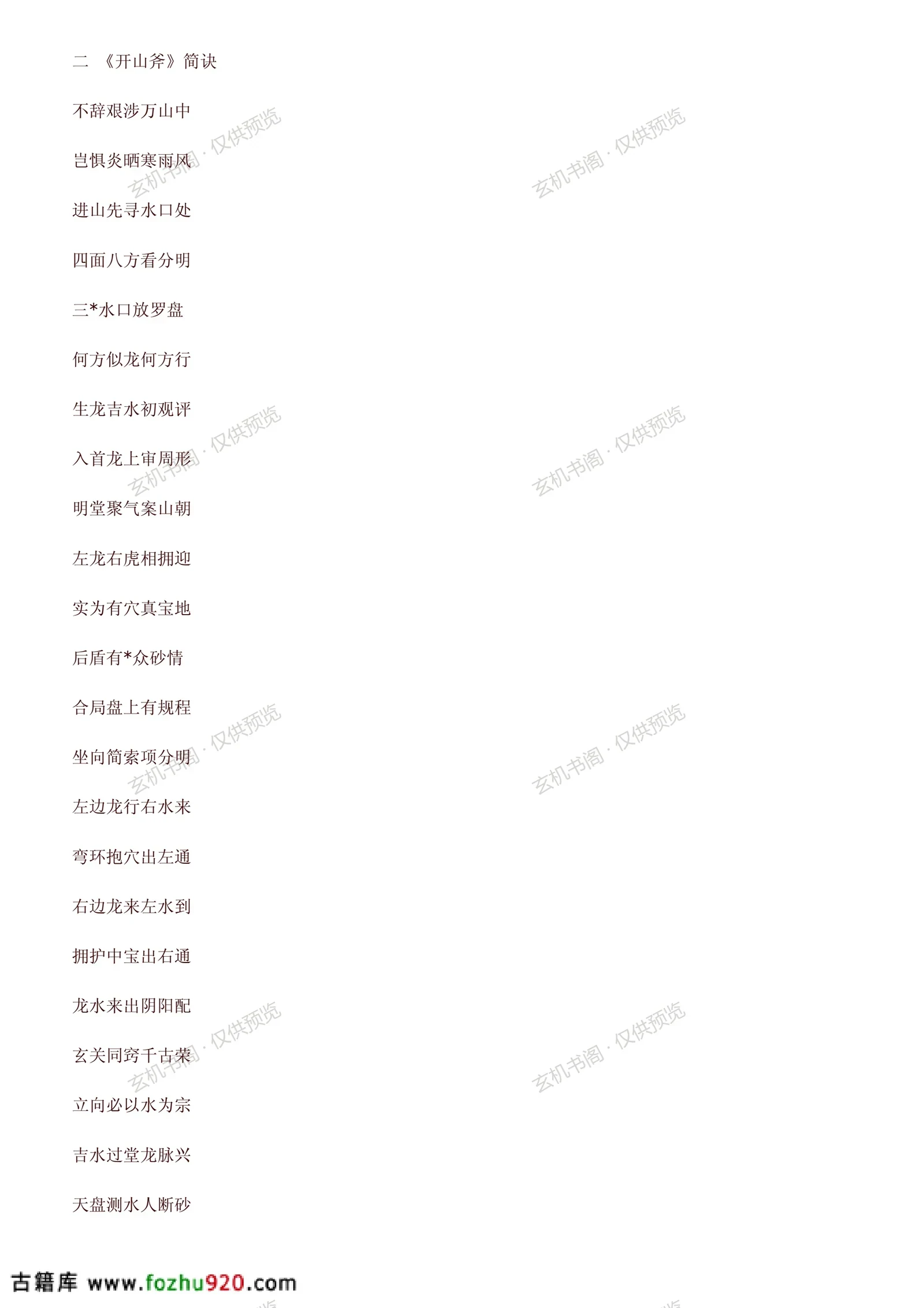
This short work introduces the fundamentals of Sanhe Feng Shui. It begins with a brief account of the tradition attributed to Yang Gong of the Tang dynasty and notes how difficult the system can be for beginners. The author presents a simplified method for forming configurations, titled Kai Shan Fu. The main text explains the ten Heavenly Stems, twelve Earthly Branches, and the twelve stages of growth (zhangsheng), with a chart showing the stage of each stem in each branch. It then defines Sanhe as the combination of the stages of growth, prosperity, and tomb, and lists the four major configurations: the water configuration of Shen-Zi-Chen, the wood configuration of Hai-Mao-Wei, the fire configuration of Yin-Wu-Xu, and the metal configuration of Si-You-Chou. Using the eight stems with water flow and mountain dragons, it explains how the four configurations are formed, and provides a table matching water outlets to configurations with modern and ancient verses. The latter part consists of the concise verses of Kai Shan Fu, describing in rhymed lines how to locate water outlets, read the compass, examine dragon veins, and determine sitting and facing. A brief index of forty-eight configurations is also mentioned. The book is compact, combining charts and mnemonic verses, and is suitable for readers with a basic interest in Sanhe Feng Shui who want a quick overview of its framework.
Contents
Origins of Sanhe Feng Shui and the Kai Shan Fu
Basic concepts: ten stems and twelve branches
Chart of the twelve stages and the Sanhe principle
Four major configurations: water, wood, fire, metal
Determining configurations by water outlet
Kai Shan Fu verses: finding water outlets and reading the compass
Index of forty-eight configurations (Chart 3)
Key Points
Sanhe combines the stages of growth, prosperity, and tomb
Water, wood, fire, and metal configurations
Eight stems paired with water flow and mountain dragons
Water outlet is key to determining the configuration
Kai Shan Fu verses summarize practical procedures