Reading guide
Content guideOverview
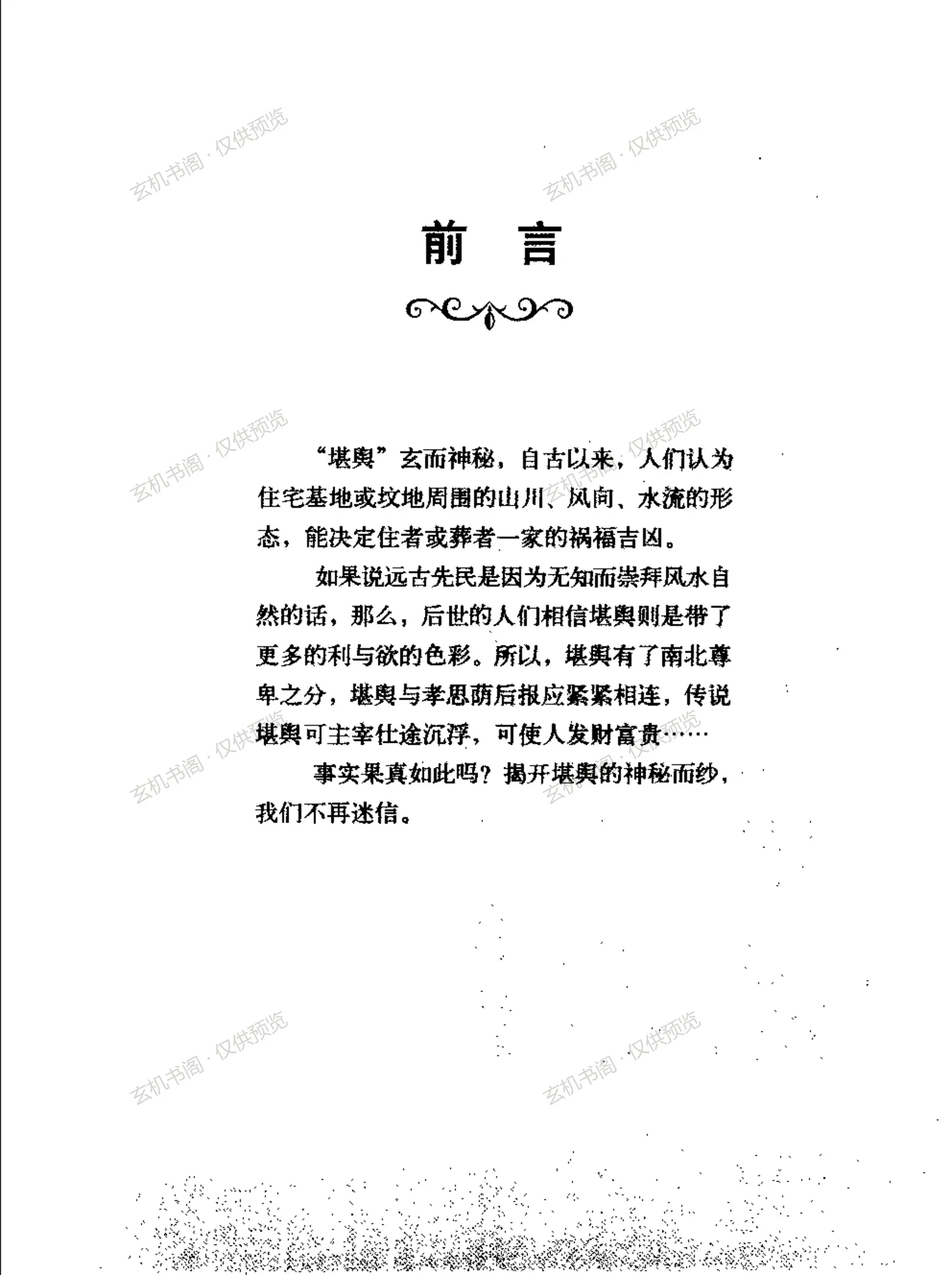
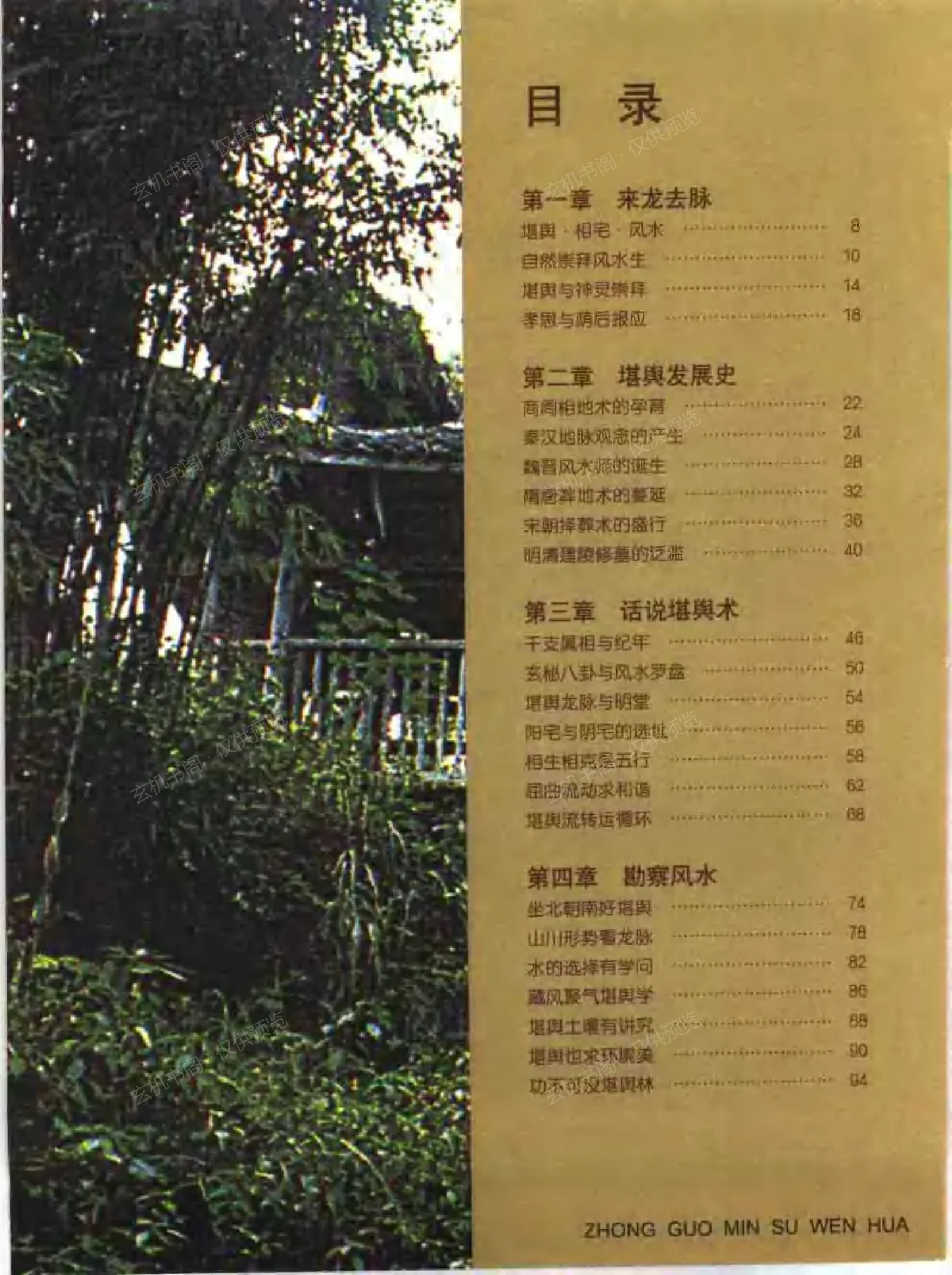
This illustrated volume in the Chinese Folk Culture series, compiled by Hong Yu and published by China Society Press, introduces kanyu (feng shui). The preface discusses how the forms of mountains, rivers, wind and water around dwellings and graves were believed to affect fortune, and proposes a demystifying approach. The table of contents shows four chapters: origins and concepts of kanyu, xiangzhai and feng shui, including nature worship and ancestral retribution; the historical development of geomancy from Shang-Zhou through Ming-Qing; technical topics such as stem-branch chronology, the bagua and luopan, dragon veins and mingtang, site selection for dwellings and graves, five phases, and cyclical fortune; and field assessment covering orientation, mountain forms, water selection, wind storage and qi gathering, soil and environmental aesthetics. With color illustrations, it serves as an accessible overview of feng shui as folk culture rather than a practical manual.
Contents
Ch.1 Origins: kanyu, xiangzhai and feng shui concepts
Ch.2 History: from Shang-Zhou geomancy to Ming-Qing tombs
Ch.3 Techniques: stems, luopan, dragon veins and site selection
Ch.4 Field assessment: landforms, water, qi and soil
Key Points
Presents feng shui as folk culture rather than an operation manual
Traces the historical development of geomancy and feng shui
Explains basic tools and concepts such as luopan, bagua and five phases
Discusses site selection, dragon veins, mingtang and water methods
Illustrated edition aids visual understanding