Reading guide
Content guideOverview
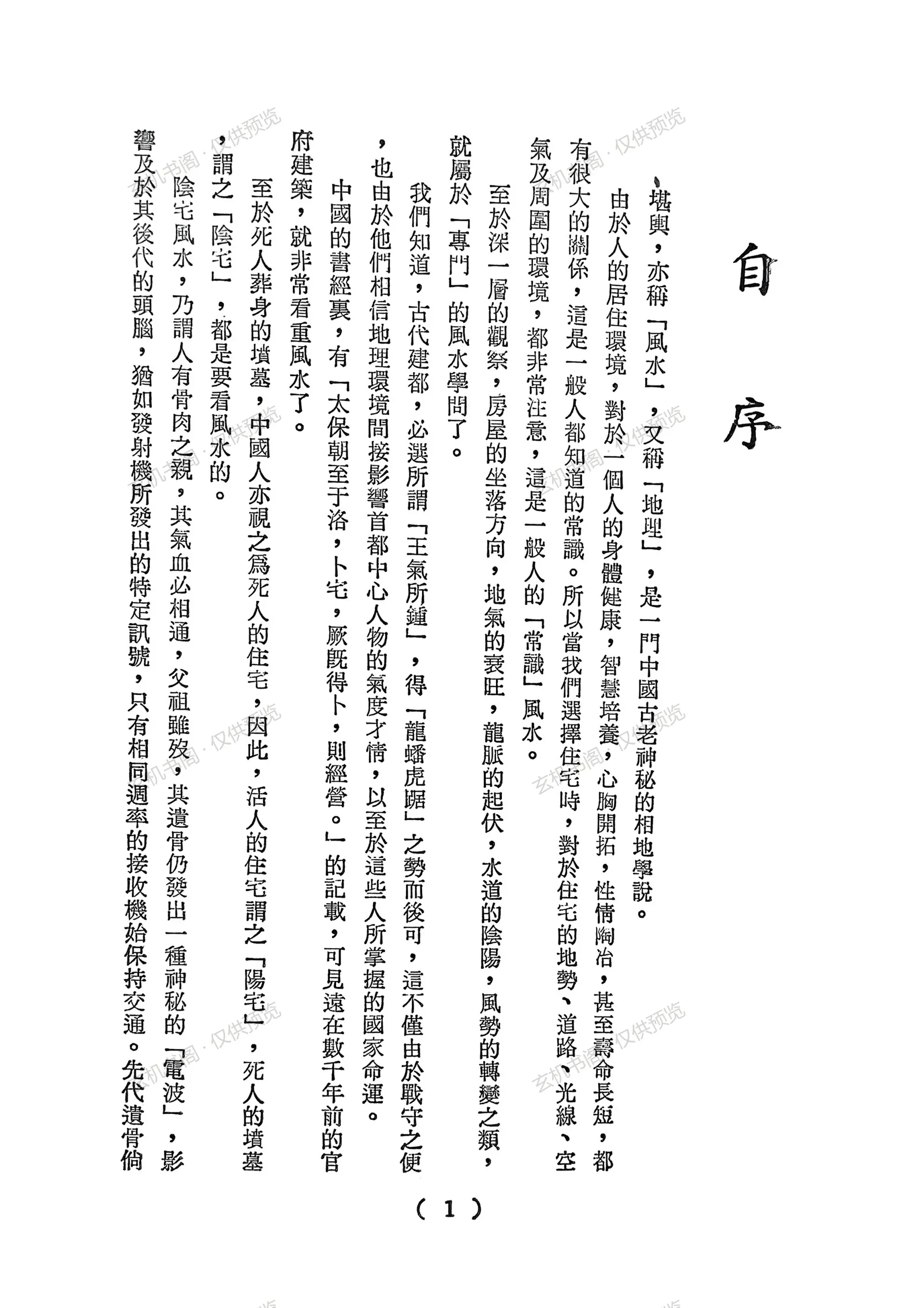
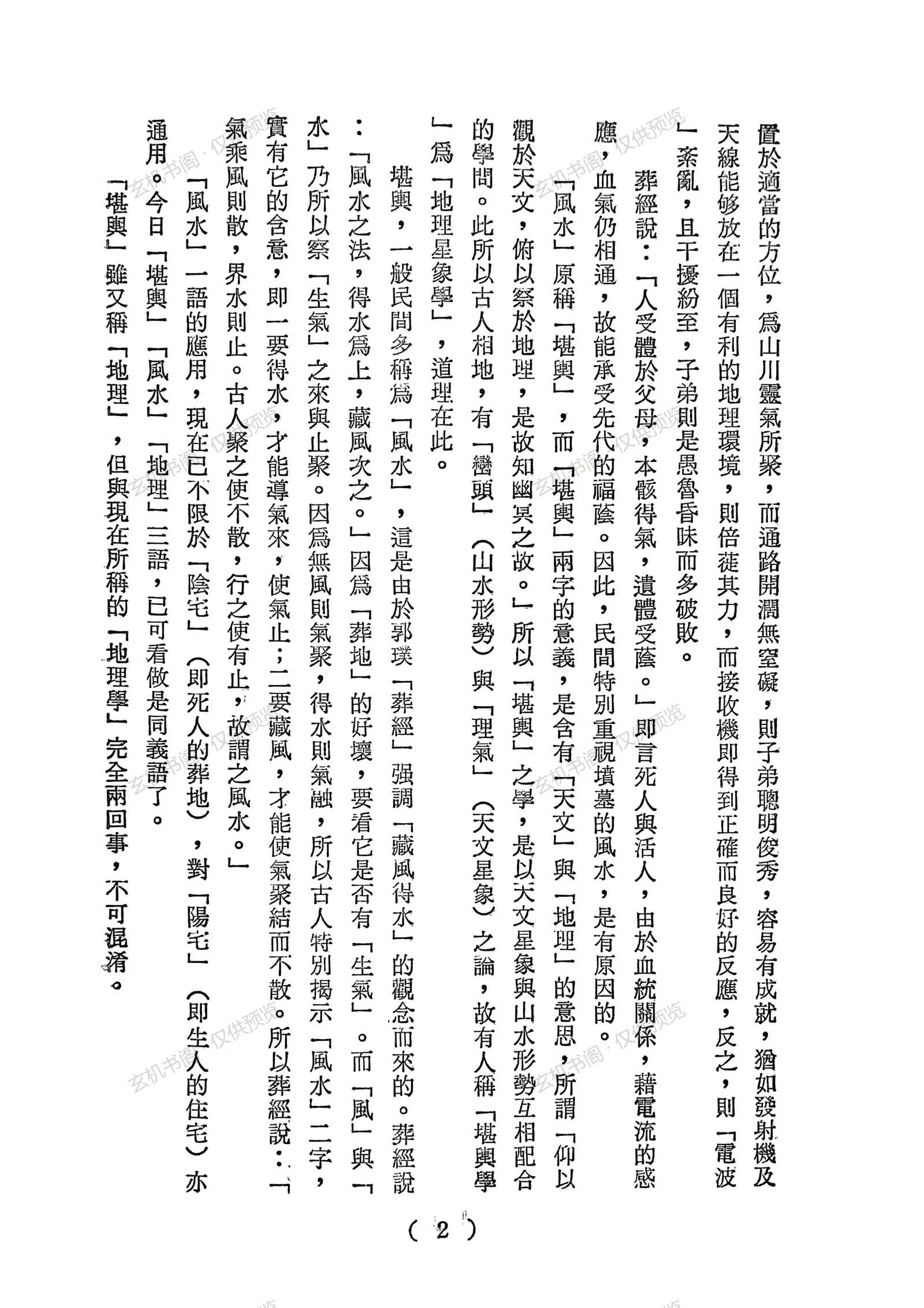
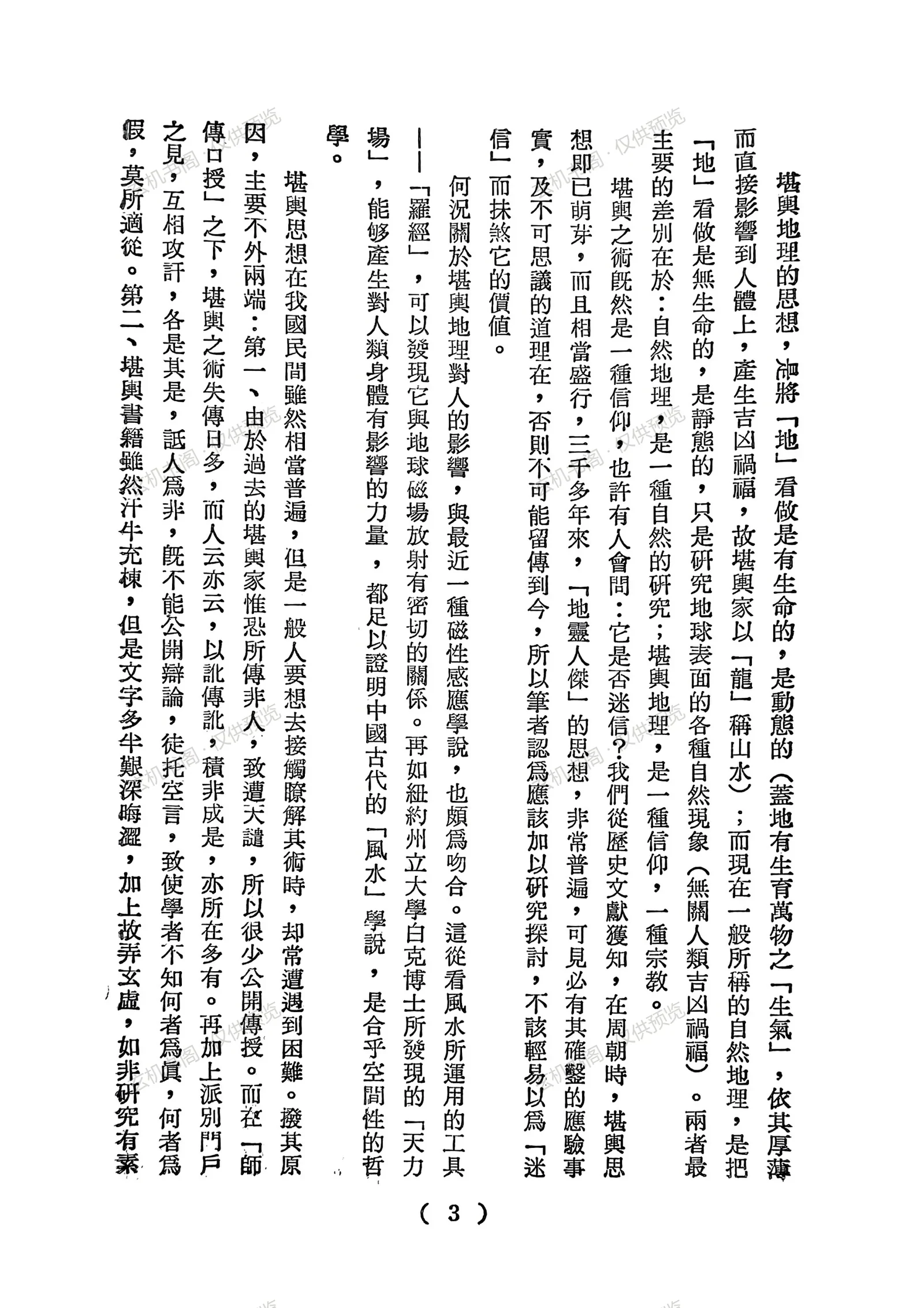
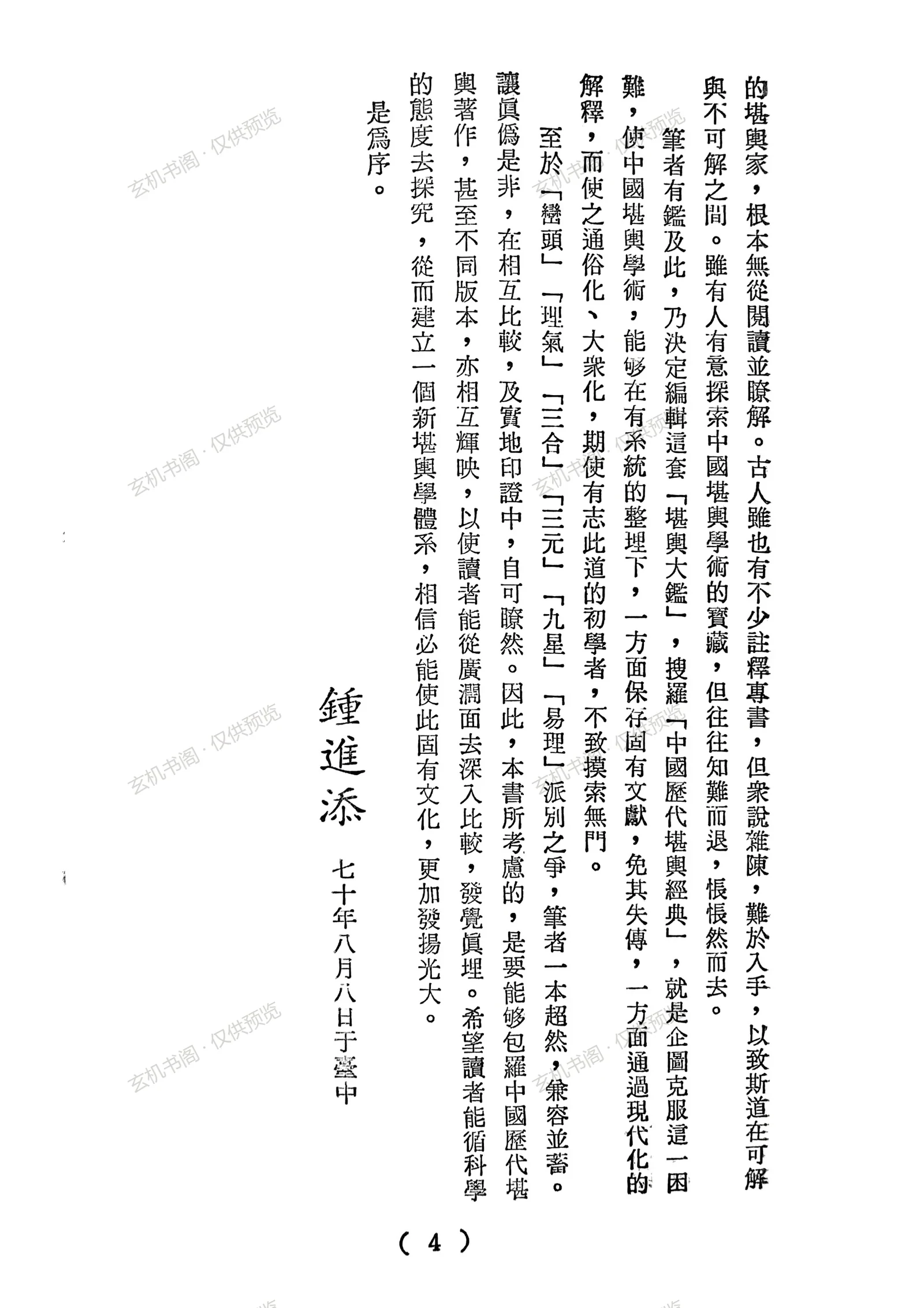
Compiled by Zhong Jintian and subtitled a study of the classic Zangshu, this book is an introductory survey of kanyu, or feng shui. The preface explains that kanyu is also called feng shui or dili, and frames it as the Chinese tradition of selecting living and burial environments. It draws on the Zangshu's ideas of 'storing wind and gathering water' and 'riding the generative qi' to explain the term feng shui. The author distinguishes kanyu from geography: geography studies the static surface of the earth, while kanyu treats the earth as a living, dynamic carrier of qi and calls mountains and waters 'dragons'. The preface also touches on magnetic resonance and heaven-human correspondence, and separates belief from superstition. The stated aim is to collect and systematically organize classical kanyu texts, preserve the inherited literature, and offer a popularized entry point for beginners. It notes the disputes among landform (xingtou), liqi, Sanhe, Sanyuan, Nine Star and Yijing schools, and advocates compatibility, field verification and comparison of editions. The main text proceeds from the Zangshu and basic kanyu concepts, making the book a useful reference for understanding traditional feng shui terminology and schools.
Contents
Preface: names and origins of kanyu and feng shui
Zangshu on storing wind and gathering water
Kanyu versus geography and magnetic resonance
Relationship of landform and liqi systems
Sanhe, Sanyuan, Nine Star and Yijing schools
Editorial aims in organizing classical texts
Key Points
Uses the Zangshu as a thread for basic feng shui ideas
Distinguishes kanyu from geography as a discipline
Surveys landform, liqi, Sanhe, Sanyuan and Nine Star schools
Stresses field verification and edition comparison
Written as a popularized introduction for beginners