Reading guide
Content guideOverview
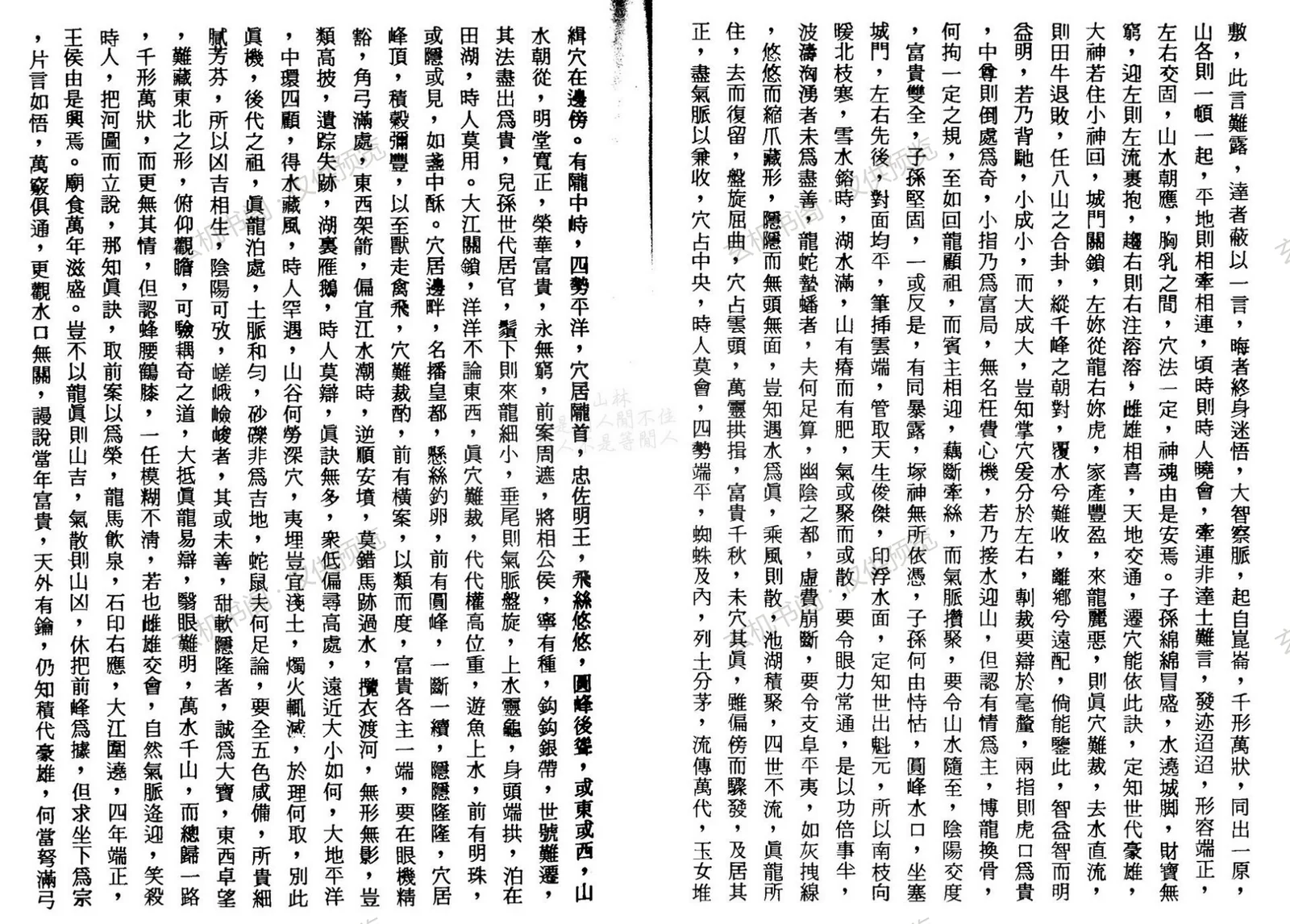
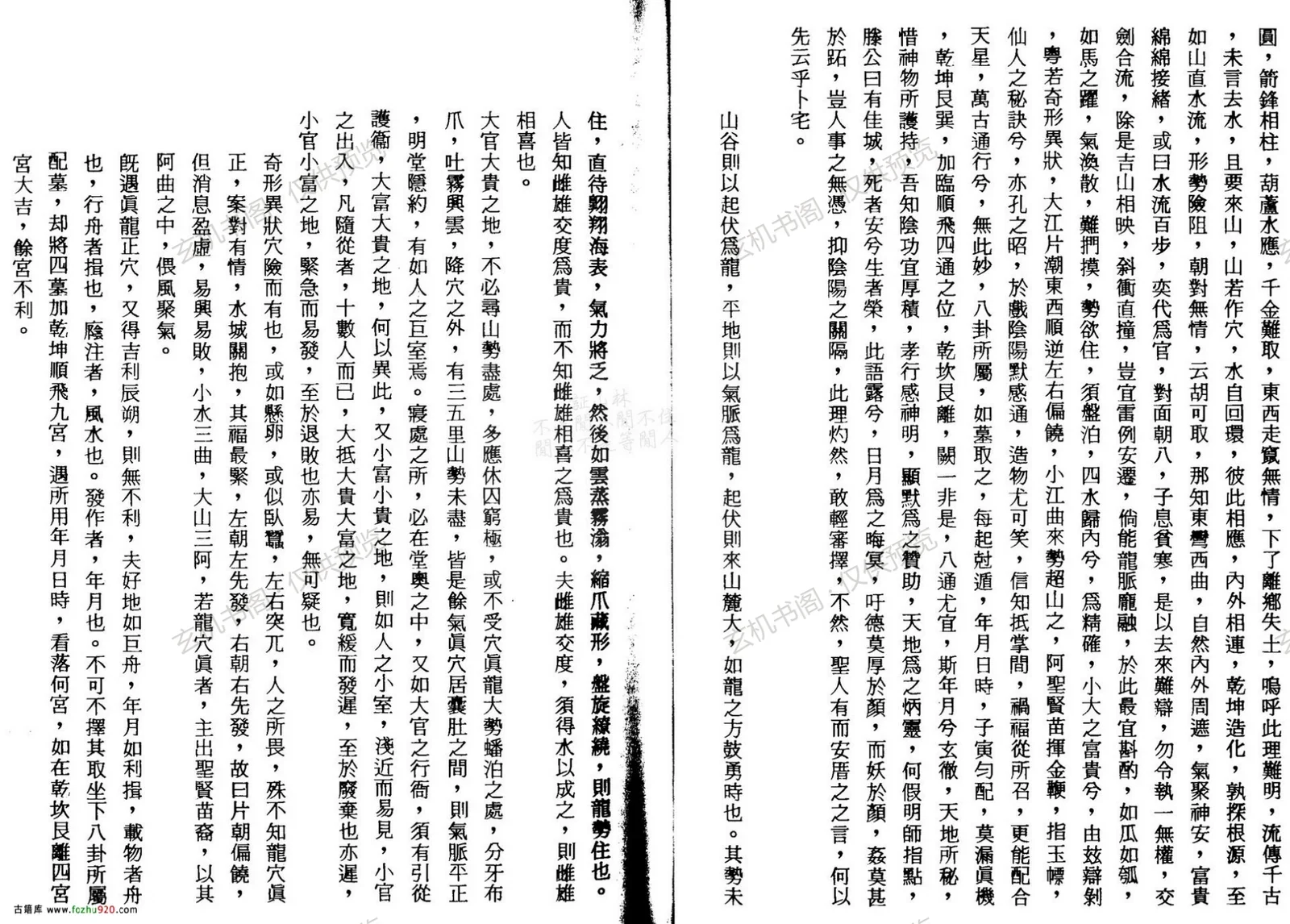
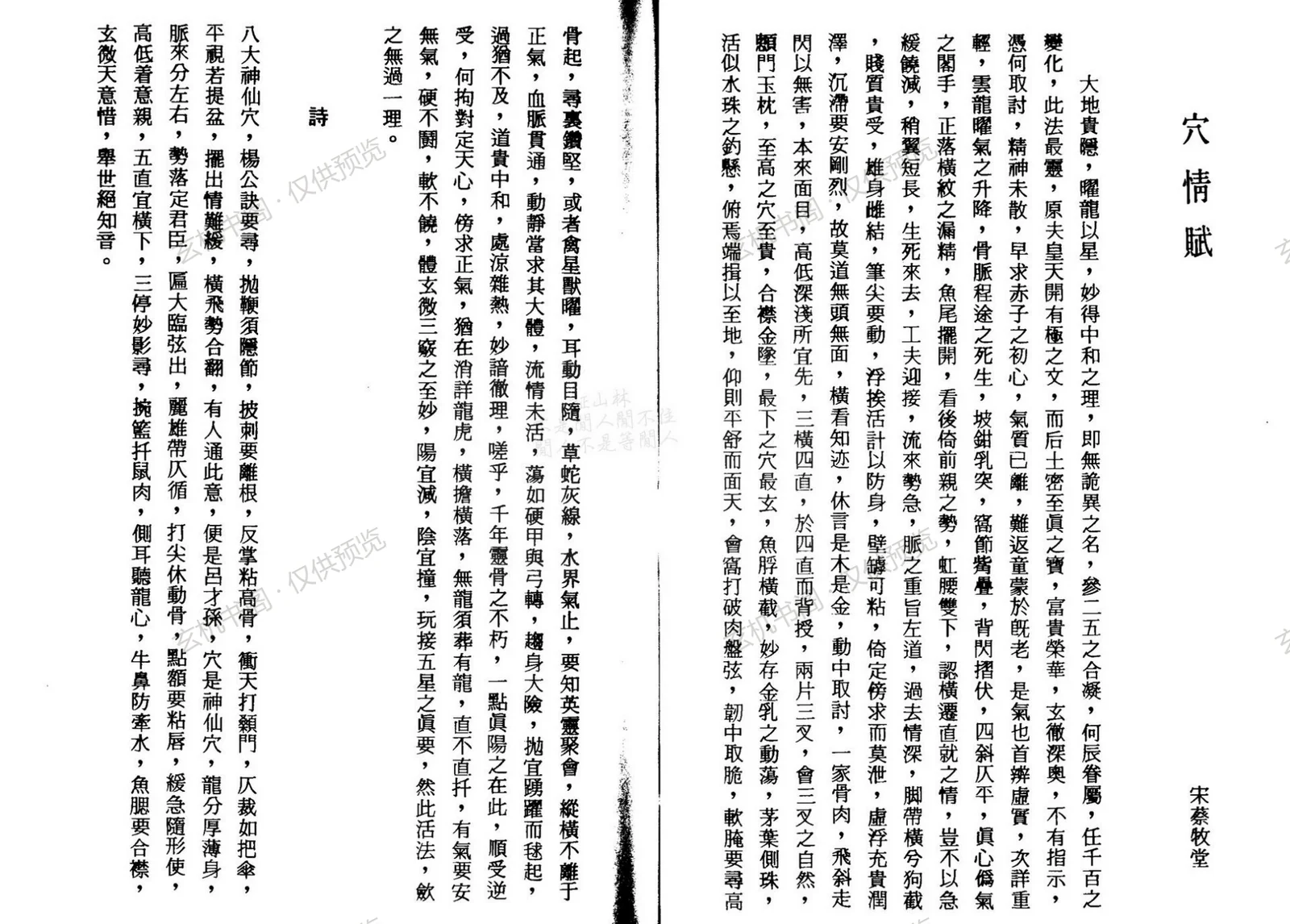
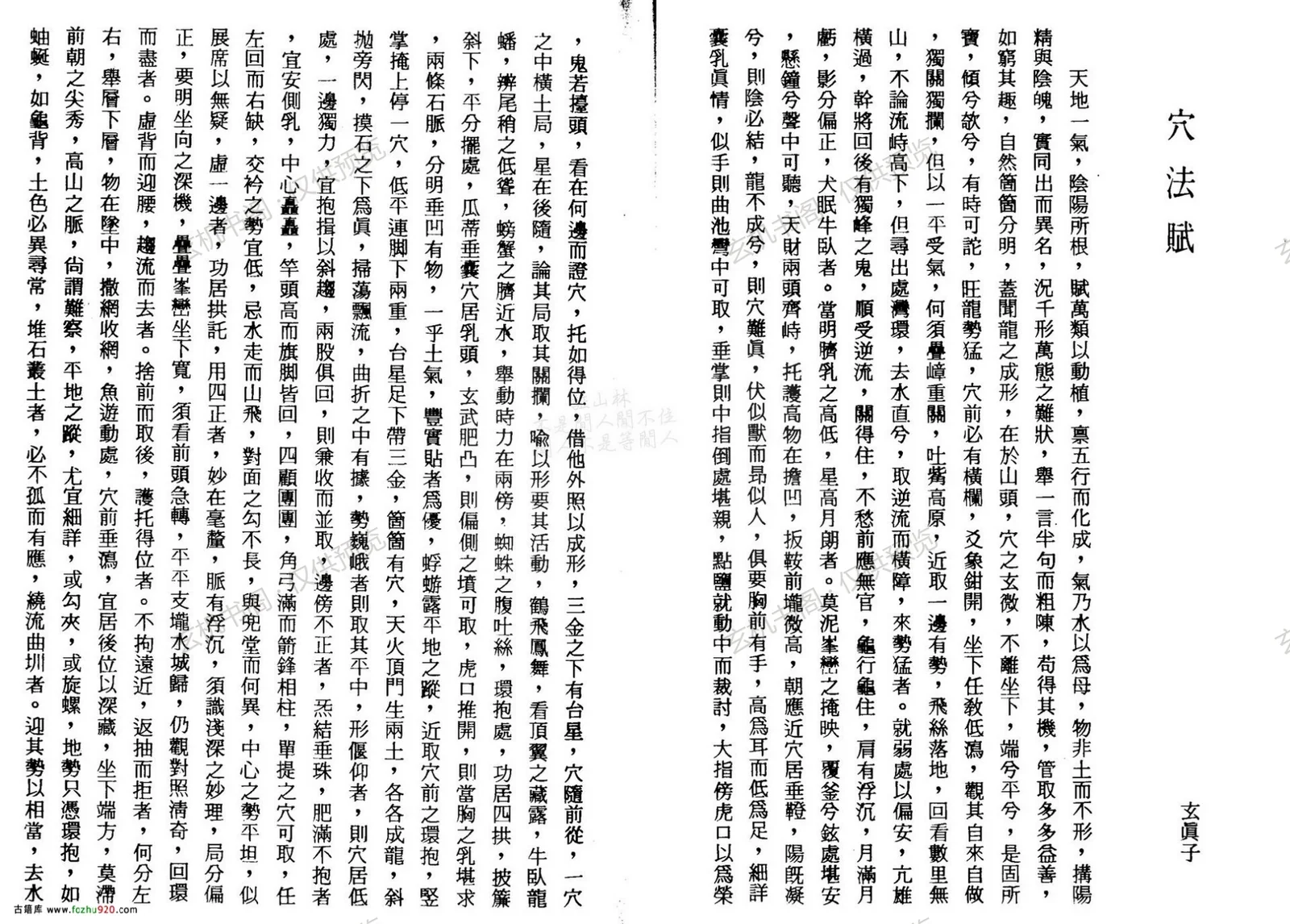
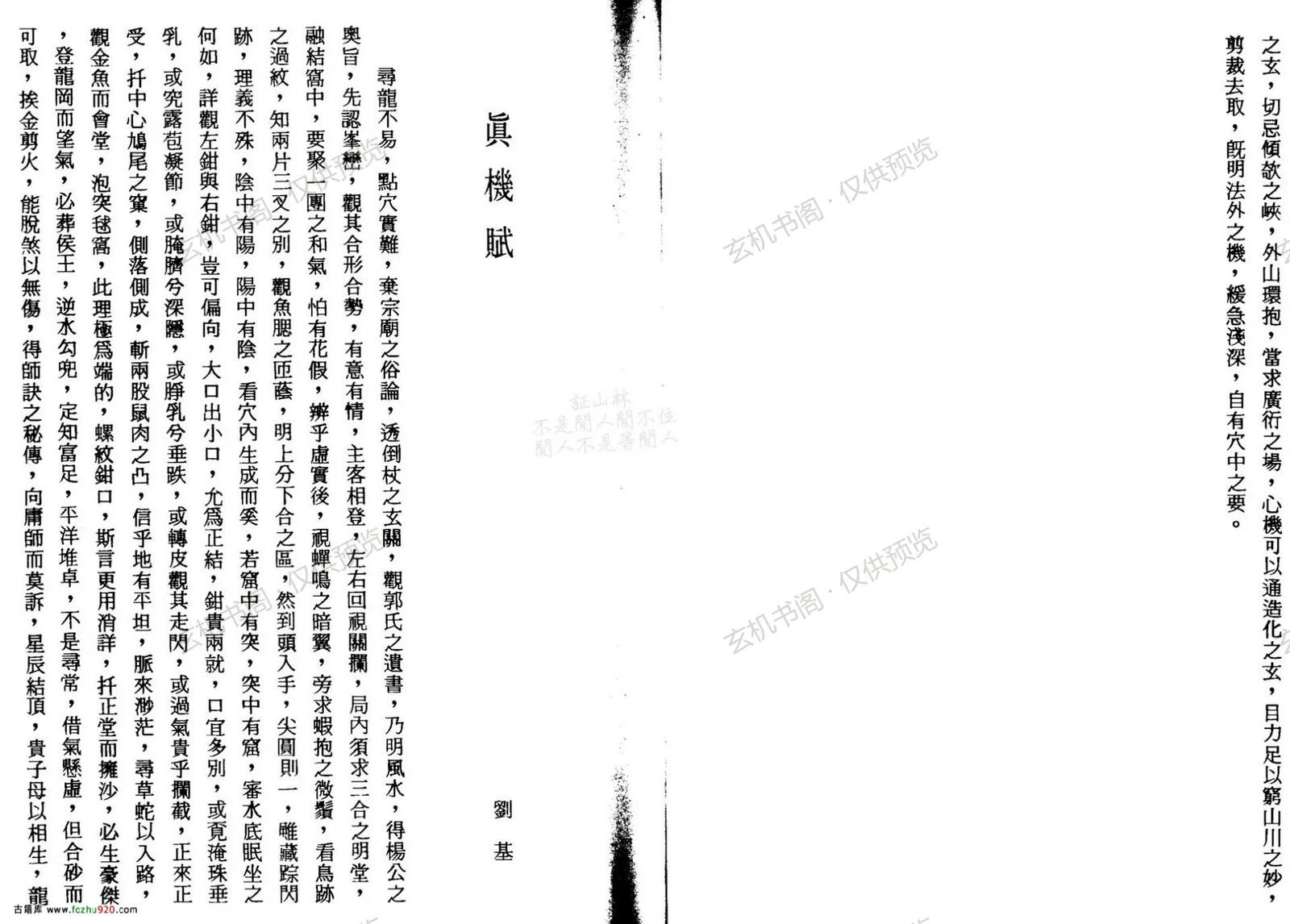
This volume, 'Baozhuan zhi wu shang' (Part One of Volume Five), is a collection of rhapsodic texts (fu) on kanyu (traditional Chinese geomancy). The opening 'Xunlong Zhuomai Fu' (Rhapsody on Tracking Dragons and Grasping Veins), attributed to Tao Kan of the Jin dynasty, discusses the origins of qi veins, yin-yang transformation, and the relationship between terrestrial features and fortune. It is followed by Cai Mutang's 'Xueqing Fu' (Rhapsody on Acupoint Dispositions), Xuanzhenzi's 'Xuefa Fu' (Rhapsody on Acupoint Methods), and Liu Ji's 'Zhenji Fu' (Rhapsody on the True Mechanism). These texts cover dragon vein tracking, acupoint selection, sand and water observation, and burial techniques, using mnemonic verse to describe mountain forms, star peaks, acupoint shapes, bright halls, water courses, and facing sand. The volume is valuable for studying traditional feng shui theory and the fu literary form in mantic texts.
Contents
Xunlong Zhuomai Fu: origins of qi veins and dragon tracking
Xueqing Fu: acupoint dispositions and selection criteria
Xuefa Fu: acupoint methods and burial essentials
Zhenji Fu: true mechanism of dragons, acupoints, sand and water
Key Points
Systematic fu-style exposition of dragon tracking, acupoint selection, sand and water observation
Emphasizes qi veins as fundamental; dragons must be examined by branches and authenticity
Details acupoint star forms and methods for determining high/low and shallow/deep placement
Covers bright hall, water courses, facing sand, and burial prohibitions