Reading guide
Content guideOverview
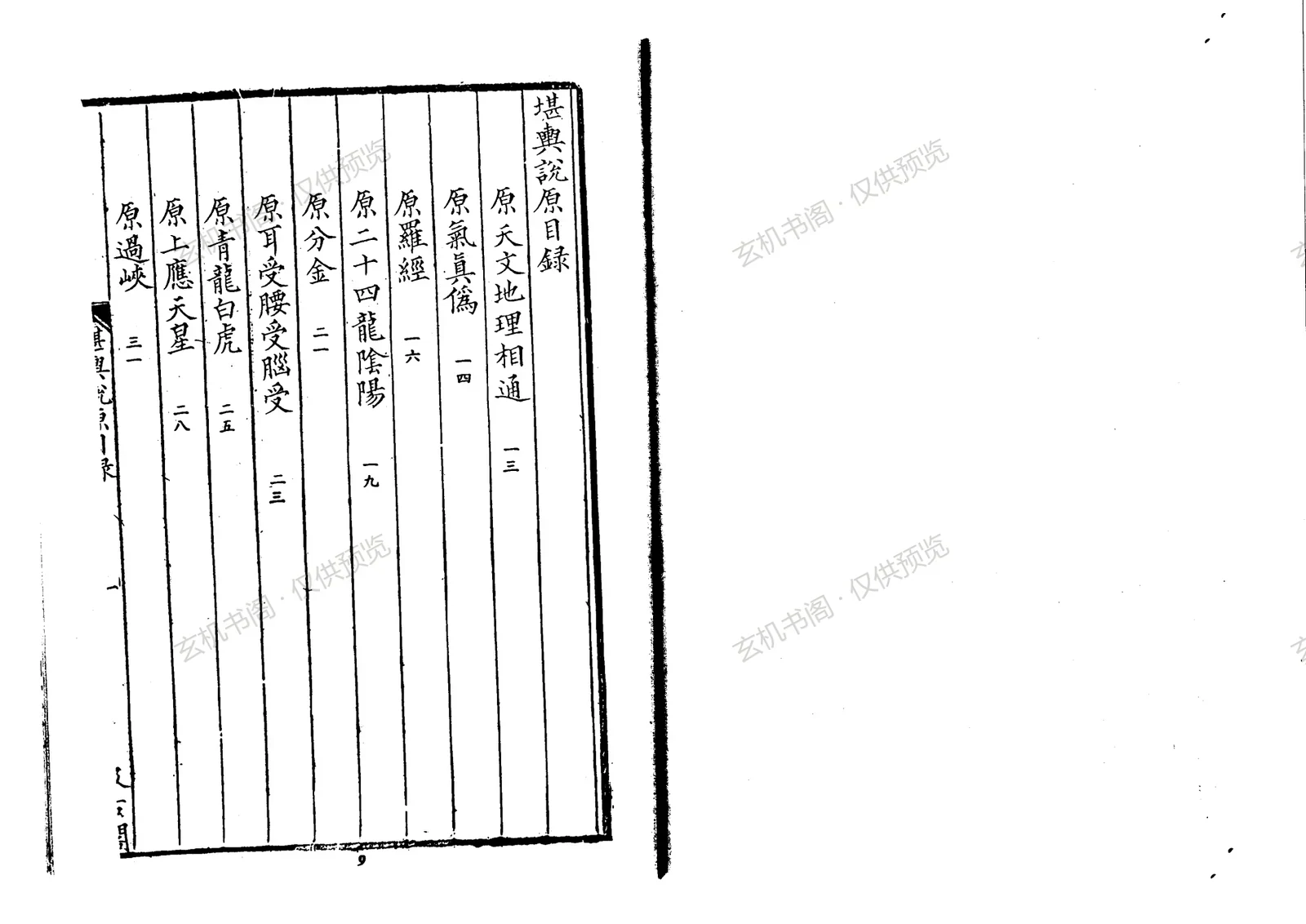
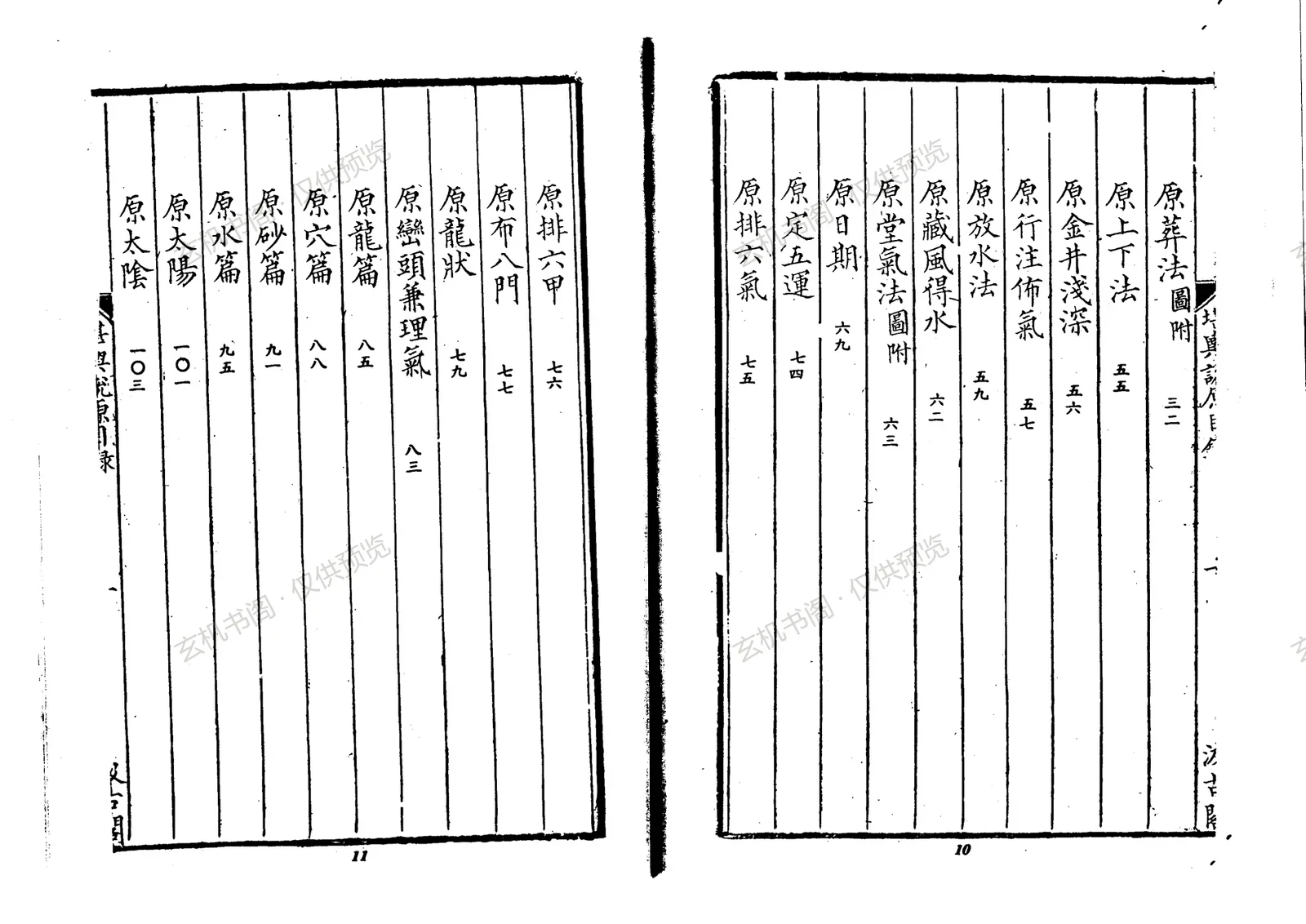
Kanyu Shuo Yuan is a Ming-dynasty feng shui treatise attributed to Fang Qingquan. The preface by Sun Meng argues that geomancy shares roots with the classical canon and that later schools descending from Guo Pu and Yang Junsong all reduce to the four factors of dragon, cave, sand and water; it also insists that the form (xingshi) and compass (liqi) schools should be combined rather than opposed. The main text opens with a discussion of how astronomy and geography are interconnected, moving from the Supreme Ultimate and yin-yang to the formation of mountains and rivers and the burial method of storing qi. The table of contents lists chapters on the authenticity of qi, the luojing compass, the yin-yang of the twenty-four dragons, fenjin divisions, the ear-waist-brain receptions, the green dragon and white tiger, correspondence with celestial stars, mountain passes, burial diagrams and methods, well depth, water release, wind shelter and water gathering, hall qi diagrams, date selection, the five movements and six qi, the six jia and eight gates, dragon forms, and the four sections on dragons, caves, sand and water. Each chapter uses the character yuan ('origin') to trace a term or practice back to its source, making the work a significant source for the study of Ming-dynasty feng shui theory.
Contents
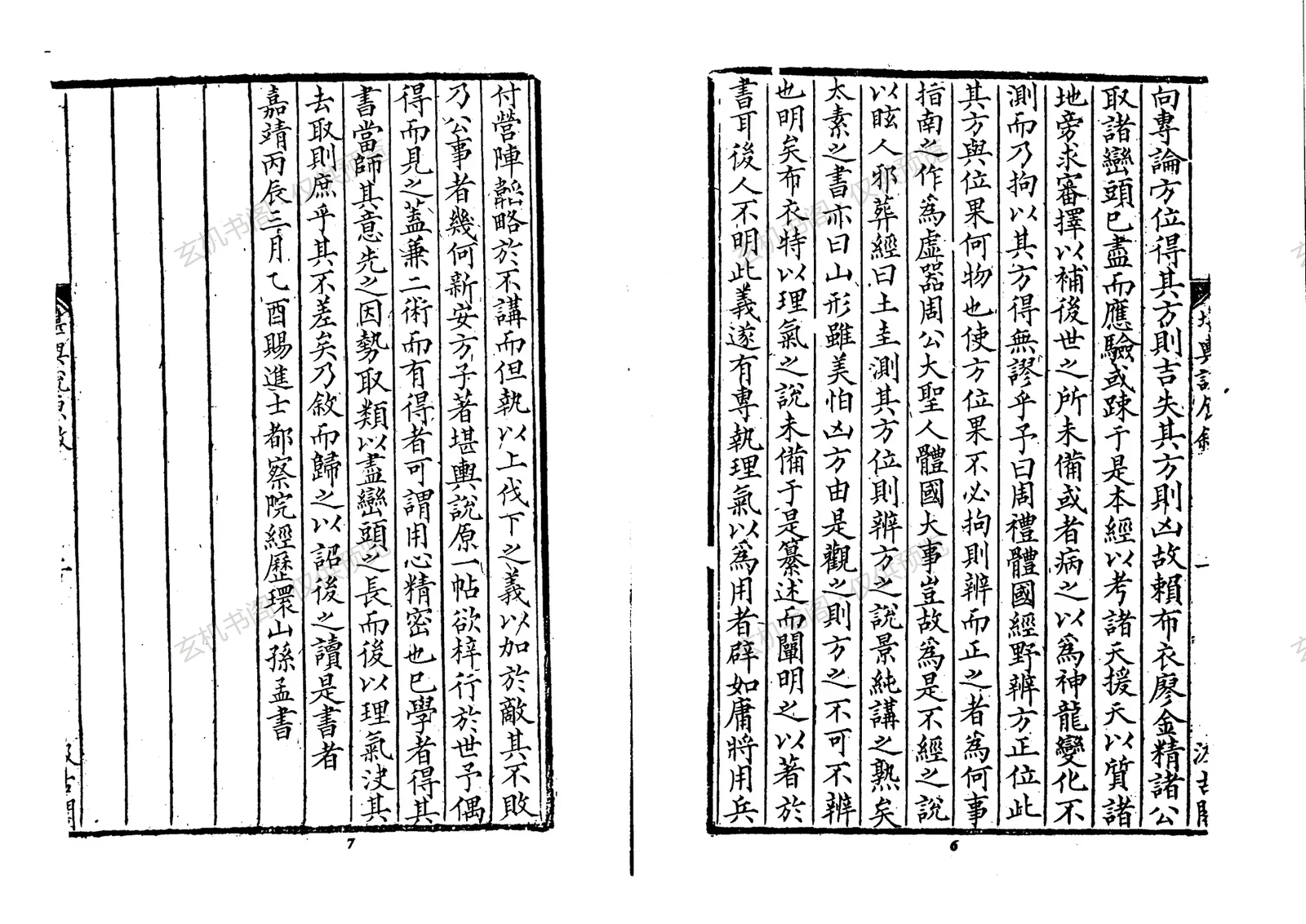
Preface by Sun Meng on the origins of geomancy and combining form and compass
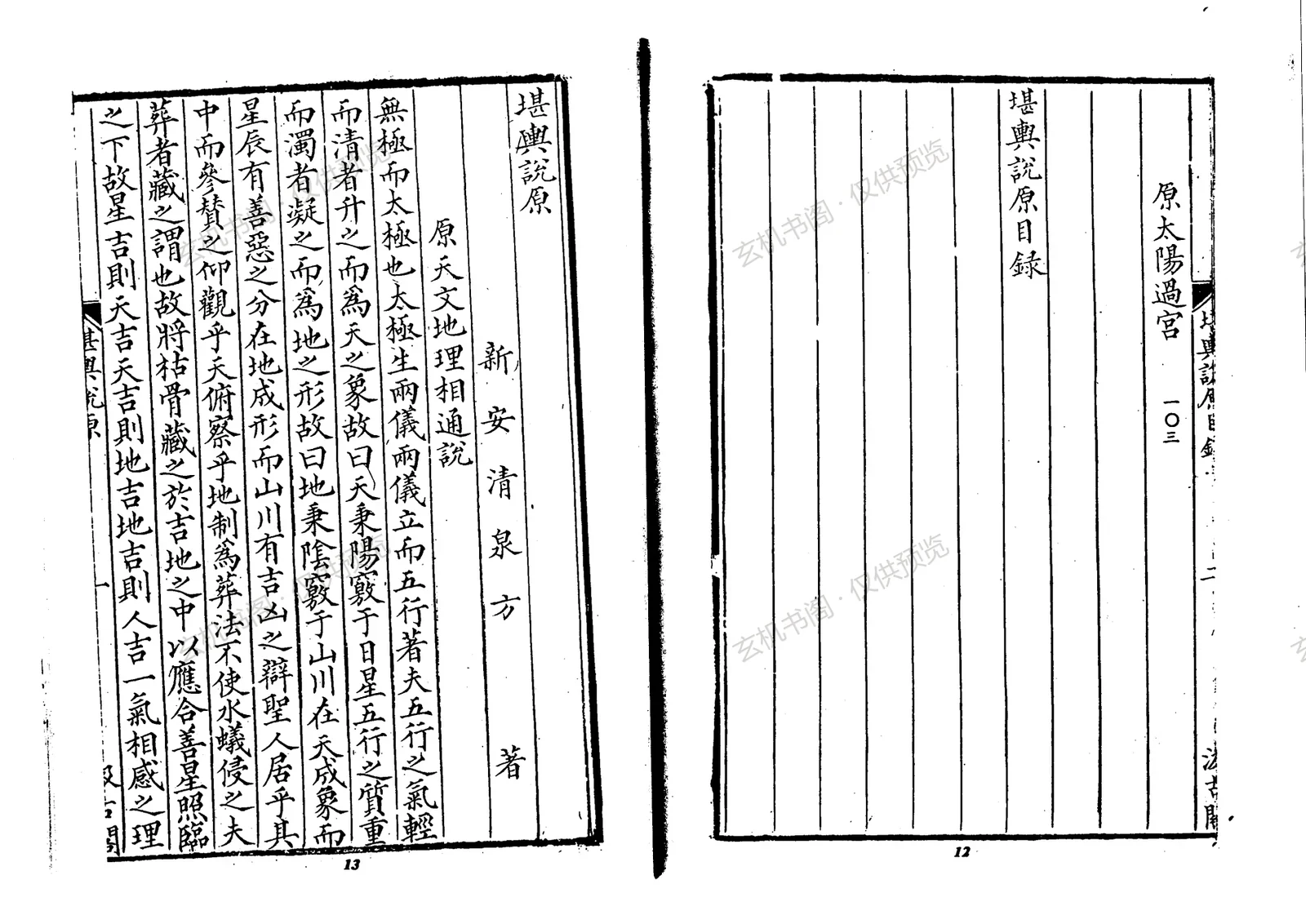
How astronomy and geography interconnect: mountains explained through yin-yang and the five phases
Chapters on the authenticity of qi, the luojing compass and fenjin divisions
Yin-yang of the twenty-four dragons and ear-waist-brain receptions
Green dragon, white tiger, celestial correspondence and mountain passes
Burial diagrams, upper and lower methods, well depth and water release
Dates, five movements, six qi, six jia and eight gates
Separate chapters on dragons, caves, sand, water, sun and moon
Key Points
Uses 'origin' chapters to trace feng shui terms and practices to their roots
Argues for combining the form and compass schools rather than choosing one
Frames geomancy within a cosmology of astronomy, geography, yin-yang and the five phases
Includes compass, fenjin, five movements and six qi, and qimen material
Dedicated sections on dragons, caves, sand, water and burial details