Reading guide
Content guideOverview
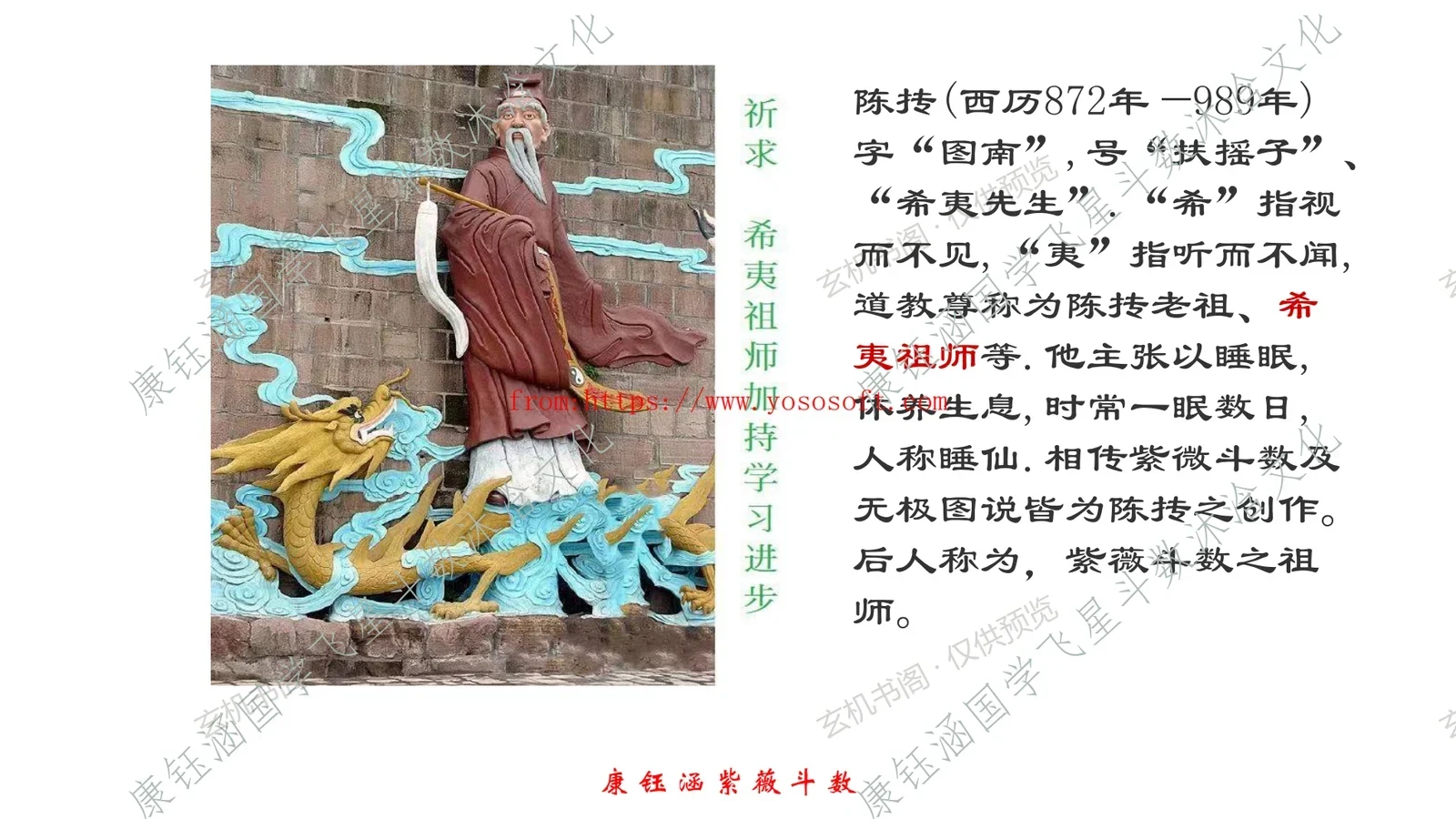
This is the beginner-level handout for Kang Yuhan's Zi Wei Dou Shu course. It opens with the tradition's origin, noting Chen Tuan (Xi Yi) as the revered founder. The main body has four parts: basic knowledge and the chart-casting process; the eighteen stars and their interpretations; the meanings of the twelve palaces with combined imagery, including birth-year four transformations, palace transformations, and self-transformations; and foundational flying-star techniques such as lu-to-ji, ji-to-ji, paired lu-ji, intersecting lu-quan, ji-out, intersecting ji, and ji-clash, with quan-ji emphasized as the driving force of events. Built around San He and flying-star four transformations, it suits complete beginners seeking a systematic framework for casting charts, reading stars, interpreting palaces, and applying transformations.
Contents
Chapter 1: Understanding the chart and casting it
Star knowledge: the eighteen stars and their interpretations
The twelve palaces and combined imagery
Birth-year four transformations, palace transformations, self-transformations
Flying-star basics: lu-to-ji, ji-to-ji, and more
Quan-ji as the driving force of events
Key Points
Centered on San He and flying-star four transformations, balancing basics and practice.
Learn chart casting first, then the eighteen stars and twelve palaces.
Birth-year four transformations, palace transformations, and self-transformations are core reading skills.
Flying-star methods include lu-to-ji, ji-to-ji, paired lu-ji, and intersecting lu-quan.
Quan-ji is stressed as the driving force behind events.