Reading guide
Content guideOverview
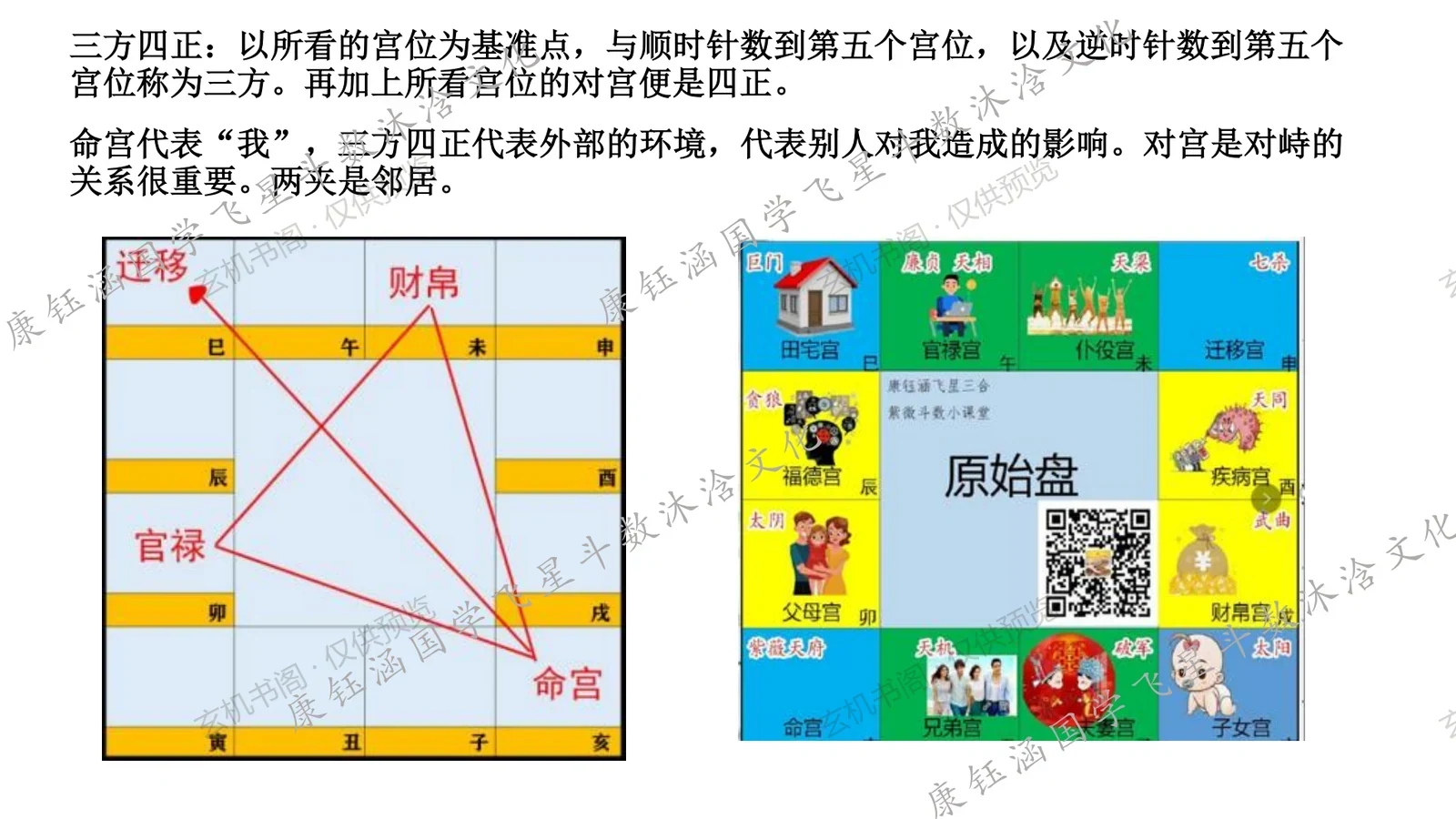
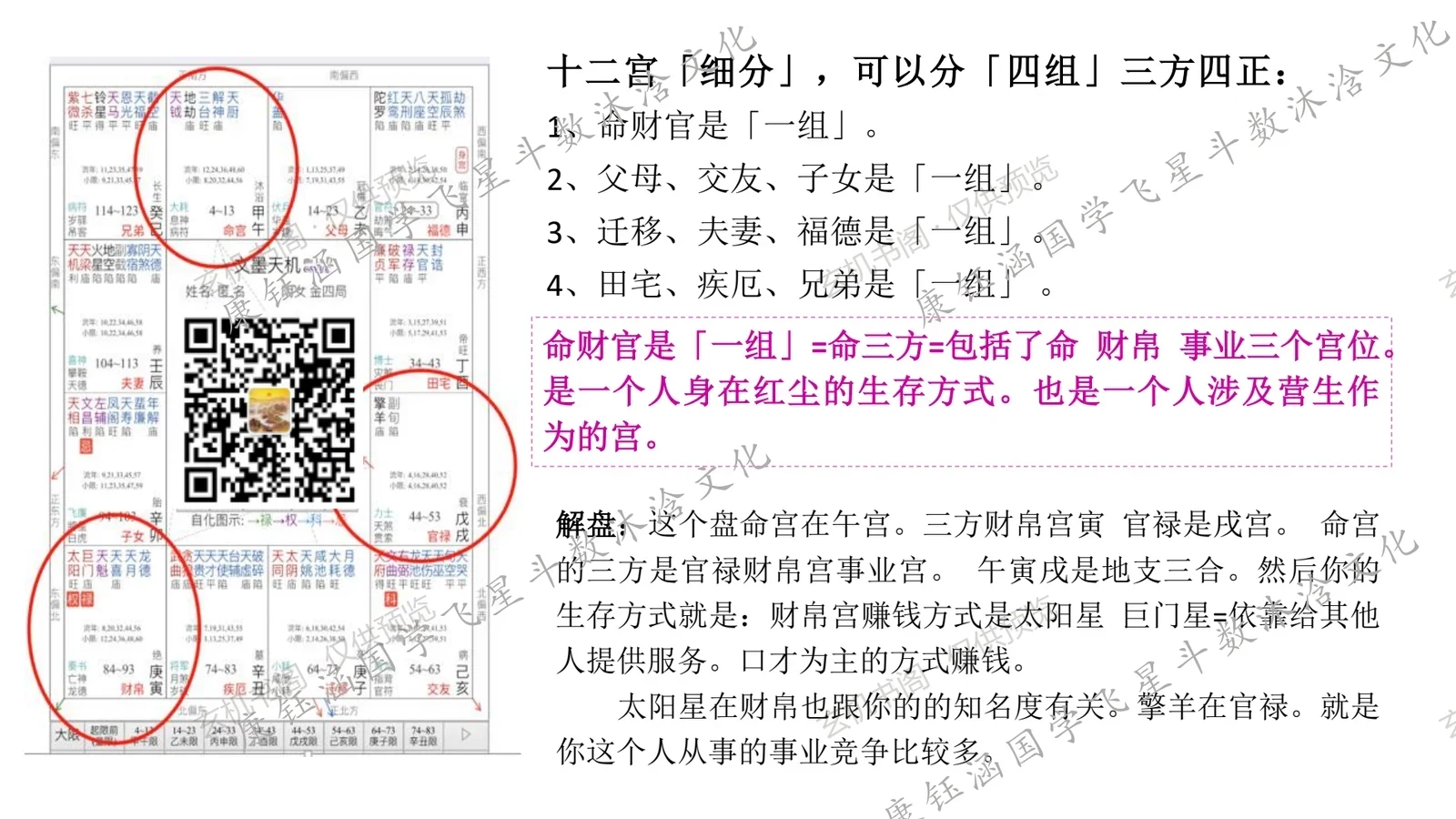
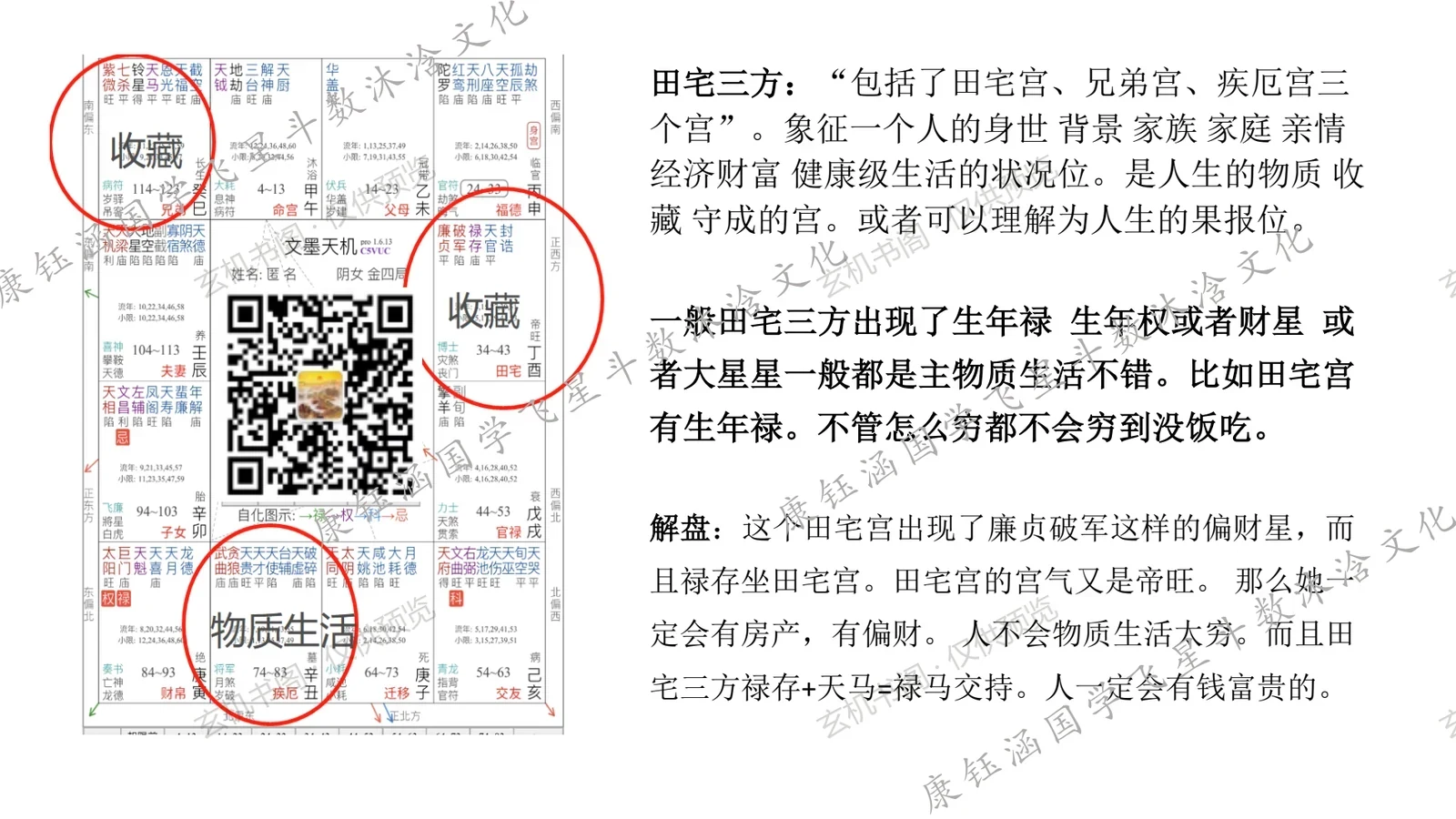
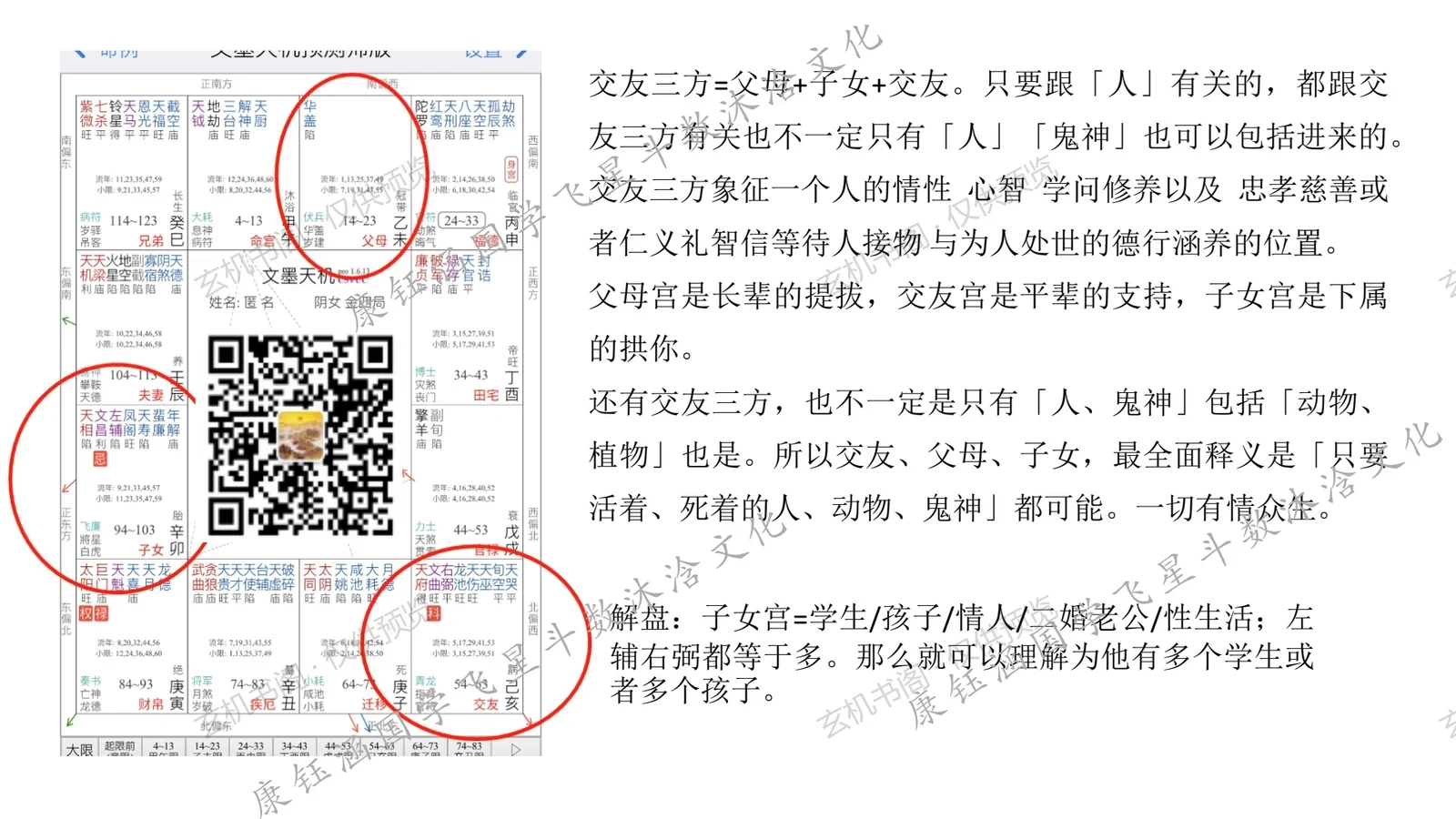
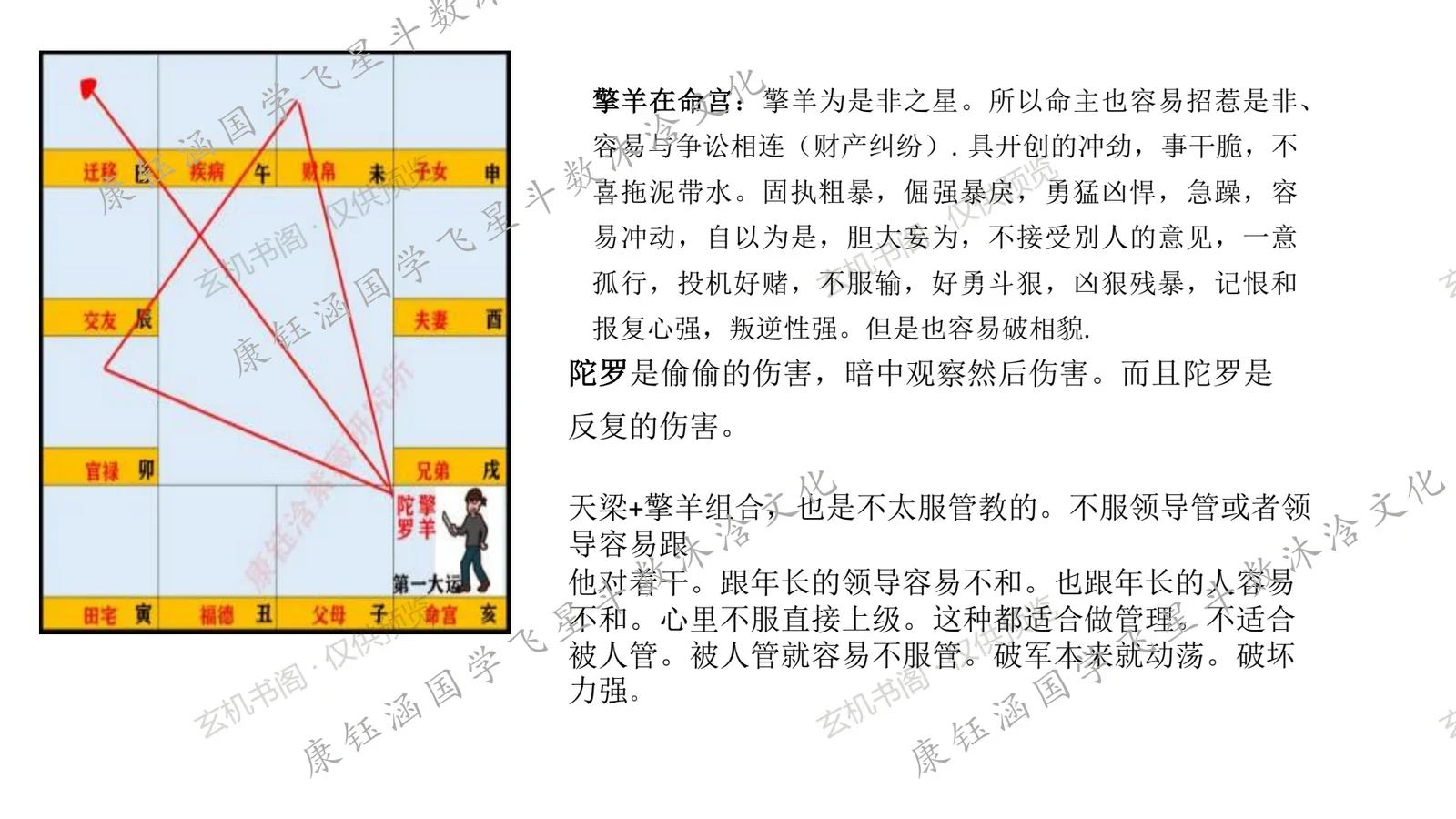
This handout focuses on sanfang sizheng in Ziwei Doushu. It first explains how the three-part and four-part positions are derived: counting five palaces clockwise and counterclockwise from the life palace to form the trine, then adding the opposite palace. The life palace represents the self, while sanfang sizheng represents external circumstances and others' influence. The twelve palaces are then grouped into four sets: life-wealth-career, parents-friends-children, travel-spouse-mental, and property-health-siblings, each covering livelihood, social character, external environment, and material accumulation. Using sample charts, it shows how to read the wealth palace for earning style, the property trine for material conditions and real estate, and the friends trine for broader human relations; the final page illustrates star traits such as Qing Yang, Tuo Luo, and Tian Liang in the life palace. It is a classroom-style reference best suited to readers with basic chart knowledge.
Contents
Deriving sanfang sizheng: trine and opposite palace
Dividing the twelve palaces into four groups
Life-wealth-career group and livelihood
Property trine and material life
Friends trine, character, and relationships
Star traits: Qing Yang, Tuo Luo, Tian Liang
Key Points
Sanfang sizheng is based on the life palace, counting five palaces each way plus the opposite palace.
The life palace is the self; sanfang sizheng is the external environment and others' influence.
The twelve palaces can be grouped into four sets for livelihood, social character, external environment, and material life.
Stars in the wealth palace indicate earning style, e.g., Sun and Ju Men suggest service and speech.
Lu Cun and Tian Ma in the property trine can indicate material comfort and real estate.