Reading guide
Content guideOverview
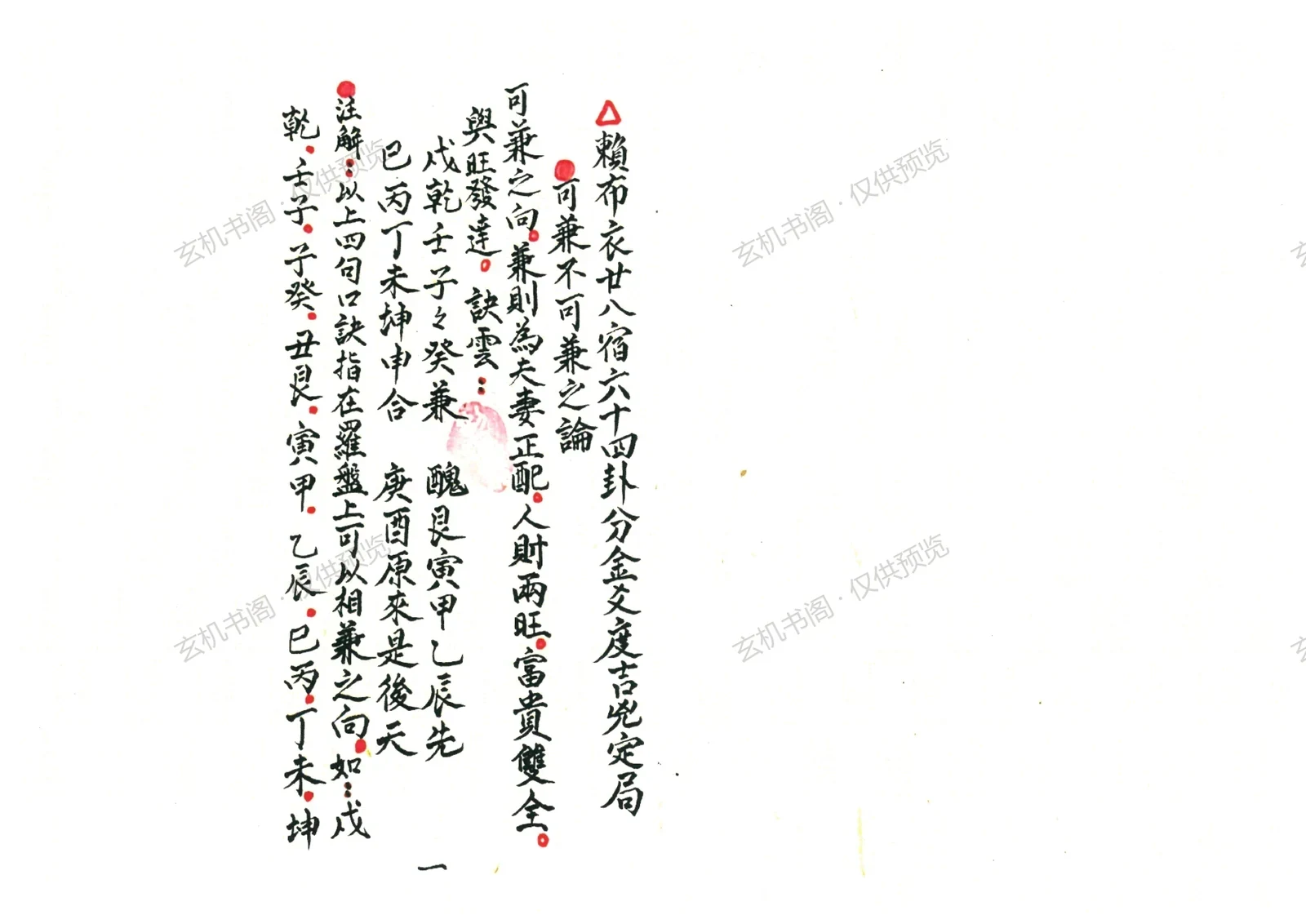
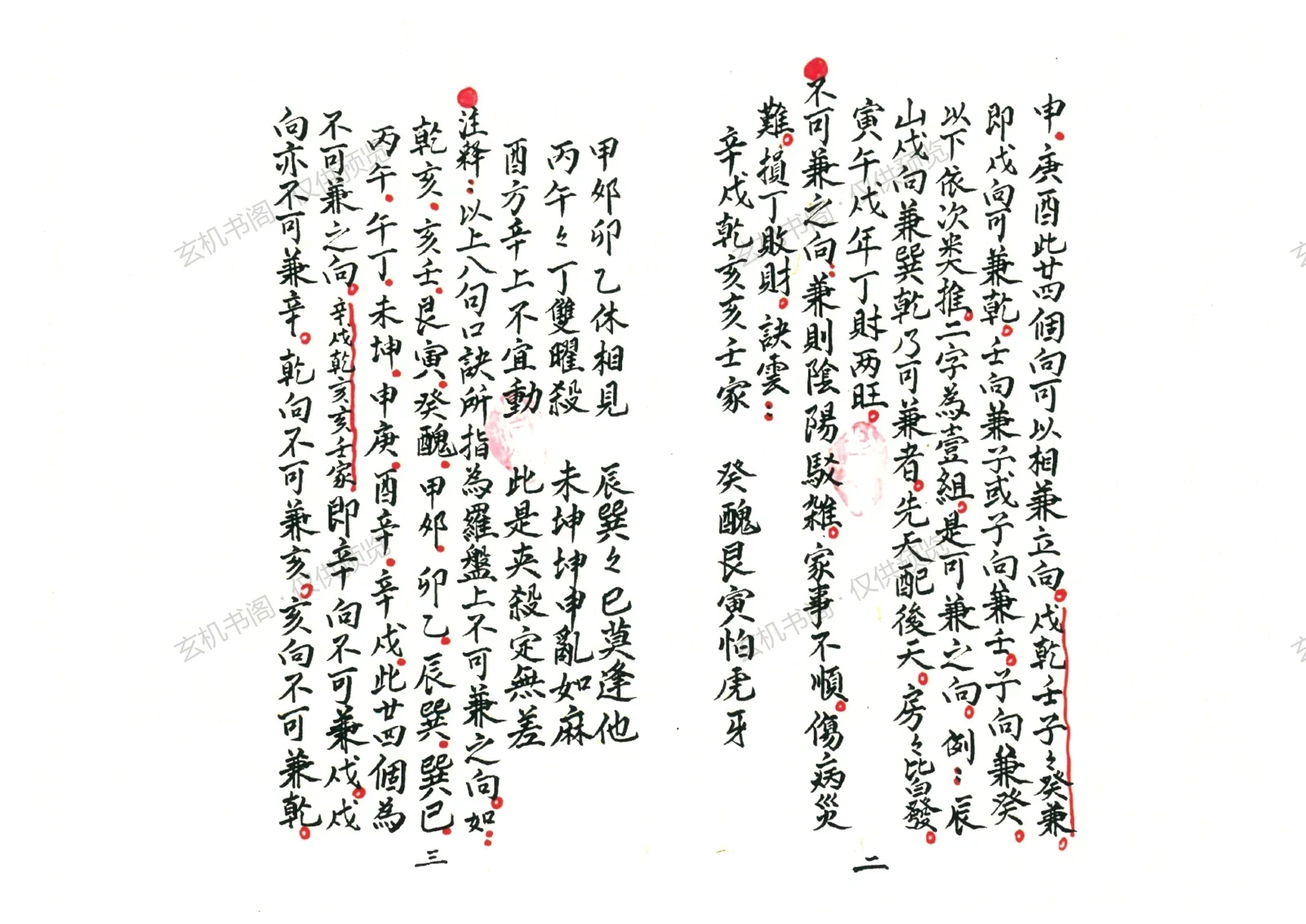
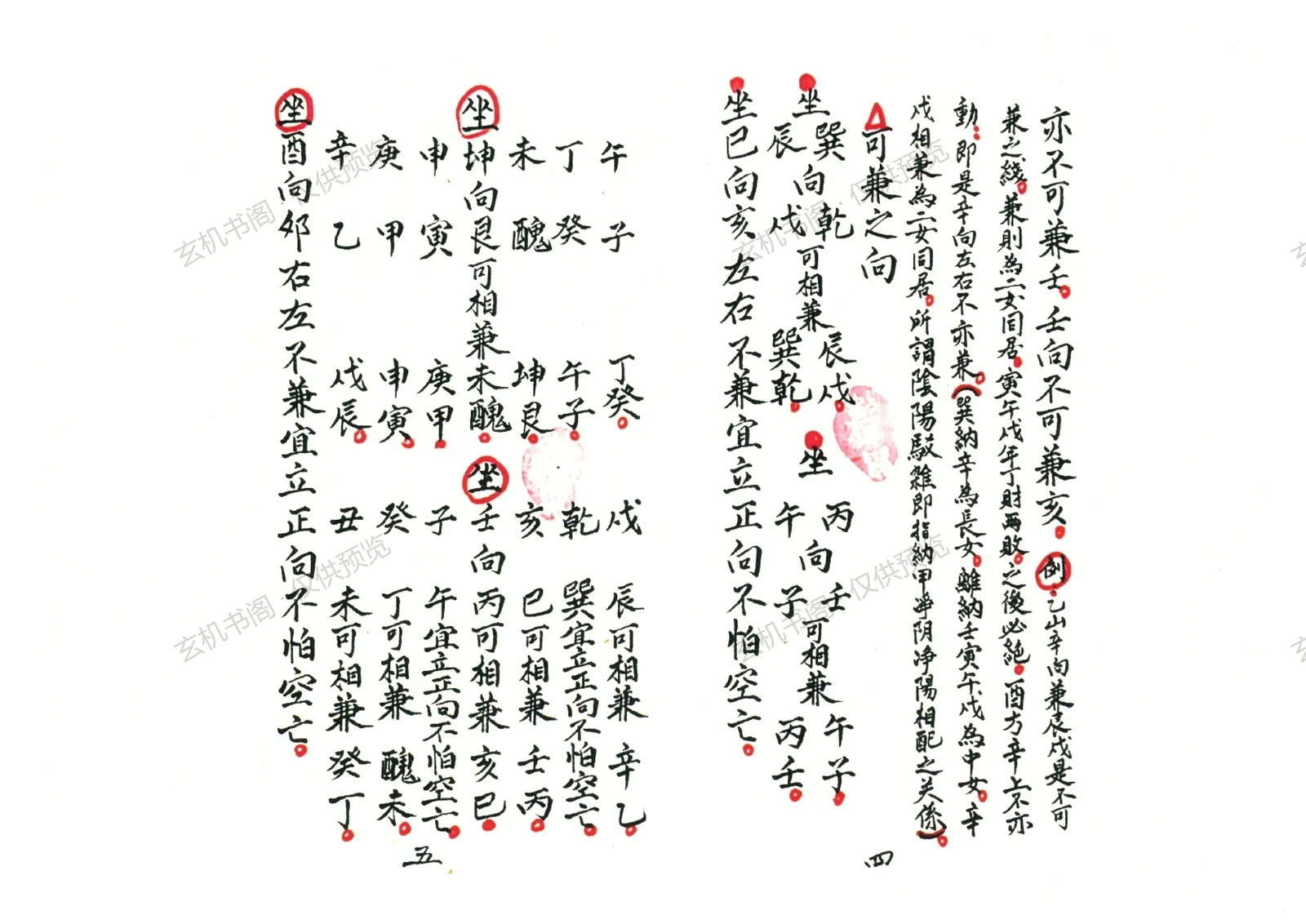
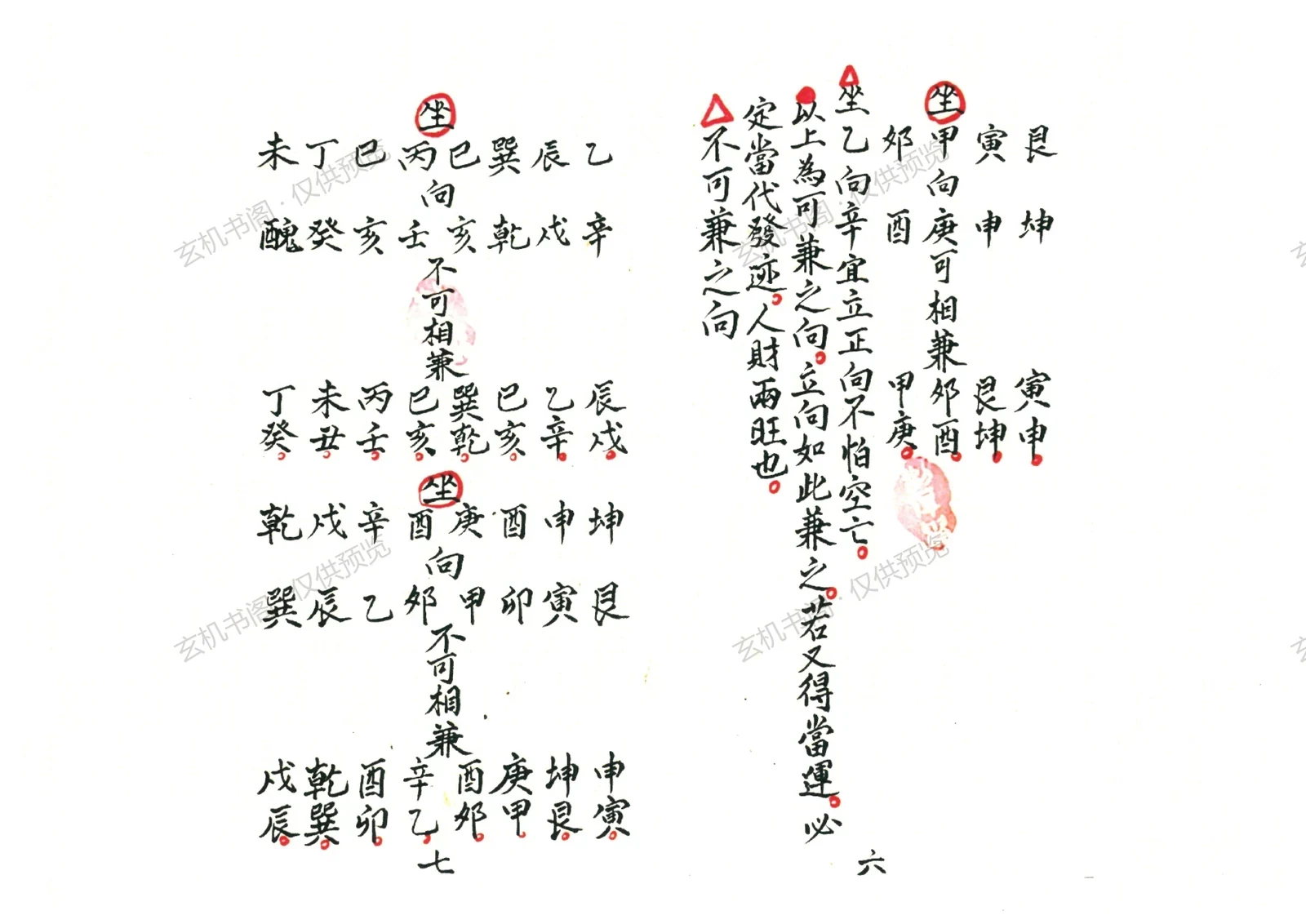
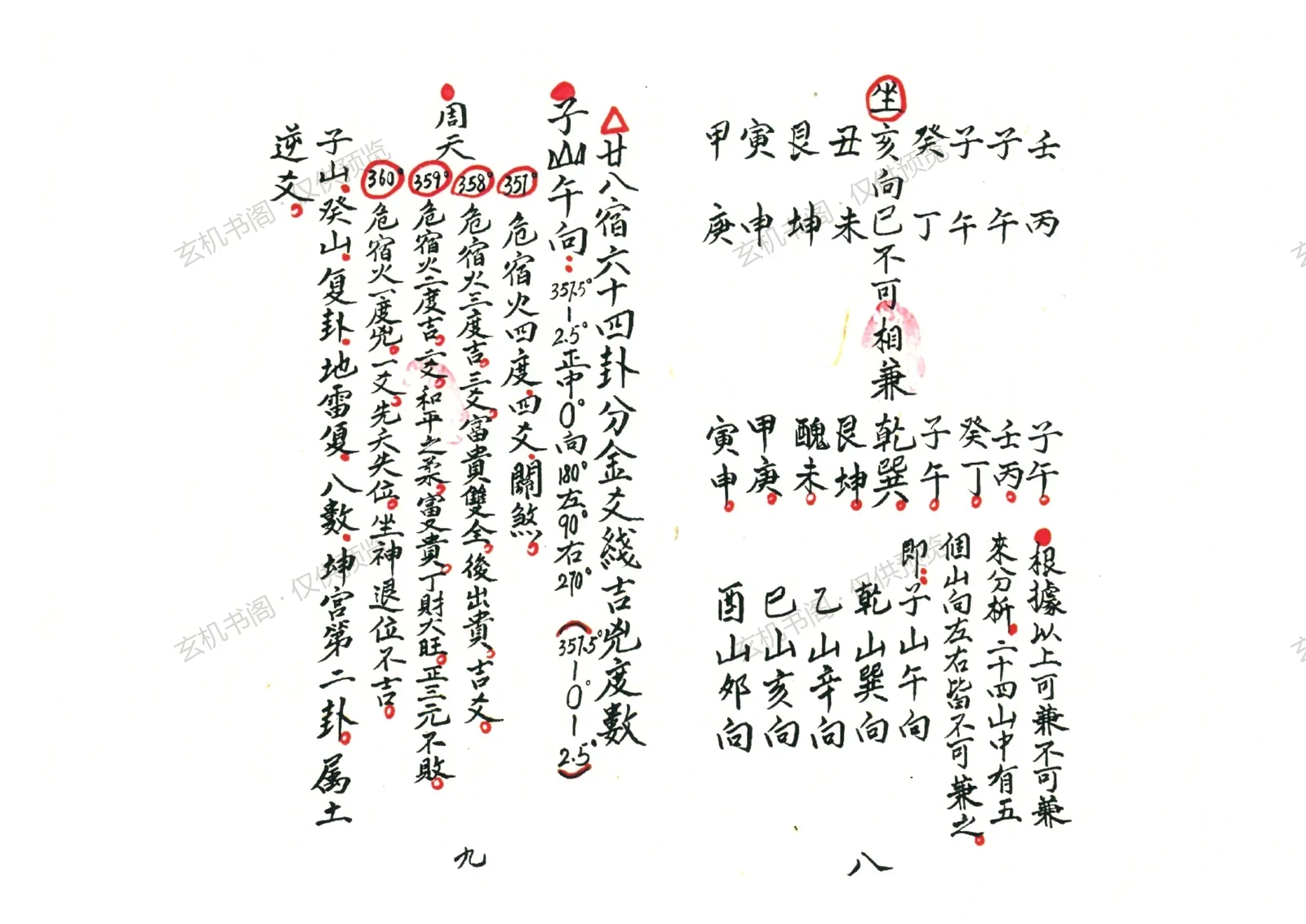
Attributed to Lai Buyi and noted on the cover as transcribed by his disciple Liu Tongshuheng, this manuscript belongs to the celestial feng shui tradition. It centers on luopan fenjin and orientation, using the twenty-eight mansions, sixty hexagrams, and twenty-four mountains as its framework to distinguish compatible and incompatible orientations. Sections such as “On Compatible and Incompatible Orientations,” “Incompatible Orientations,” and “Compatible Orientations” list pairings among Qian, Kun, Gen, Xun, Zi, Wu, Mao, and You, with judgments like “wealth and people prosper, riches and honor complete,” “family affairs go poorly, illness and disaster,” or “prosper first, decline later.” Later sections turn to the auspicious and inauspicious degrees of the twenty-eight mansions and yao lines, marking mansion degrees and yao positions with notes on “blocking煞,” “producing nobles,” “great prosperity of offspring and wealth,” or “losing position first, retreating inauspiciously.” Red dots, circled numbers, and annotation notes guide the reading, making it a practical compilation of luopan fenjin formulas.
Contents
On compatible and incompatible orientations
Incompatible orientations and judgments
Compatible orientations and key points
Examples of paired orientations among the twenty-four mountains
Auspicious and inauspicious degrees of the twenty-eight mansions and fenjin yao lines
Key Points
Uses the twenty-eight mansions, sixty hexagrams, and twenty-four mountains as the fenjin framework
Focuses on distinguishing compatible from incompatible mountain orientations
Links orientation compatibility directly to wealth, offspring, status, illness, and disaster
Marks mansion degrees and yao positions for practical luopan fenjin reference