Reading guide
Content guideOverview
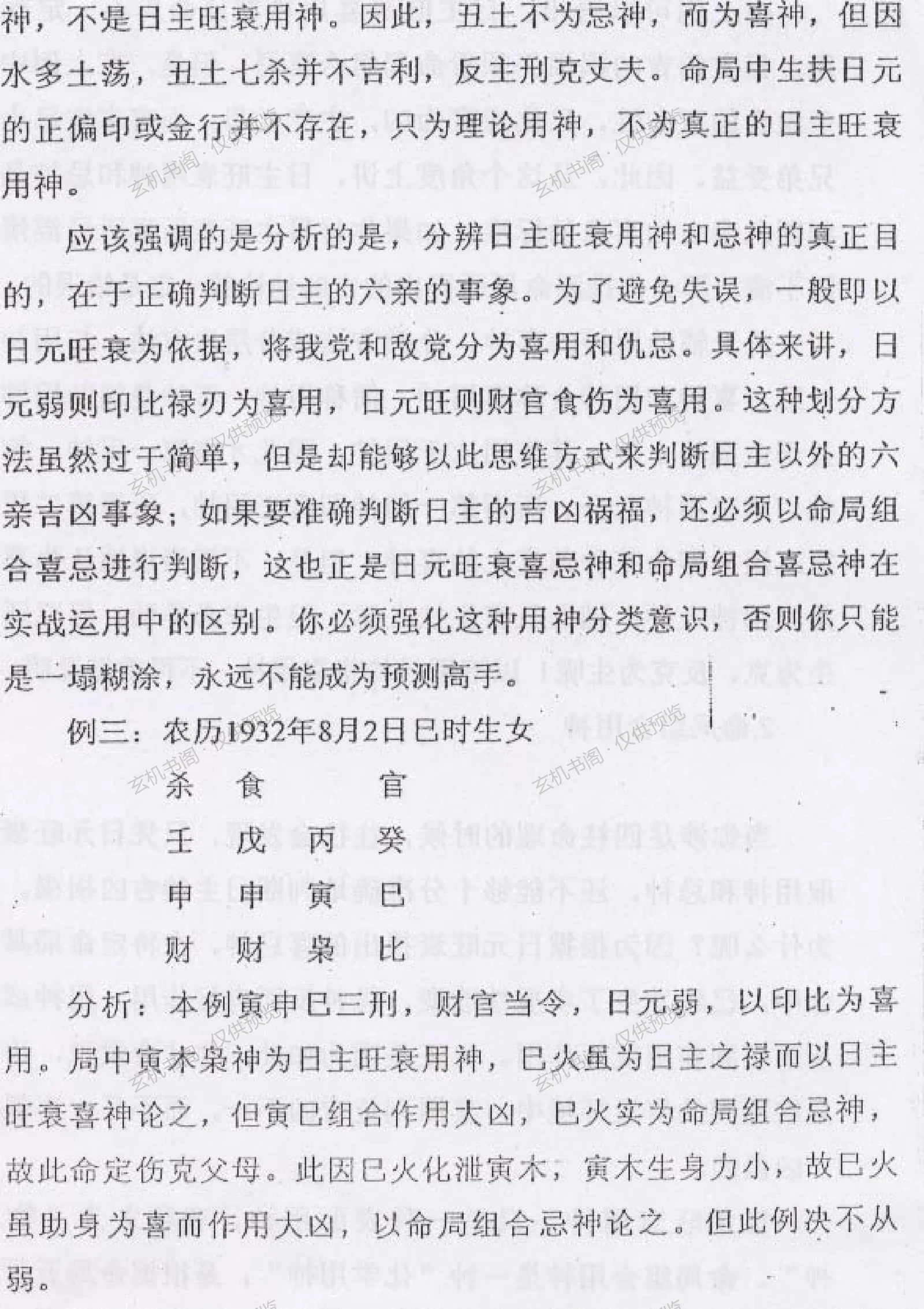
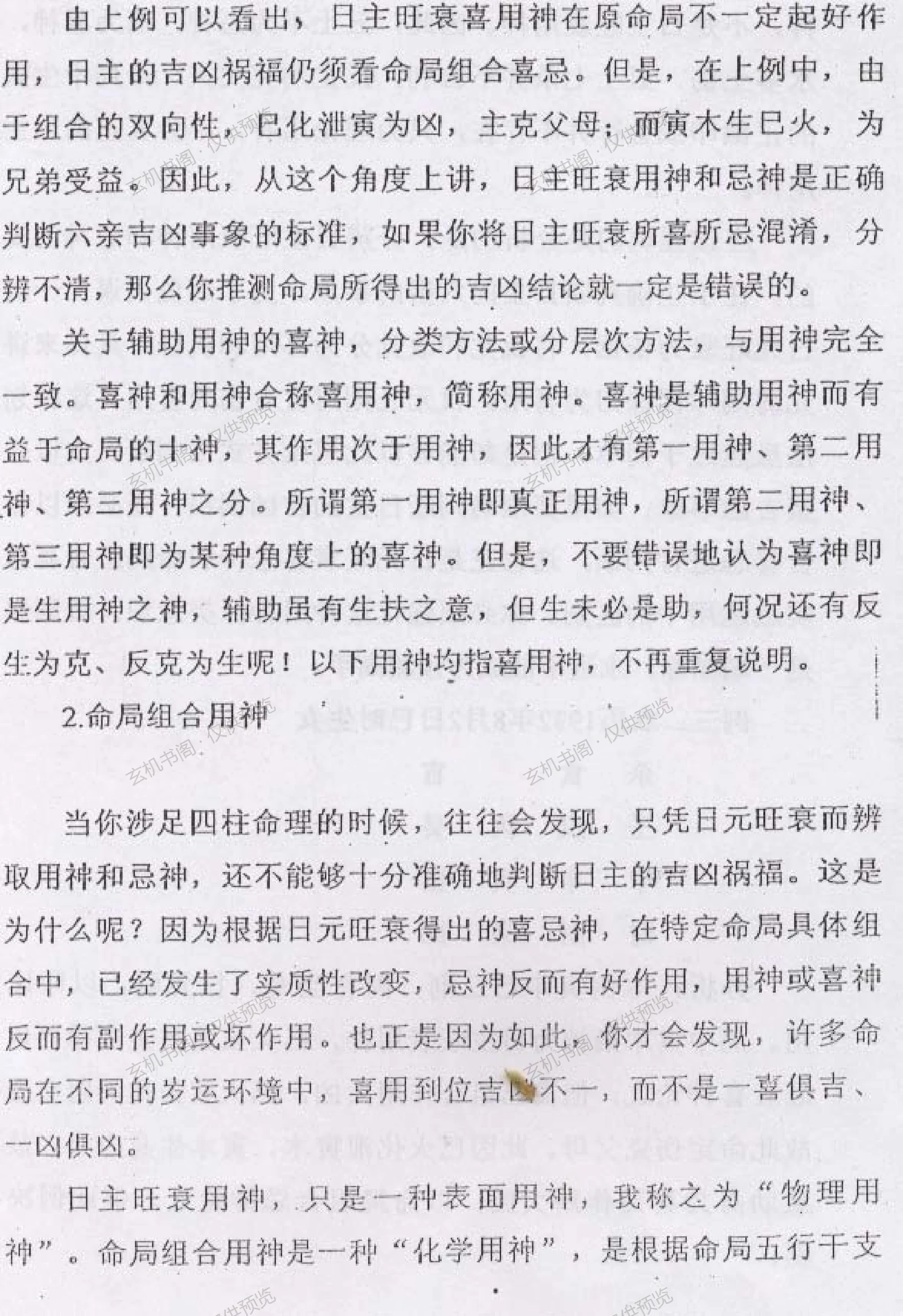
Issued under the heading 'China's Liu-School Fate Calculation System', Lei Tian Gu is attributed to Liu Jianming and published by the Liu School of Yijing Information Forecasting Research Centre. The visible chapter, 'Useful and Harmful Gods', opens with 'Liu School's New Theory of the Useful God'. The author notes that charts with a clearly lopsided five-element balance are easy to read, while balanced, smoothly flowing charts make the choice of useful god genuinely hard, and errors of favourable versus unfavourable are common. He therefore sets out a classification: three kinds of useful god (based on day-master strength, on chart combination, and on structural balance) and three levels (genuine and well-placed, present but misplaced, and merely theoretical). Several charts are analysed in turn, including a yi-wood chart with 巳酉 clashes, a supportive-style chart, a follow-the-strong chart, and one with a 寅申巳 triple punishment. Throughout he distinguishes the 'physical' useful god of day-master strength from the 'chemical' useful god created by chart combination, arguing that only the latter reliably settles matters concerning relatives and the day master's fortune. The material reads as an in-house Liu-school lecture text, suited to readers who already know Four Pillars basics and want a deeper method for choosing the useful god.
Contents
Cover: China's Liu-School Fate System, Lei Tian Gu
Section 1: Liu School's New Theory of the Useful God
Concepts and levels of useful and harmful gods
Three kinds: strength, combination, structural balance
Three levels: true, misplaced, and theoretical
Day-master strength gods with worked charts
Combination-based gods and the 'chemical' useful god
Key Points
Proposes a framework of three kinds and three levels of useful god
Works through real charts to show how useful gods are chosen and harmful ones identified
Separates the 'physical' strength-based useful god from the 'chemical' combination-based one
Stresses that combinations can turn a favourable god harmful and vice versa
Restricts strength-based judgements mainly to matters of relatives and close associates