Reading guide
Content guideOverview
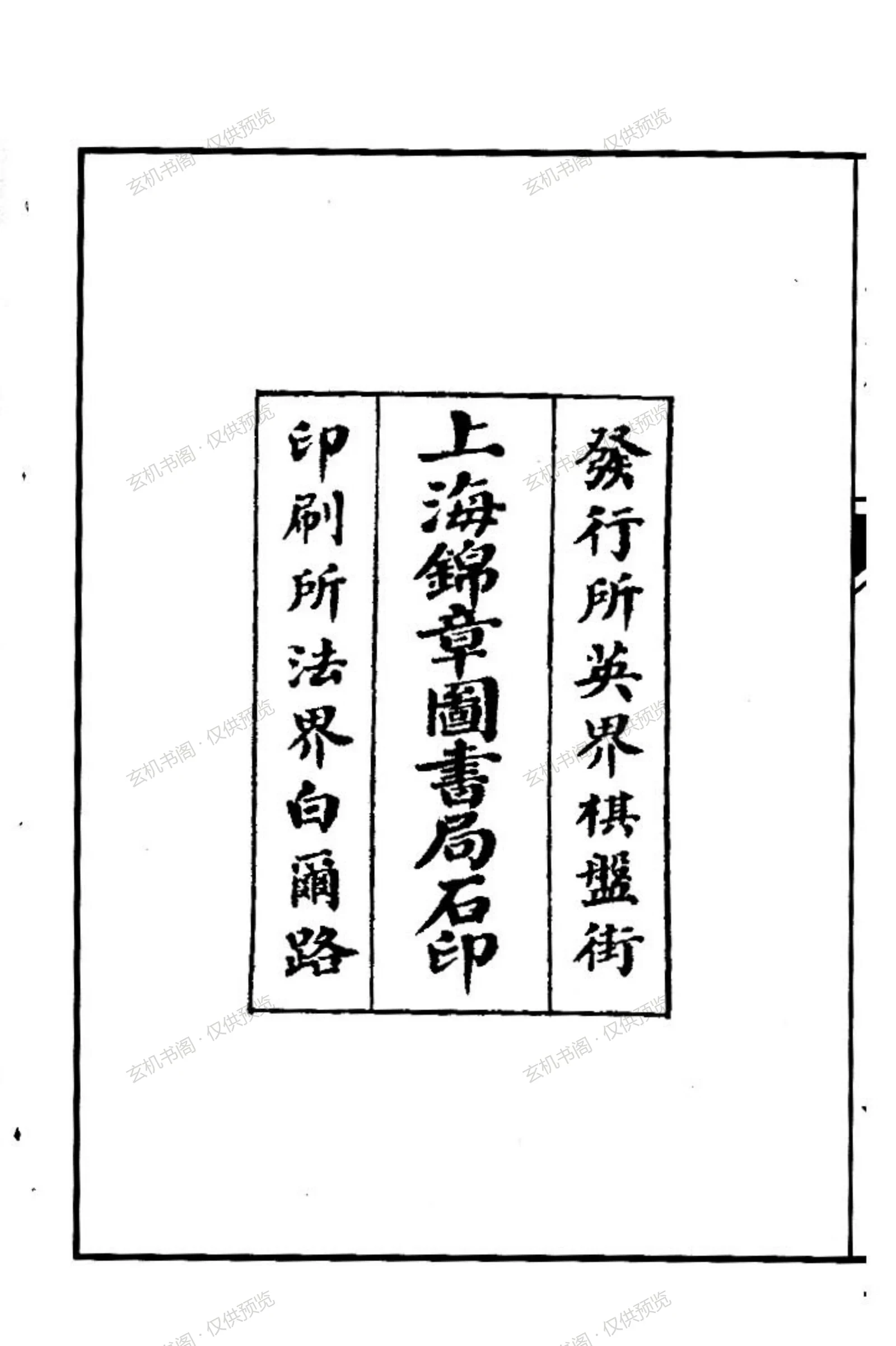
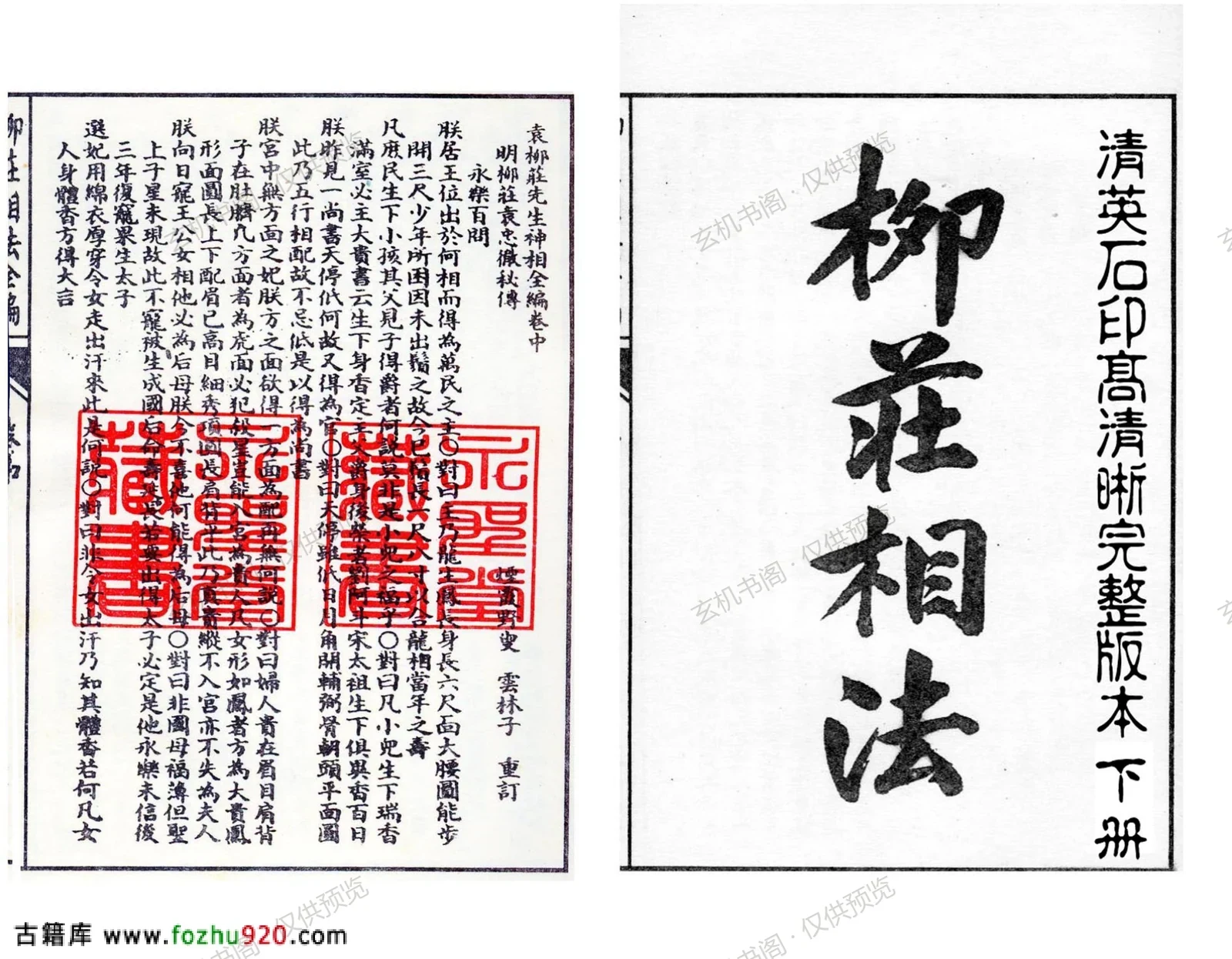
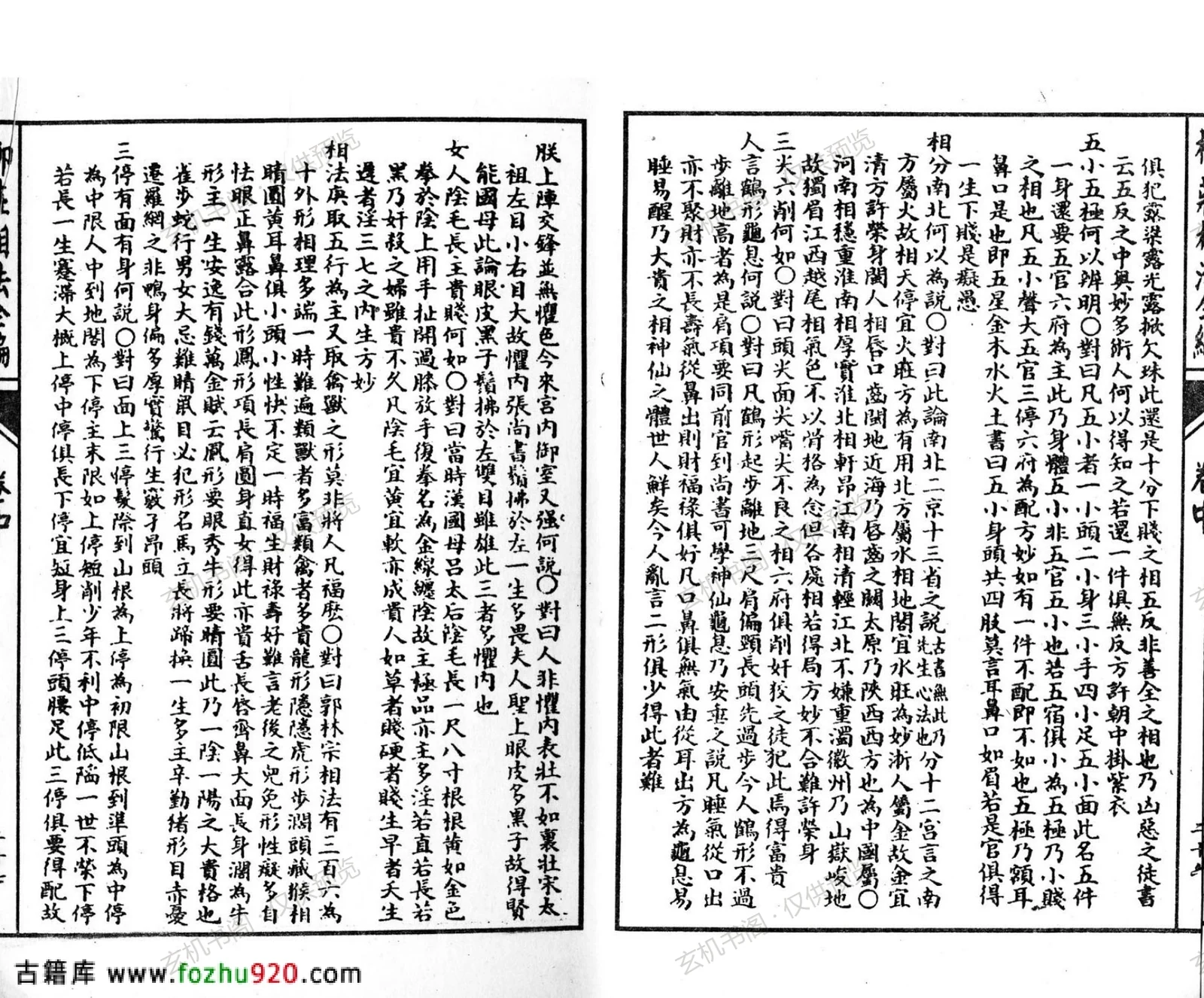
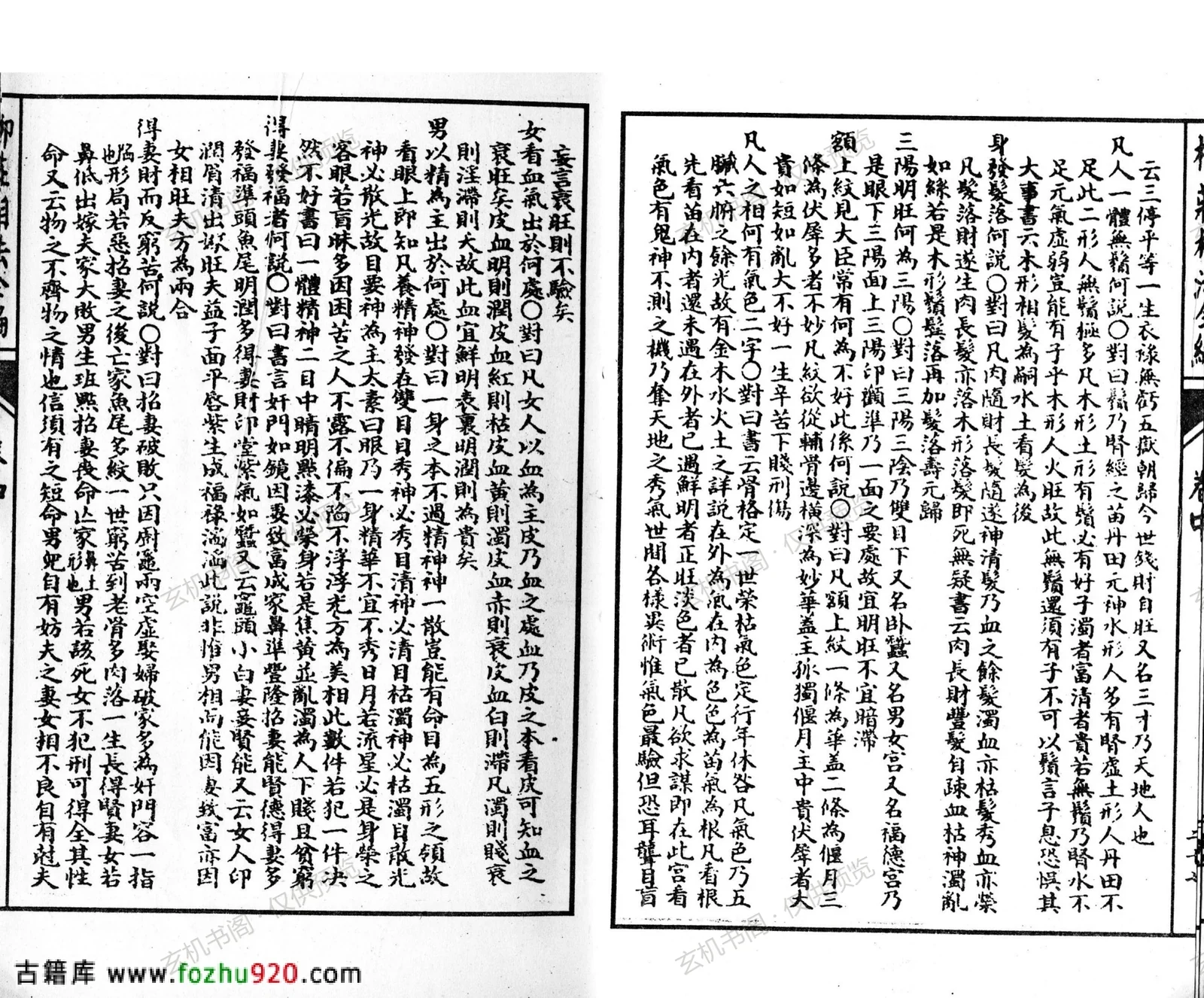
This is the second volume of Liuzhuang's Physiognomy Methods (Liuzhuang Xiangfa), a Qing-era lithographic edition. The cover names Shanghai Dacheng Shuju as distributor and marks it as the lower volume; the inner title page advertises a "clear complete edition" printed by Shanghai Jinzhang Tushu Ju, with the issuing office on Qipan Street in the British Concession and the printing office on Bair Road in the French Concession. The text opens with "Mr. Yuan Liuzhuang's Complete Compilation of Divine Physiognomy, middle juan," attributed to Yuan Zhongche of the Ming dynasty and revised by Yunlinzi. Written largely in question-and-answer form, it covers facial regions (forehead, brows, eyes, nose, mouth, ears, chin), complexion and spirit, and judgments about male and female physiognomy, nobility, longevity, and misfortune. It uses standard technical terms such as the Three Stops, Five Peaks, and Five Stars and Six Luminaries, and includes the "Yongle Hundred Questions." As a modern lithographic reprint, it is useful for students of traditional physiognomy, folk belief, and the history of stone-printed publishing in Shanghai.
Contents
Cover and publication data: Shanghai Dacheng Shuju, lower volume
Inner title: clear lithographic edition printed by Shanghai Jinzhang Tushu Ju
Opening title: Yuan Liuzhuang's Complete Compilation, middle juan, attributed to Yuan Zhongche
Yongle Hundred Questions: facial regions and complexion in Q&A
Judgments on male and female forms, nobility, longevity, and misfortune
Technical terms: Three Stops, Five Peaks, Five Stars and Six Luminaries
Key Points
Explains facial regions and complexion through questions and answers
Opening title identifies the text as part of Yuan Liuzhuang's Complete Compilation, attributed to Yuan Zhongche
Discusses male and female physiognomy, nobility, longevity, and fortune
Uses traditional terms such as Three Stops, Five Peaks, and Five Stars and Six Luminaries
A modern Shanghai lithographic edition with value for publishing and folk-studies history