Reading guide
Content guideOverview
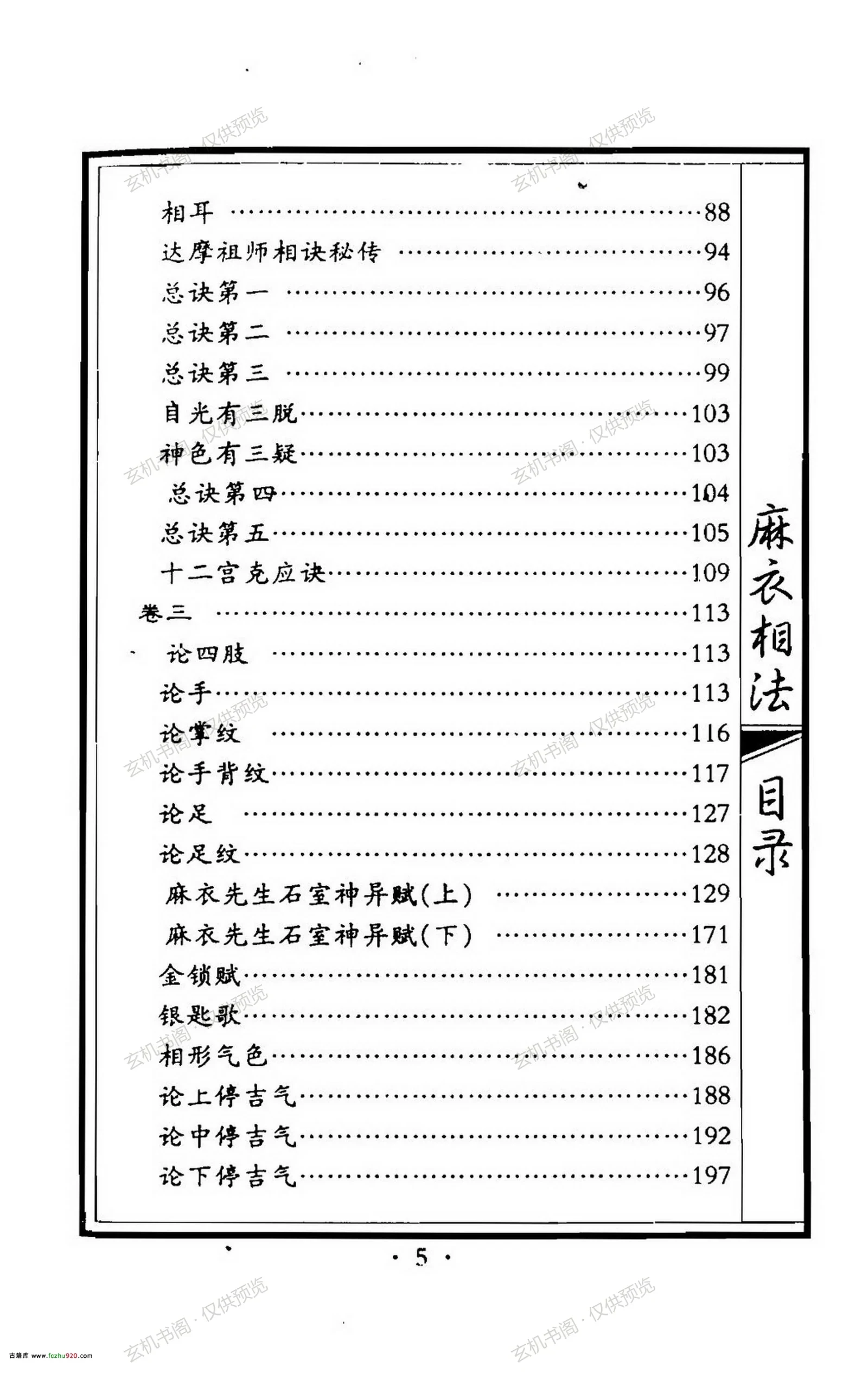
This is a modern compiled edition of the classic Ma Yi physiognomy text. The cover credits Ma Yi Xiangshi, and the opening preface, attributed to a Hanlin compiler, discusses the relationship between physiognomy and character, cautioning readers neither to dismiss nor overindulge in it. The book is divided into upper and lower sections. The upper section follows the main Ma Yi text: Volume One presents fourteen physiognomic diagrams, eight methods of observing people, the thirteen facial positions, annual fortune verses, the twelve palaces and their secrets, the five organs, five mountains, four rivers, three fundamentals, five stars and six luminaries, and the four and eight halls of learning. Volume Two moves to general face analysis, five-element forms and colors, discussions of form and spirit, voice and qi, then detailed chapters on bones, flesh, hair, forehead, face, eyebrows, eyes, nose, philtrum, mouth, lips, tongue, teeth, and ears, followed by Bodhidharma's secret physiognomy transmission, five general discourses, three escapes of light, three doubts of expression, and the twelve-palace response verses. Volume Three covers limbs, hands, palm lines, back-of-hand lines, feet and foot lines, includes the Shishi Shenyi Fu in two parts, the Jinsuo Fu, and the Yinshi Ge, and closes with discussions of form, color, and qi in the upper, middle, and lower sections of the face. With both illustrations and text, it serves as a foundational reader for understanding traditional physiognomic terminology and judgment systems.
Contents
Fourteen physiognomy diagrams and eight observation methods
Thirteen positions, annual fortune, and twelve palaces
Five organs, five mountains, four rivers, five stars and six luminaries
Form, spirit, five-element colors, voice, and qi
Bones, flesh, head, face, brows, eyes, nose, mouth, teeth, ears
Bodhidharma's secret verses and twelve-palace responses
Limbs, hands, feet, palm lines, and Shishi Shenyi Fu
Jinsuo Fu, Yinshi Ge, and three-section complexion omens
Key Points
Uses fourteen diagrams and eight methods to establish basic facial zones.
Thirteen positions and annual fortune verses locate age and auspiciousness.
The twelve palaces with five organs and five mountains frame judgments on family and wealth.
Emphasizes form, spirit, voice, and qi rather than facial shape alone.
Volume Three extends to hands and feet and includes major prose-poems and songs.