Reading guide
Content guideOverview
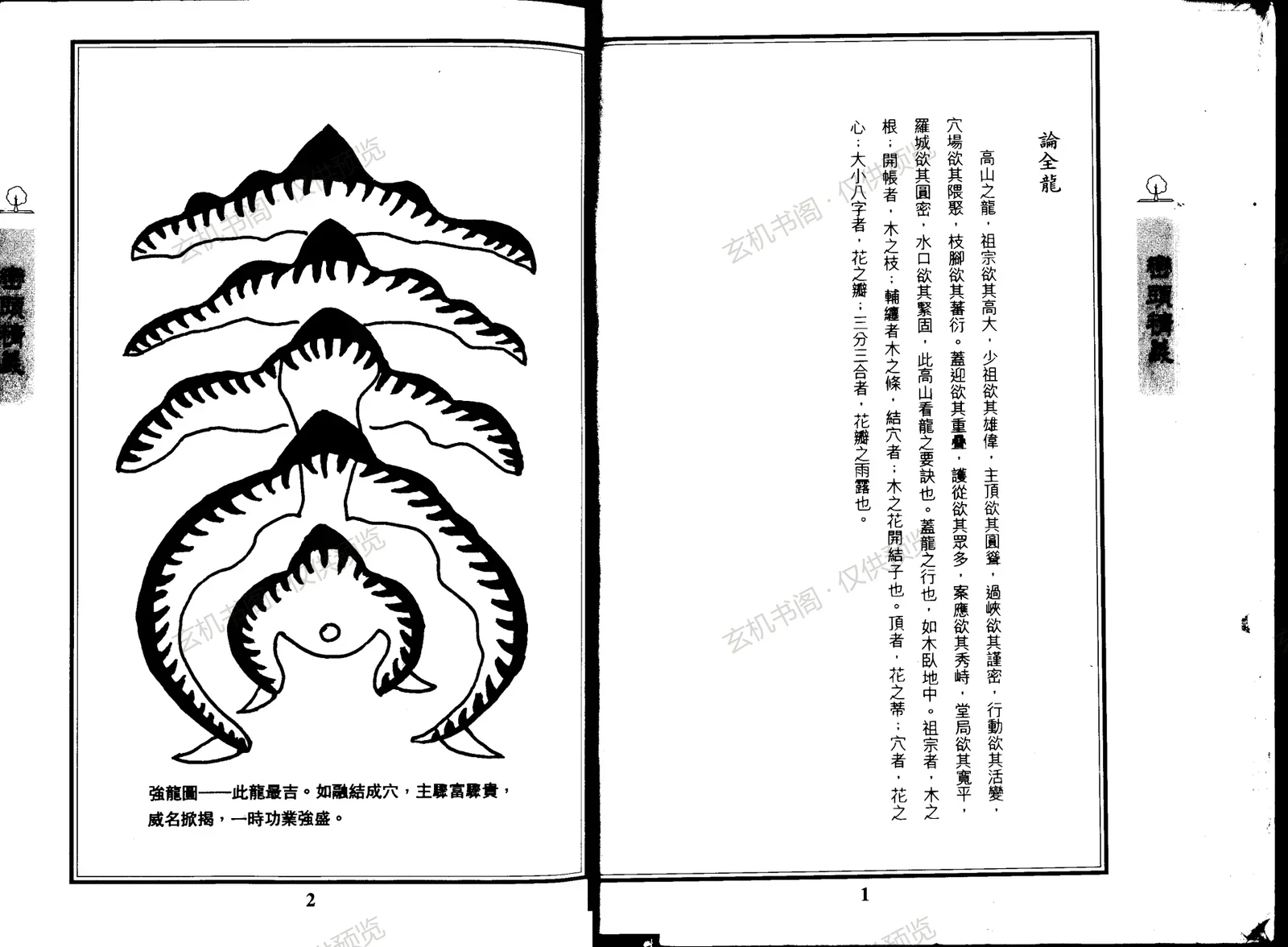
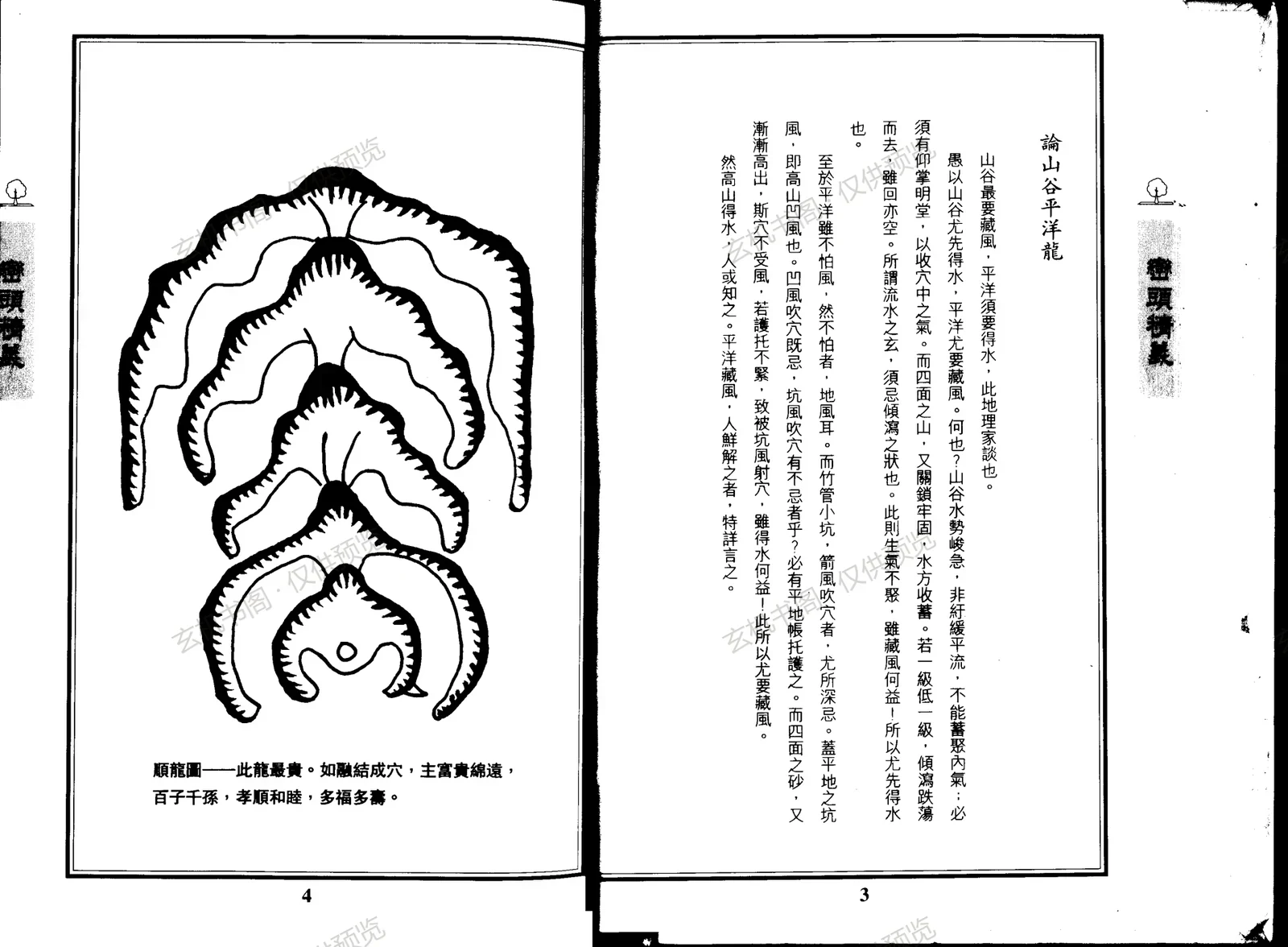
This book is a form-school (luántóu) feng shui treatise by Li Mozhai, a Qing-dynasty geomancer from Xiangshan (present-day Zhongshan, Guangdong). In his preface, the author states that he spent over forty years studying feng shui and testing his ideas against old graves before compiling this work. The book centers on the configuration of mountains and water, covering the identification of dragon veins, the assessment of穴 spots, the examination of sand and water, and the determination of orientation. It discusses various dragon forms—high mountain dragons, flatland dragons, branch dragons, and ridge dragons—along with穴 star formations such as窝, 钳, 乳, and突. Detailed water rules include golden fish water, shrimp whisker water, and crab eye water, while sand and water patterns cover official, ghost, bird, and star sand, city walls, water mouths, and bright halls. Chapter Five is devoted to strange穴 formations, with mnemonic verses and explanations intended to correct common misidentifications. The book is illustrated with diagrams such as the Strong Dragon and the Flowing Dragon, making it useful for readers with basic feng shui knowledge who wish to deepen their study of form-school methods.
Contents
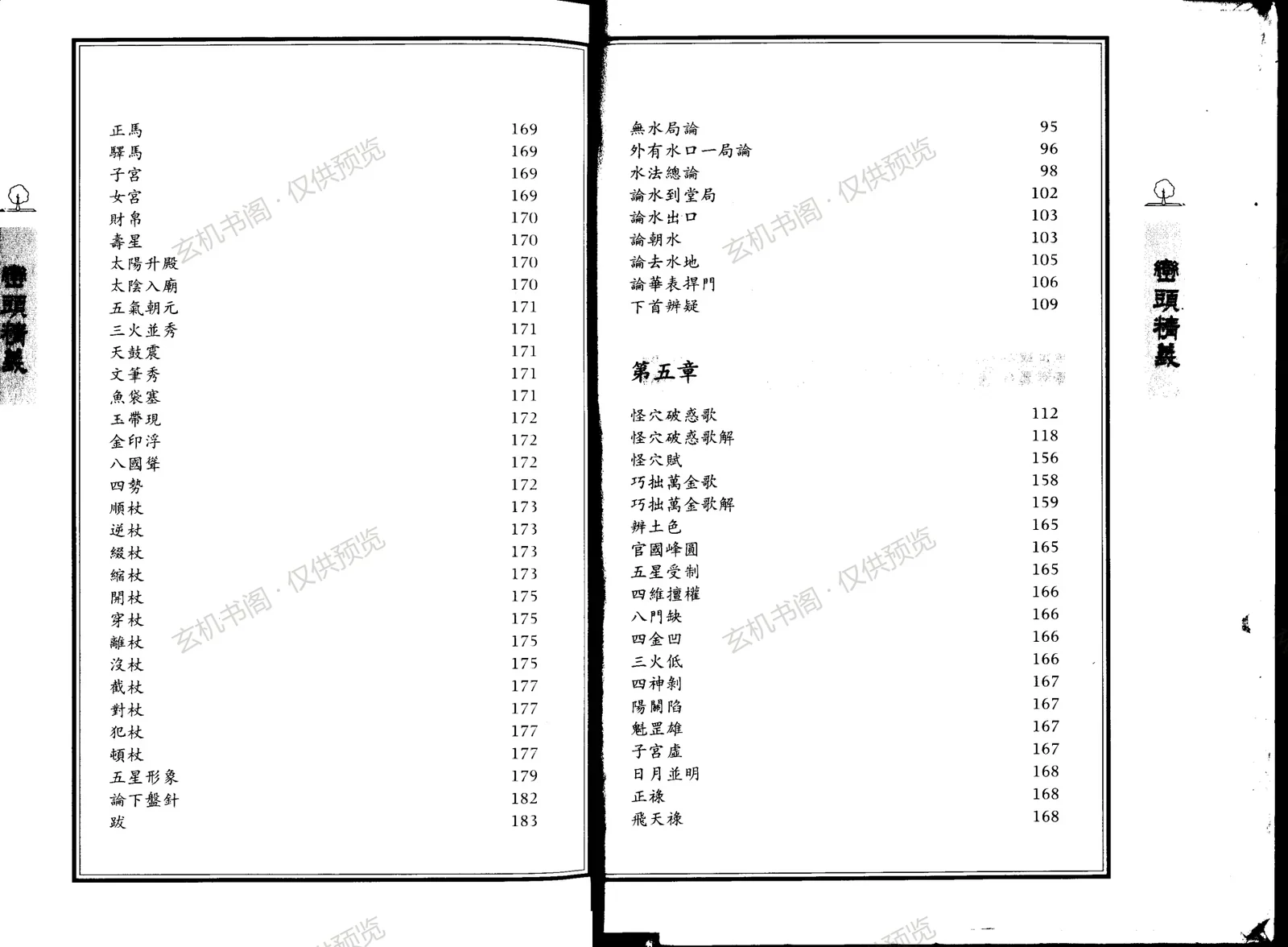
Ch.1: On golden dragons, mountain and flatland dragons, five configurations and ten layouts
Ch.2: Methods for assessing穴 spots, on taiji, two modes, eight trigrams
Ch.3: General principles of sand and water, golden fish water, crab eye water
Ch.4: Spiral patterns, inverted staff method, five layouts of dragon穴
Ch.5: Songs on strange穴, songs on skill and clumsiness, five star images
Key Points
Focuses on form-school feng shui: identifying dragon veins,穴 stars, sand, water, and bright halls.
Includes diagrams such as the Strong Dragon and Flowing Dragon for visual reference.
Devotes a chapter to strange穴 formations, explained through mnemonic verses.
Distinguishes high mountain methods (storing wind) from flatland methods (obtaining water).