Reading guide
Content guideOverview
Feng-Shui Comic is an illustrated beginner's guide that explains what feng shui is and where it came from. It opens with the everyday scene of people consulting feng shui before buying or renovating a home, then defines feng shui as a way of observing heaven and earth whose core is the unity of heaven and humanity, a method for living in harmony with nature and an important branch of Yijing studies. The text traces the term to Guo Pu's Book of Burial in the Jin dynasty, notes the Han-era Palace Dwelling Terrain and Kunyu Jinkui as the earliest feng shui treatises, and dates the tradition to the Warring States period, flourishing in the Eastern Han under the name kanyu. Cartoons and maps show its spread: to Europe around the eighteenth century, where Western scholars framed it as an Eastern environmental science, with a cover of Ernest J. Eitel's What Is Feng-Shui? and an English luopan; and across Asia, where it produced Japanese, Korean and Southeast Asian variants, reaching Japan via Korea with the earliest record in 602. Chinese practice divides yang-dwellings and yin-dwellings, called kaso and bosho in Japan, which emphasizes houses over tombs. The book closes by noting that feng shui changes with environment and that Chinese schools broadly fall into the form school and the compass school. Light on text and heavy on images, it suits complete beginners building a conceptual and historical framework.
Contents
Chapter 1: Overview of feng shui
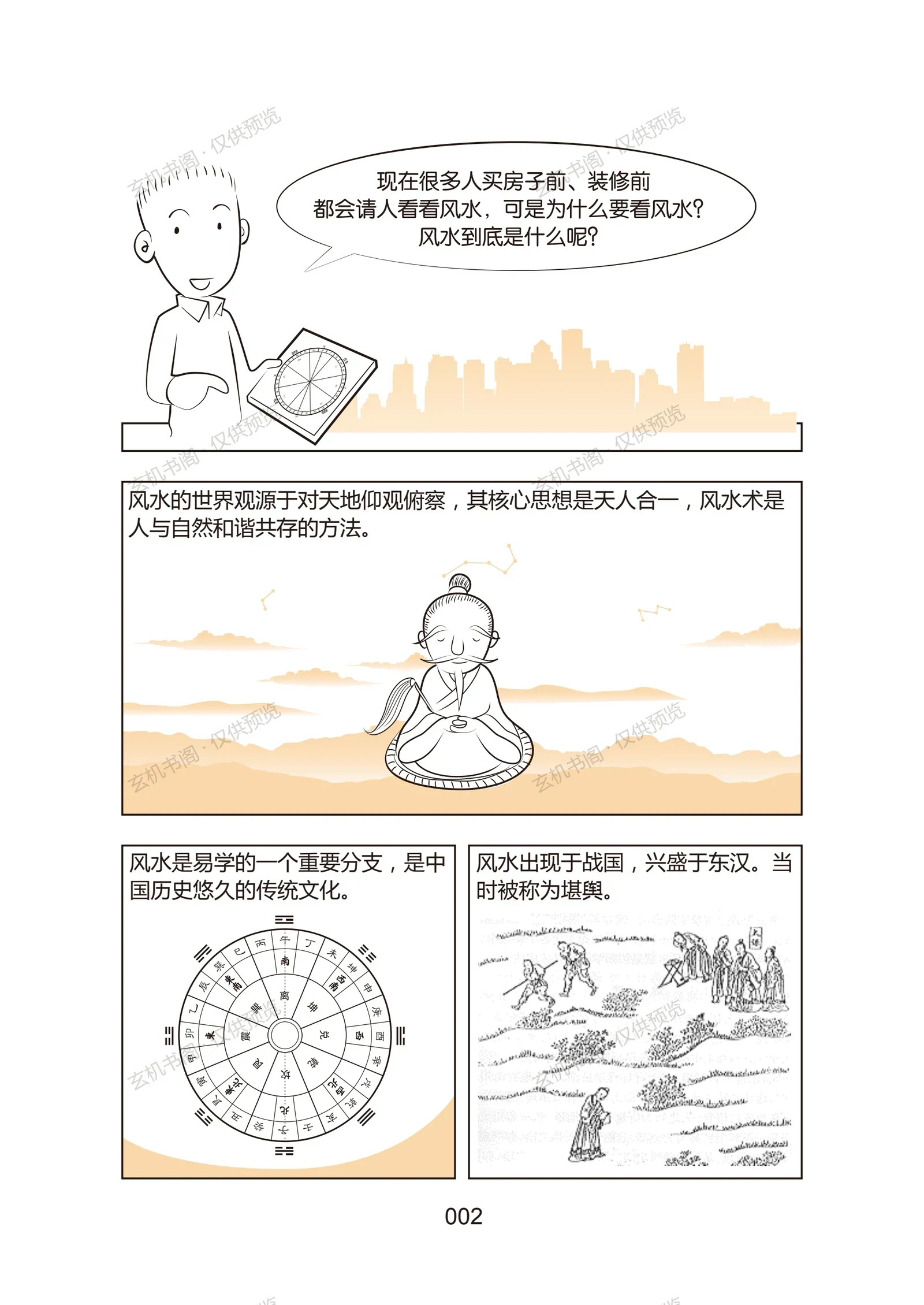
Definition: unity of heaven and humanity
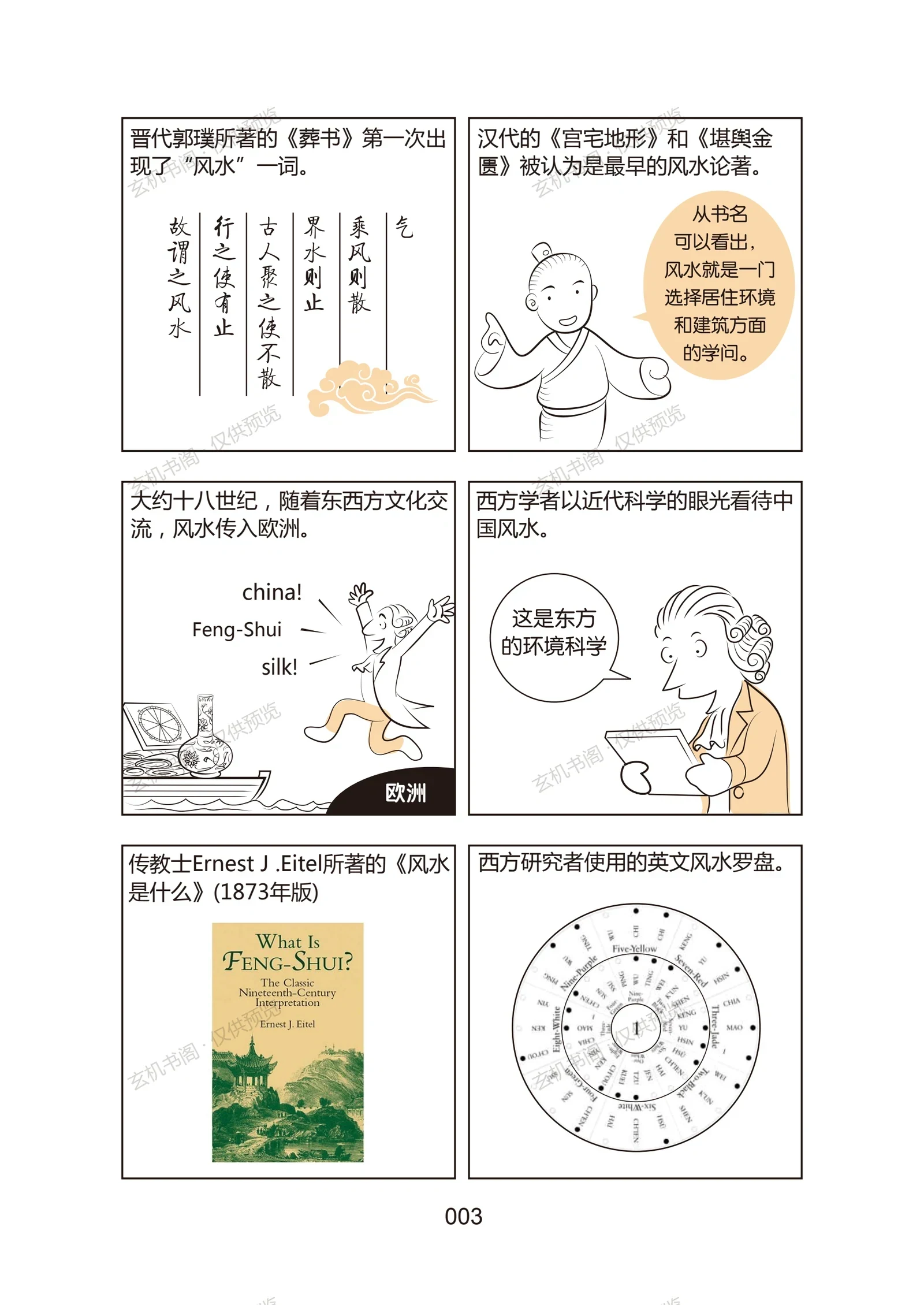
Origin of the term and early treatises
Transmission to Europe as environmental science
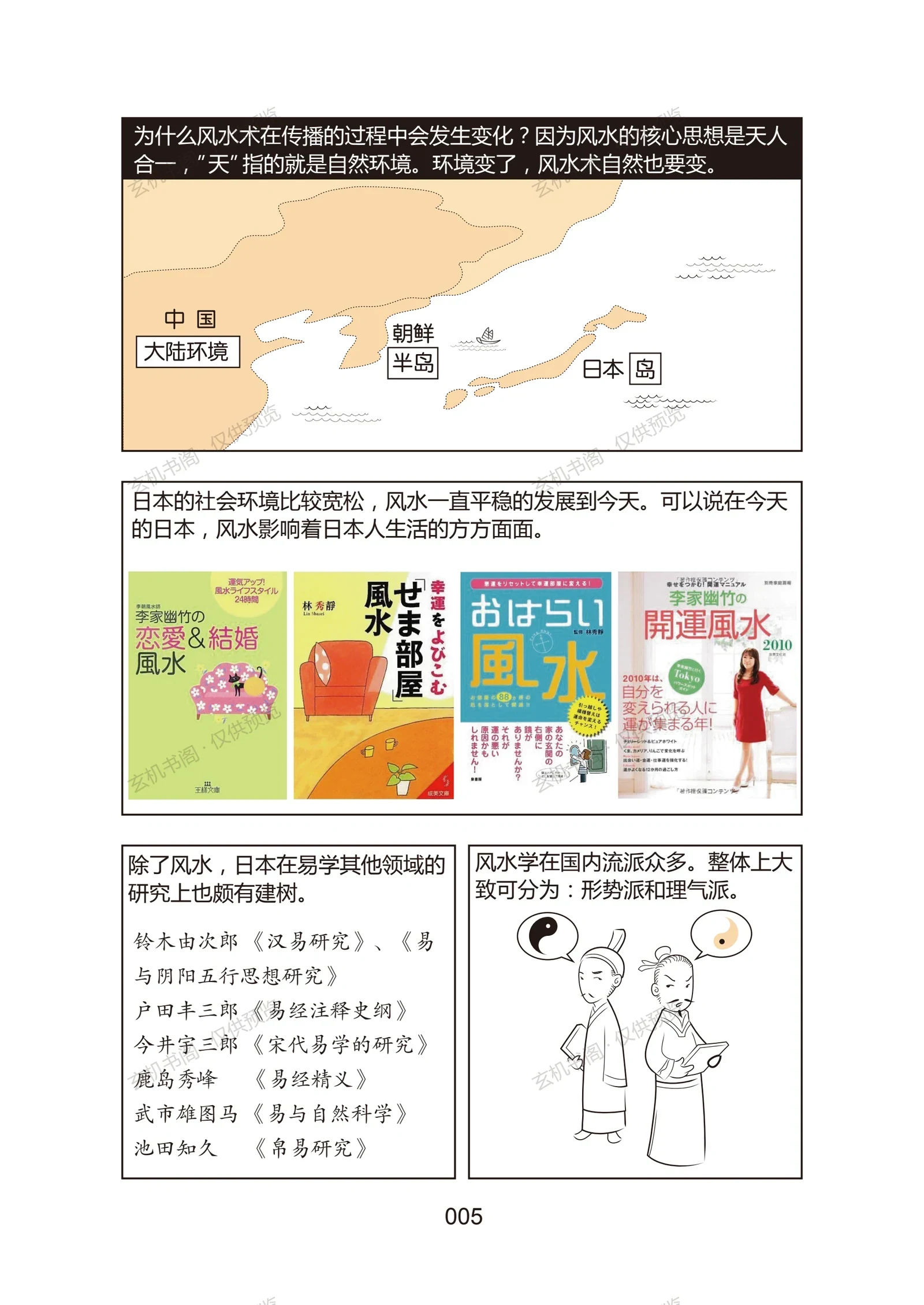
Asian variants: Japan, Korea, Southeast Asia
Yang and yin dwellings, kaso and bosho
Form school versus compass school
Key Points
Core idea is harmony between heaven, earth and people
The term first appears in Guo Pu's Book of Burial
Reached Europe around the 18th century as environmental science
Japan received it via Korea and stresses houses over tombs
Chinese schools split broadly into form and compass schools