Reading guide
Content guideOverview
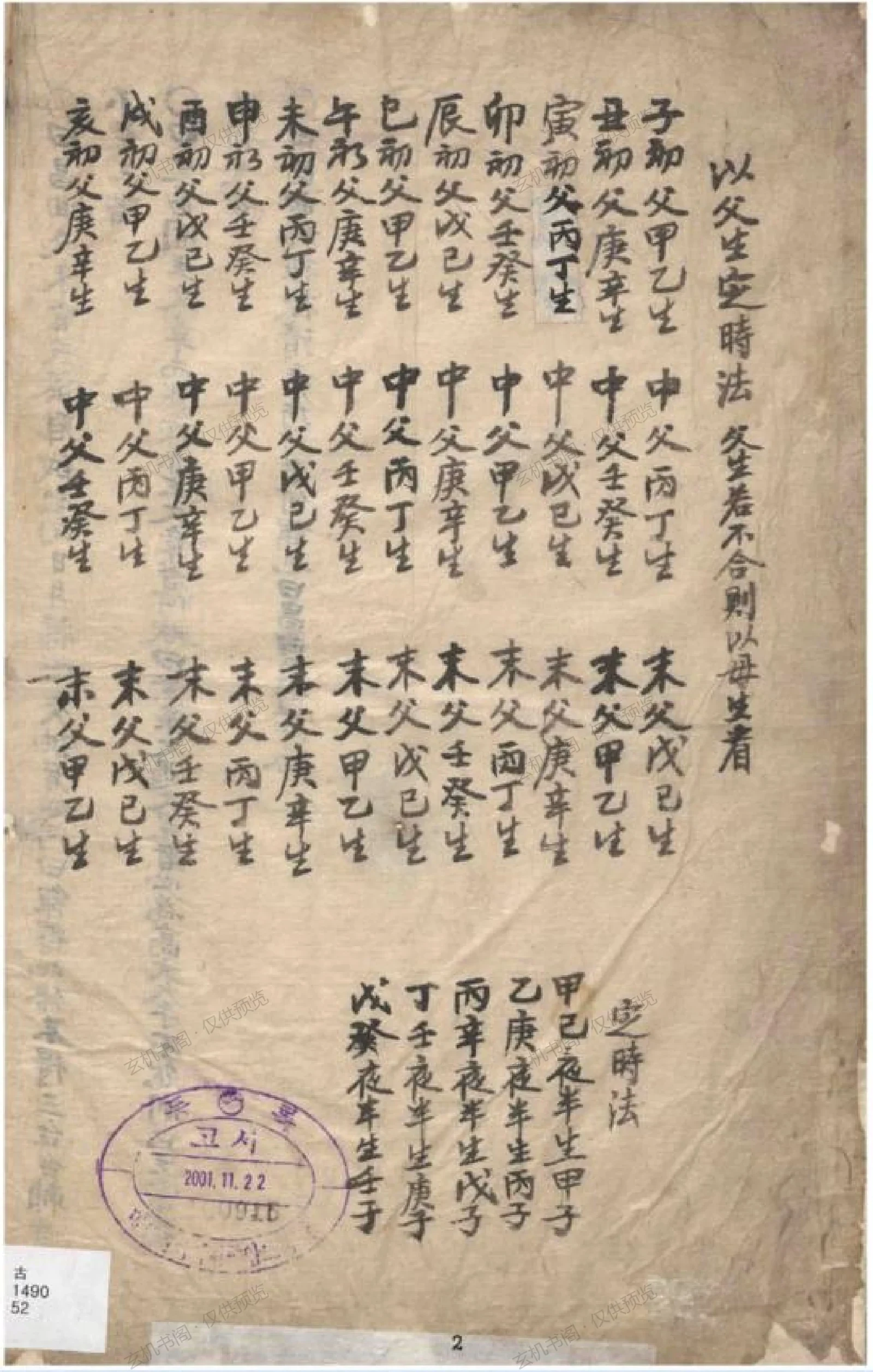
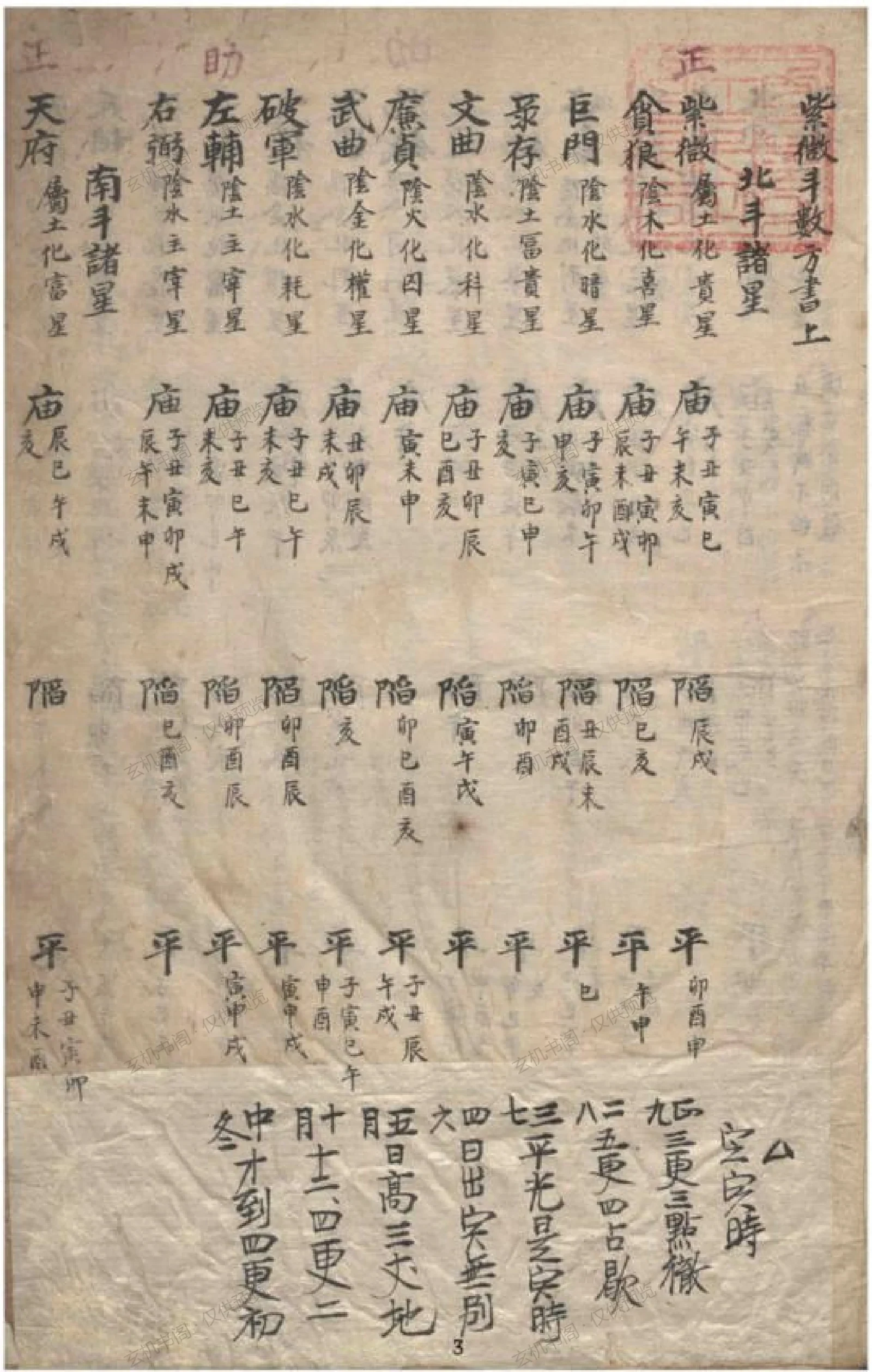
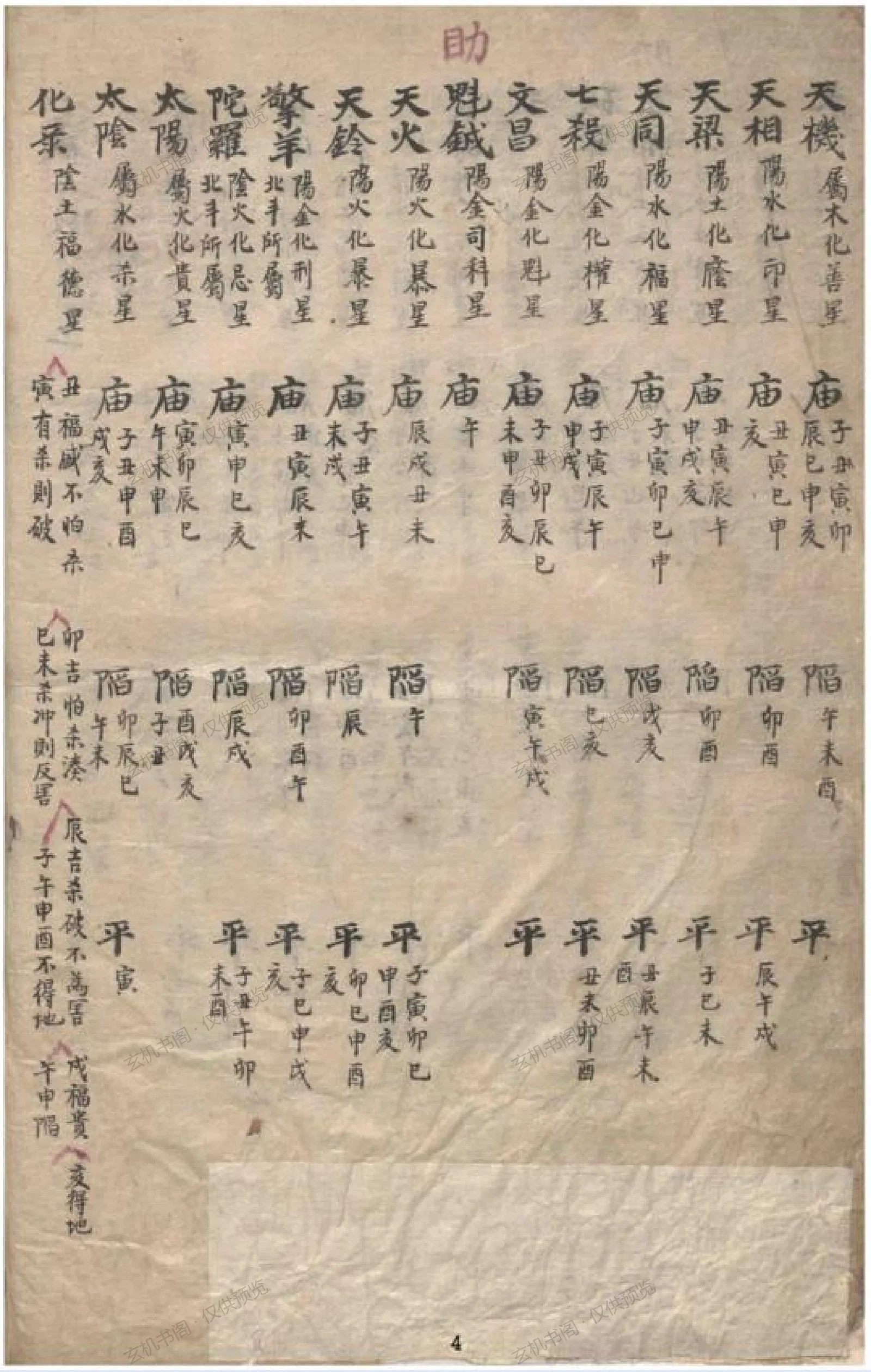
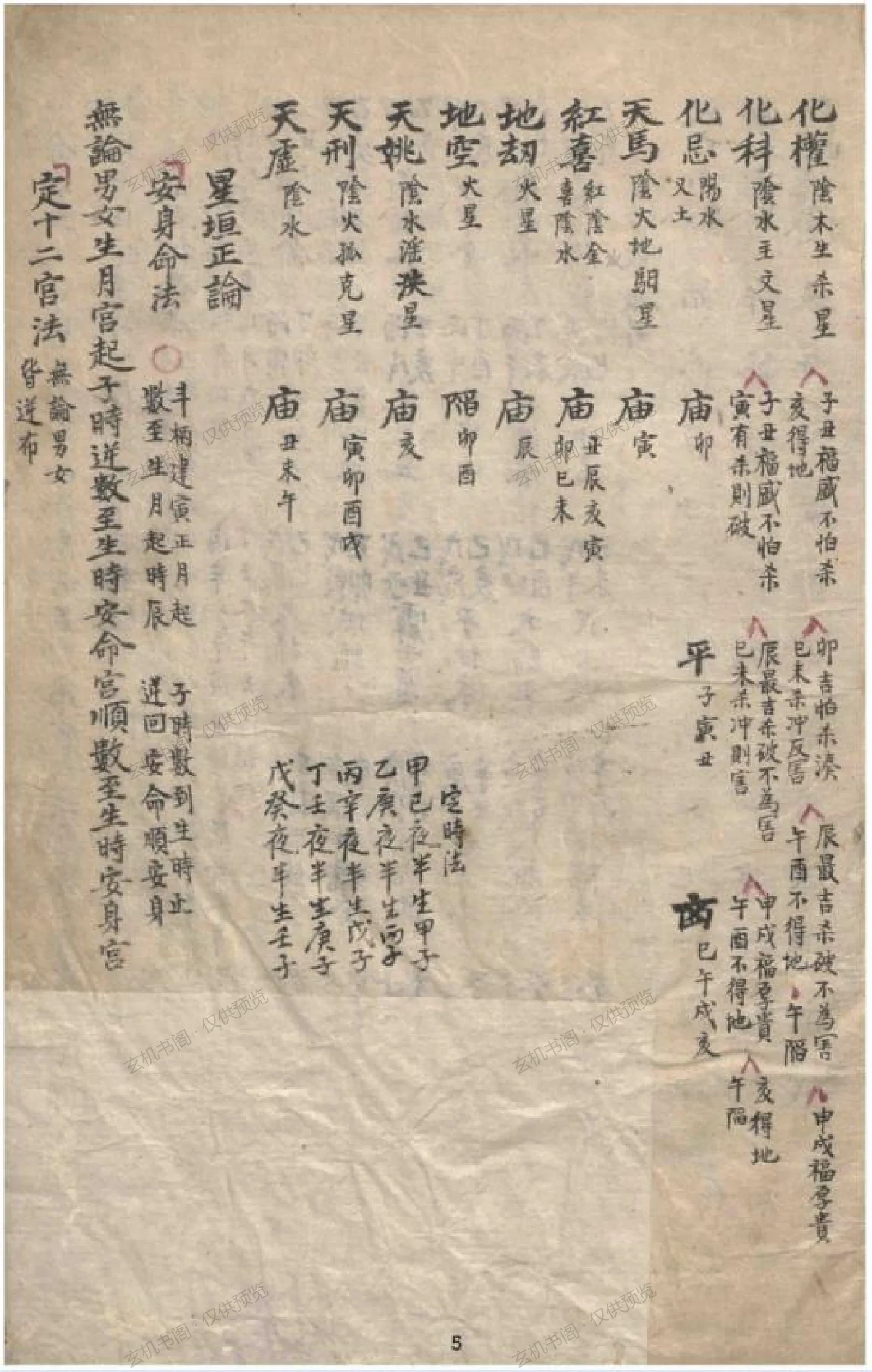
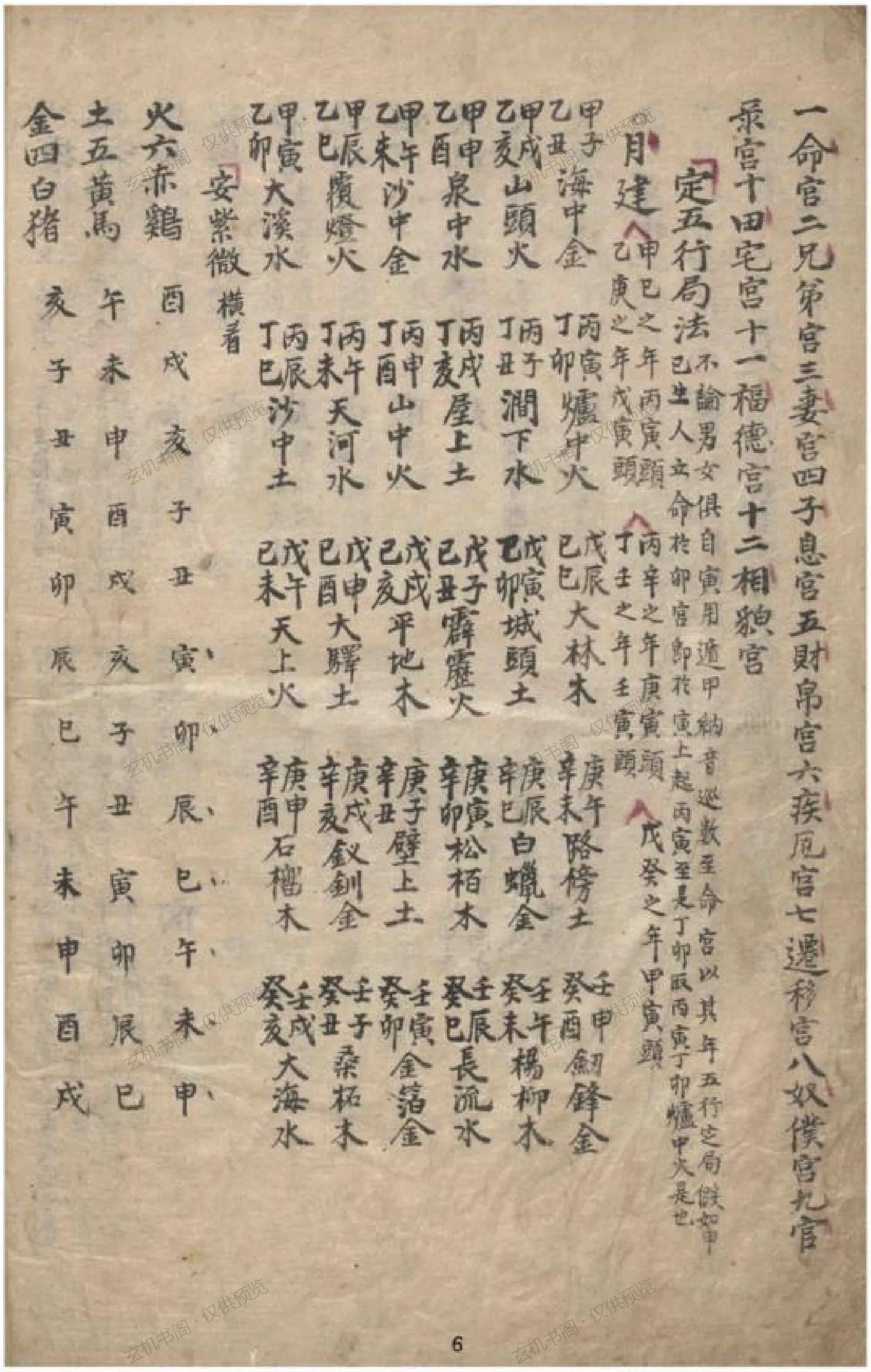
The cover reads 'Secretly Transmitted Ziwei' with 'Chun'gang Collection' at the lower left, indicating a handwritten Ziwei Doushu text. The first six pages cover the fundamentals of chart construction: a method for determining the birth hour from the parents' birth years and the night-watch hours; a list of Northern Dipper stars such as Ziwei, Tanlang, Jumen, Lucun, Wenqu, Lianzhen, Wuqu, Pojun, Zuofu, Youbi and Tianfu, each annotated with its element, transformed qi and temple/fallen status; and a parallel list of Southern Dipper stars including Tianji, Tianliang, Tiantong, Qisha, Wenchang, Tiankui, Tiangui, Qingyang, Tuoluo, Taiyang, Taiyin and Hualu, likewise with favorable and unfavorable positions. The later pages discuss 'True Discourse on the Star Enclosures', methods for placing the life and body palaces, and rules for setting out the twelve palaces, together with the five-element bureaus and the sixty-jiazi nayin table. It reads as a portable handbook of star-placement rules, useful for understanding the terminology and charting order of old Ziwei manuscripts, though its dense handwriting and variant characters require some prior familiarity with Ziwei Doushu.
Contents
Methods for determining the birth hour
Northern Dipper stars and their positions
Southern Dipper stars and their positions
True discourse on the star enclosures
Placing life/body palaces and the twelve palaces
Five-element bureaus and sixty-jiazi nayin
Key Points
Birth hour is inferred from parents' birth years and night-watch hours.
Stars are divided into Northern and Southern groups, each with element, qi and position notes.
Life and body palaces are counted from birth month and hour.
The twelve palaces are laid out in sequence with the five-element bureaus.
A sixty-jiazi nayin table closes the excerpt for bureau and limit calculation.