Reading guide
Content guideOverview
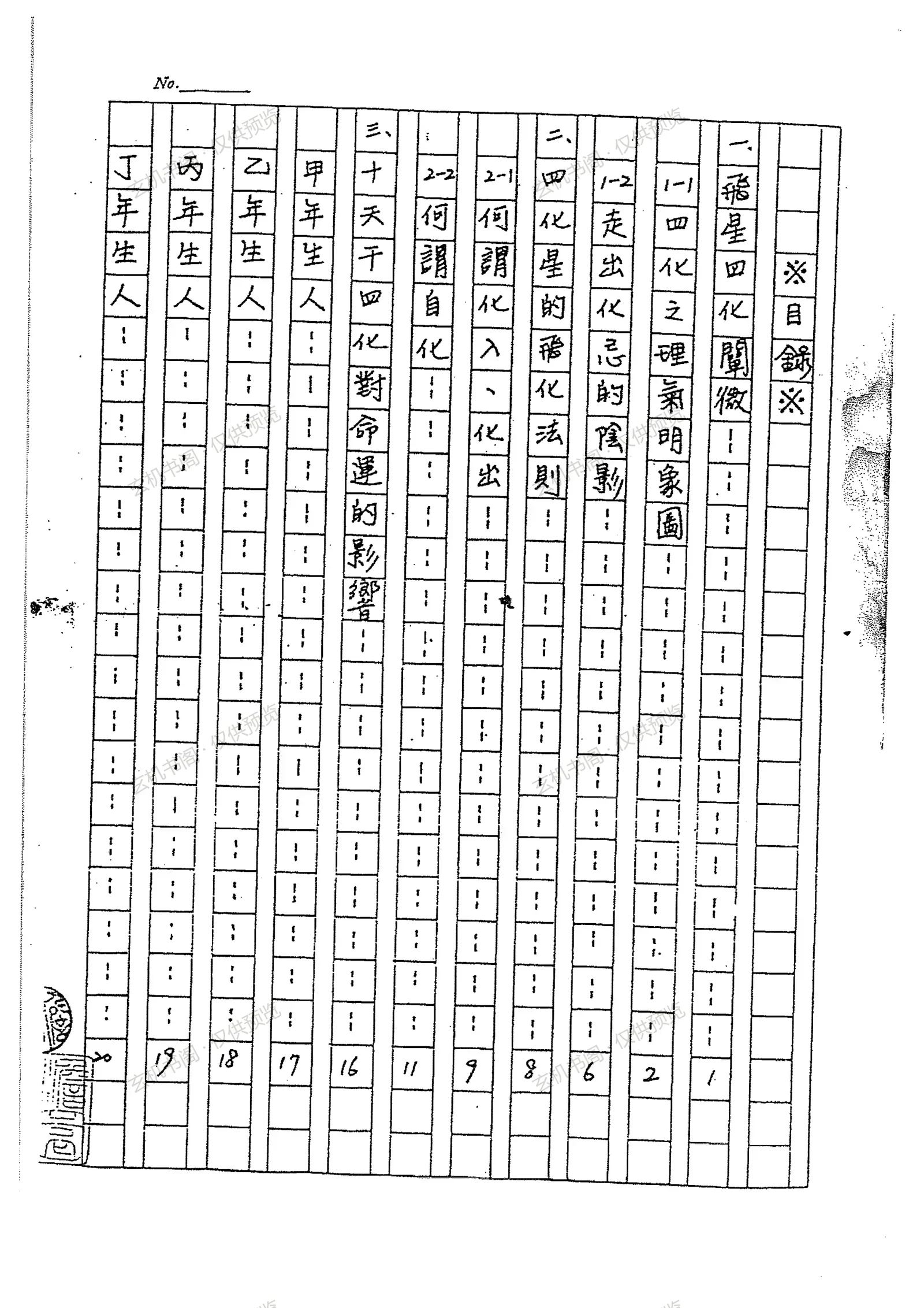
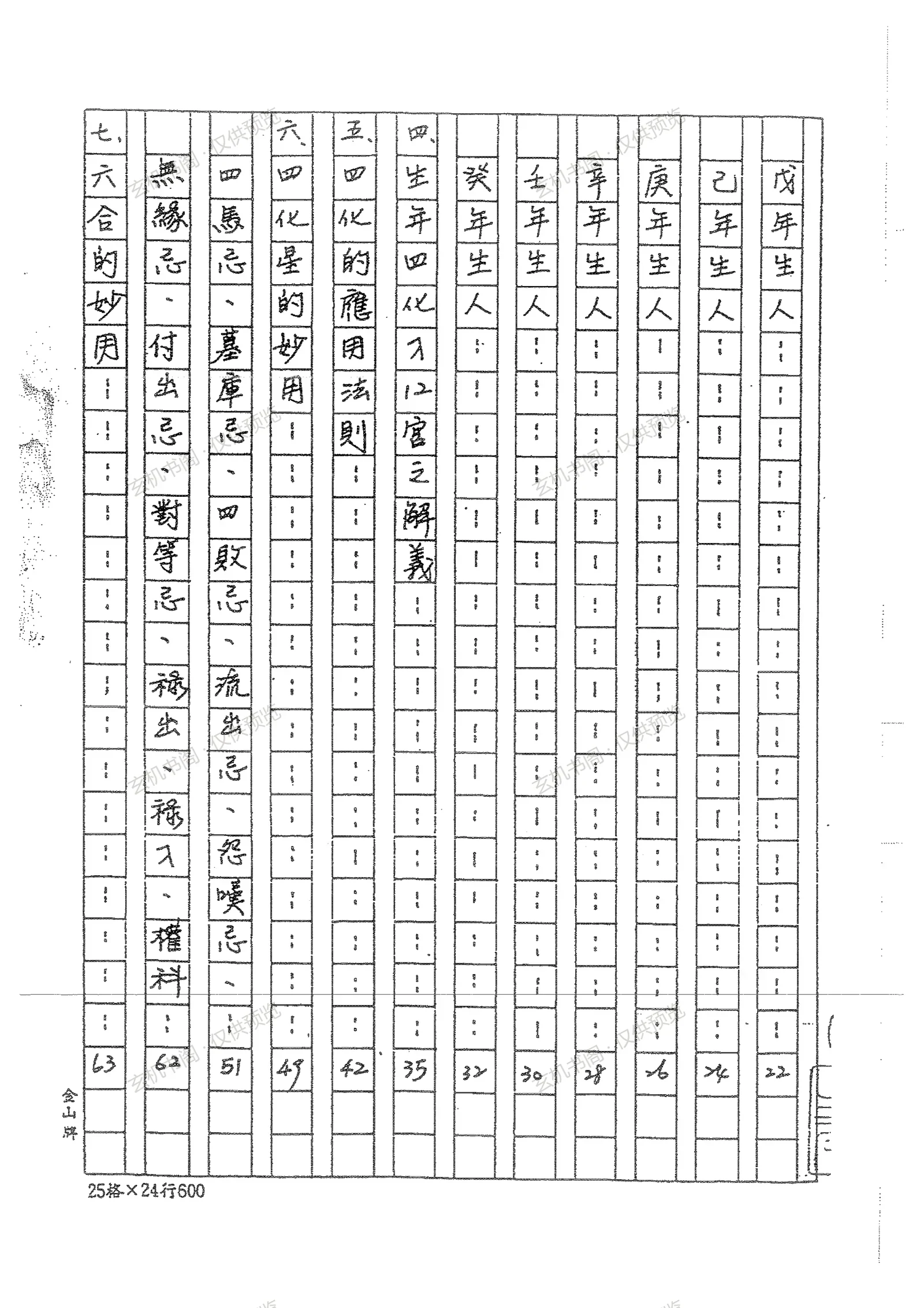
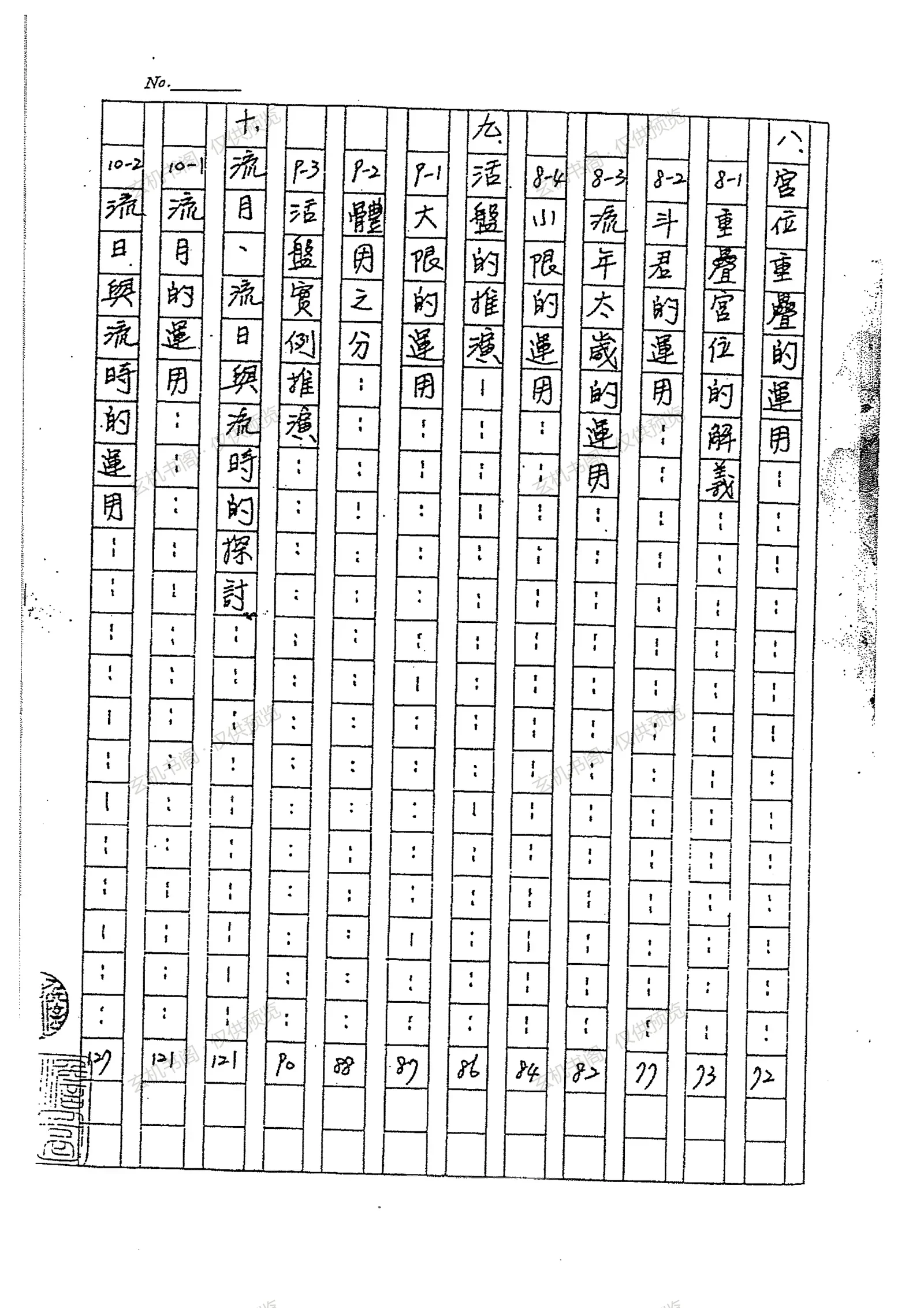
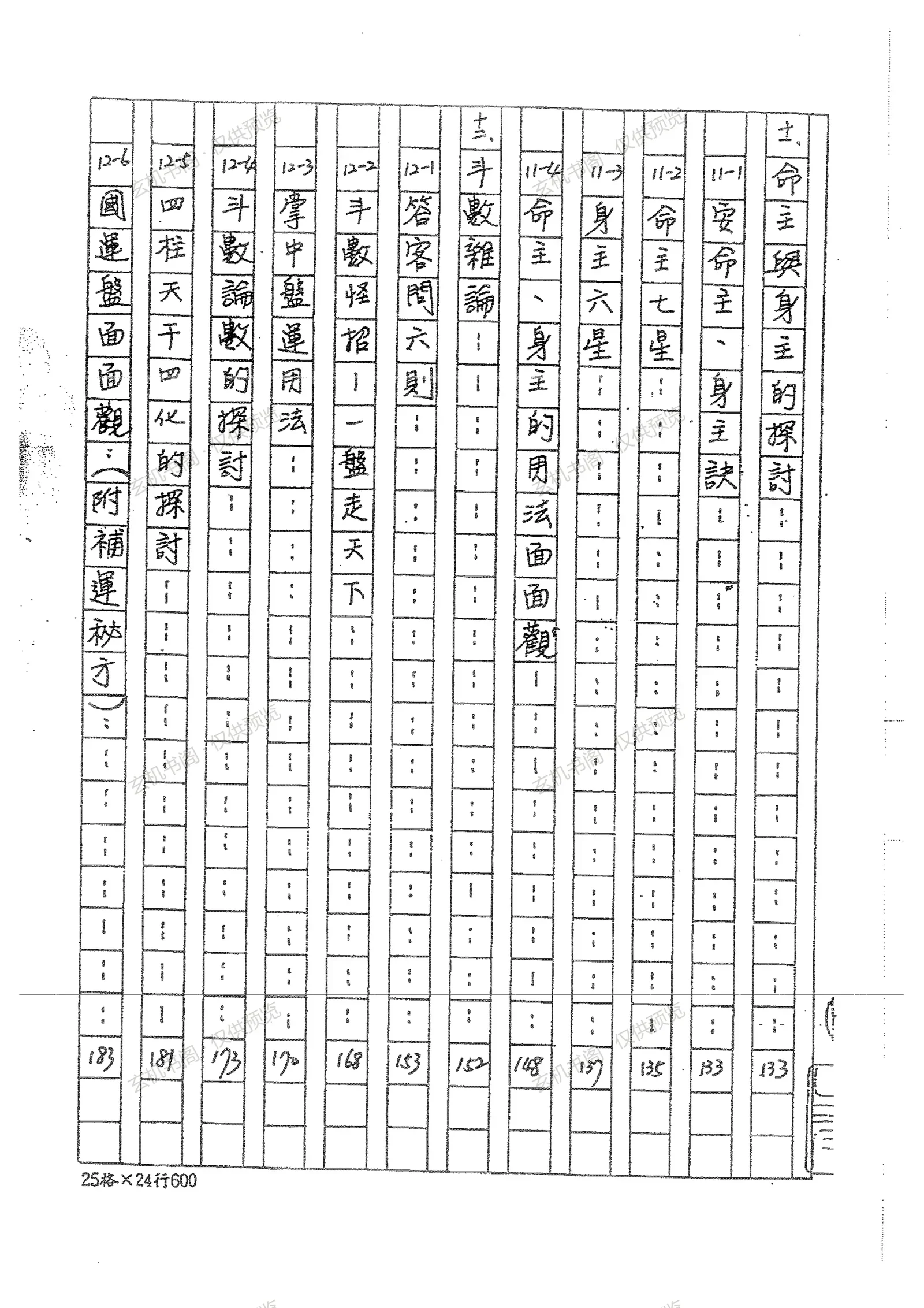
This is the fourth volume of the Zhanyuan Doushu series. The cover reads only 'NEW 谵園斗數 4', and the following pages consist of a handwritten table of contents in twelve sections. It opens with the theory of flying-star four transformations (si hua), covering the symbolic diagrams of the four transformations, escaping the shadow of hua ji, and the rules by which the four transformed stars change. It then explains what it means for a transformation to enter, exit, or self-transform, and discusses the influence of the four transformations on destiny for people born in each of the ten heavenly stems. Later chapters cover the application rules of the four transformations, the subtle uses of the four transformed stars, terms such as wuyuan ji, fuchu ji, duideng ji, lu chu, lu ru, quan and ke, and categories of ji including sha ji, ku ji, bai ji, liu ji and yuantan ji. Chapter seven treats the uses of the six harmonies, and chapter eight the use of overlapping palaces, including explanations of overlapping palaces, the dou jun, liu nian tai sui, xiao xian, and live-chart deduction. Chapter nine discusses the use of major limits and their stacking, with live-chart examples for deducing monthly, daily, and hourly cycles. Chapter eleven returns to the question of the life master and body master, and chapter twelve is a miscellany of dou shu topics, questions and answers, and a discussion of four transformations by the heavenly stems of the four pillars. The book leans heavily toward the practical deduction of flying-star four transformations and palace overlays, and is suited to readers who already have a foundation in dou shu and wish to deepen their chart-reading skills. The handwritten contents are cursive, and a few headings are difficult to identify with certainty.
Contents
1. Flying-star four transformations: symbolic diagrams and the shadow of hua ji
2. Rules of change: transformations entering, exiting, and self-transforming
3. Influence of the ten heavenly stems' four transformations on destiny
4. Application rules and subtle uses of the four transformed stars
5. Uses of the six harmonies and categories of ji stars
6. Overlapping palaces, dou jun, tai sui, and xiao xian
7. Major limits and live-chart deduction of monthly, daily, hourly cycles
8. Life master and body master, miscellany, and four transformations by four-pillar stems
Key Points
Flying-star four transformations form the main thread, with entering, exiting, and self-transformation explained one by one
The influence of the four transformations is discussed separately for each of the ten heavenly stems
A chapter is devoted to the six harmonies and to terms such as sha ji, ku ji, and bai ji
Overlapping palaces, dou jun, tai sui, xiao xian, and live-chart deduction are treated in detail
The final chapter adds discussions of the life master and body master and of four transformations by four-pillar stems