Reading guide
Content guideOverview
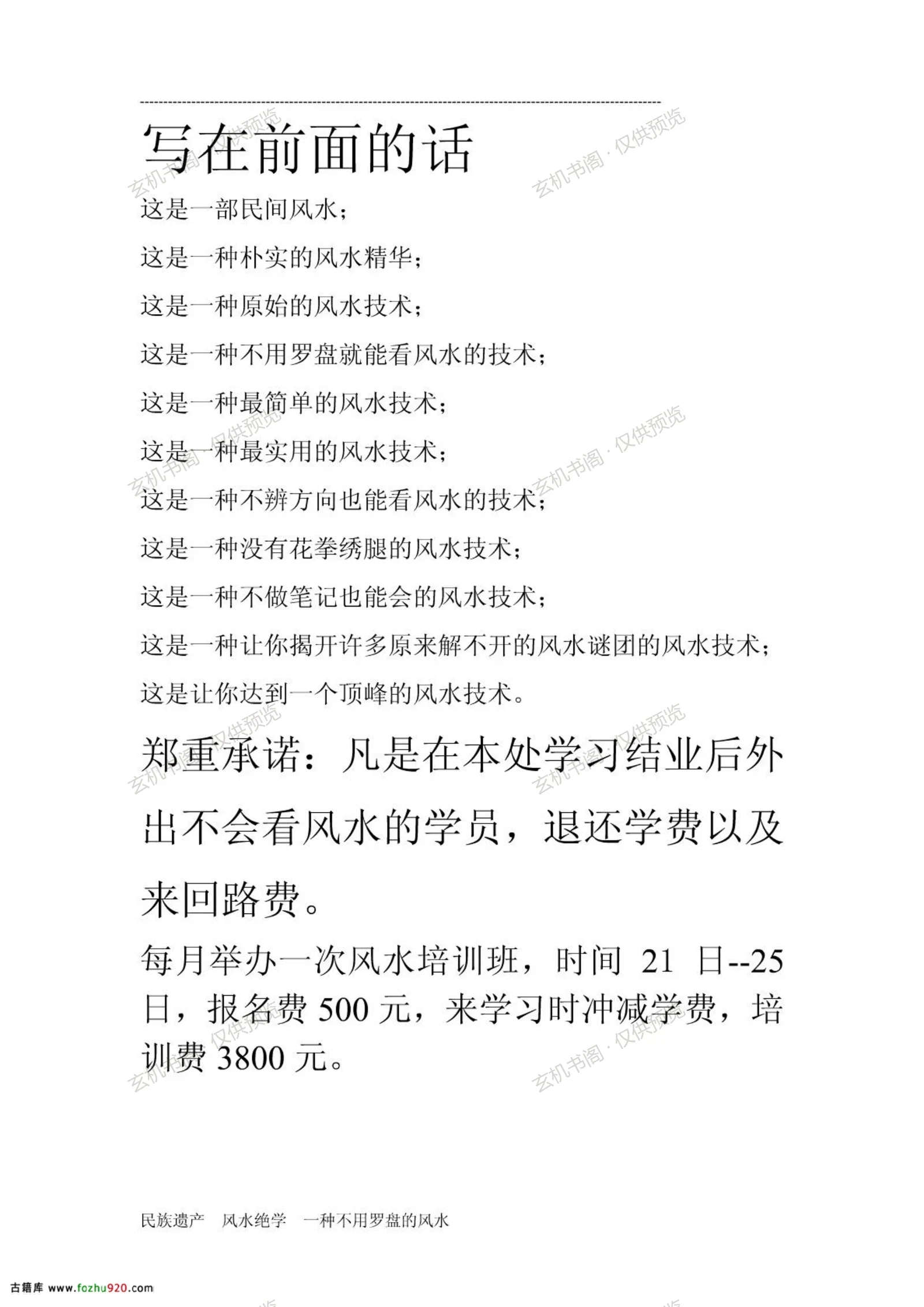
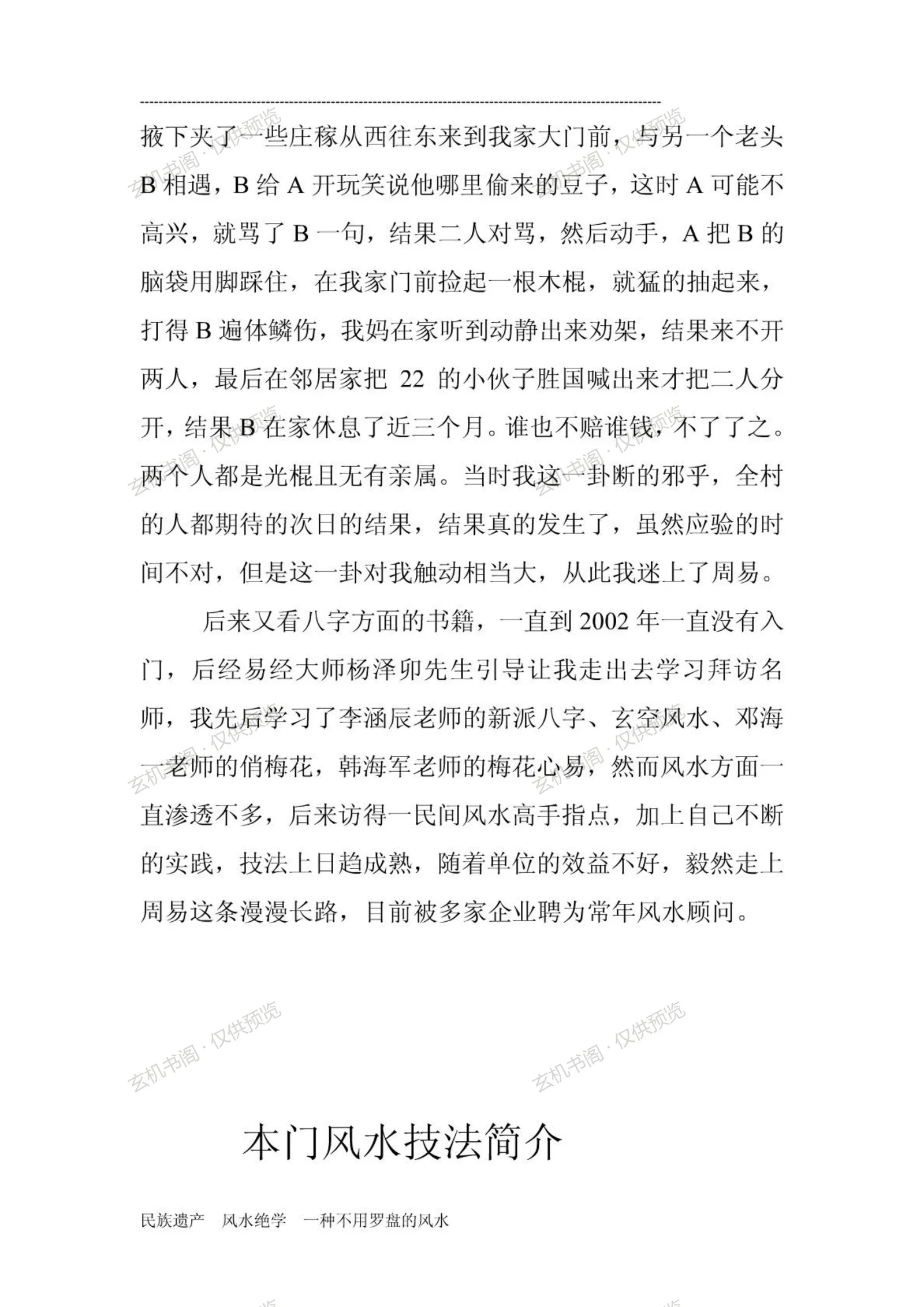
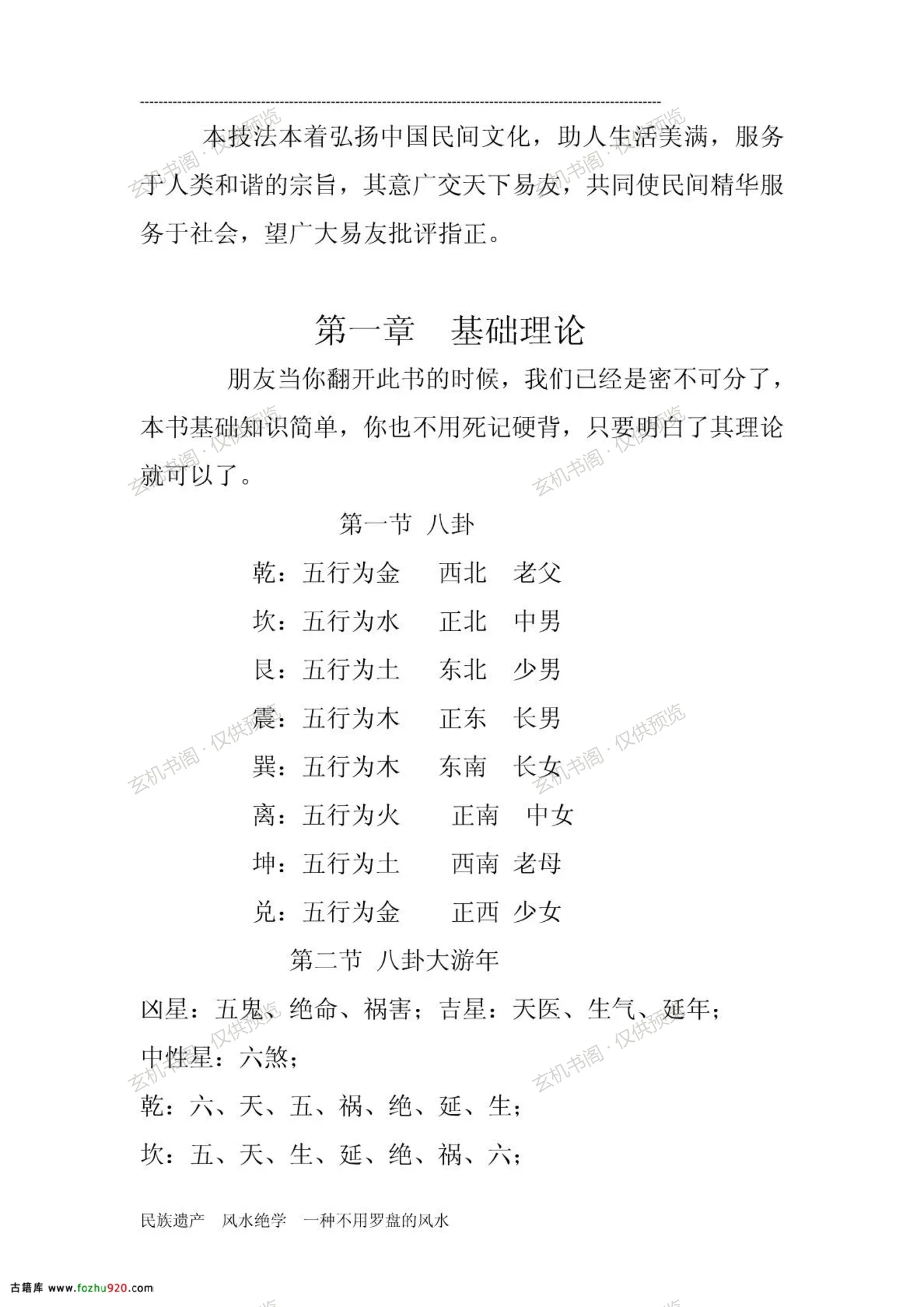
Compiled by Gao Shanliang, this book presents a folk feng shui approach described on the cover as a 'national heritage feng shui esoteric art' and 'a feng shui that does not use a luopan.' The opening pages include a preface, author biography, a brief introduction to the method, and the first chapter on basic theory. The author says he encountered Zhouyi culture in 1991 and later studied New School Bazi, Xuankong feng shui, Qiaomeihua, and Meihua Xinyi before developing his own method under the guidance of folk feng shui masters. The book stresses that this method does not rely on a compass or orientation, and builds on bagua, five-element generation and overcoming, Dayounian, and external sha around dwellings. The visible table of contents shows Chapter One, 'Basic Theory,' with sections on the bagua and bagua Dayounian, listing correspondences of elements, directions, family members, auspicious and inauspicious stars, and the Dayounian sequence. It reads as a compact folk manual with practical judgments, though the author notes that key techniques are transmitted orally and only partly included in the book.
Contents
Preface: feng shui without a luopan
Author biography: from Zhouyi enthusiast to feng shui consultant
Method overview: bagua, Dayounian, and external sha
Chapter One: Basic Theory
Section One: bagua, five elements, directions, and family members
Section Two: bagua Dayounian and auspicious/inauspicious stars
Key Points
Claims feng shui can be done without a luopan or orientation
Uses bagua, five elements, directions, and family correspondences
Adapts the Dayounian sequence in a non-traditional way
Focuses on external sha and common dwelling formations
Written as a compact folk manual rather than a systematic treatise