Reading guide
Content guideOverview
Written by Lu Yang Jushi, this book organizes Chinese four-pillar (Bazi) divination into thirty-two distinct methods. The early chapters lay the groundwork: the five elements, heavenly stems and earthly branches, punishments, clashes, combinations and meetings, the construction of a four-pillar chart, and the calculation of major and minor luck cycles. Later chapters move into practical judgment—combined, clashing, and three-punishment configurations, annual and luck-cycle methods, tomb clashes, marriage and women's charts, misfortunes, and timing techniques. The book also includes corrective methods such as “discerning falsehood” and “elimination,” and closes with example cases. Its didactic, method-by-method approach makes it useful for readers who already know the basics and want a systematic reference for applied Bazi interpretation.
Contents
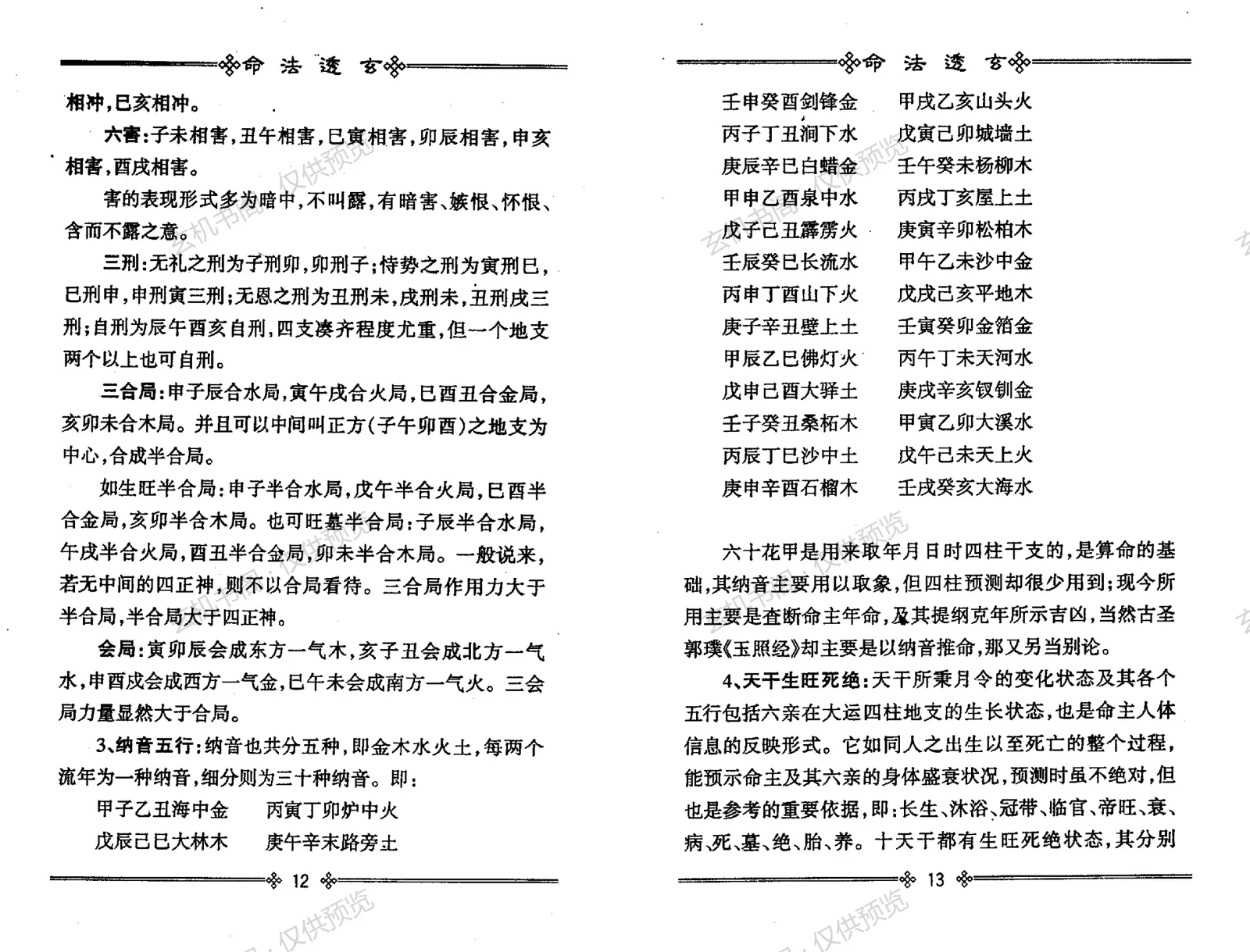
Method 1: Foundations—elements, stems, branches, clashes and combinations
Methods 2–9: palm calculation, quick reckoning, spirits, chart setting, strength, useful god
Methods 10–15: overview, structure, head pressure, reverse and hidden chants, overcoming structures
Methods 16–22: combinations, clashes, three punishments, limits, annual luck, cycles, tomb clashes
Methods 23–26: discernment, elimination, synchronization, barrier spirits
Methods 27–32: women's charts, marriage, misfortune, skewed charts, timing, examples
Key Points
Thirty-two methods cover chart construction, useful-god selection, structures, and annual events.
The foundational method details stems, branches, clashes, combinations, and growth phases.
Worked examples and mnemonic verses accompany major procedures such as luck-cycle calculation.
Corrective methods warn against common misjudgments in reading charts.
Later chapters apply the system to women's charts, marriage, and misfortune.