Reading guide
Content guideOverview
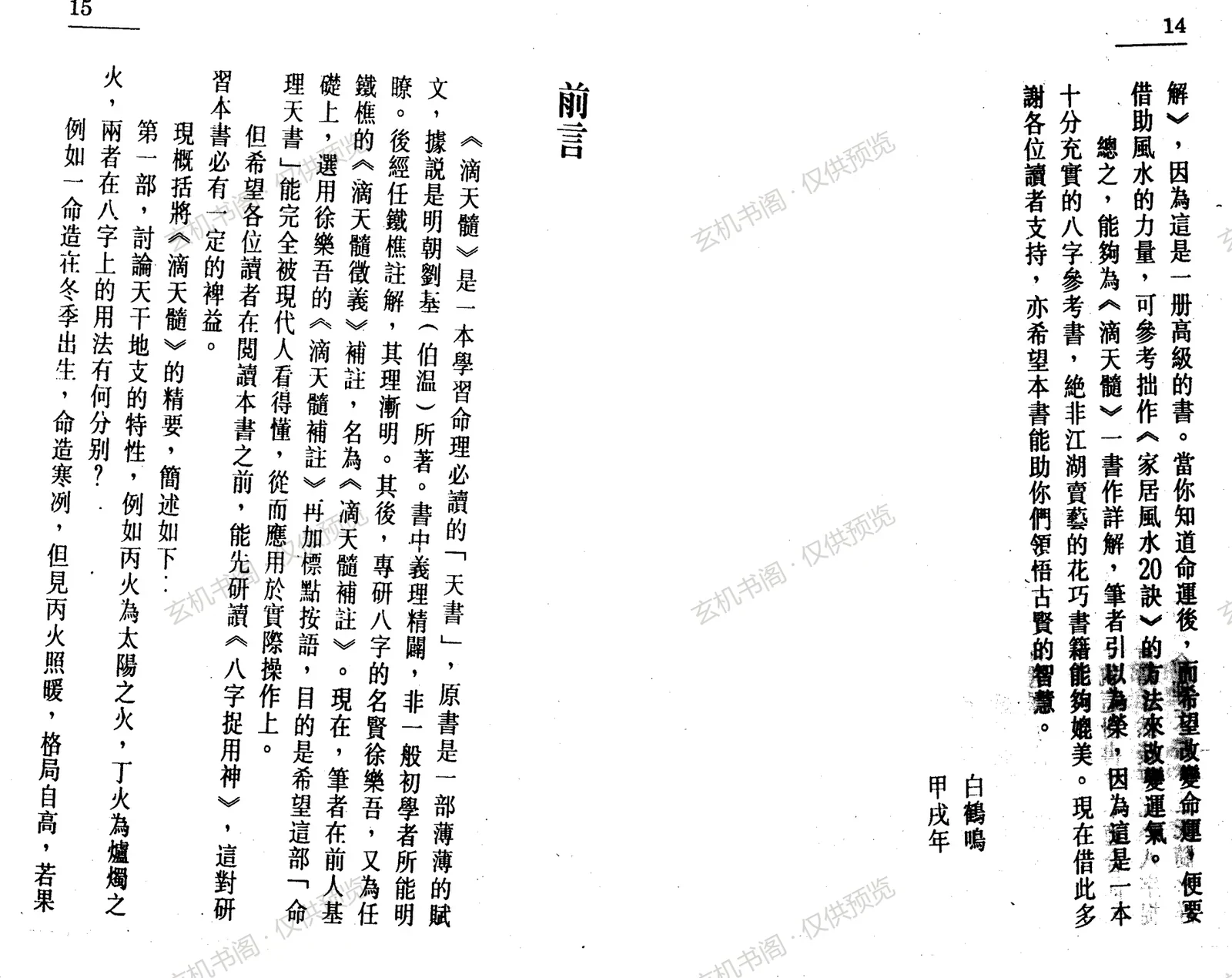
This book is Bai Heming's modern annotated edition of Di Tian Sui, originally attributed to Liu Ji (Liu Bowen) of the Ming dynasty. Building on the commentaries of Ren Tieqiao and Xu Lewu, Bai reinterprets the classical text in plain Chinese. The work is divided into four parts: an introduction to destiny studies covering the Tong Shen Song, heavenly stems, earthly branches, and stem-branch transformations; a section on essence and function discussing image, structure, eight configurations, following tendency, source and flow, passage, clarity and turbidity, truth and falsehood, and related concepts; a micro-level section analyzing six relations, wealth and status, temperament, illness, social position, women's destiny, and children; and a concluding general discussion of the four pillars. Bai notes that the book is advanced material and recommends prior study of introductory works such as Ba Zi Zhuo Yong Shen.
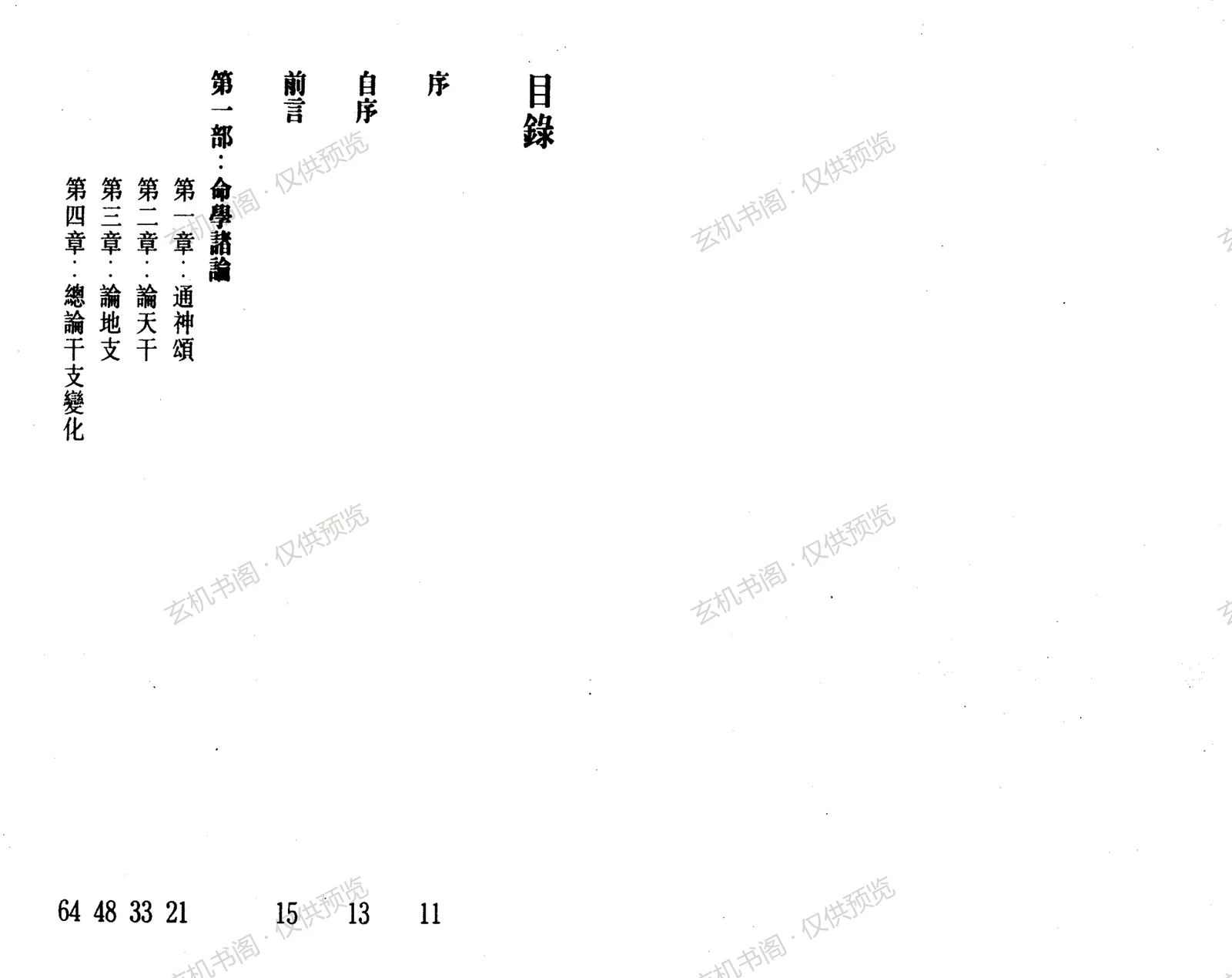
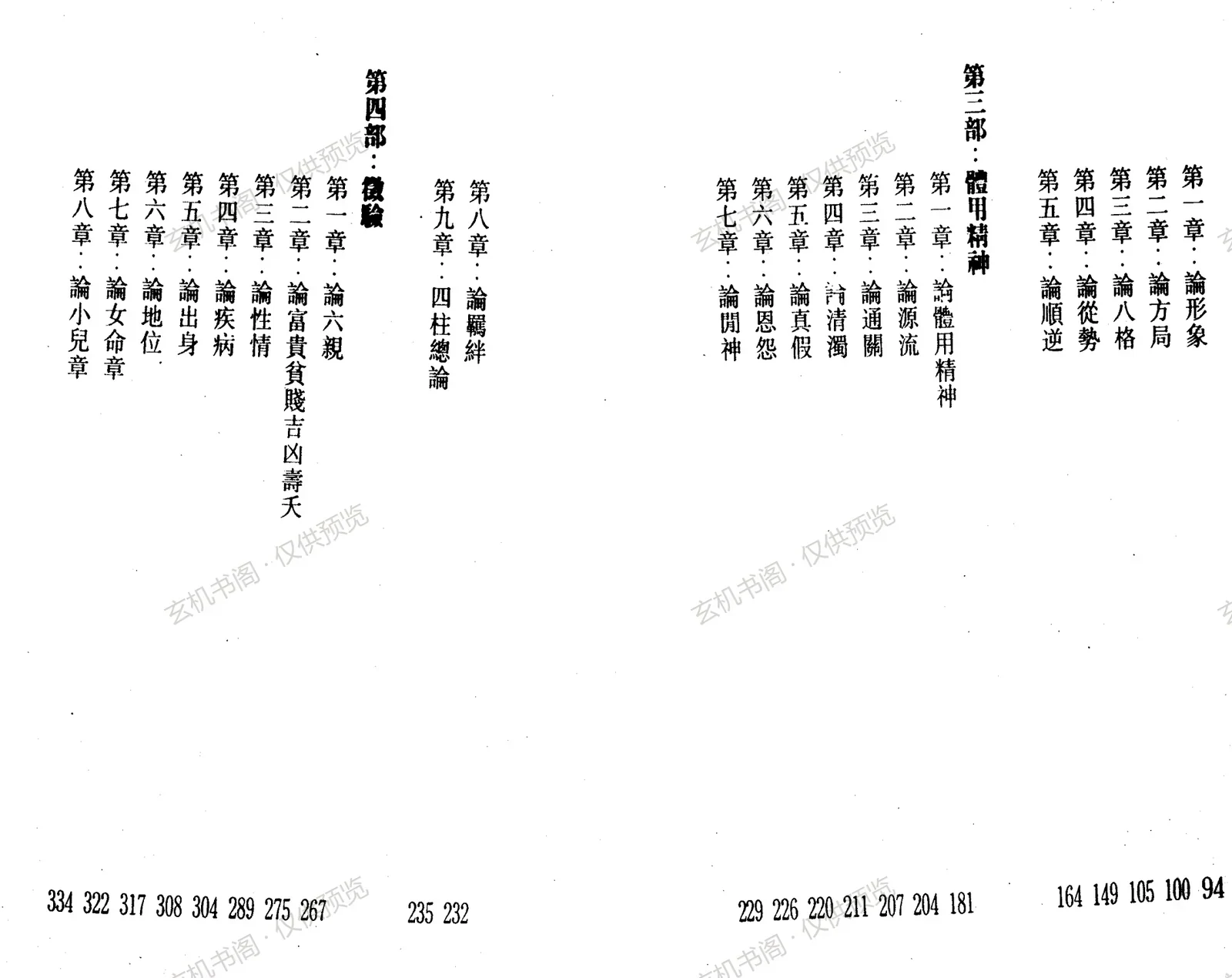
Contents
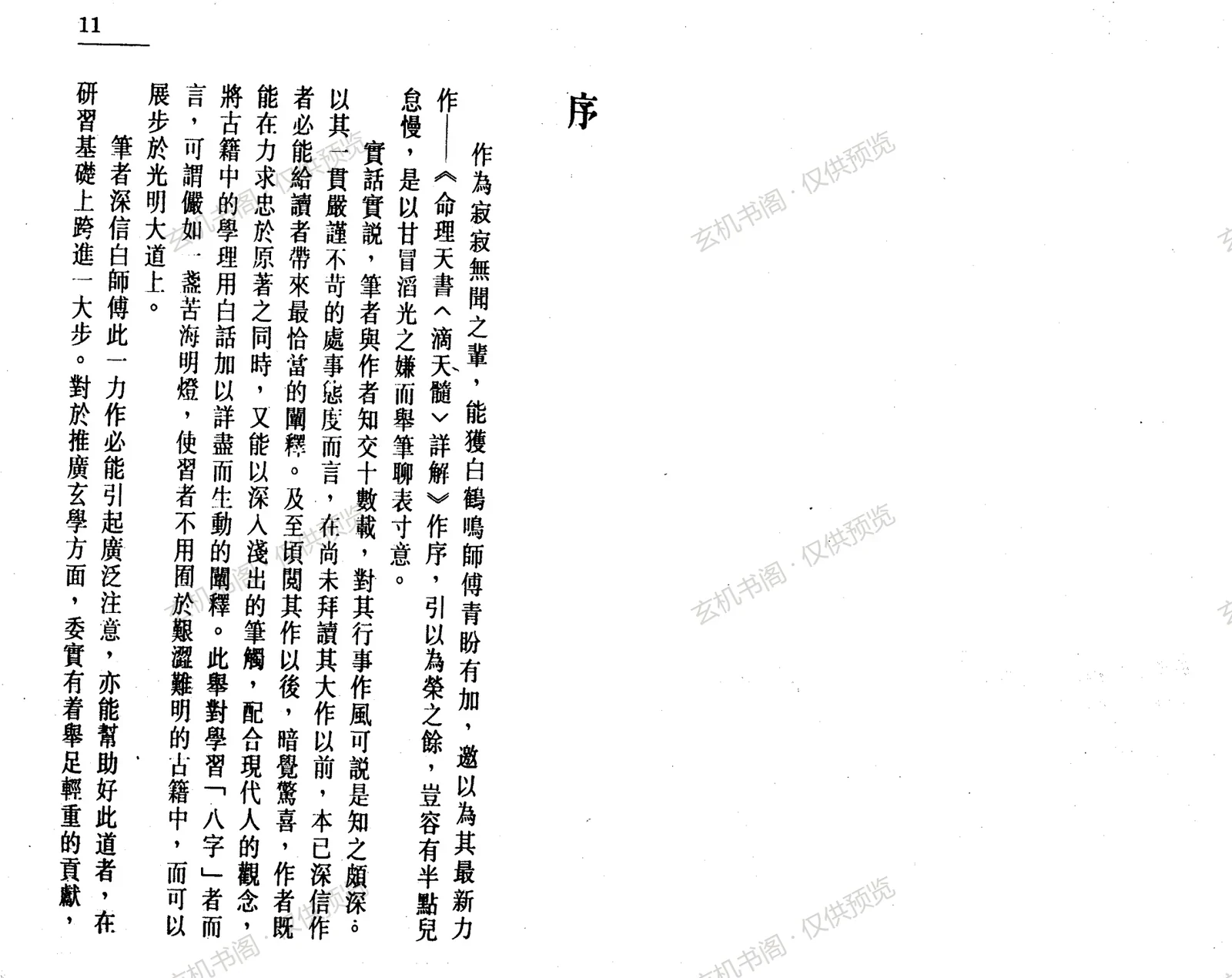
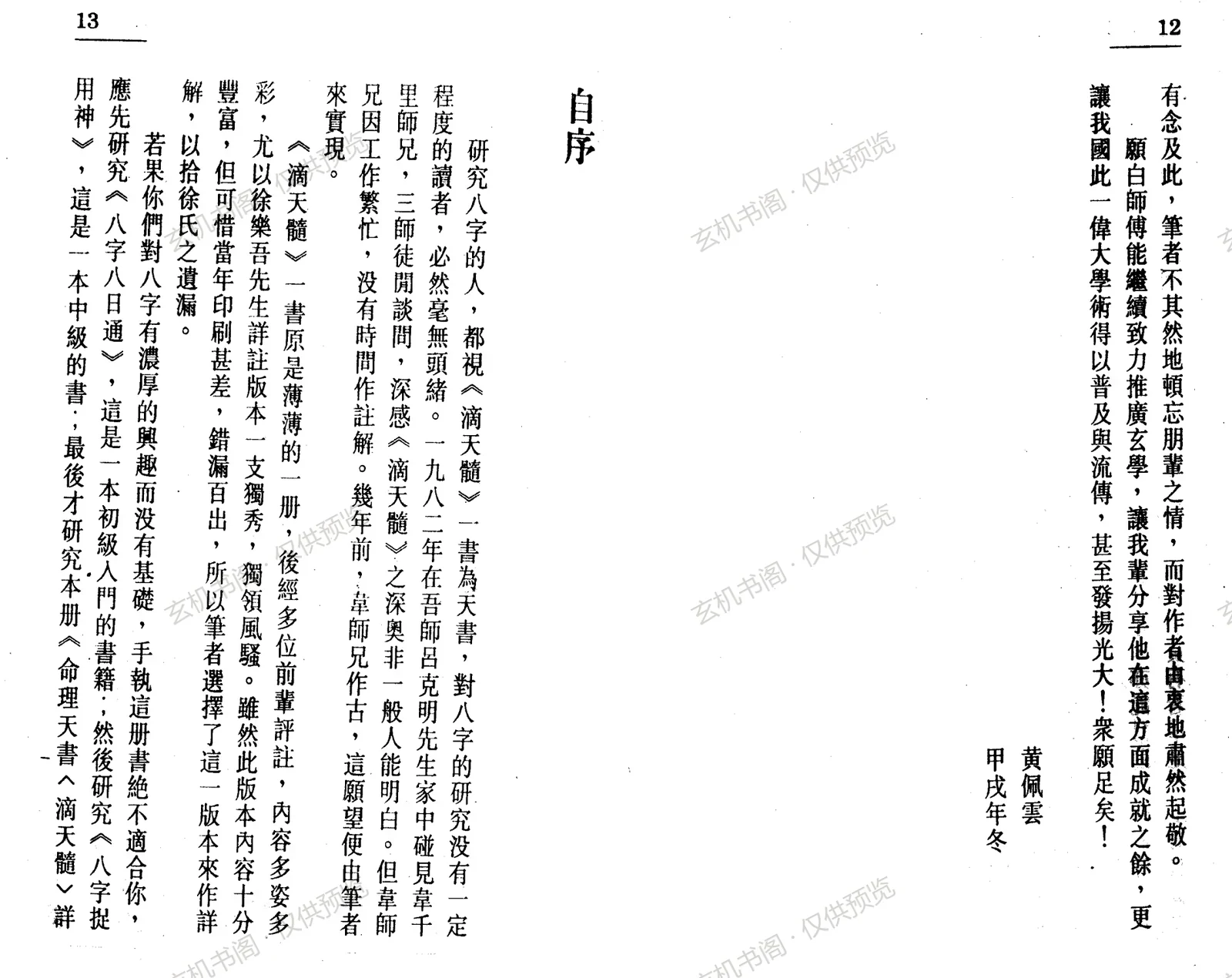
Preface and author's preface
Part I: Introduction to destiny studies—Tong Shen Song, stems, branches, transformations
Part II: Essence and function—image, structure, configurations, following tendency, source and flow, clarity, truth and
Part III: Micro analysis—six relations, wealth and status, temperament, illness, position, women's destiny, children
Part IV: General discussion of the four pillars and on entanglement
Key Points
Explains Di Tian Sui in modern Chinese, integrating Ren Tieqiao and Xu Lewu
Organized into introduction, essence-function, micro analysis, and general discussion
Focuses on advanced concepts such as essence and function, source and flow, clarity and turbidity
Applies theory to six relations, temperament, illness, and women's destiny
The author states it is advanced material requiring prior foundation