Reading guide
Content guideOverview
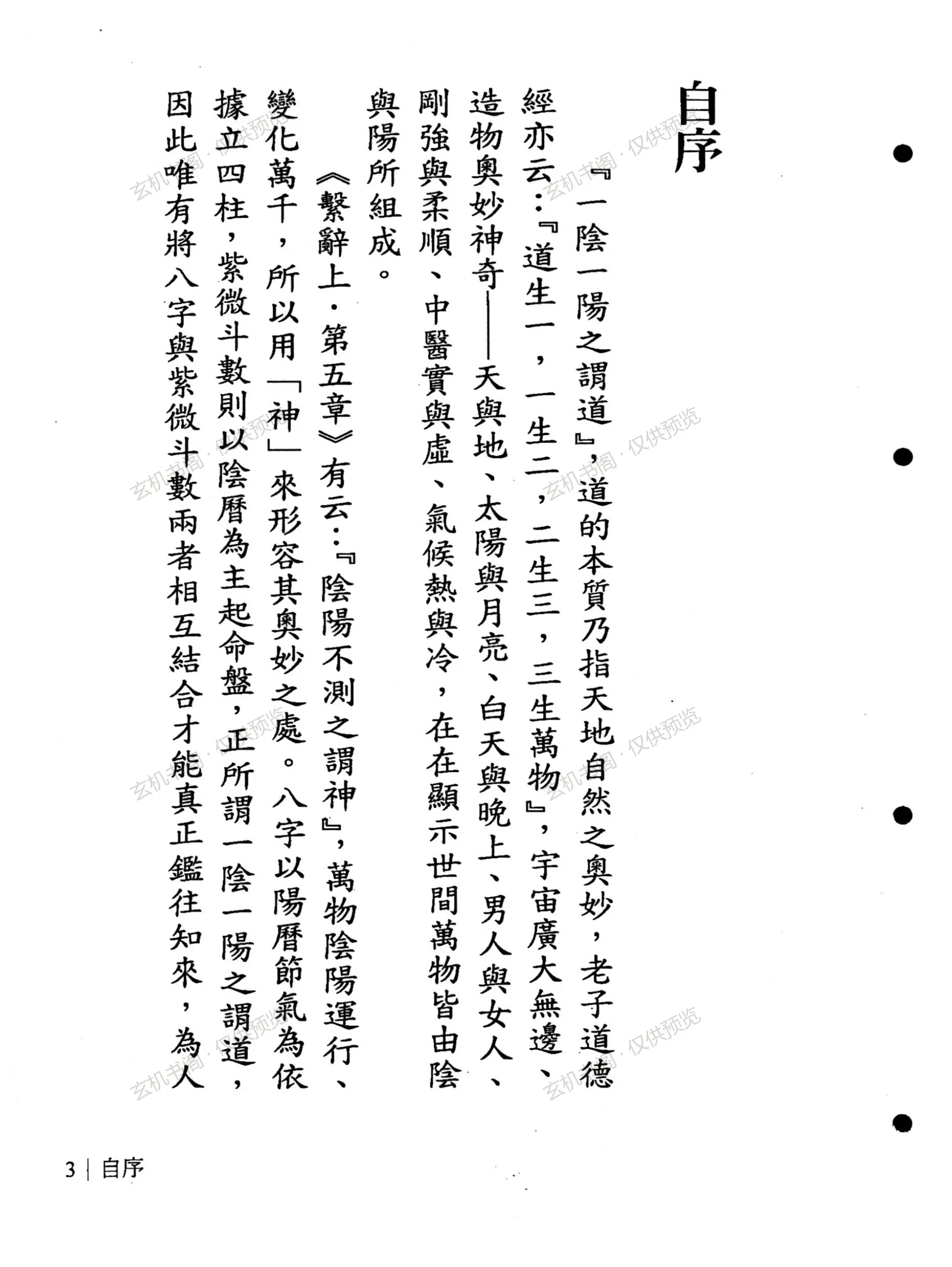
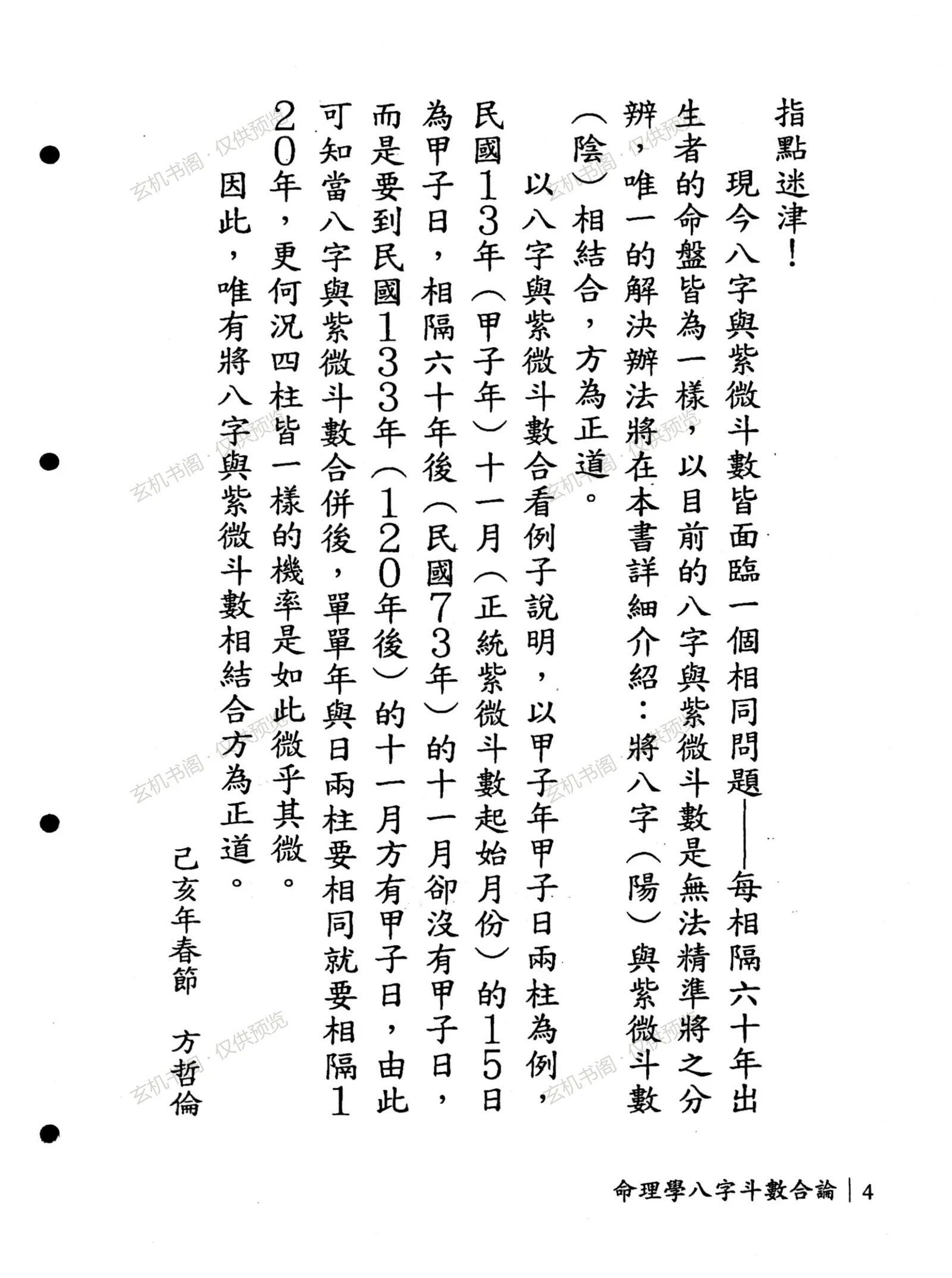
This book by Fang Zhelun argues that Bazi (Four Pillars) and Ziwei Doushu should be used together rather than separately. In the preface the author grounds his case in the Yijing's Xici, citing the sayings that 'one yin and one yang is the Dao' and that 'the unfathomable interplay of yin and yang is called spirit.' Bazi builds its four pillars from solar-term (yang) reckoning, while Ziwei Doushu casts its chart mainly by the lunar calendar (yin); each is one-sided on its own and cannot easily distinguish people born under near-identical charts. The author illustrates the mismatch with calendrical cases such as a jiazi year with a jiazi day, noting that identical pillars recur only at long intervals of the sexagenary cycle, and concludes that only a combined reading is the 'correct path.' The body of the work is expected to cover chart construction in both systems, principles for cross-referencing them, and worked examples. It is an advanced fate-calculation text for readers who already know both systems and want to integrate them.
Contents
Preface: yin-yang theory as the basis of fate calculation
Constructing the four pillars from solar terms
Casting the Ziwei chart by the lunar calendar
Differences in the calendrical basis of the two systems
The sexagenary cycle and cases of near-identical charts
Principles for combined Bazi-Ziwei judgment
Key Points
Advocates reading Bazi and Ziwei together as yin and yang
Bazi uses solar terms, Ziwei uses the lunar calendar
Uses jiazi-cycle cases to show how the two charts diverge
Stresses that identical charts are hard to distinguish without cross-checking
Grounds the combined approach in the Yijing's Xici