Reading guide
Content guideOverview
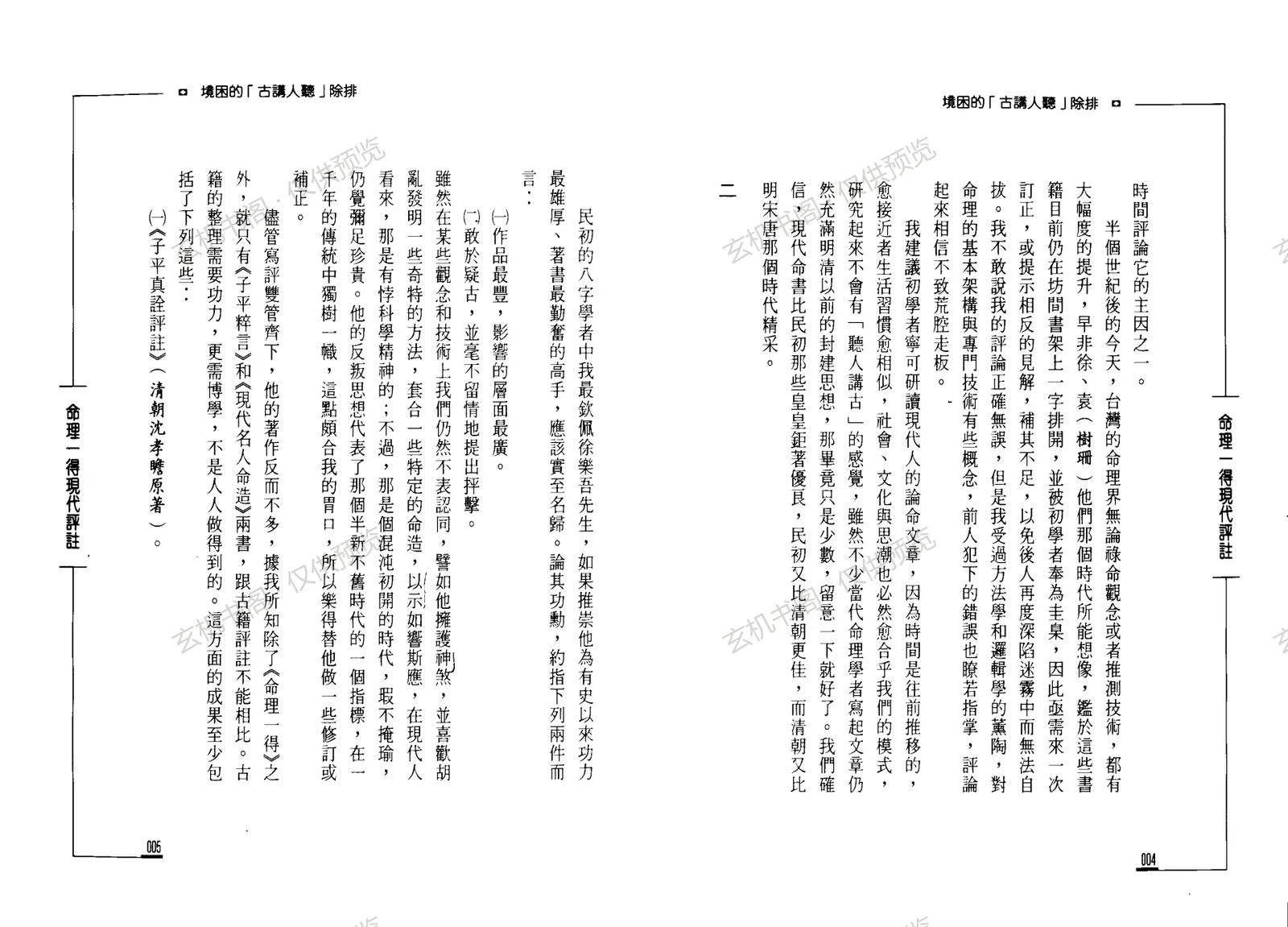
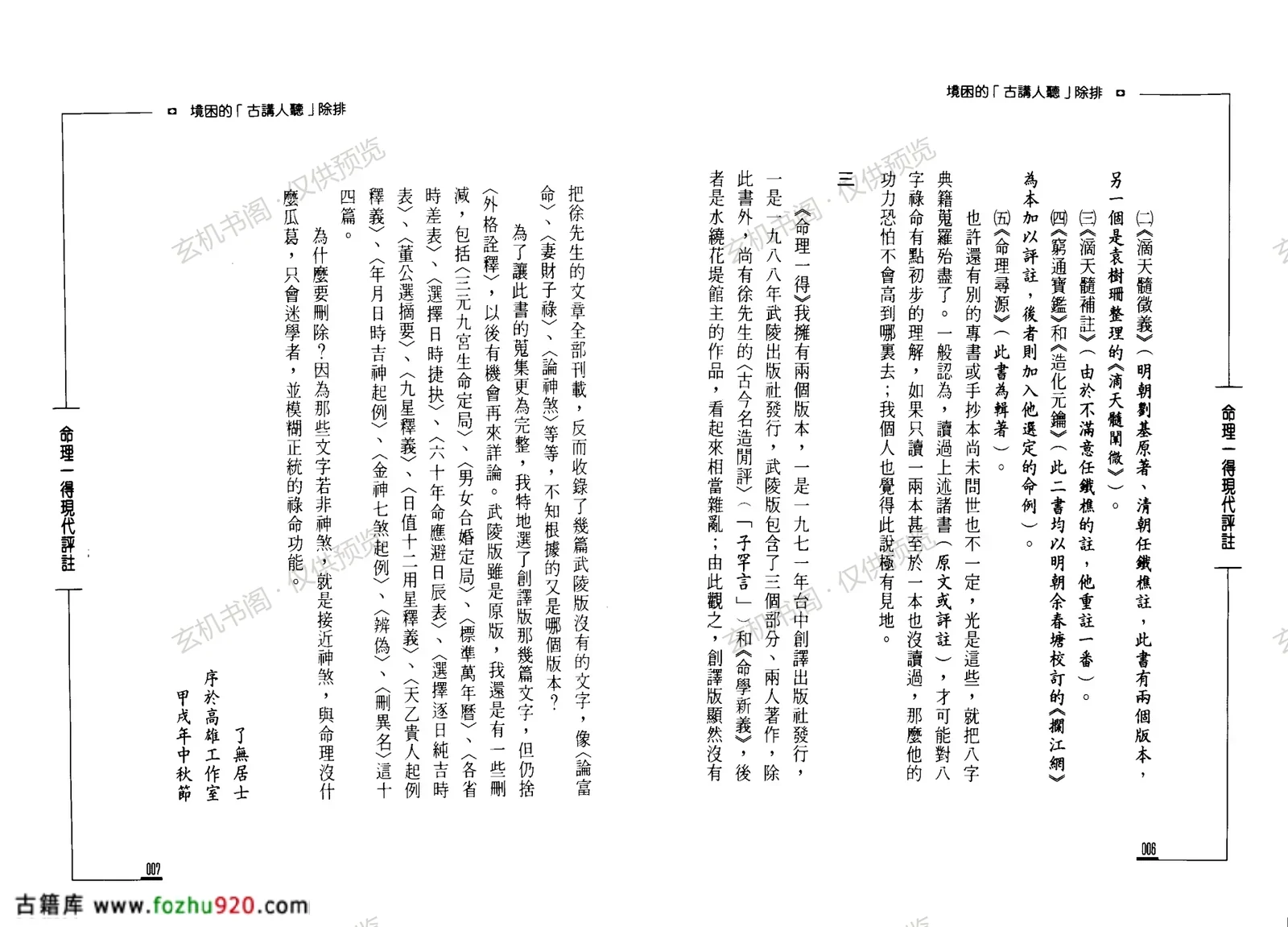
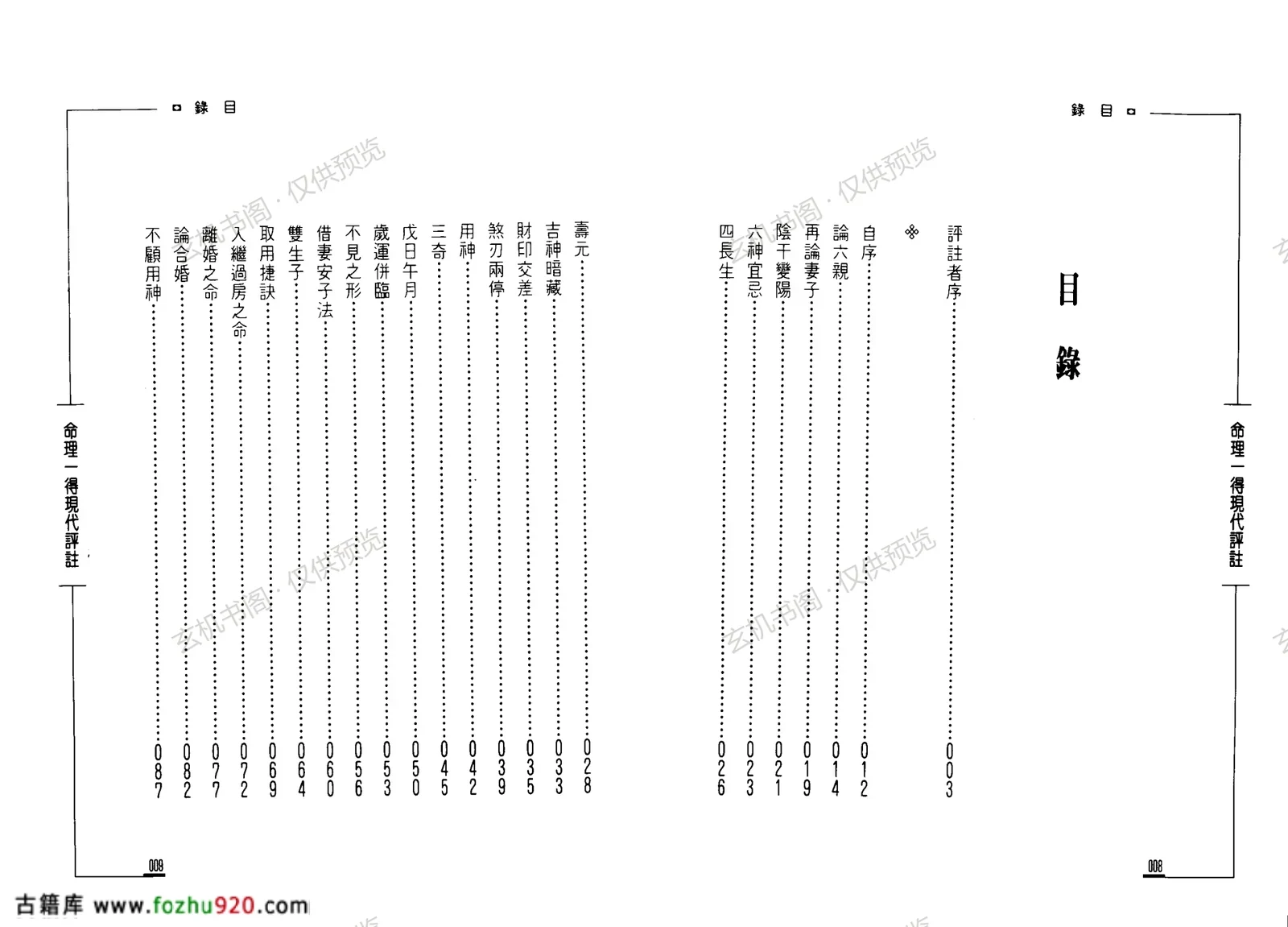
This book is a modern annotated edition of Mingli Yide by the Republican-era Bazi master Xu Lewu. It opens with the commentator's preface and the author's original preface, followed by a table of contents and topical chapters on longevity, hidden auspicious spirits, the interplay of wealth and resource, the balance of power and blade, useful gods, the Three Wonders, Wu-day noon-month cases, the concurrence of year and luck cycles, invisible forms, methods for borrowing a wife to settle children, twins, quick methods for selecting useful gods, adopted heirs, divorce fate, marriage matching, and disregarding the useful god, with appendices on the six spirits and four growing phases. The commentator reexamines classical Bazi theories through a modern lens, arguing that many old views are no longer suitable and proposing clearer, more contemporary ways of understanding destiny. The book also discusses Xu Lewu's other works and their editorial value, making it a useful reference for understanding the transmission and evolution of Ziping Bazi theory since the Republican period.
Contents
Commentator's preface and author's preface
Topics on longevity, hidden auspicious spirits, wealth and resource, power and blade, useful gods
Three Wonders, Wu-day noon-month, year-luck concurrence, invisible forms
Methods for borrowing a wife to settle children, twins, quick selection of useful gods
Adopted heirs, divorce fate, marriage matching
Appendices on six spirits and four growing phases
Key Points
A modern commentary on Xu Lewu's Mingli Yide, reinterpreting Bazi theory
Emphasizes moving beyond outdated concepts and guiding Bazi learners
Covers core Ziping topics such as longevity, useful gods, wealth and resource, power and blade, and luck cycles
Also discusses marriage matching, adoption, and divorce from a fate perspective
The commentator evaluates Xu Lewu's other works and their editorial value