Reading guide
Content guideOverview
This volume, the sixth in a Feng Shui series, treats tomb physiognomy (muxiang) through a question-and-answer format. It opens by asking whether tomb lore rests on reliable grounds, arguing that it draws on landform (luantou) and direction-principle (liqi) together with natural law and accumulated experience rather than on lineage transmission alone. Chapters cover tomb construction, the burial environment, the shape and engraving of gravestones, and posthumous names, with entertaining historical cases. Later sections shift to divination based on tomb features, the relation of names to fate, naming secrets, five-grid name analysis, and the influence of the "four great cycles." The visible text explains the "three powers" (heaven, earth, human) as the upper, middle, and lower parts of a gravestone, uses the four emblems (dragon, cavity, sand, water) to judge a tomb, and invokes Qimen Dunjia for directional assessment, noting that Chinese tomb lore stresses orientation while Japanese practice often does not.
Contents
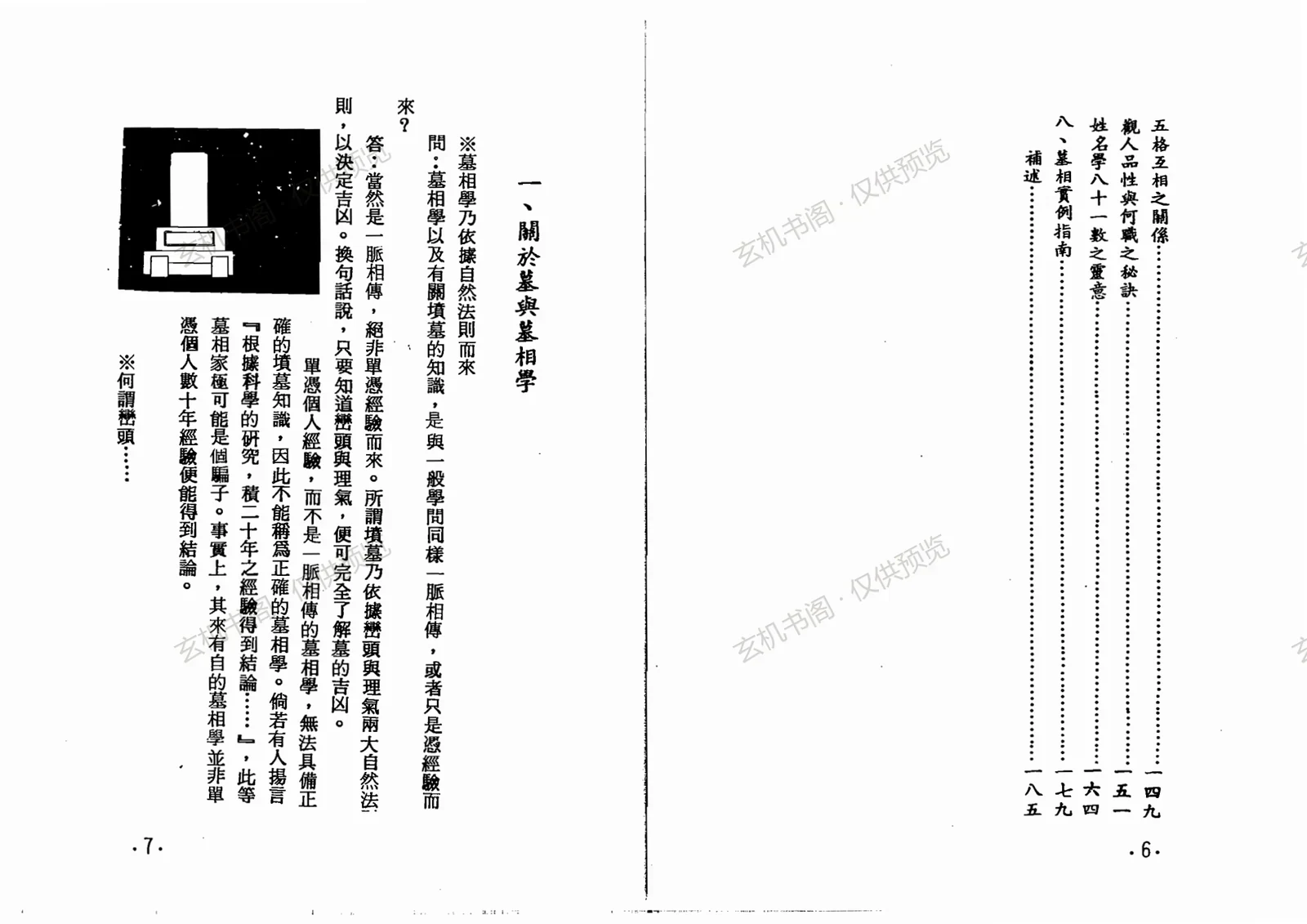
Basic questions on tombs and tomb physiognomy
Tomb construction, site environment, and stone forms
Engraving of gravestones and posthumous names
Historical and curious tomb cases
Divination by tomb features
Names, fate, and naming secrets
Five-grid name analysis
The influence of the four great cycles
Key Points
Question-and-answer format grounds tomb lore in landform, direction-principle, and experience
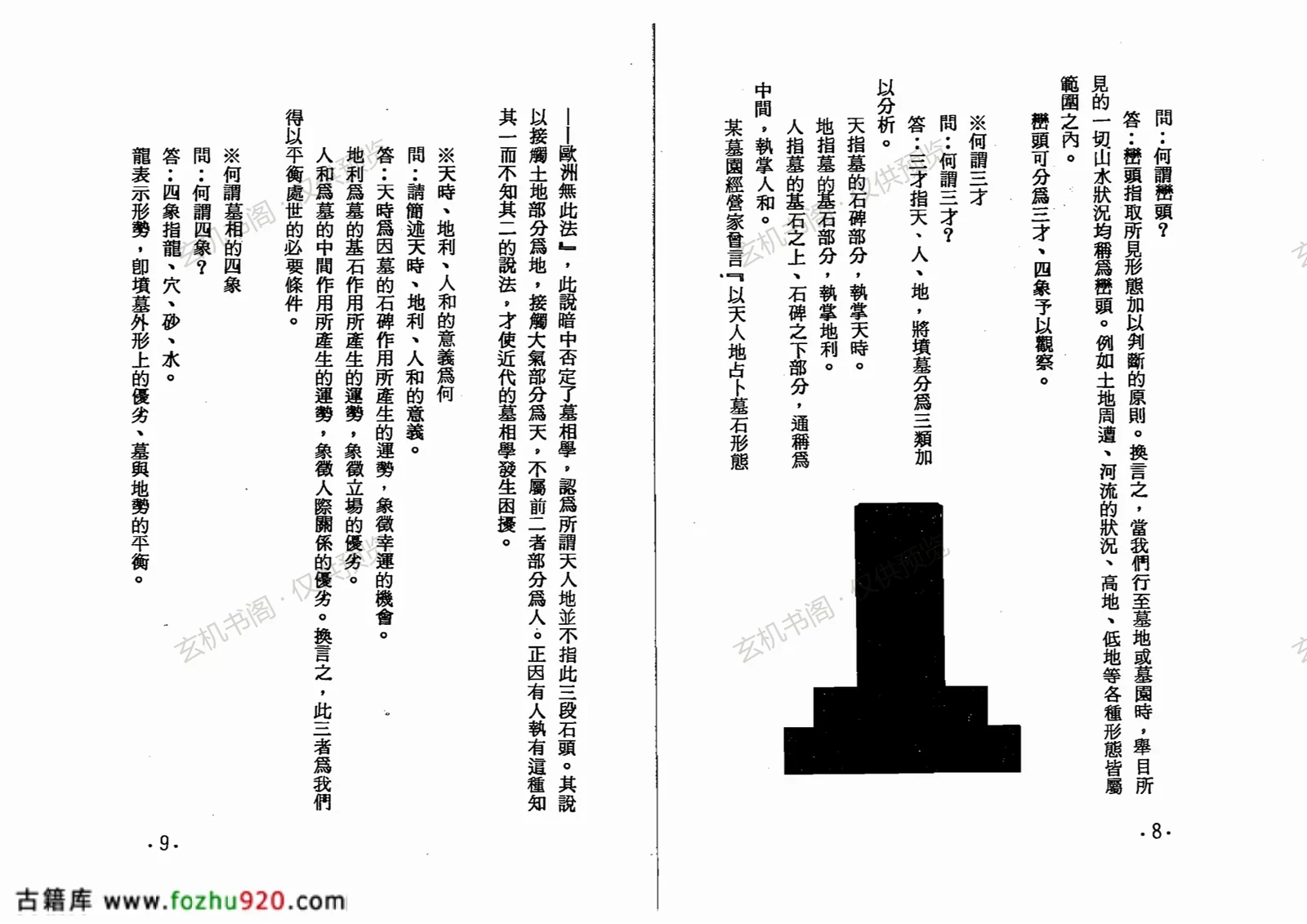
The gravestone's three sections map to heaven, earth, and human fortunes
The four emblems—dragon, cavity, sand, water—judge a tomb's quality
Contrasts Chinese emphasis on orientation with Japanese neglect of it
Uses Qimen Dunjia to assess a tomb's directional fortune