Reading guide
Content guideOverview
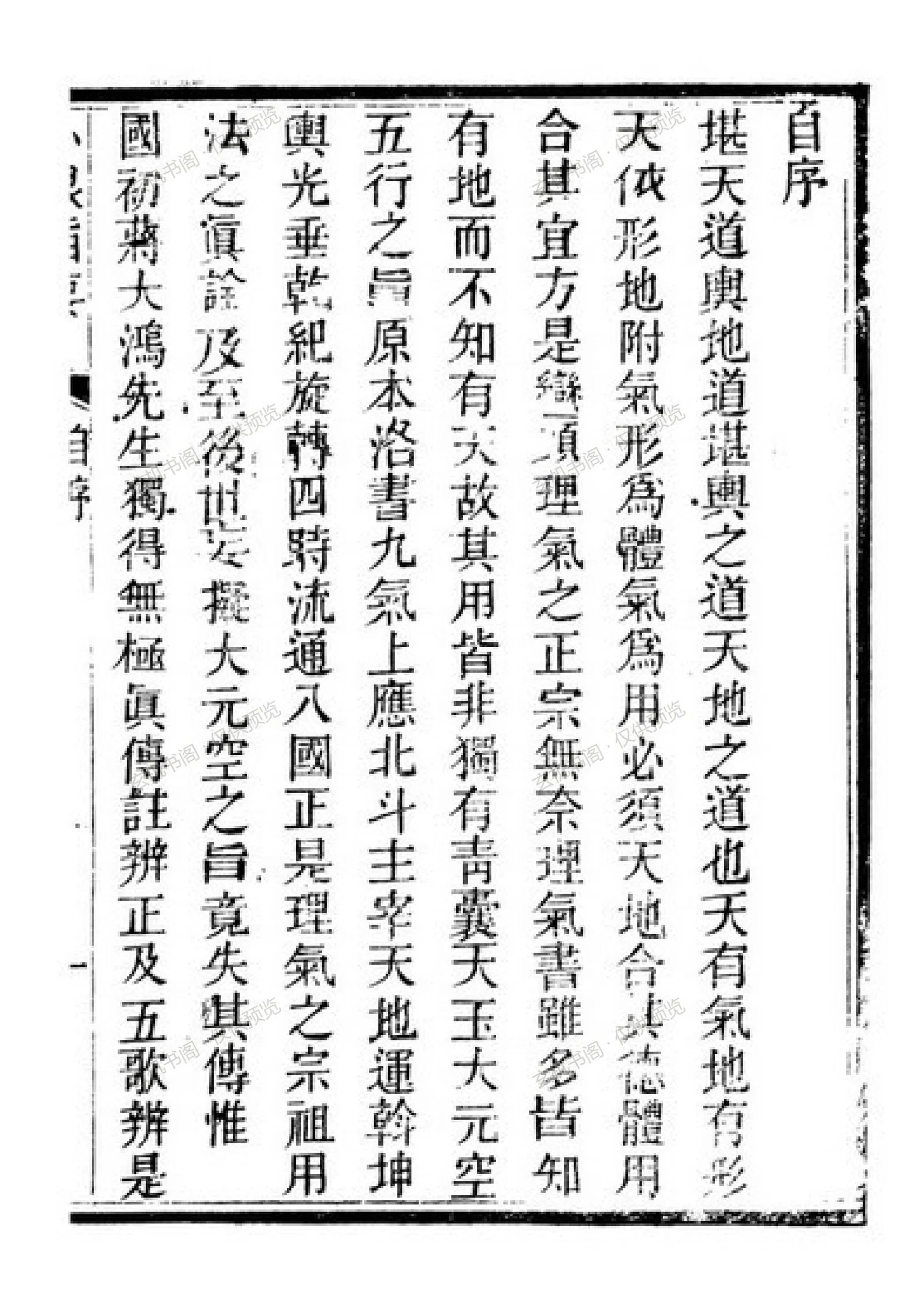
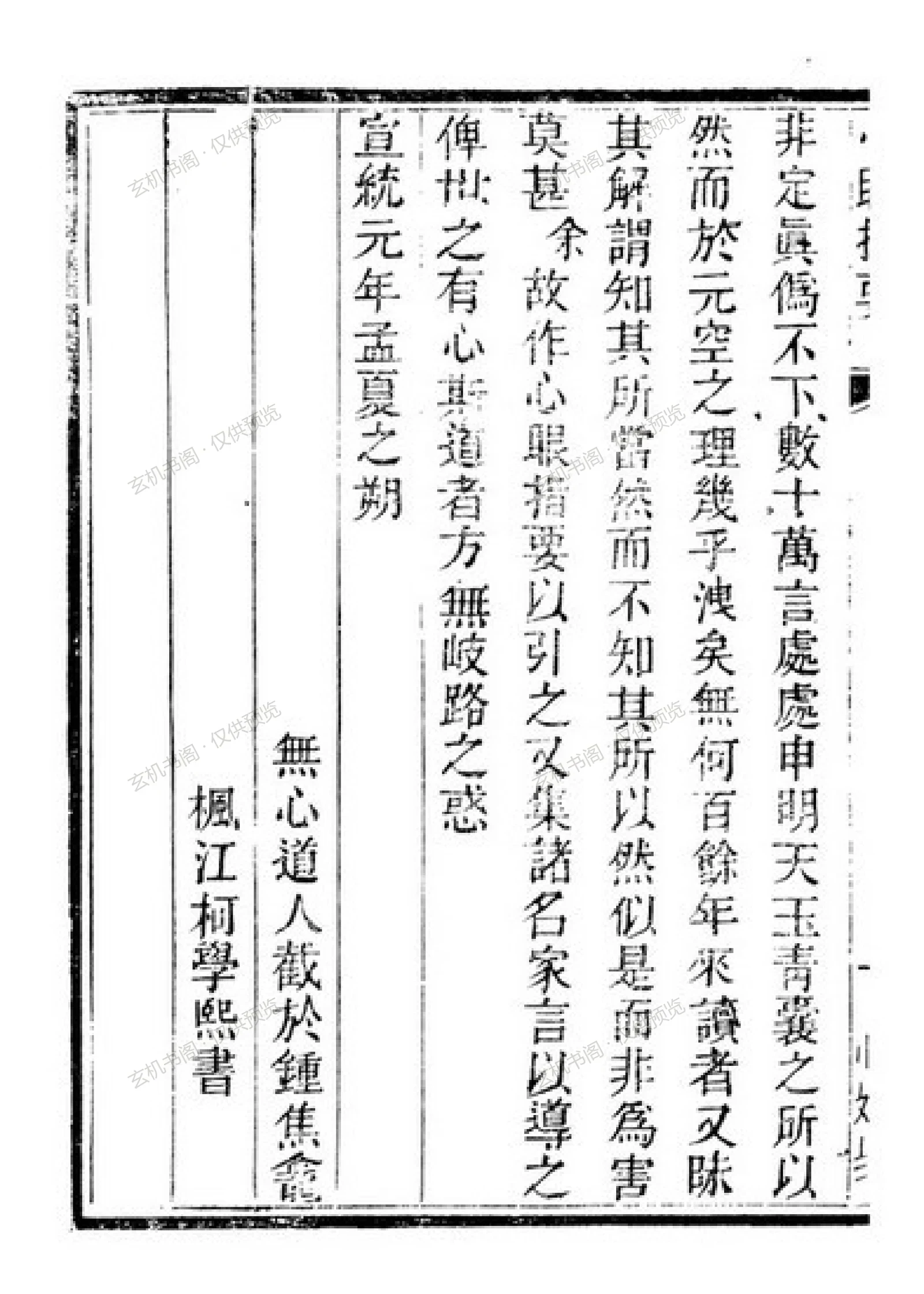
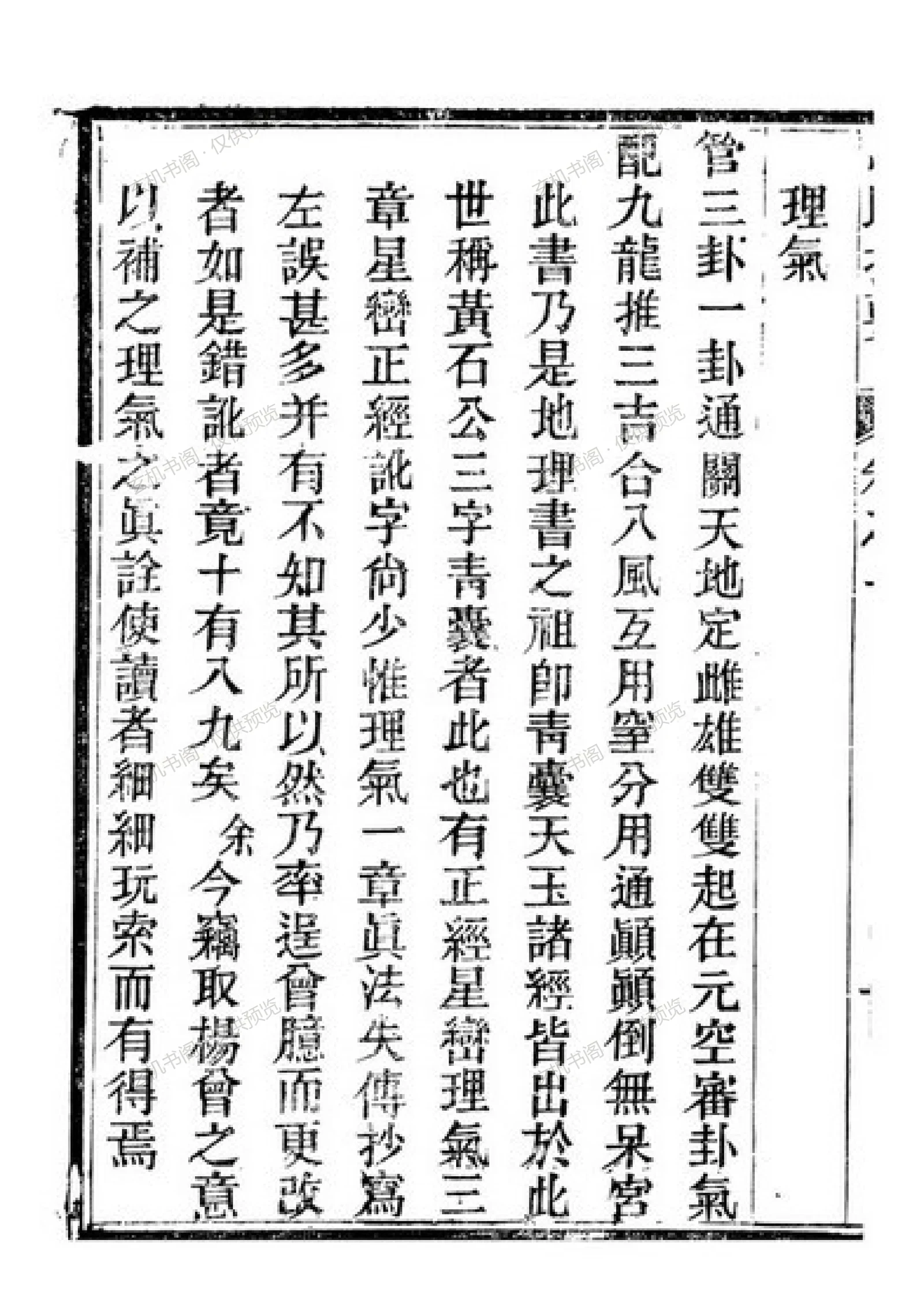
Xin Yan Zhi Yao is a fengshui text on liqi (qi theory) compiled by Zhang Zhongshan of Xishan in the Qing dynasty. The opening pages include a publication note dated the first year of Xuantong (1909) and a preface that grounds the work in the Dao of heaven and earth, treating form and qi as body and function. It draws on the Luoshu nine qi, the Northern Dipper, and the forward and reverse movements of the five phases, arguing that true liqi doctrine descends from the Qingnang and Tianyu classics and that later transmissions had become distorted. Volume one, attributed to the Wuxin Daoren of Xishan and checked by disciples, opens with a section on liqi and cites the Qingnang Neizhuan, Tianyu Jing, and Qingnang Jing to discuss Xuan Kong, the three trigrams, male and female, the nine qi, zero and positive positions, the seven stars, and city gates. The book is largely commentary and oral-formula style, stressing the coordination of qi theory with physical form, and is an important source for the Zhang school of Xuan Kong fengshui.
Contents
Publication note and preface: origins and purpose
Volume one attribution and disciple editors
General liqi: heaven-earth form and qi, Xuan Kong three trigrams
Qingnang and Tianyu classics: nine qi, male-female, zero-positive
Stars, forms, and gate methods: seven stars, city gates, star arrangement
Key Points
Rooted in the Qingnang and Tianyu classics, expounding Xuan Kong liqi
Stresses form and qi as body and function, requiring their coordination
Mixes classical commentary with oral formulas, preserving Zhang school methods
The Xuantong jiyou edition reflects late Qing transmission