Reading guide
Content guideOverview
The Great Principles of Female Destiny is a traditional Chinese fate-calculation text focused exclusively on women's BaZi charts. It opens by asserting that a woman's fortune hinges on the husband star, then lays out a framework in which the husband star determines status and the children star indicates late-life fortune, discussing how the officer star, food god, wealth and resource interact in a female chart. The book proceeds through named categories—harmony, purity, nobility, turbidity, excess, prostitution, licentiousness, benefiting the husband, and harming children—each stated as a principle and then supported by concrete four-pillar stem-branch examples. Its method is category-plus-case, stressing the combination of the four pillars, the use of symbolic stars, and judgments of clarity versus muddiness. It is a useful reference for studying traditional female destiny analysis, though readers should note its period-bound gender assumptions.
Contents
General thesis: husband star sets status, children star shows late fortune
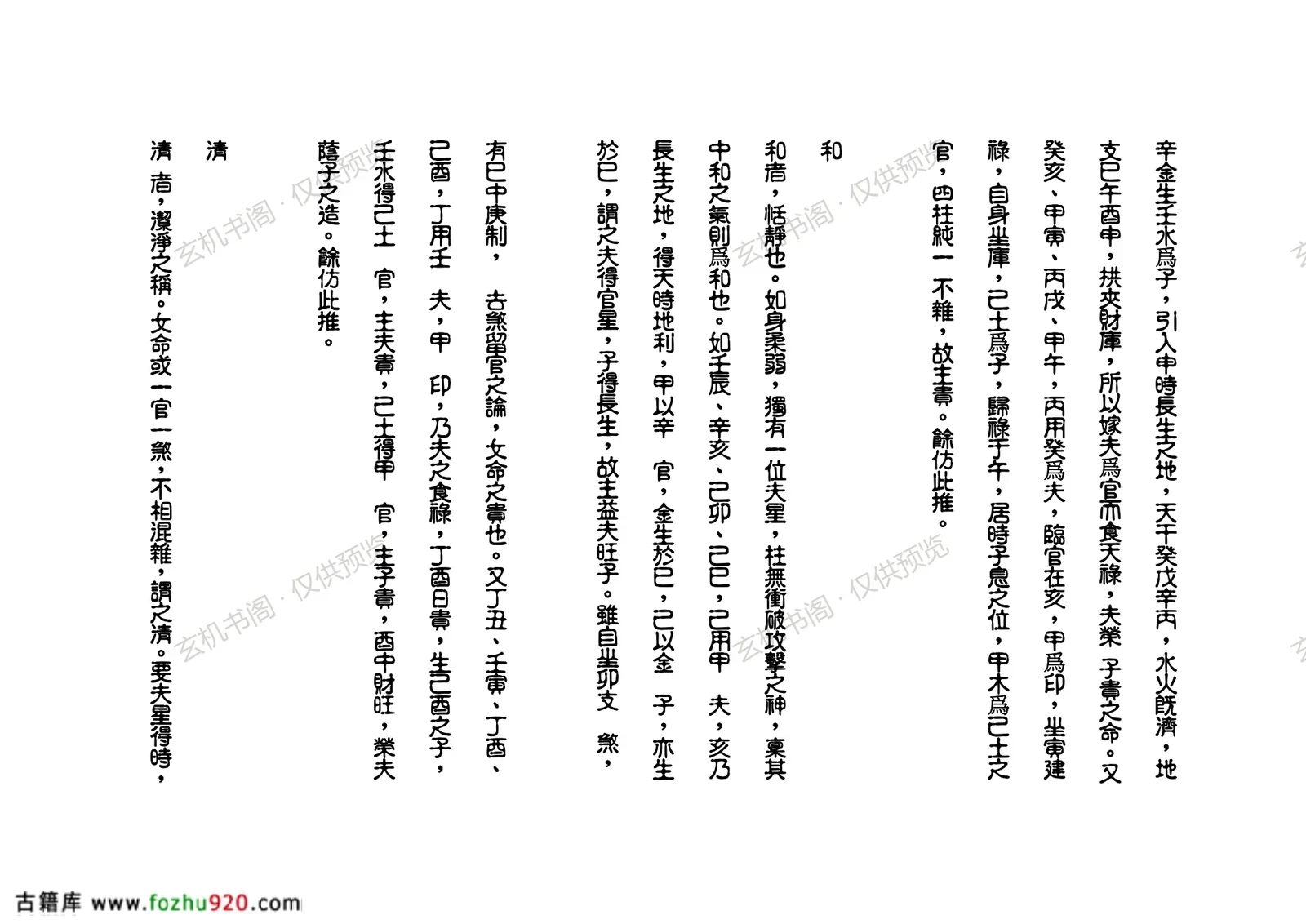
Harmony: a weak self supported by a timely, well-placed husband star
Purity: one officer or one spirit, unmixed
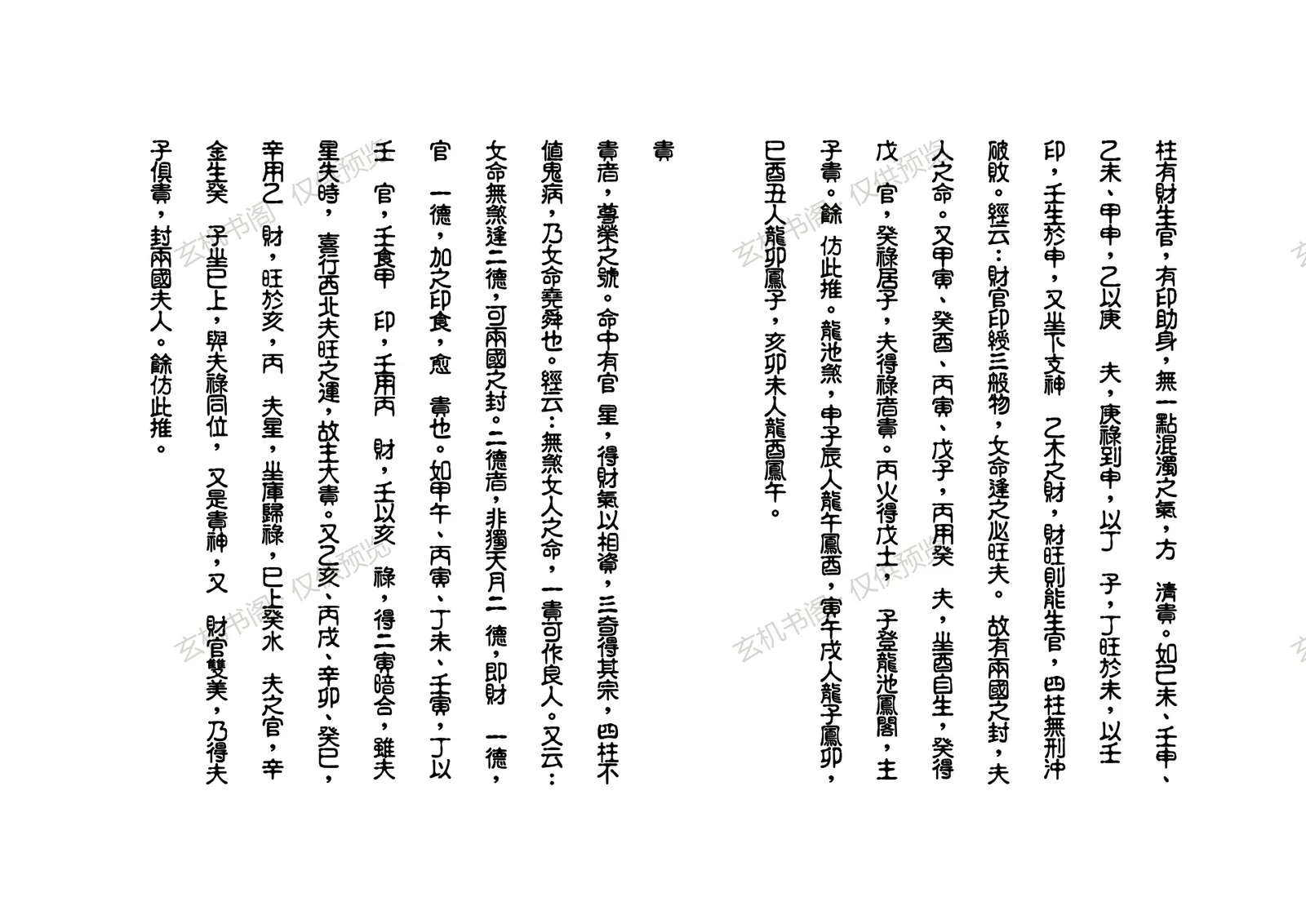
Nobility: officer star aided by wealth and resource
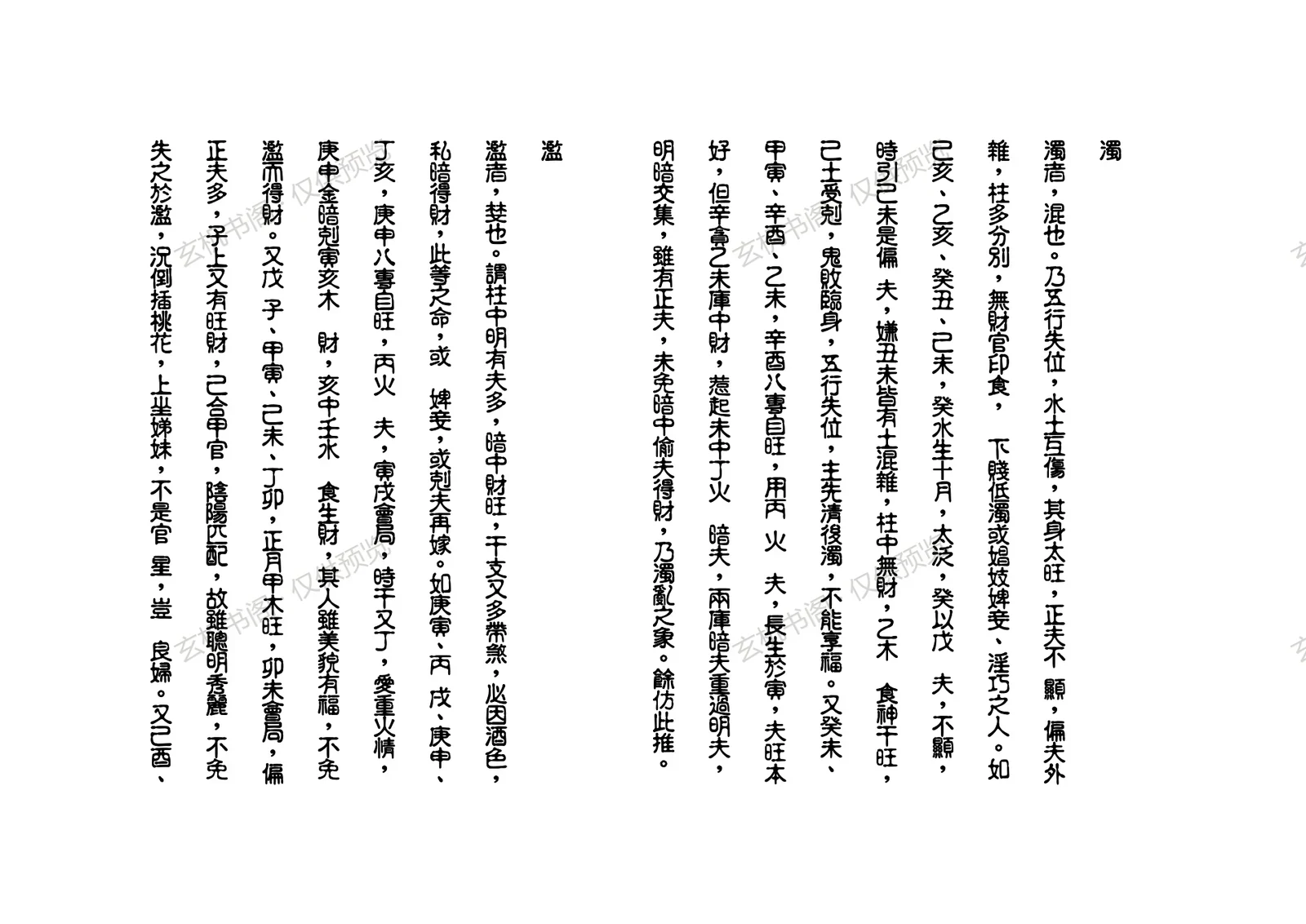
Turbidity: elements out of place, husband star mixed
Excess: many husbands or hidden husbands bringing wealth
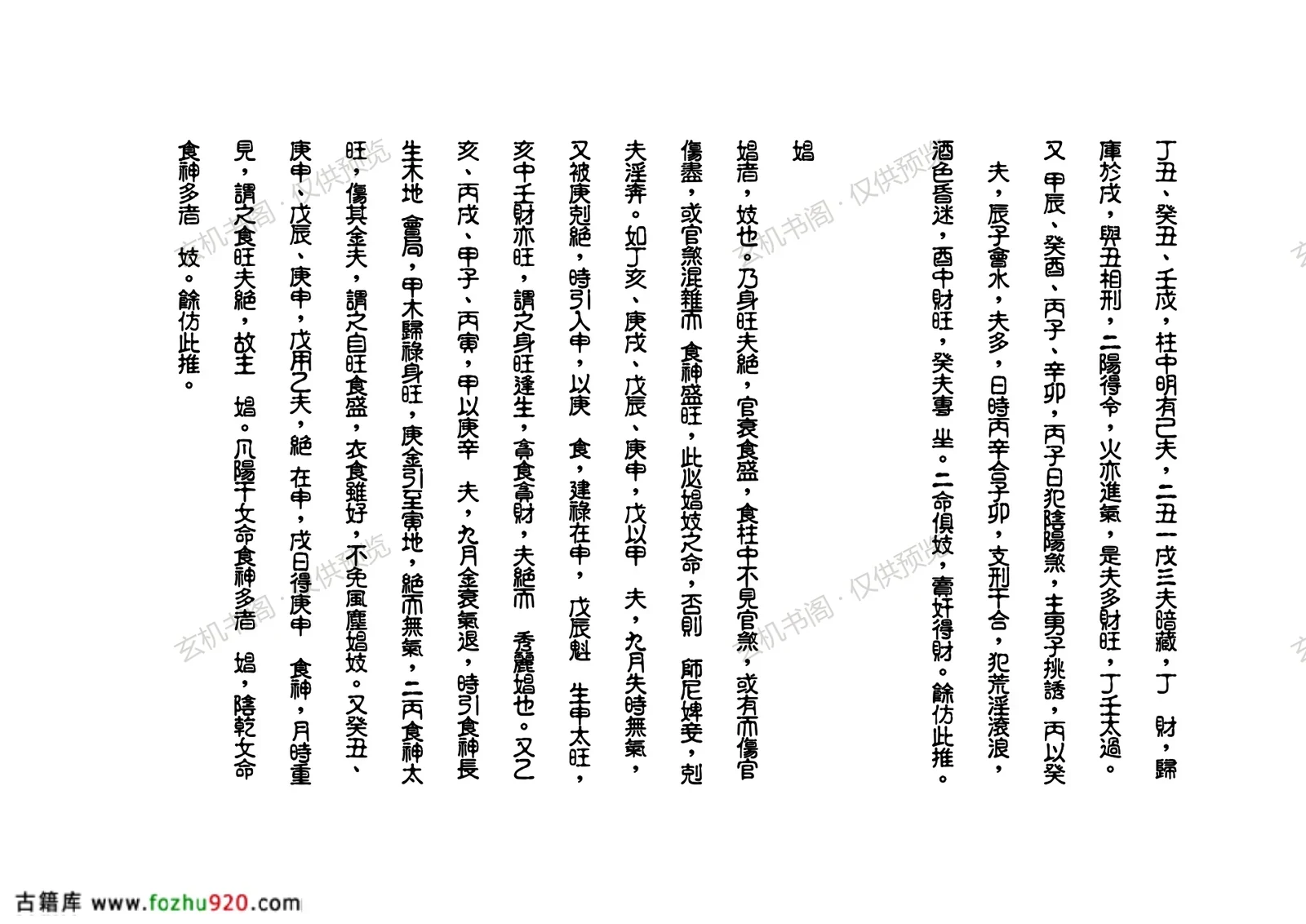
Prostitution: strong self, exhausted husband star, abundant food god
Licentiousness: strong self without control, hidden unions
Key Points
Husband star and children star are the two organizing principles
Emphasizes stem-branch combination and symbolic stars; one officer without mixture is purity
Distinguishes graded categories from harmony and purity to turbidity and prostitution
Each category is illustrated with concrete four-pillar examples
Holds that a weak self supported by the husband star is favorable, while strong self without control tends to be adverse