Reading guide
Content guideOverview
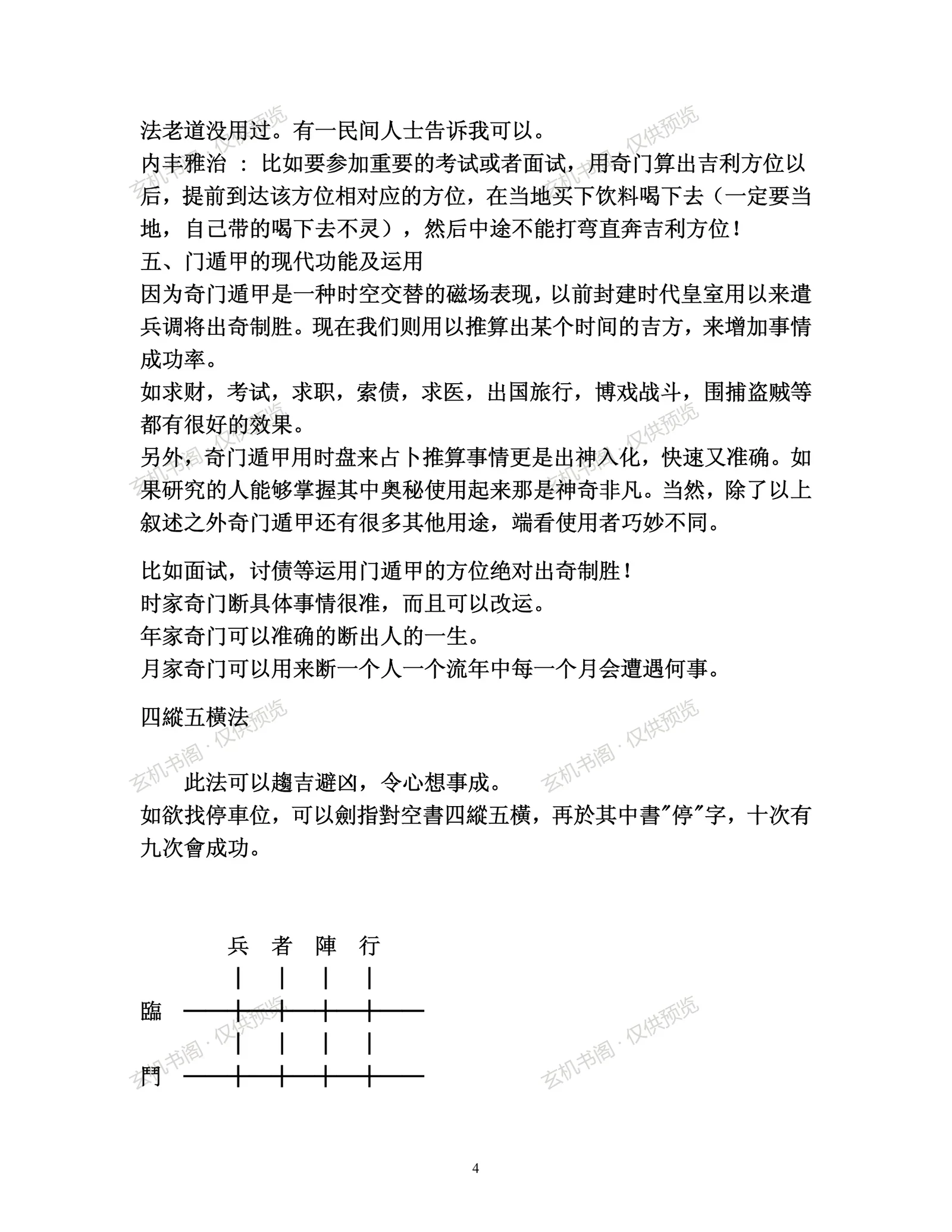
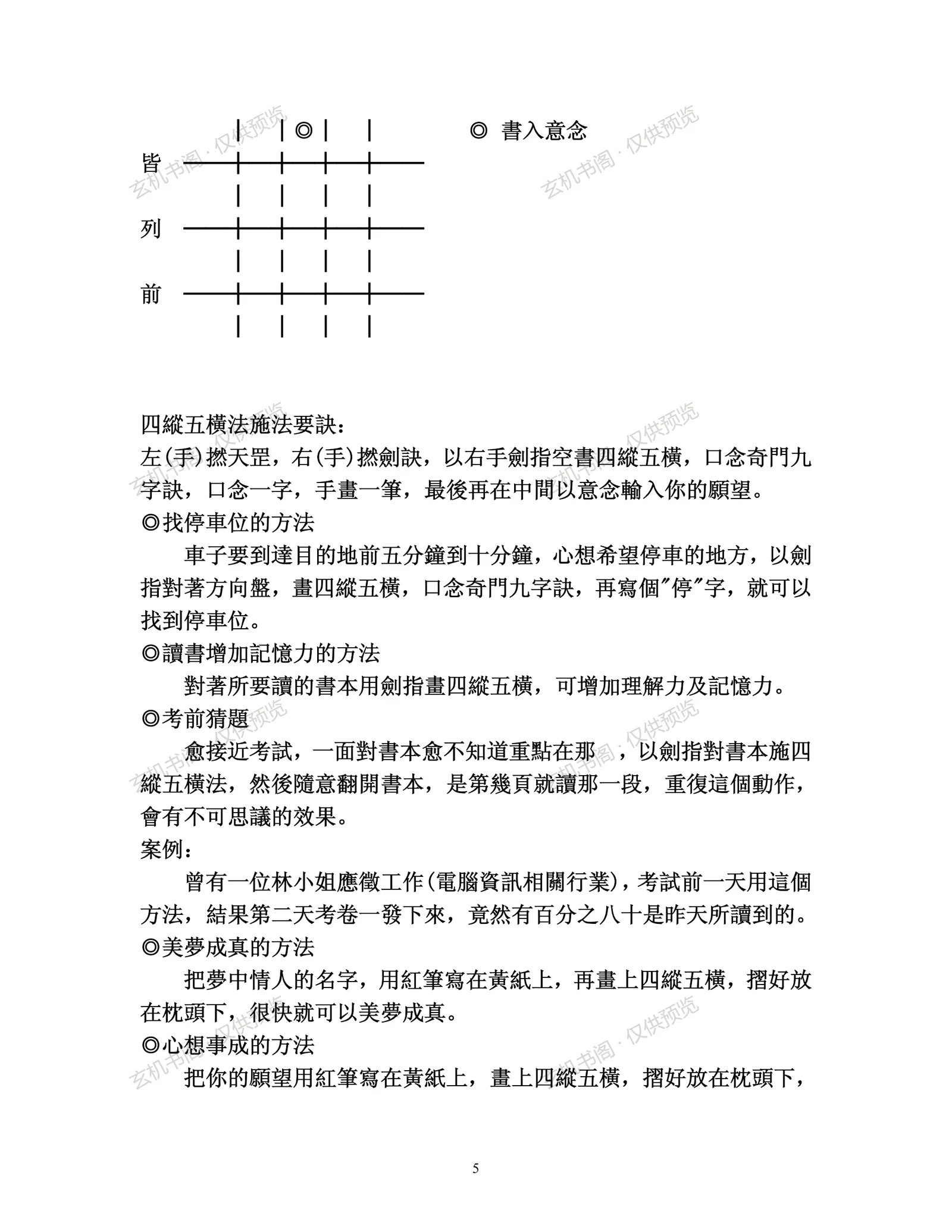
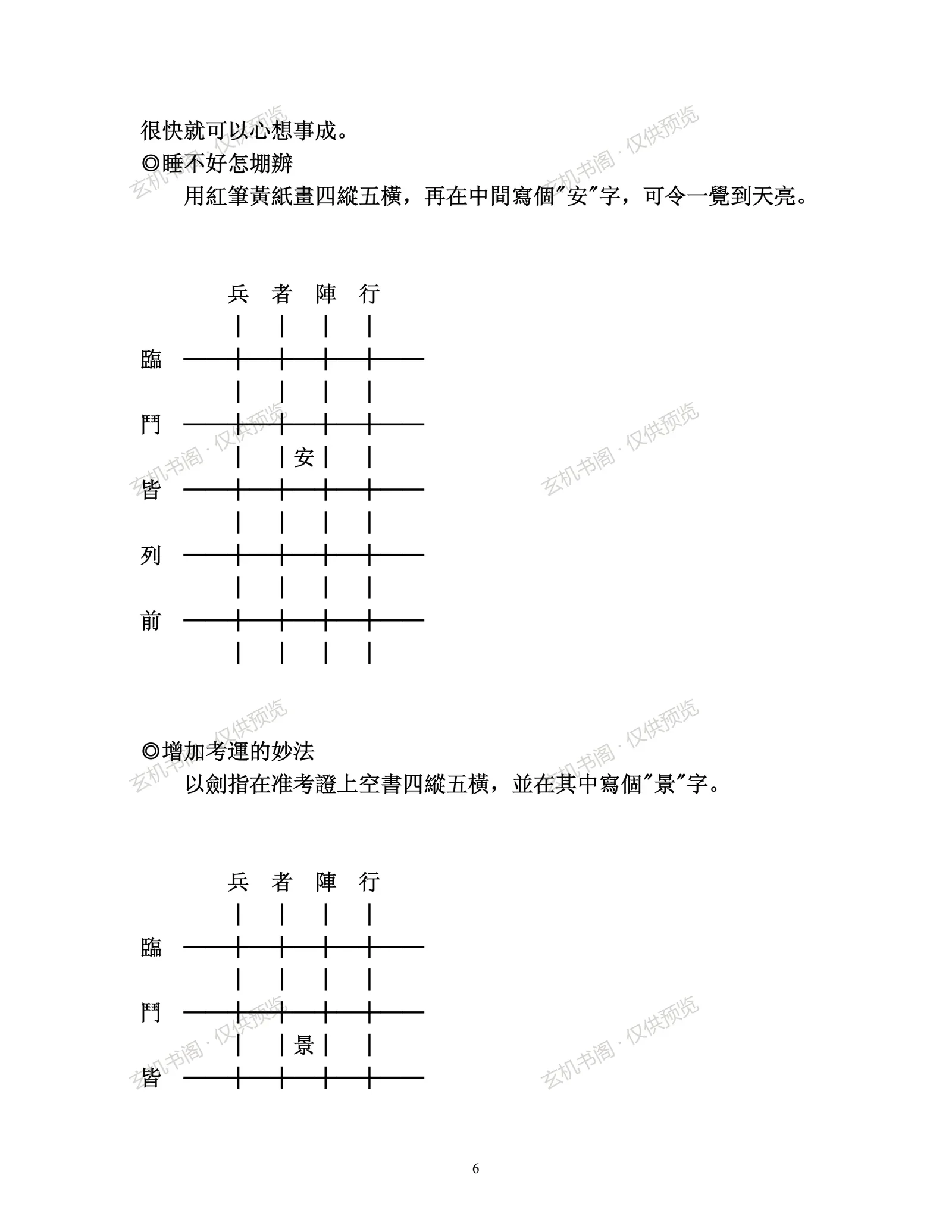
This book focuses on the 'Four Vertical and Five Horizontal' technique within Qimen Dunjia, detailing preparatory rituals, hand gestures, and visualization methods. It first explains the basic procedure, including twisting the Tiangang and Sword gestures, drawing the grid, and reciting the Nine-Character Mantra, while emphasizing good intentions to avoid harm. It then presents various everyday applications such as finding parking spaces, improving memory, guessing exam questions, fulfilling dreams, and improving sleep. A separate chapter covers the Nine-Character Mantra 'Lin, Bing, Dou, Zhe, Jie, Zhen, Lie, Qian, Xing' with its usage and taboos. The book also systematically introduces the Eight Gates (Rest, Life, Injury, Delusion, Scenery, Death, Fear, Open) and their auspicious or inauspicious implications. Finally, it discusses modern applications of Qimen Dunjia, including methods for selecting auspicious directions for wealth, exams, job hunting, and litigation. The content is practical and folk-oriented, suitable for readers interested in Qimen rituals.
Contents
1. Four Vertical and Five Horizontal Technique: steps and taboos
Case studies of everyday applications
2. Nine-Character Mantra: recitation and uses
3. Auspicious and inauspicious Eight Gates in Qimen Dunjia
4. Application of auspicious gates: choosing directions and timing
5. Modern functions and applications of Men Dun Jia
Key Points
The technique requires specific hand gestures, drawing a grid, and reciting the mantra.
Practitioners must pray silently and maintain good intentions to avoid harm.
The Nine-Character Mantra 'Lin, Bing, Dou, Zhe, Jie, Zhen, Lie, Qian, Xing' is used for protection and blessing.
Each of the Eight Gates has its own auspicious or inauspicious nature; Rest, Life, Open, and Scenery are generally positive.
To activate an auspicious gate, one should walk in its direction for at least fifteen minutes.