Reading guide
Content guideOverview
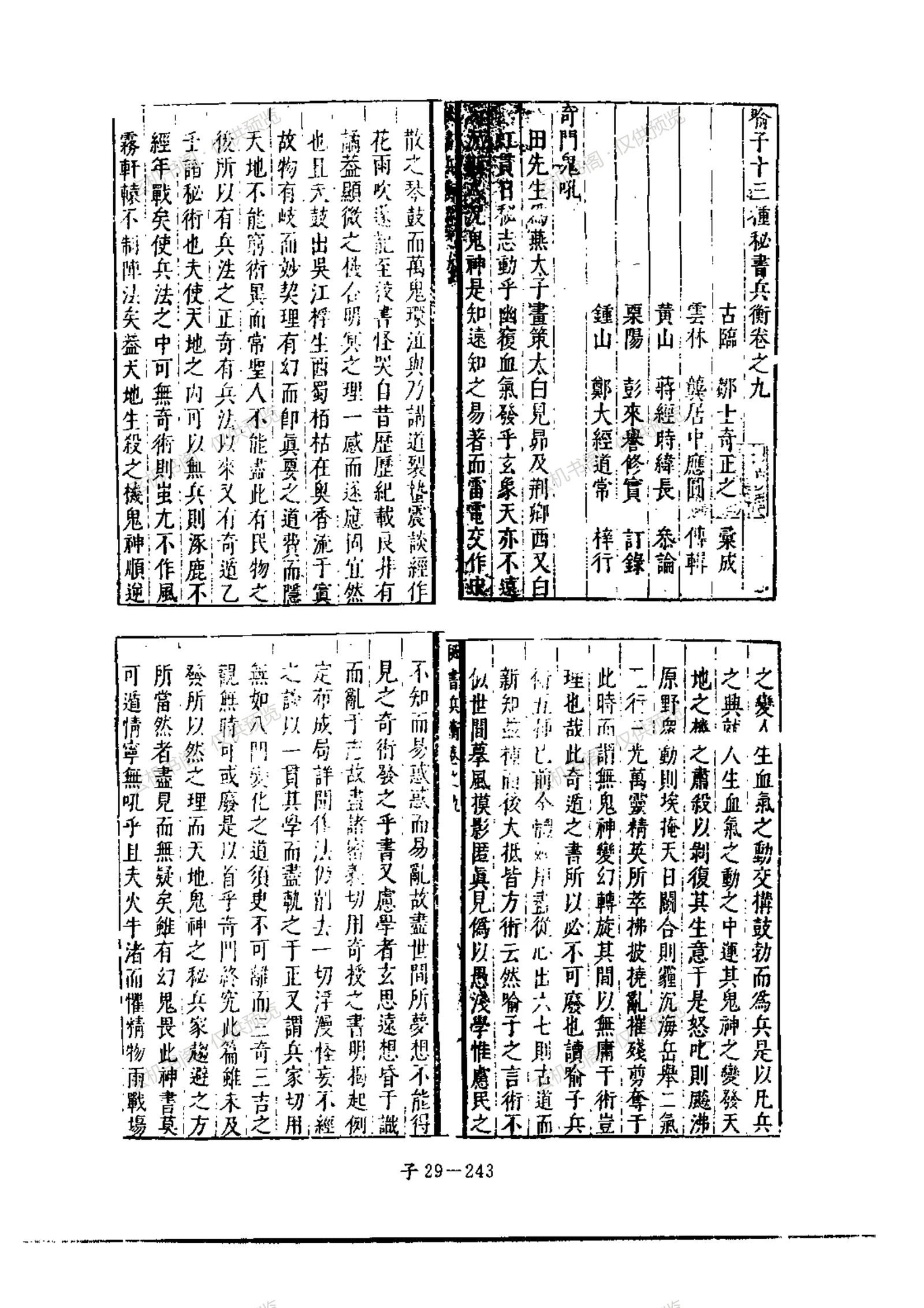
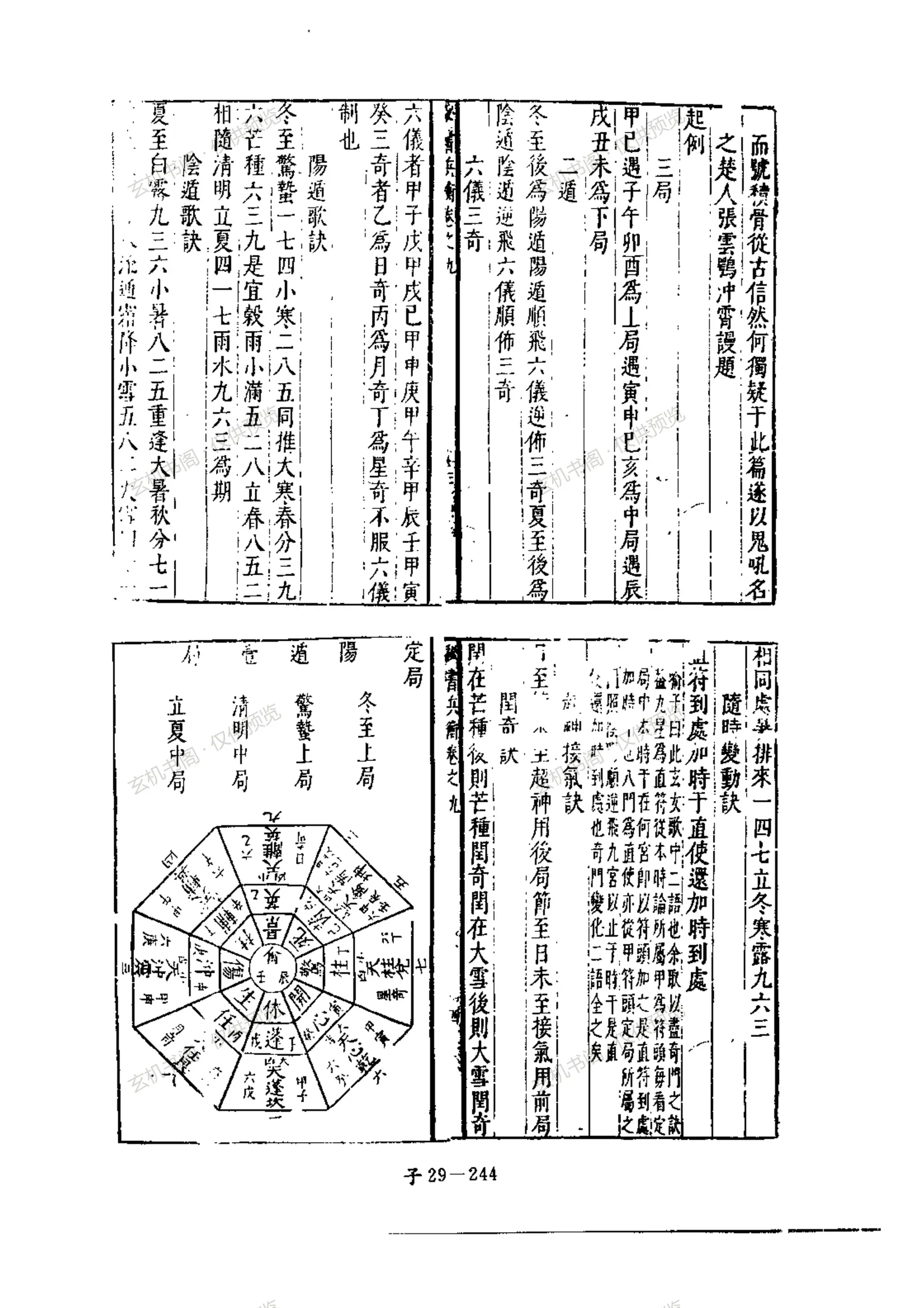
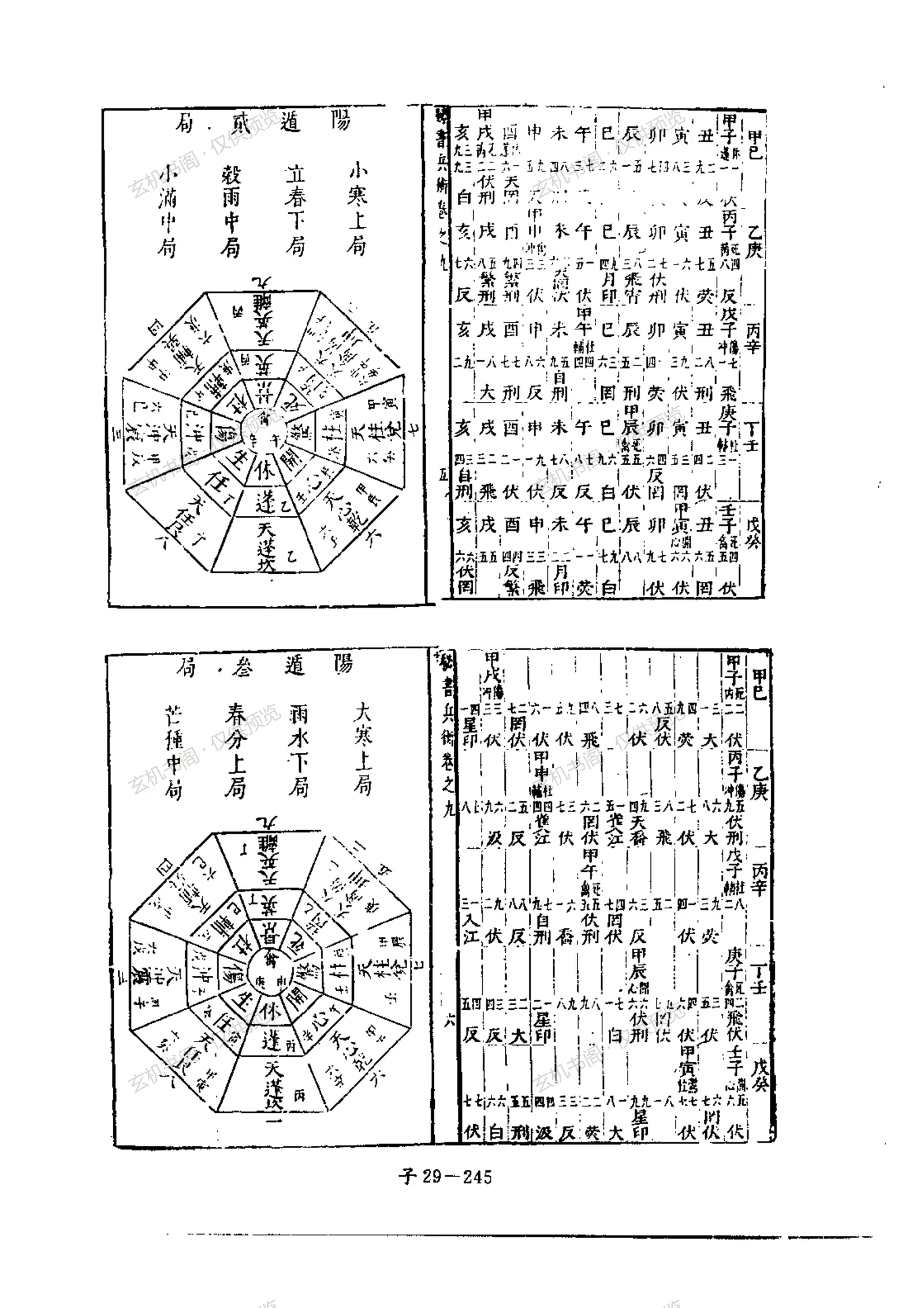
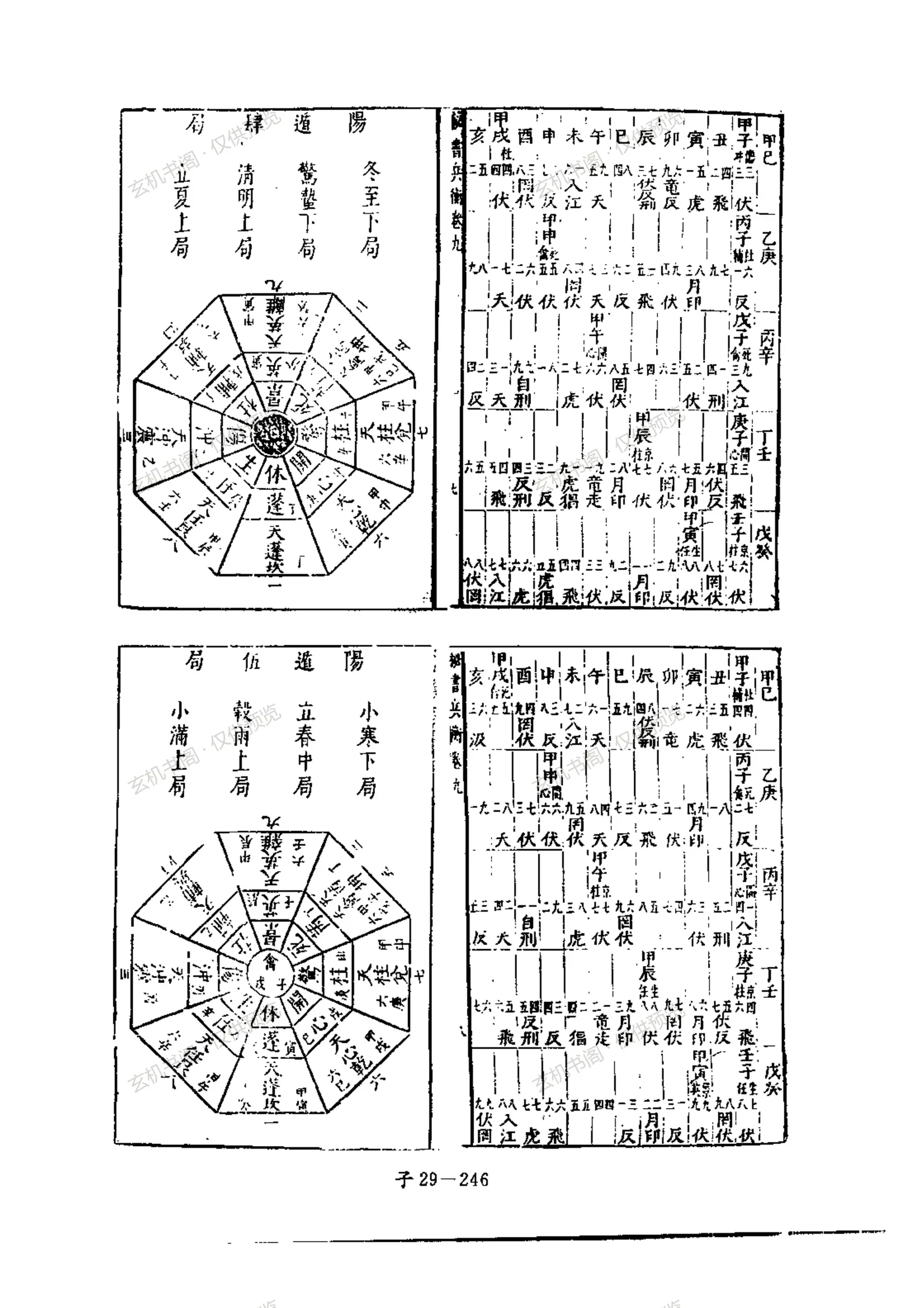
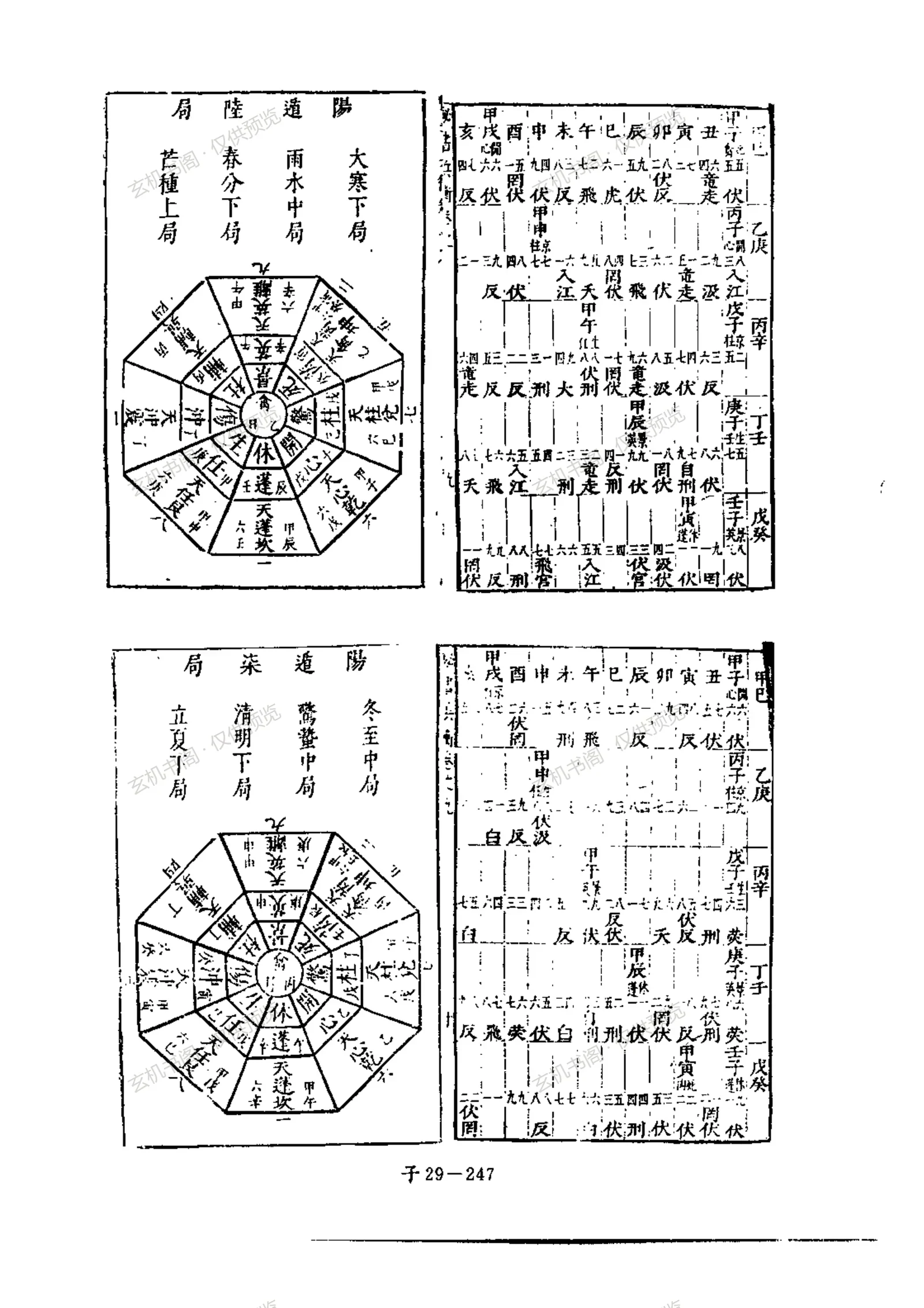
Qimen Guihou is a traditional work on Qimen Dunjia, here scanned from volume 29 of the Zi section of the Siku Jinhui Shucongkan, a collectanea of books banned in the Qing. The opening essay relates Qimen to military yin-yang thought and the workings of heaven and earth, then distinguishes year, month, day, and hour Qimen and discusses chaogie and leap adjustment. The main body is organized by yang-dun and yin-dun: it first explains the six yi stems and the three wonder stems (yi, bing, ding), then gives yang-dun and yin-dun mnemonic verses and diagrams, followed by the upper, middle, and lower cycle configurations for each solar term, such as the winter solstice upper cycle and the start-of-spring lower cycle. The later pages combine circular nine-palace charts with dense sexagenary tables showing value chief and value envoy placements and patterns such as fei, fu, fan, and fu. The work is best suited to readers with some Qimen background who wish to consult an original source on solar-term ju-setting and charting rules.
Contents
Preface on Qimen's origins and military yin-yang
Six yi and three wonders with yang-dun and yin-dun verses
Overview of upper, middle, and lower cycle ju by solar term
Yang-dun solar-term nine-palace charts and chief/envoy tables
Yin-dun solar-term nine-palace charts and sexagenary tables
Key Points
The title page reads Qimen Guihou, a work preserved in the Siku Jinhui Shucongkan.
It explains the ju rules for yang-dun and yin-dun across each solar term's three cycles.
Entries such as winter-solstice upper cycle allow ju lookup by solar term.
Later pages use circular nine-palace charts and stem tables to show chief, envoy, and flying/hidden patterns.