Reading guide
Content guideOverview
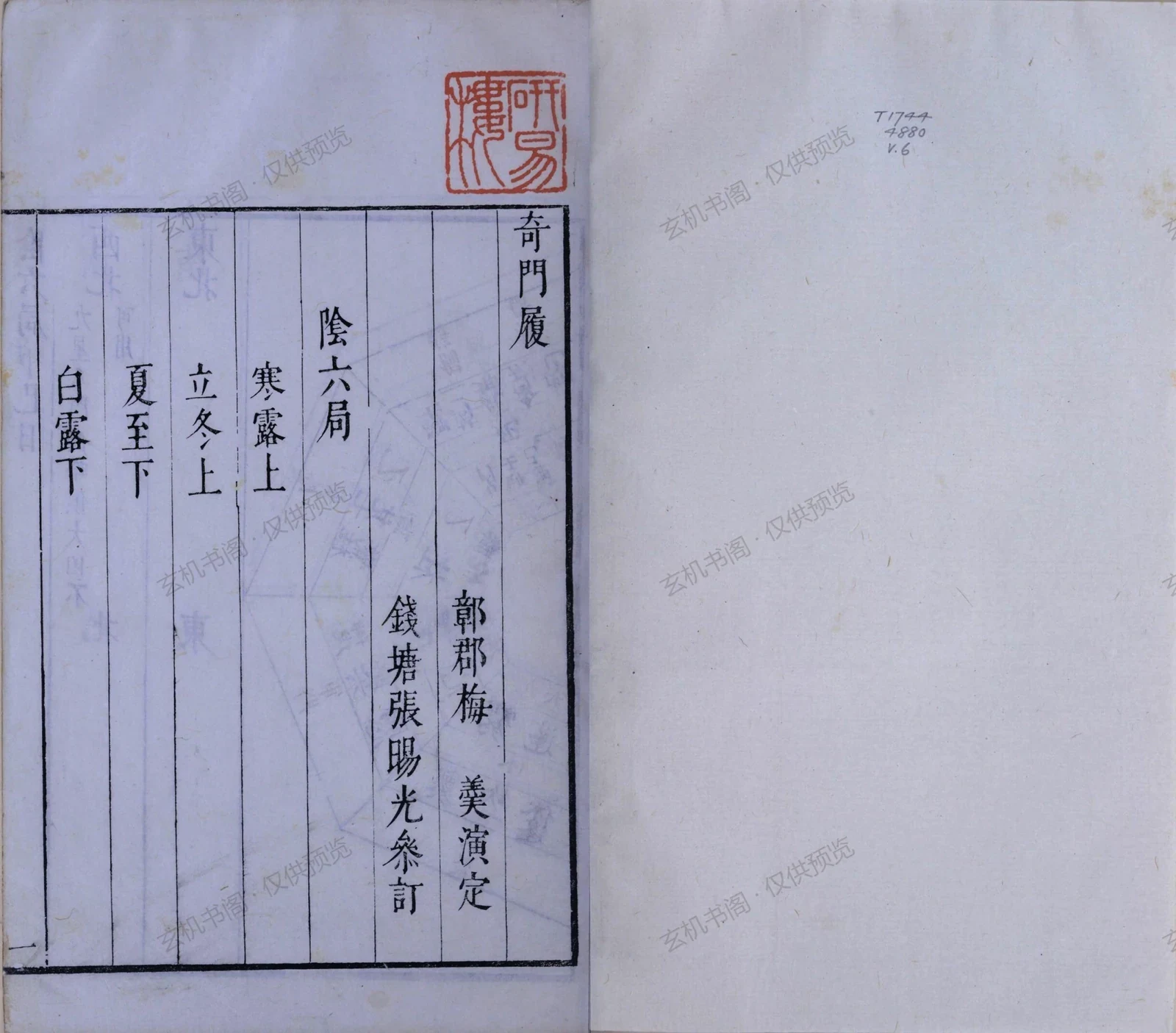
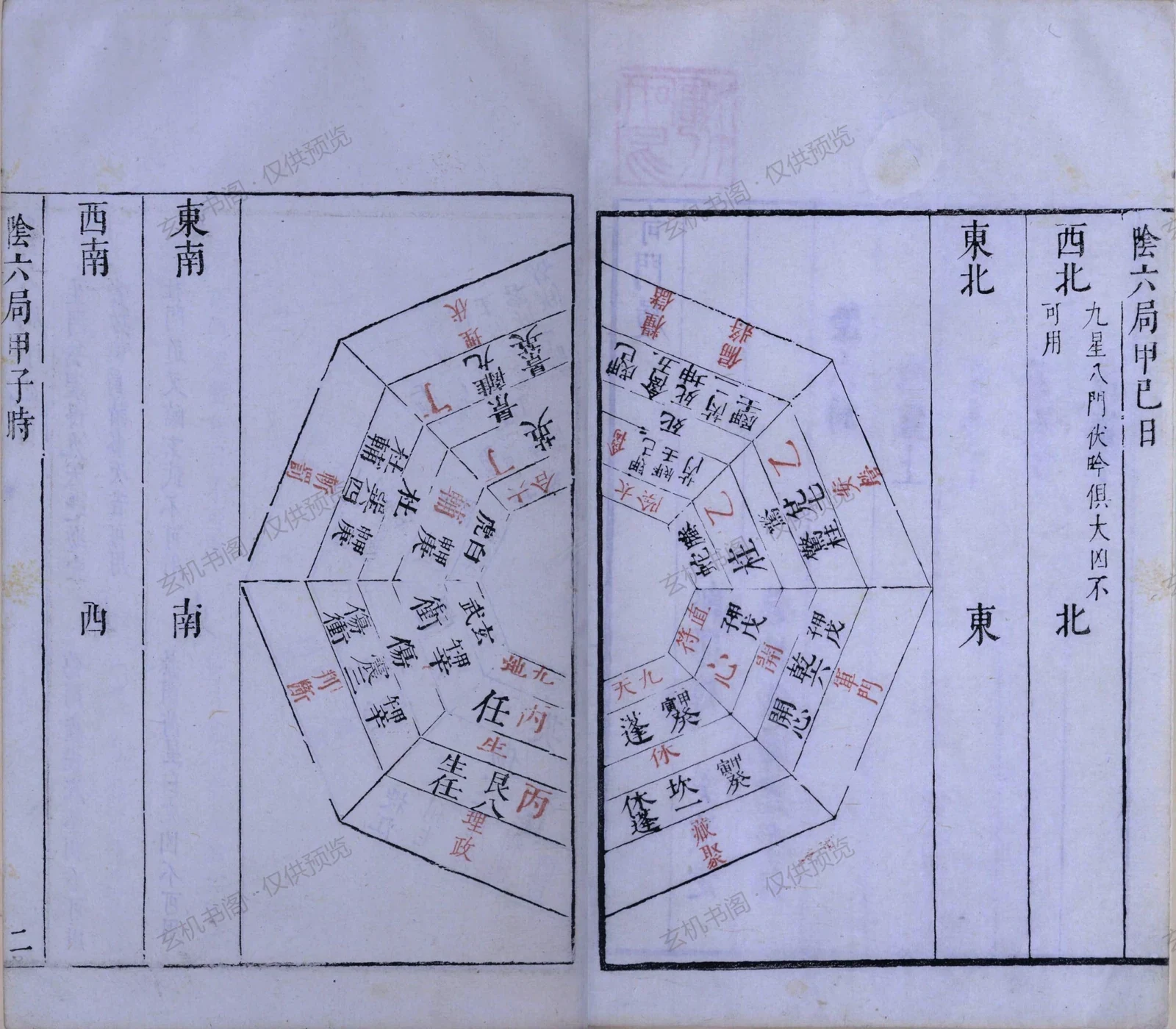
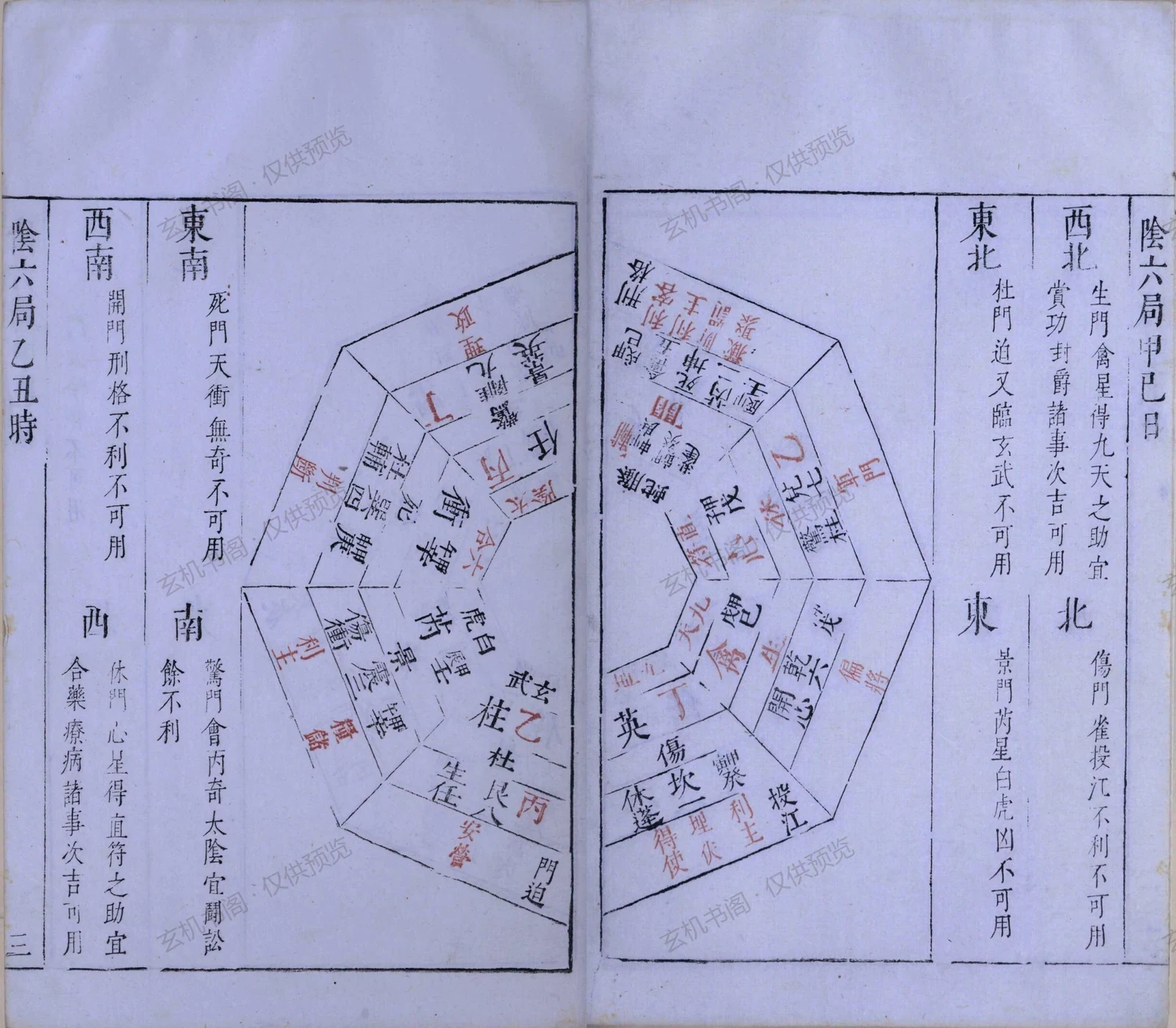
This is a surviving portion of the Qimen Dunjia manual Qimen Lü, titled on the inner cover and section headings as the 'Yin Six Bureau.' The text credits Mei Geng of Gaoxian with setting the method and Zhang Yangguang of Qiantang with collation. The extant pages present hour-by-hour bureau charts, beginning with the jiazi and yichou hours of the Yin Six Bureau. Each chart arranges the eight gates, nine stars, eight spirits, and heavenly stems across a nine-palace grid, with red and black annotations on the margins giving practical judgments. Visible remarks include warnings that 'when the nine stars and eight gates are in repeated yin, great misfortune, do not use,' notes that the Life Gate meeting the Bird Star with the Nine Heavens aid is suitable for rewarding merit and granting titles, and that the Harm Gate with the 'sparrow plunging into the river' configuration is unfavorable. The red-and-black overprinting distinguishes the layout from the commentary, making the volume useful for studying late Ming and early Qing Qimen charting conventions, gate-star-spirit judgments, and printing history. Only the first six pages are seen here; the ninth bureau and later content are missing, and several pages are blank endpapers, so a complete copy is needed for verification.
Contents
Cover and library stamps
Inner title: Qimen Lü, Yin Six Bureau
Yin Six Bureau, jiazi hour chart
Yin Six Bureau, yichou hour chart
Hourly annotated judgments on gates, stars, and spirits
Key Points
Charts are set hour by hour for the Yin Six Bureau, arranging gates, stars, and spirits across the nine palaces
Red and black marginal notes directly state suitability and auspiciousness of actions
Uses Qimen terminology such as repeated yin, gate pressure, and stem-spirit conjunctions
Red-and-black overprinting separates layout from judgment and is bibliographically distinctive