Reading guide
Content guideOverview
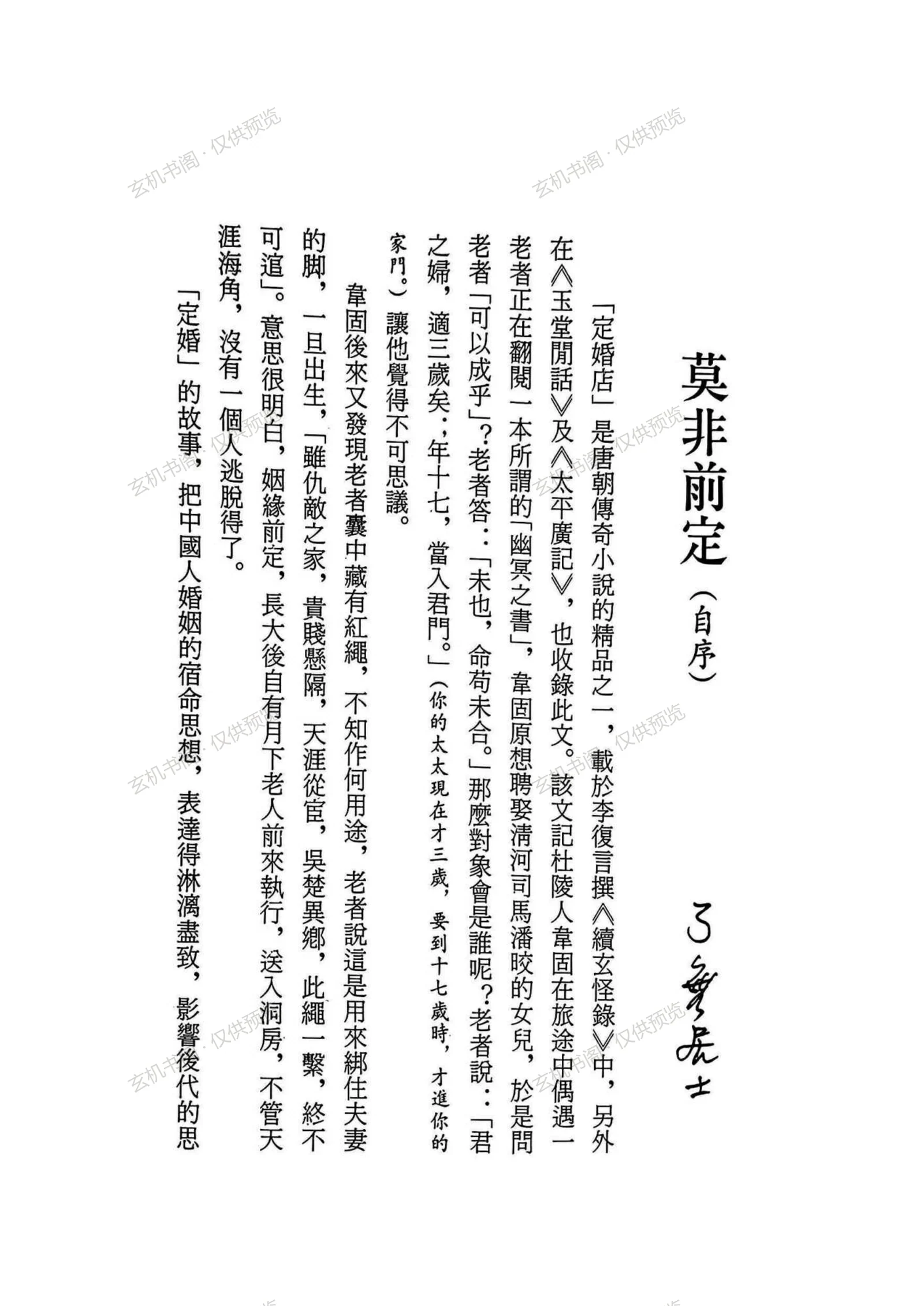
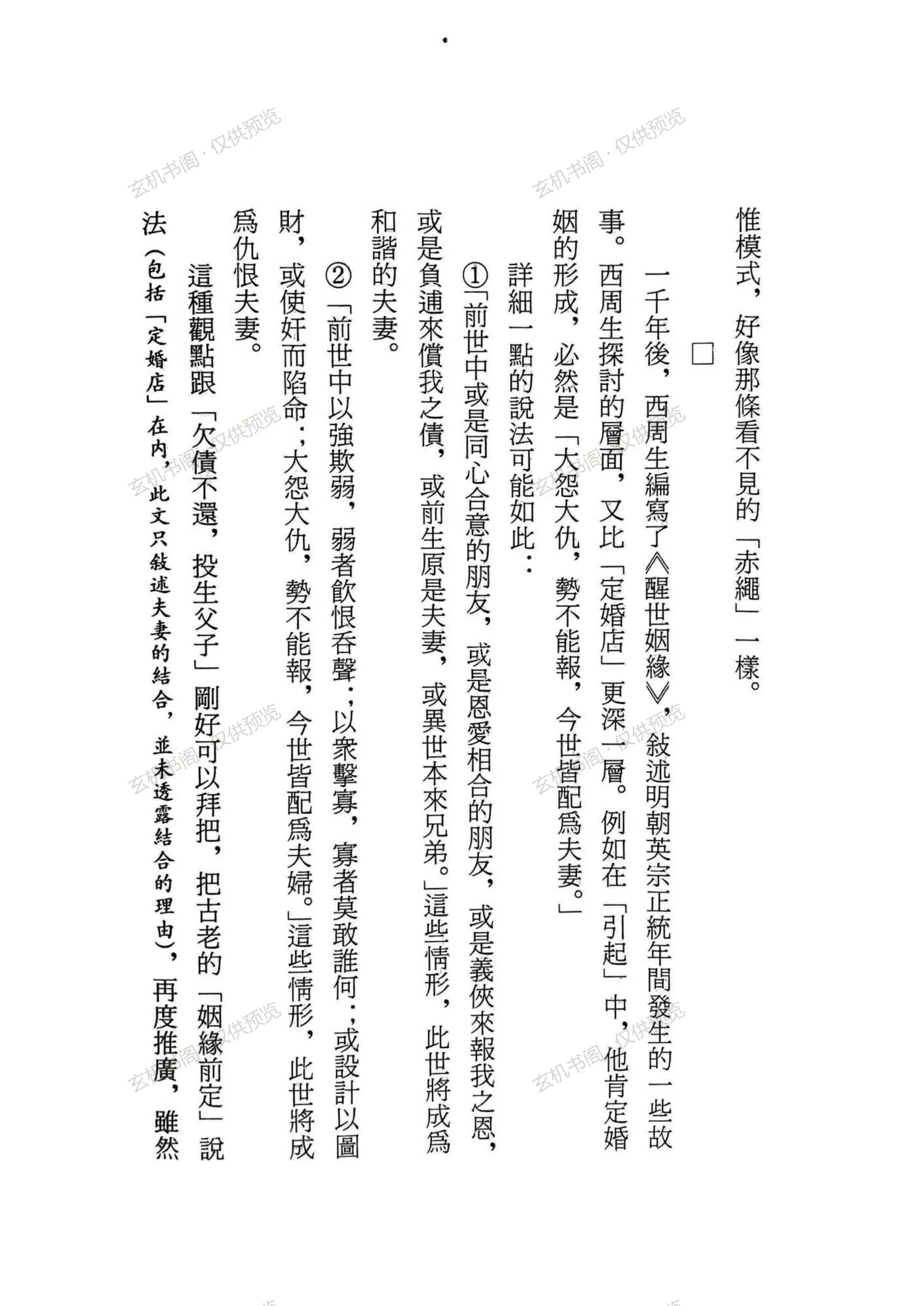
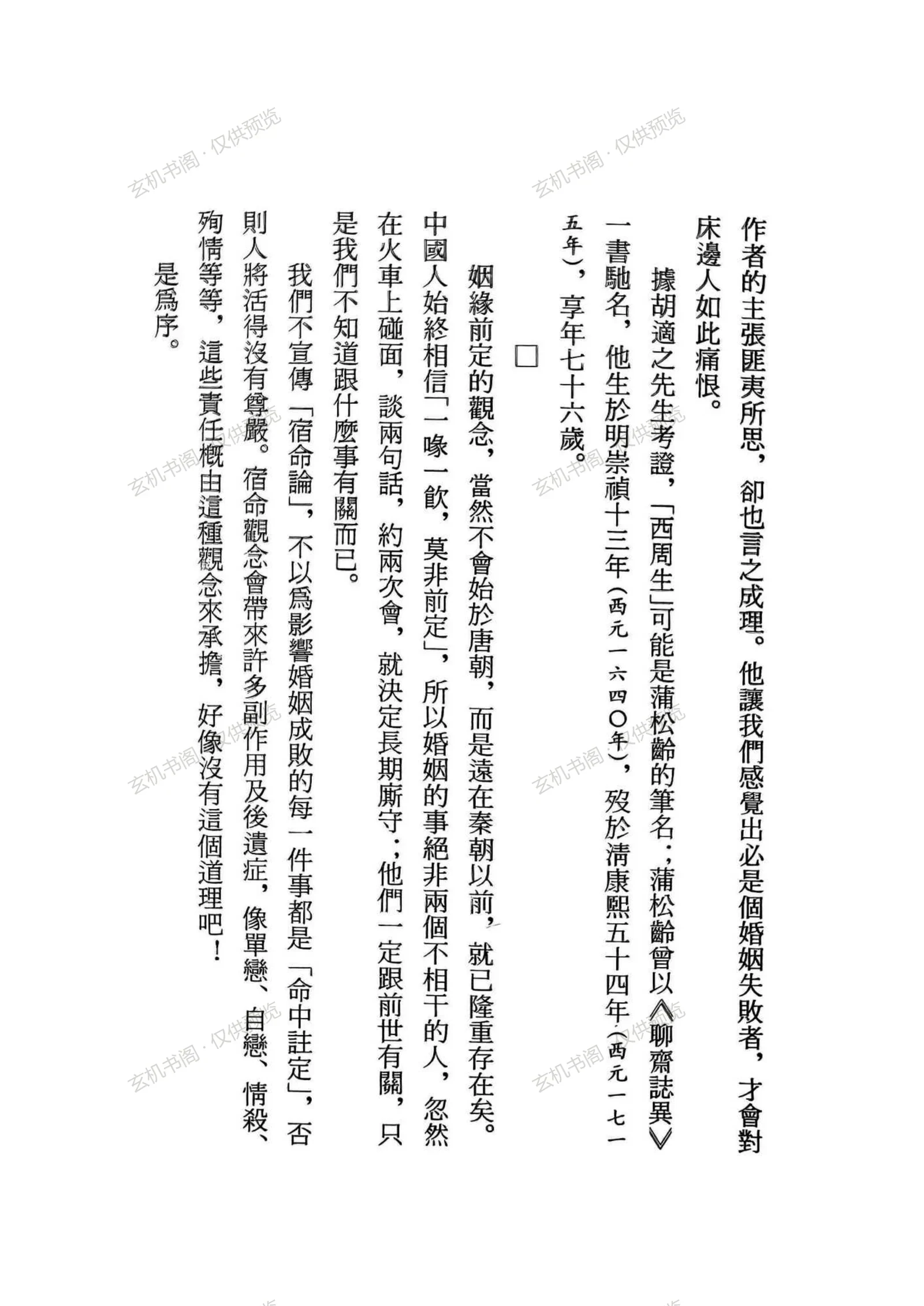
This is the fourth volume of Liaowu Jushi's series Modern Fate Calculation for Modern People, published by Tianxiang Press in June 1987. Starting from the Tang tale Dinghun Dian (The Betrothal Shop) and its red thread that binds couples, the author draws on classical notebooks such as Xu Xuanguai Lu, Taiping Guangji and Yutang Xianhua to show how the belief in predestined marriage spread in Chinese society. He then turns to Ming-Qing novels such as Xingshi Yinyuan Zhuan to discuss the karmic-debt theory that great enemies must be repaid by becoming husband and wife, and outlines several patterns in which friends, brothers, benefactors or enemies in a past life become spouses in this one. The book also critiques the side effects of fatalism on marriage and uses Hu Shi's identification of the novelist 'Xizhou Sheng' as an example. It is a cultural and fate-calculation essay collection rather than a manual of Bazi chart reading.
Contents
Preface: the red thread and the betrothal shop
Origins of predestined marriage and novel evidence
Patterns of past-life karma becoming marriage
The impact and critique of fatalism on marriage
Hu Shi on Xizhou Sheng and Xingshi Yinyuan Zhuan
Key Points
Uses the red-thread tale of Dinghun Dian to explain the origin of predestined marriage
Draws on Xingshi Yinyuan Zhuan to discuss enemies reborn as spouses
Lists patterns: past-life benefactors, friends, brothers or enemies becoming spouses
Critiques the side effects of fatalism such as unrequited love, self-obsession, crimes of passion and suicide
A cultural discussion, not a practical Bazi chart-reading manual