Reading guide
Content guideOverview
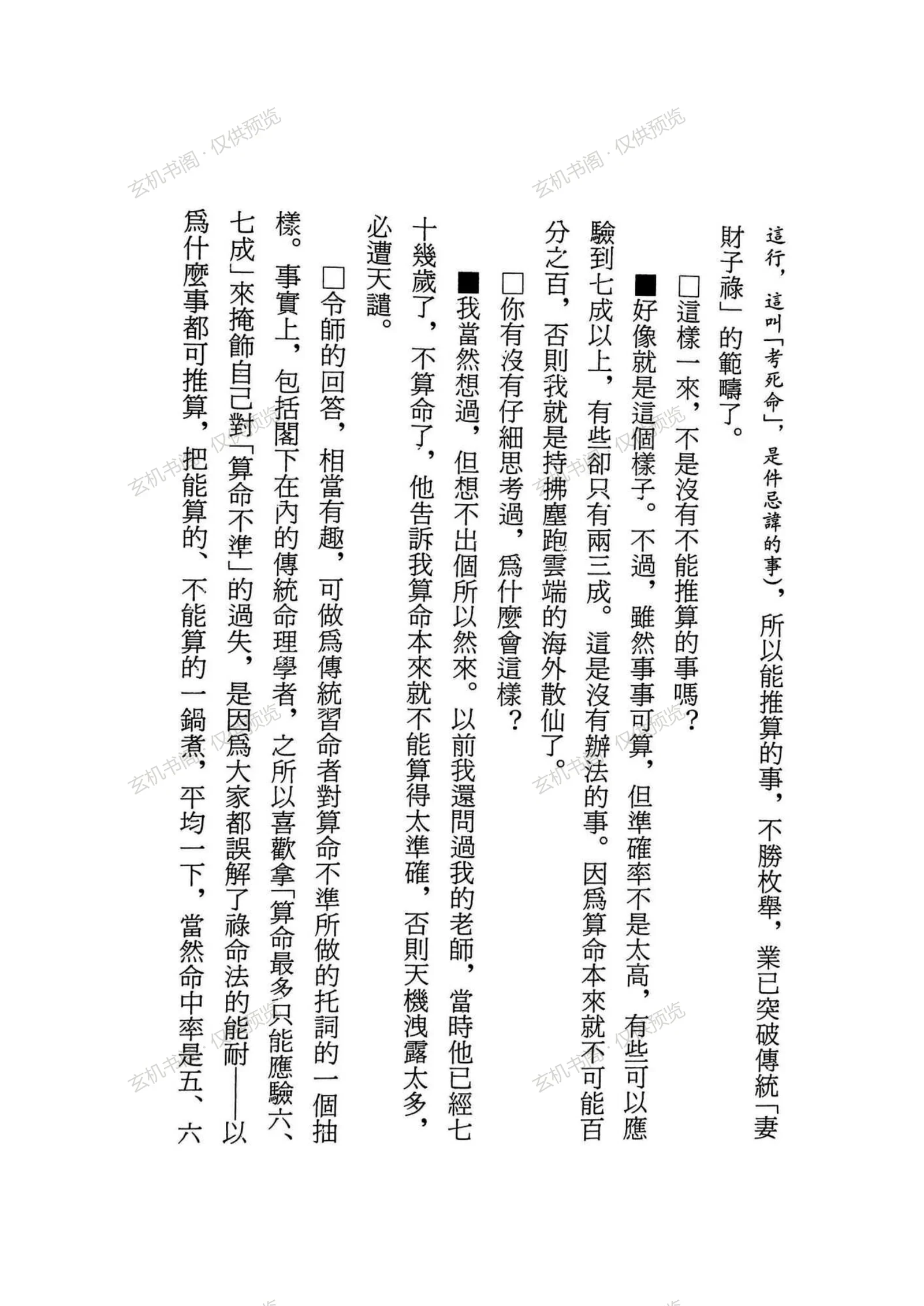
This is the second volume of the "Modern Fate Calculation for Modern People" series by Liao Wu Jushi, published in Taipei by Tianxiang Publishing House in June 1987 as part of a five-volume set. The visible pages show the opening of the preface, "Relative Truth," written as a dialogue with a veteran practitioner of thirty years. The author argues that a set of eight characters or a Zi Wei chart is merely a projection, or缩影, of a whole life, and perhaps only a fragment of it, so no formula can cover everything. He asks what fate calculation can really predict, whether the traditional scope of wife, wealth, children and office is adequate, and why readings hit only sixty or seventy percent rather than certainty, citing a teacher's warning that revealing too many heavenly secrets brings retribution. The book appears to examine, question by question, the limits of predictability and the boundaries practitioners draw around their craft. It suits readers with some Bazi or Zi Wei background who want to reflect on method and accuracy.
Contents
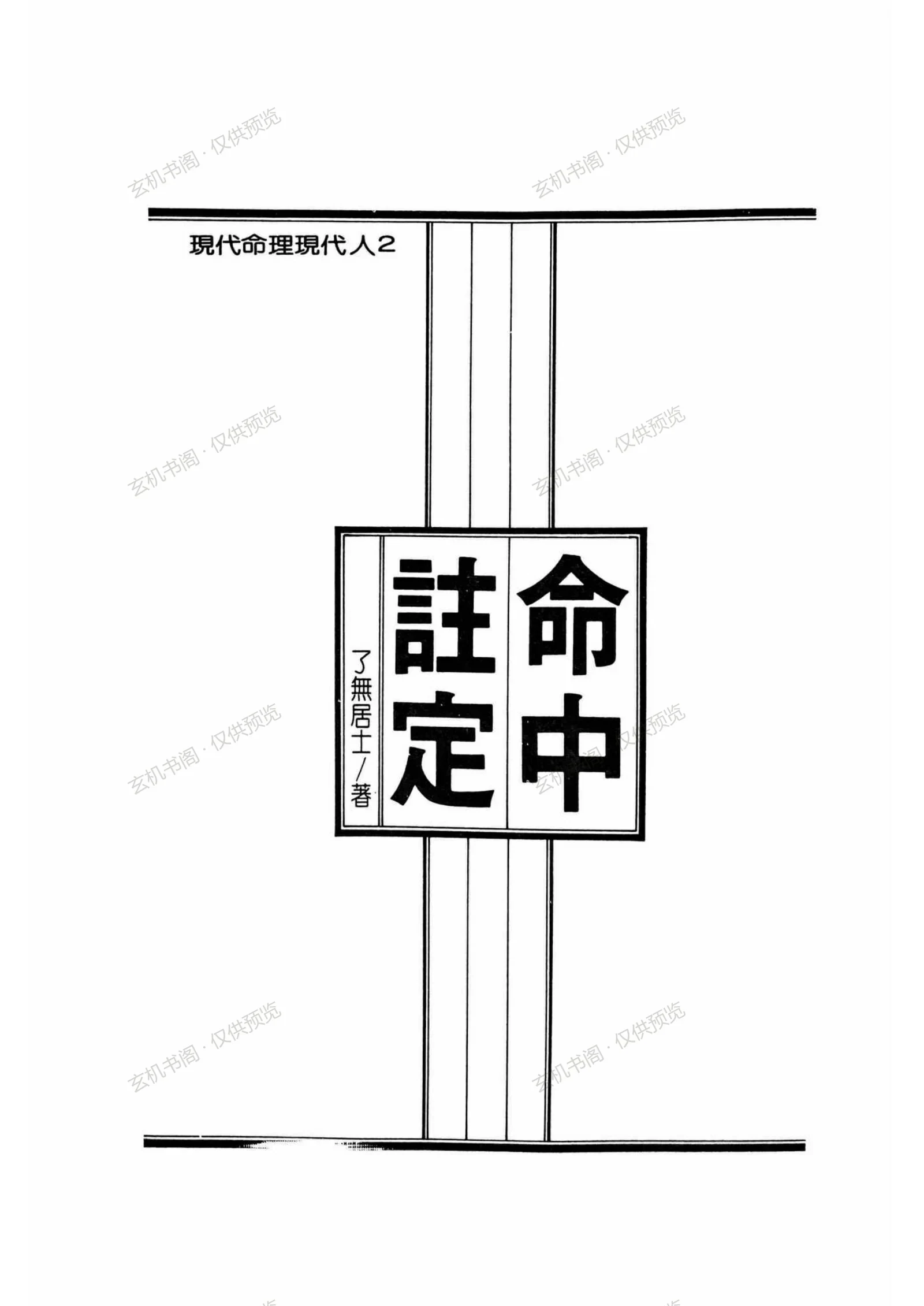
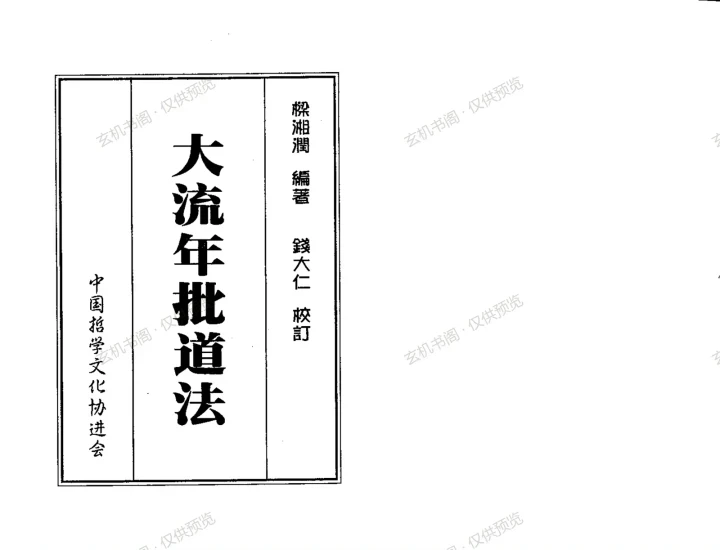
Cover and title page: Modern Fate Calculation 2, Destined
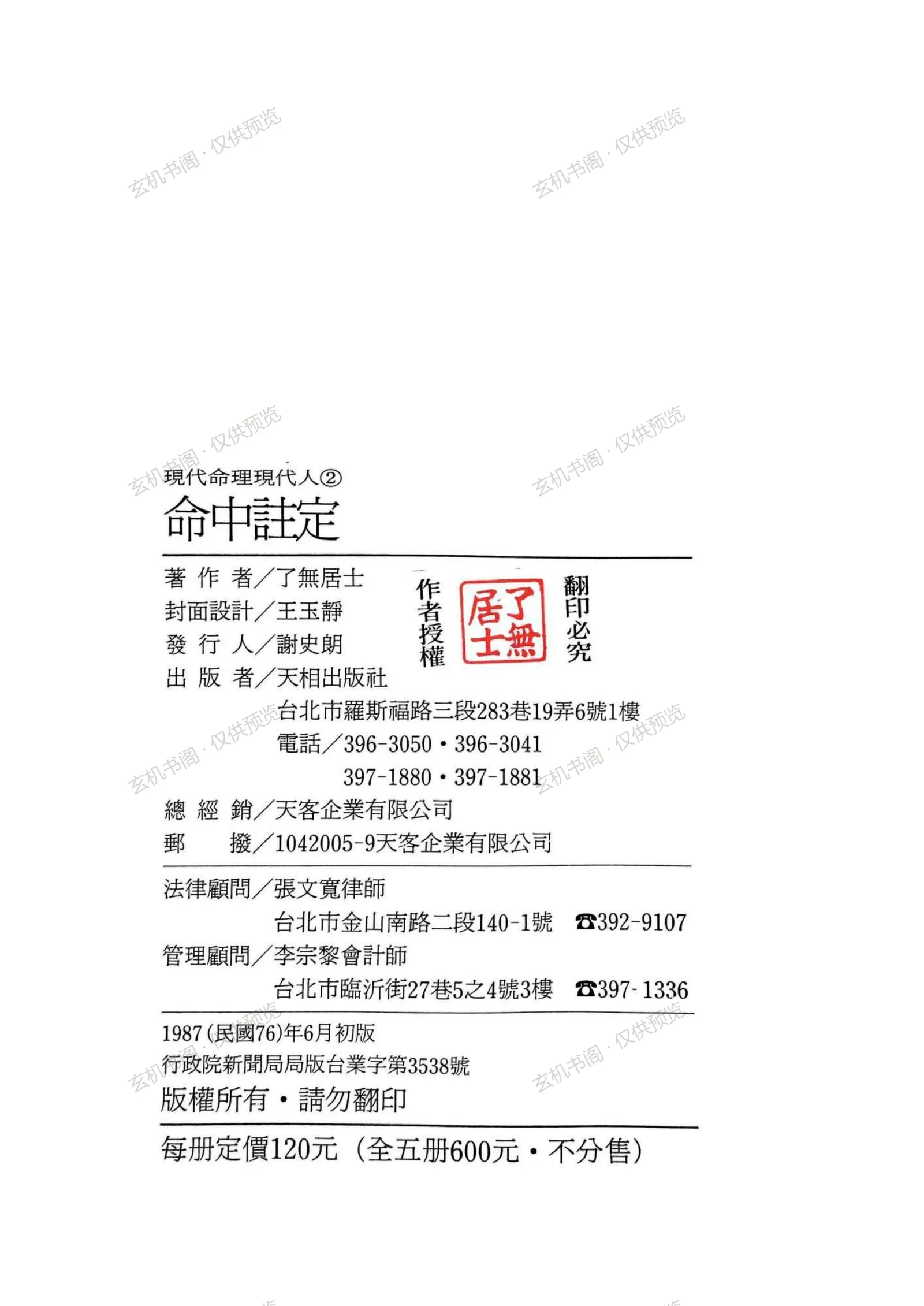
Copyright page: Tianxiang, June 1987, five-volume set
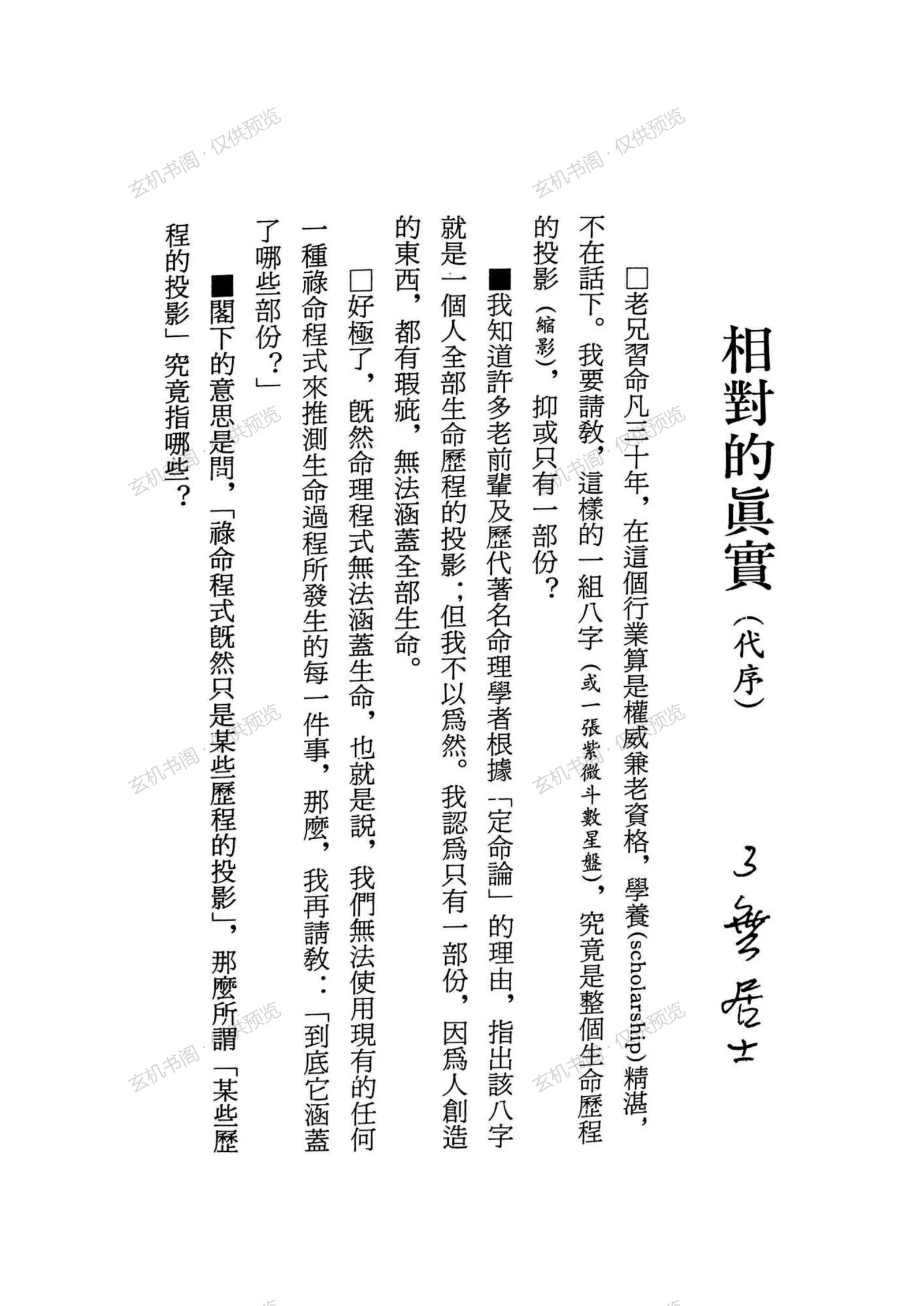
Preface: Relative Truth
Questioning determinism: a chart as partial projection
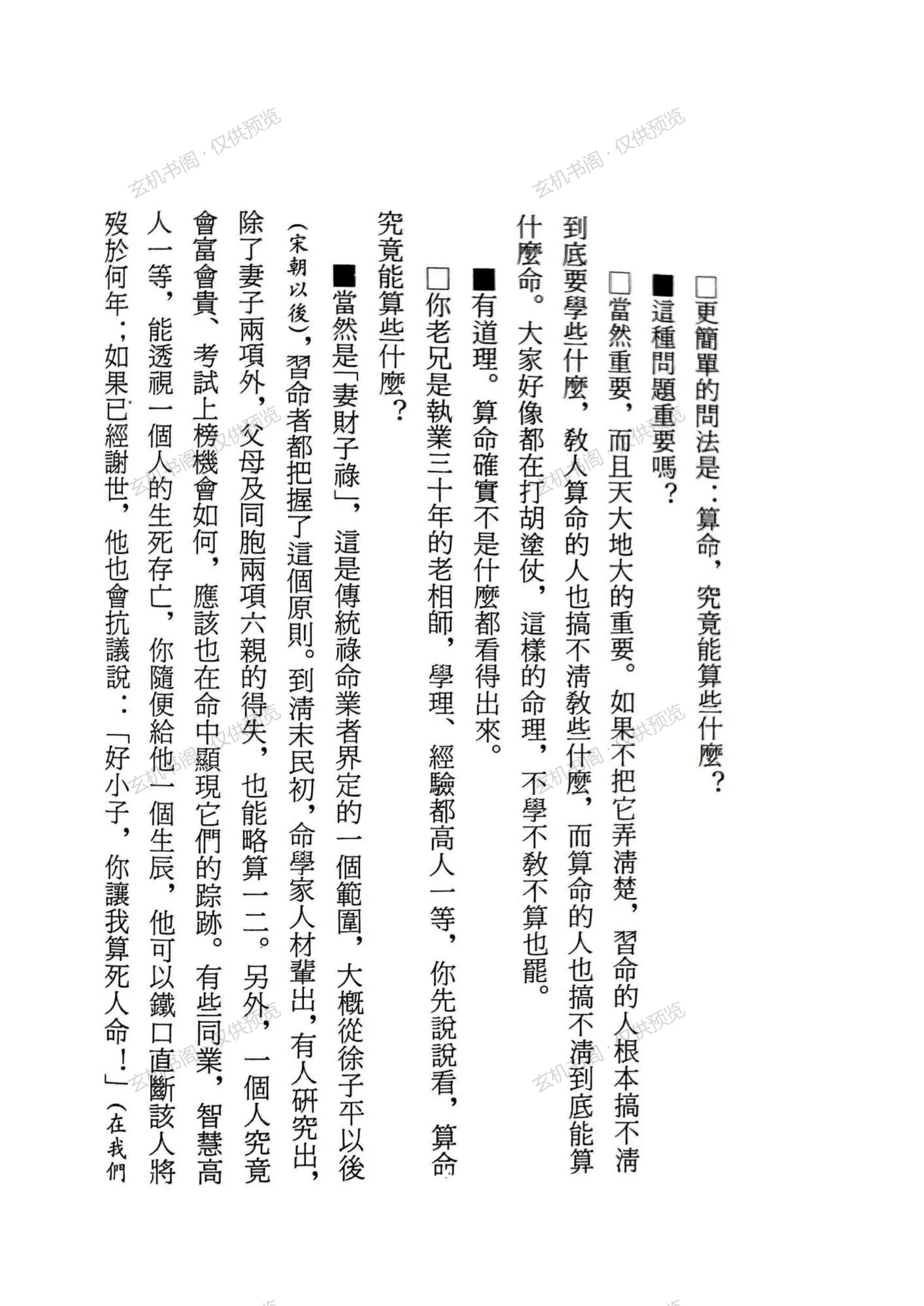
What can be calculated: wife, wealth, children, relatives
Accuracy debate: sixty to seventy percent and heavenly secrets
Key Points
Uses a dialogue format to challenge determinism, treating a chart as a partial projection of life.
Questions the traditional scope of wife, wealth, children and office as the measure of a reading.
Discusses why accuracy hovers around sixty to seventy percent and how practitioners rationalize misses.
Second volume of the five-volume Modern Fate Calculation for Modern People series.