Reading guide
Content guideOverview
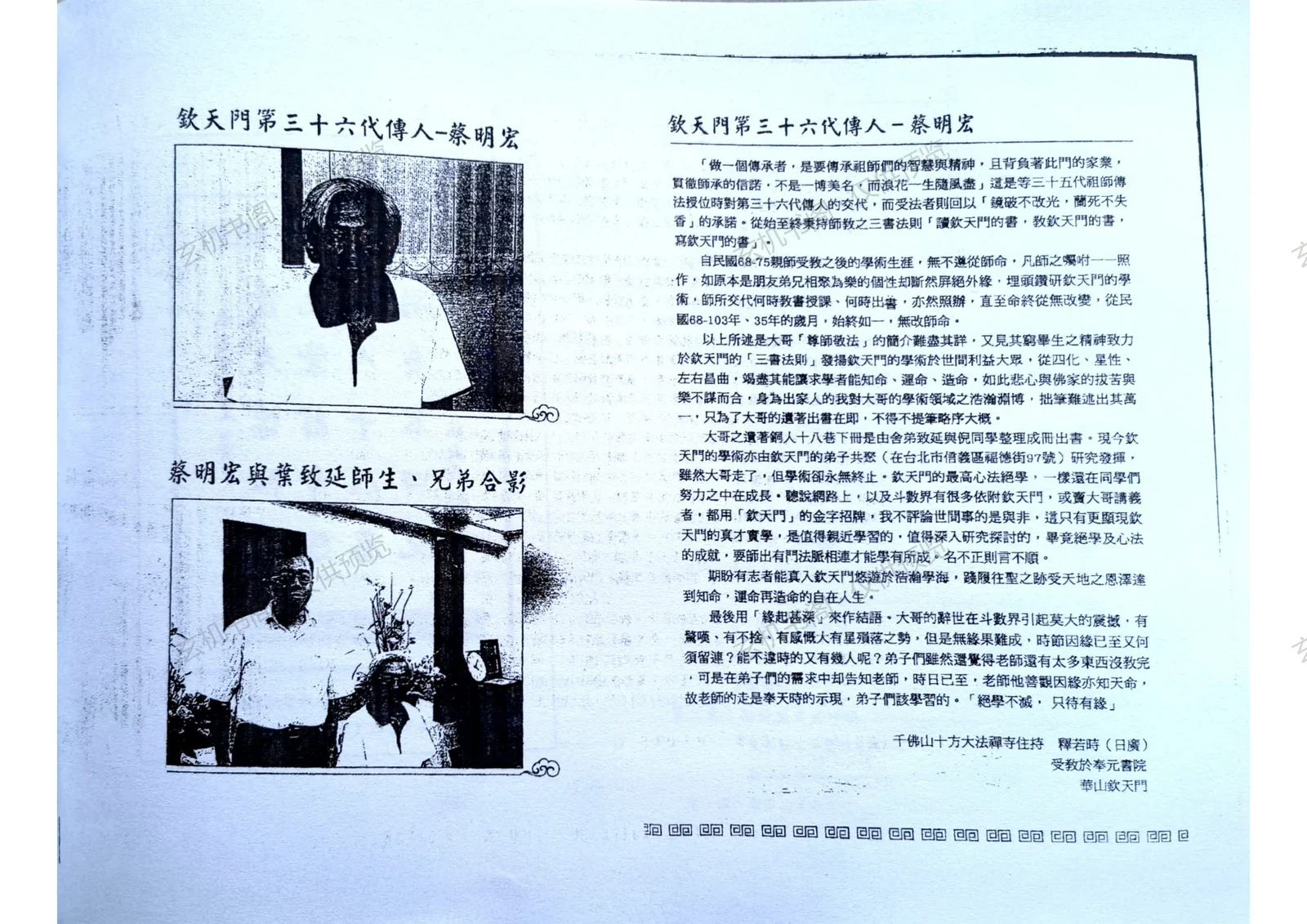
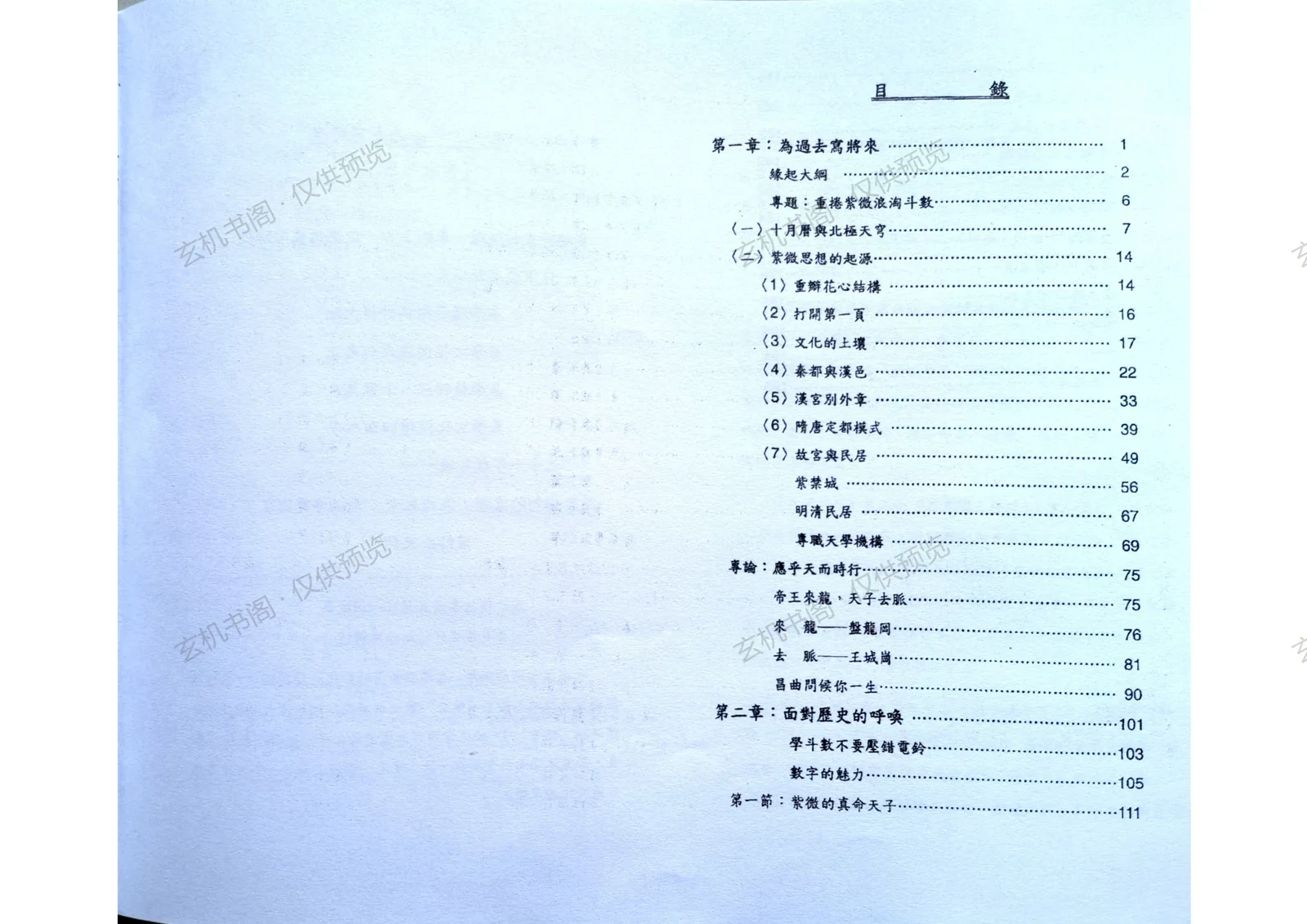
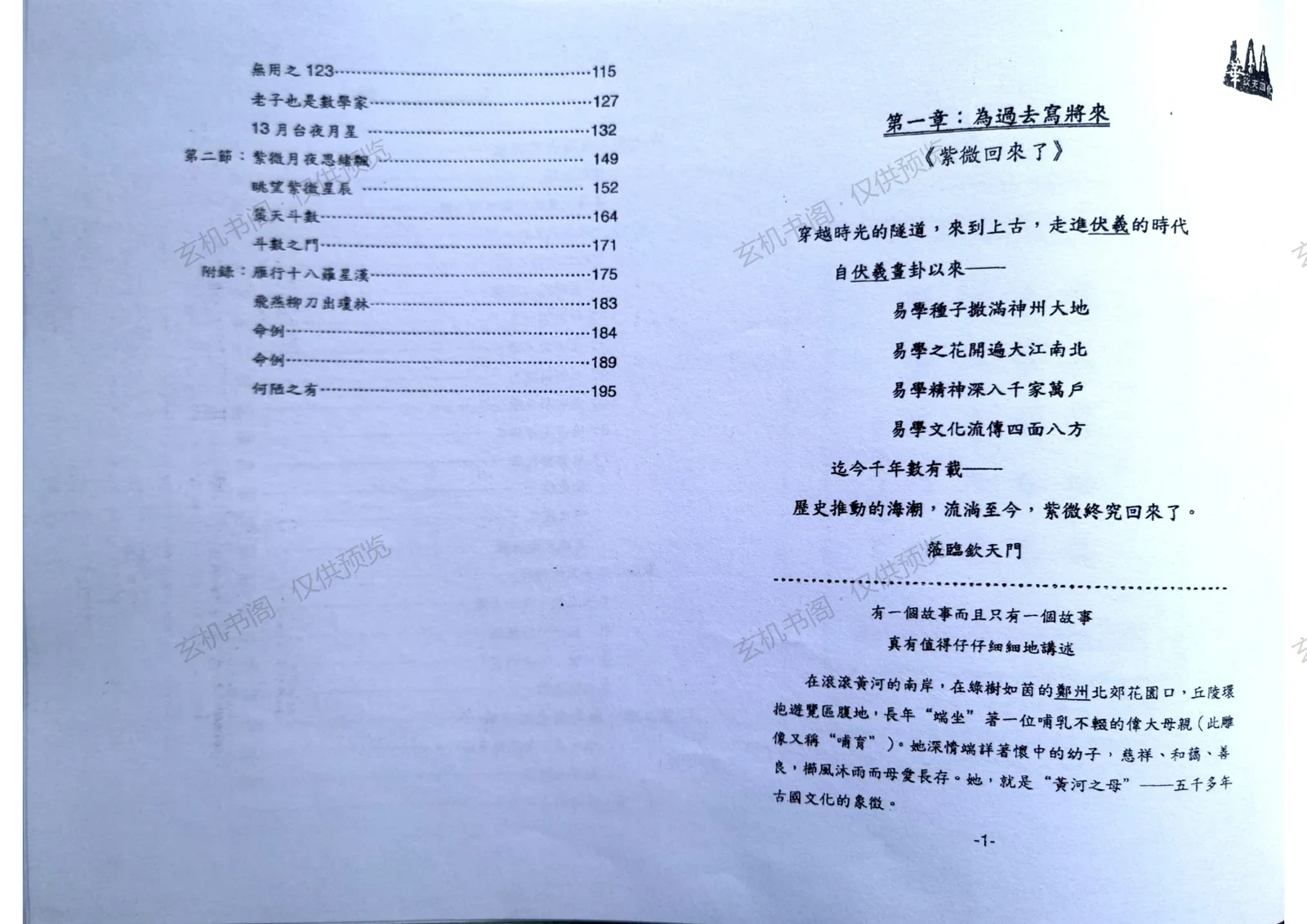
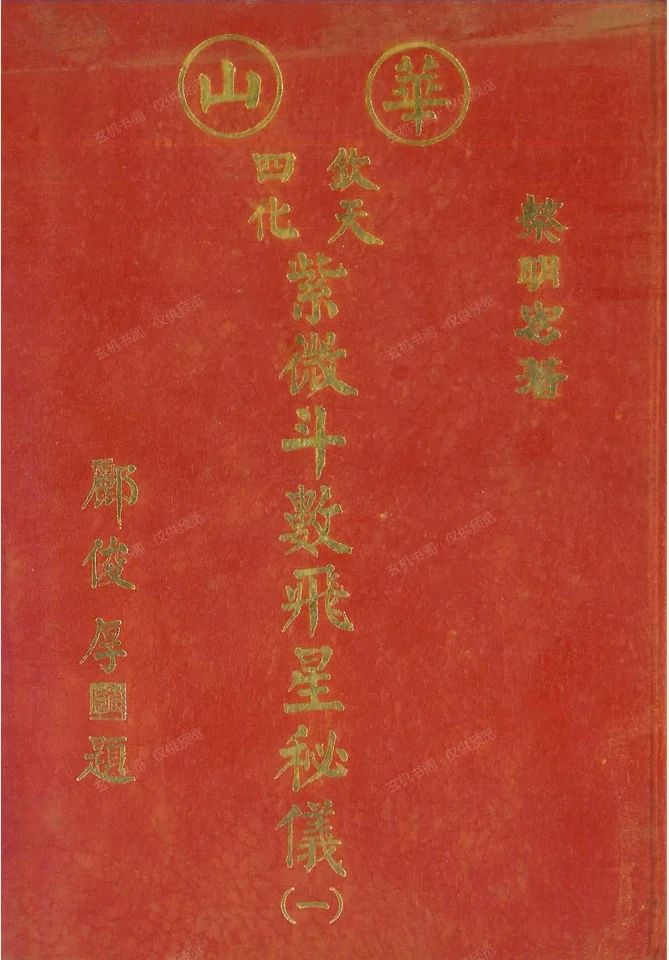
This is the lower volume of Cai Minghong's Qintian Jiuzi Tongren Shiba Xiang, a Ziwei Doushu work from the Qintian school. It opens with a preface by Shi Ruoshi, the thirty-sixth lineage holder of Qintianmen, recalling how Cai received his master's commission and how this book was compiled by students. Chapter one, 'Writing the Future for the Past,' starts from Fuxi's drawing of the trigrams and the spread of Yijing learning, then examines the ten-month calendar, the northern celestial pole, layered flower-heart structures, the layout of Qin and Han capitals, the Forbidden City, and Ming-Qing dwellings, using astronomy and architecture to frame the spacetime assumptions behind Doushu. Chapter two, 'Facing the Call of History,' turns to Doushu itself, with topics such as not ringing the wrong bell when learning Doushu, the charm of numbers, the true emperor of Ziwei, the usefulness of the useless, Laozi as mathematician, and the night moon over the thirteenth-month terrace. An appendix, 'Wild Geese Rows and the Eighteen Luoxing Han,' and several case studies follow. The book emphasizes intellectual lineage and cultural context over rote charting formulas, and is suited to readers with basic Doushu knowledge who want to understand the Qintianmen approach.
Contents
Preface by the thirty-sixth lineage holder of Qintianmen
Chapter 1: origins of Ziwei thought
Ten-month calendar, northern pole, flower-heart structure
Qin-Han capitals, Forbidden City, Ming-Qing dwellings
On imperial dragon veins and urban geography
Chapter 2: Doushu and the meaning of numbers
Ziwei's true emperor, usefulness of the useless, case topics
Appendix: Eighteen Luoxing Han and case studies
Key Points
Traces Ziwei thought back to Yijing transmission and Fuxi's trigrams
Uses calendars, astronomy, and capital architecture to frame Doushu
Discusses imperial dragon veins and Changqu inquiries
Stresses understanding principles rather than memorizing formulas
Includes case studies and the Eighteen Luoxing Han appendix