Reading guide
Content guideOverview
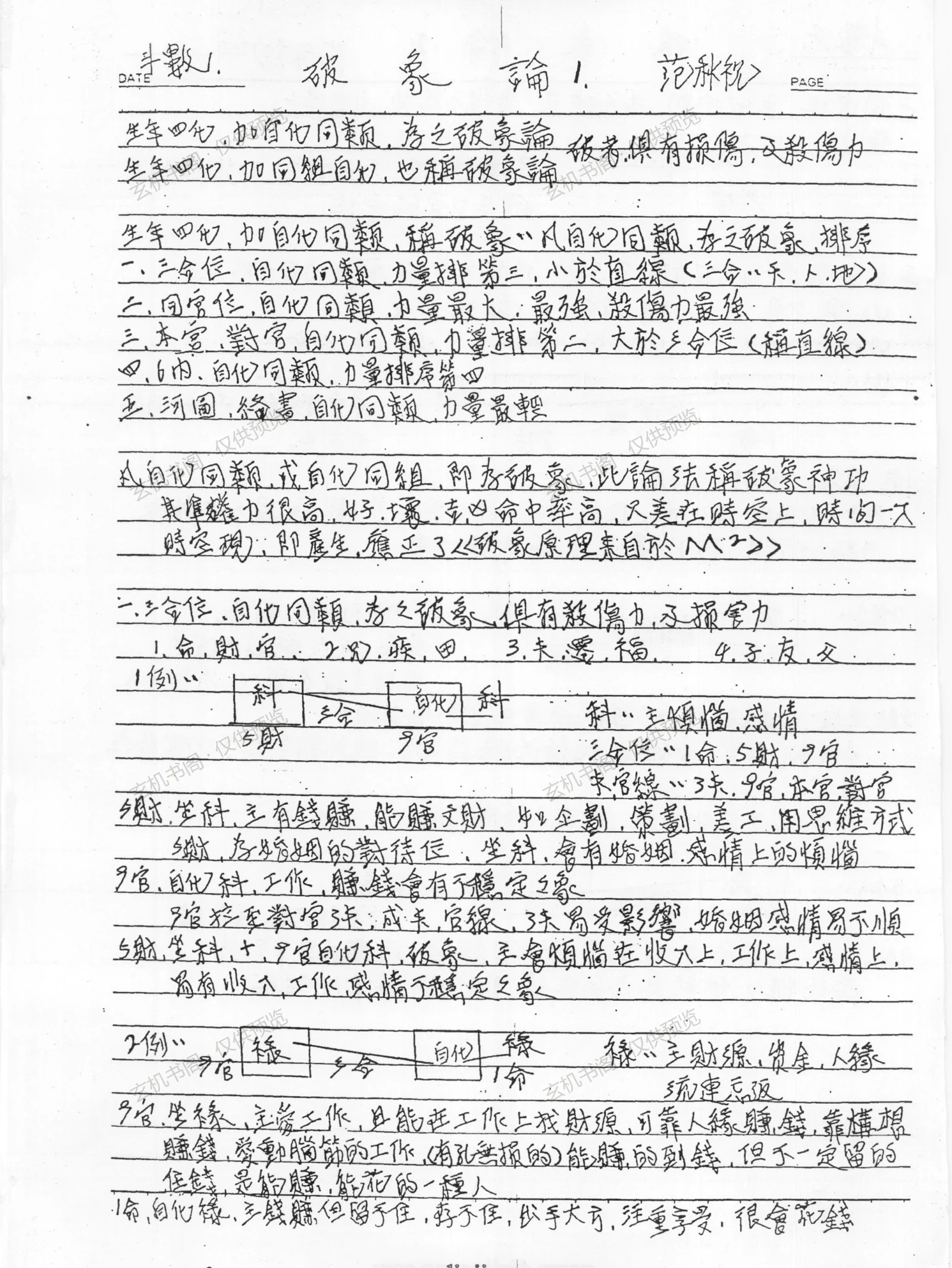
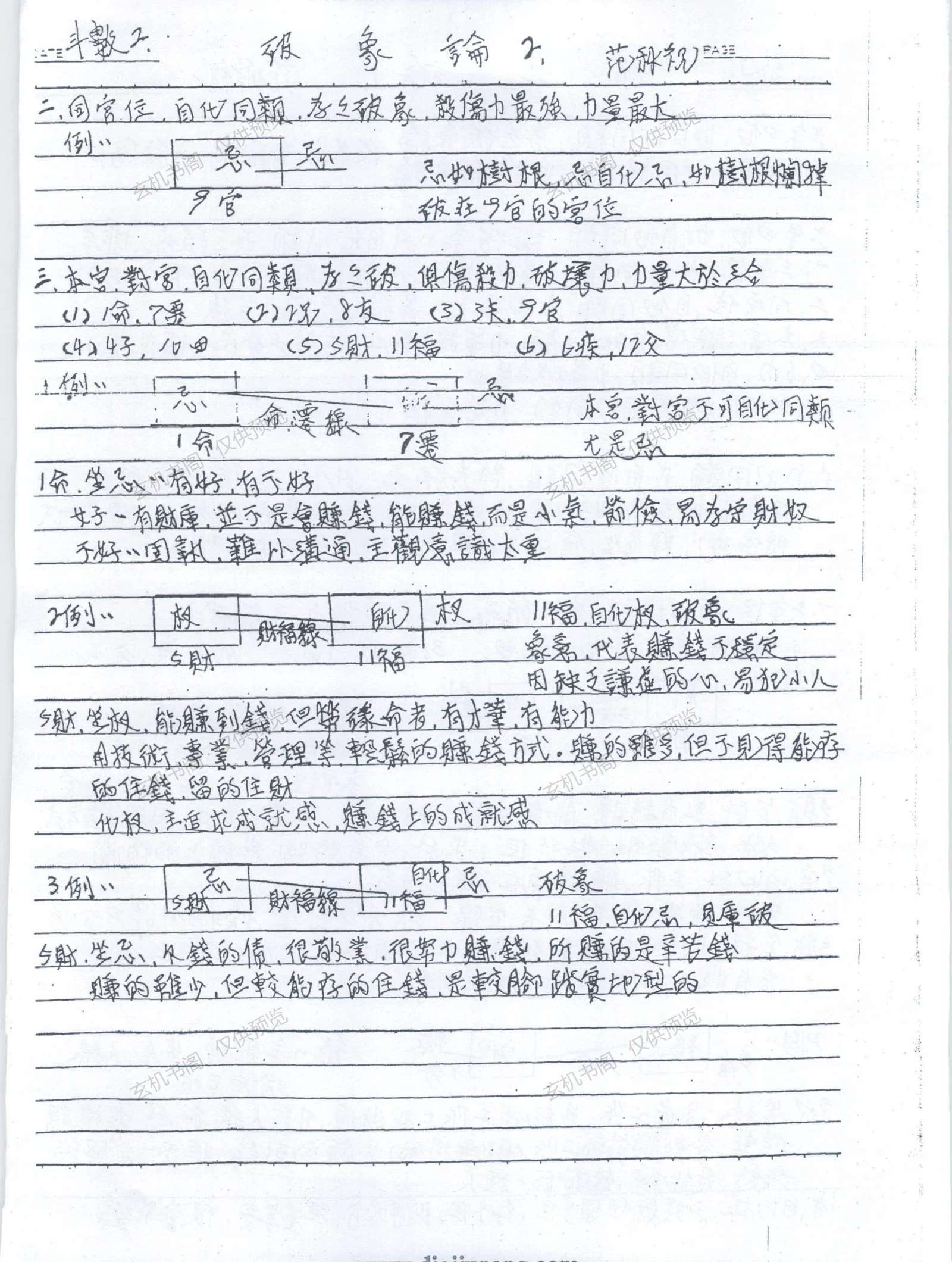
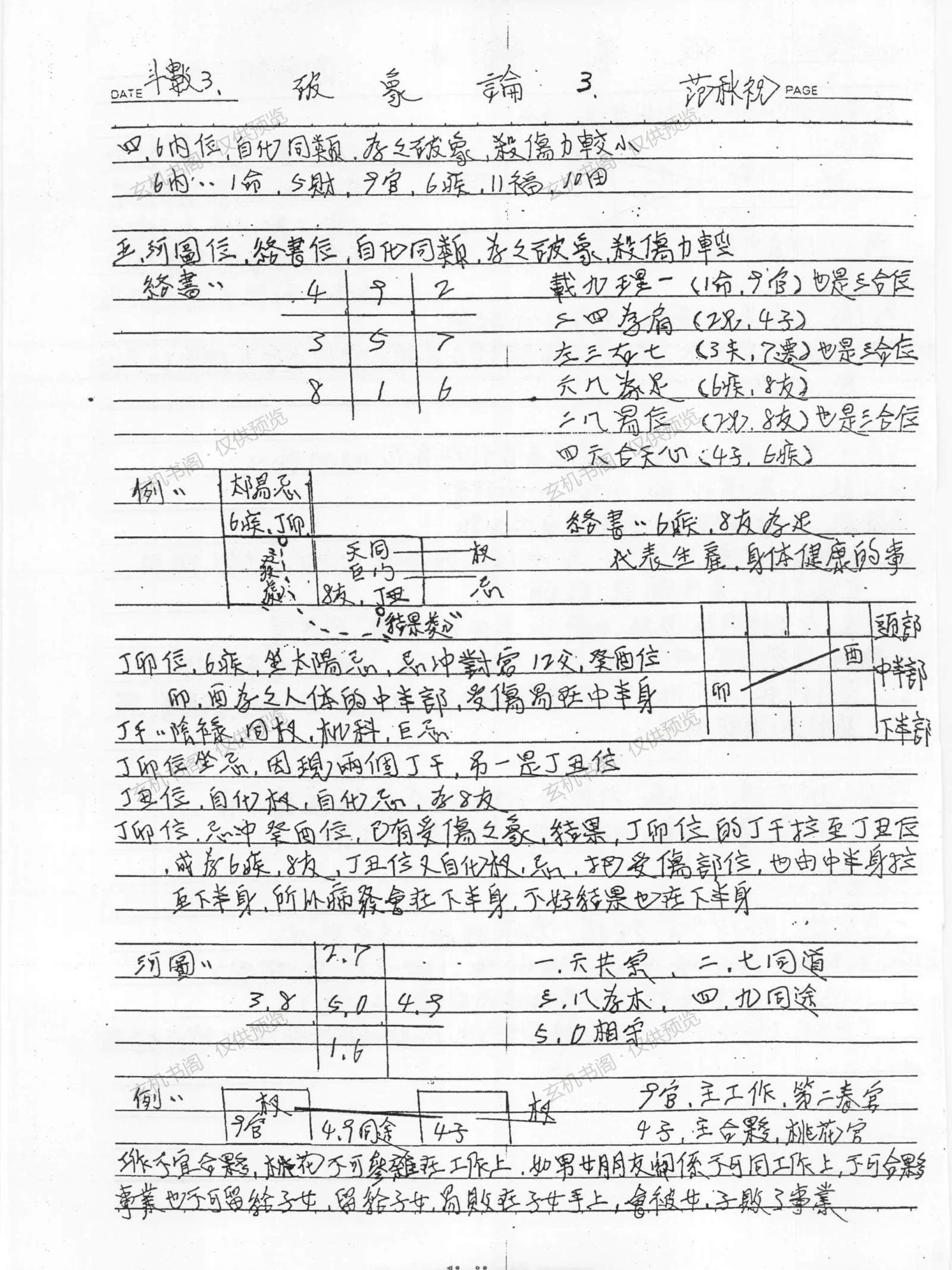
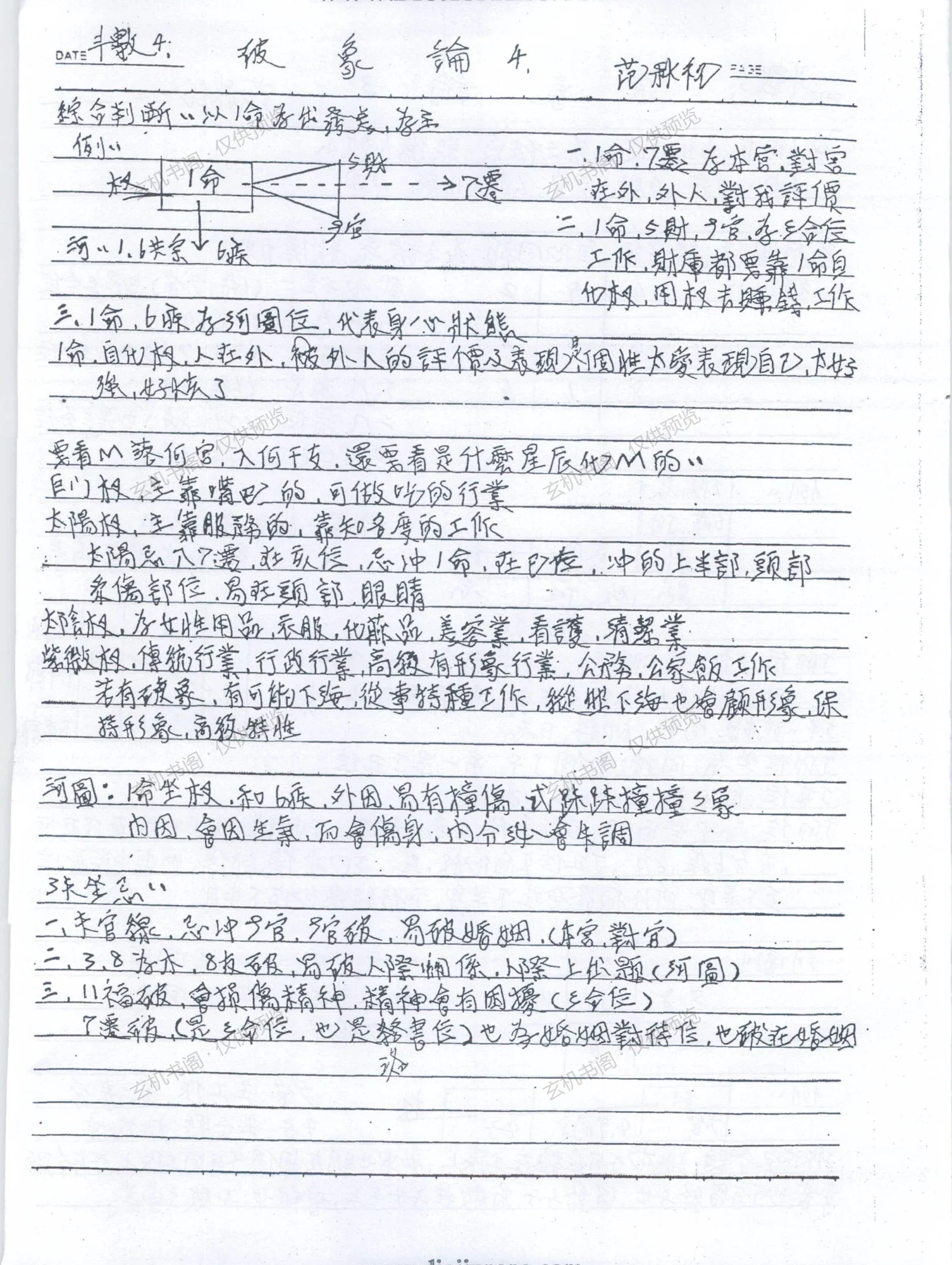
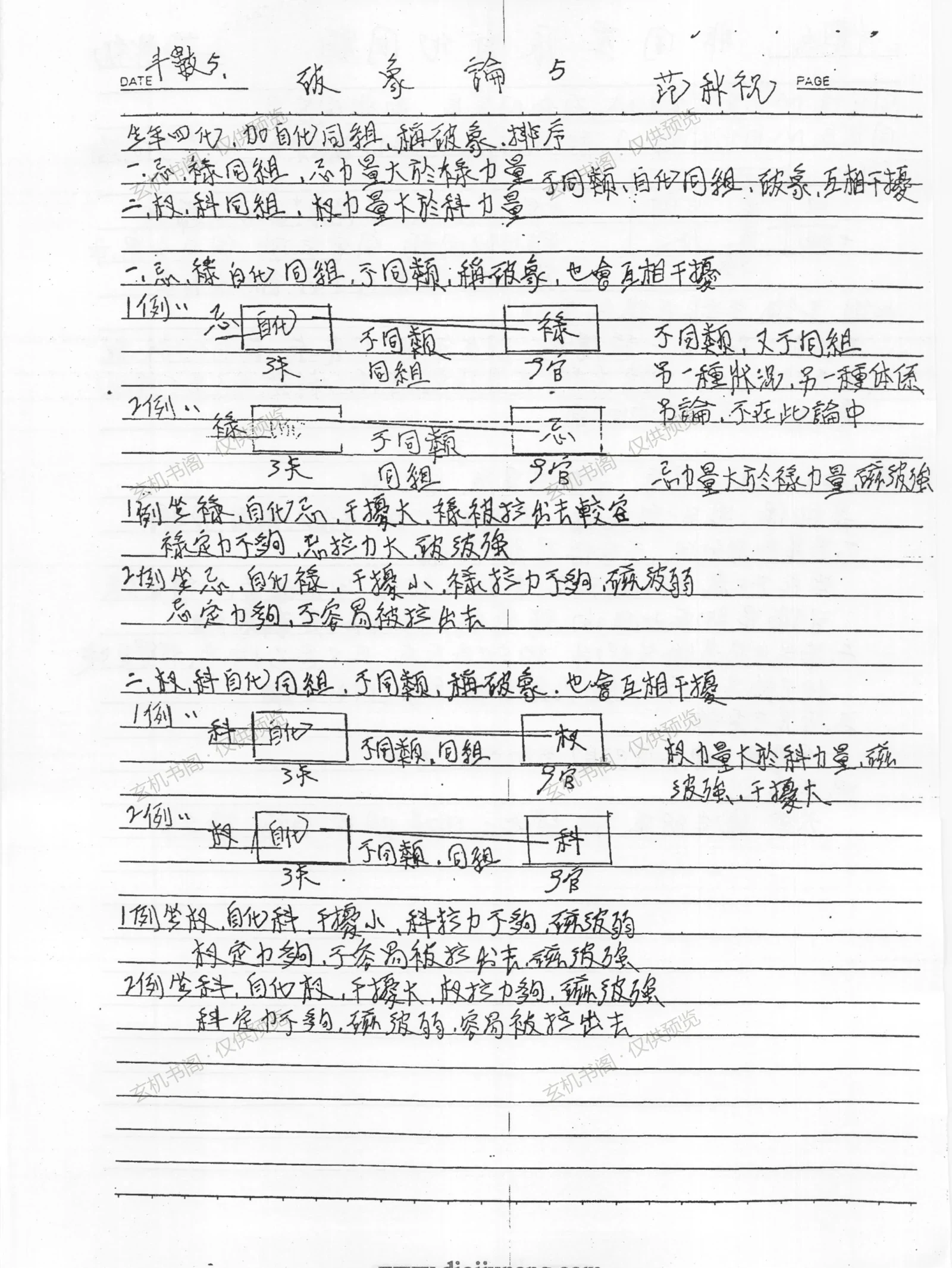
This is an internal lecture handout by Fan Qiuzhu on the Qintian school of Zi Wei Dou Shu. The cover reads "Qintian School Zi Wei Dou Shu" and notes May 1990 and January 1991 editions. The first five pages are handwritten notes titled "Po Xiang Lun" (On Broken Images), numbered Dou Shu 1 to 5, dealing with the relationships between natal four transformations and self-transformations of the same group or same category. The text first ranks the destructive force of broken-image configurations: same-palace self-transformation of the same category is strongest, followed by the opposite palace, the trine palaces, the six internal positions, and the He Tu Luo Shu positions. It then explains five forms of broken images with examples drawn from the Life, Wealth, Career, Spouse, and Health palaces, discussing money, marriage, health, and career. The later pages turn to natal four transformations combined with self-transformations of the same group, examining how Ji-Lu and Quan-Ke groups interfere with each other and how the strength of pull determines the severity of the broken image. The notes are dense with terminology and suit readers already familiar with Zi Wei Dou Shu four transformations.
Contents
Po Xiang Lun 1: definition and five-level ranking
Po Xiang Lun 2: same-palace and opposite-palace examples
Po Xiang Lun 3: six internal positions, He Tu Luo Shu, injury positions
Po Xiang Lun 4: comprehensive judgment from the Life Palace
Po Xiang Lun 5: natal four transformations with self-transformation groups
Key Points
Broken images rank from same palace, opposite palace, trine, six internal, to He Tu Luo Shu
Self-transformation of same category and same group are the two main sources
Judgment starts from the Life Palace and combines opposite, trine, and He Tu Luo Shu
Ji-Lu and Quan-Ke groups interfere; pull strength decides severity
Examples cover Life, Wealth, Career, Spouse, and Health palaces