Reading guide
Content guideOverview
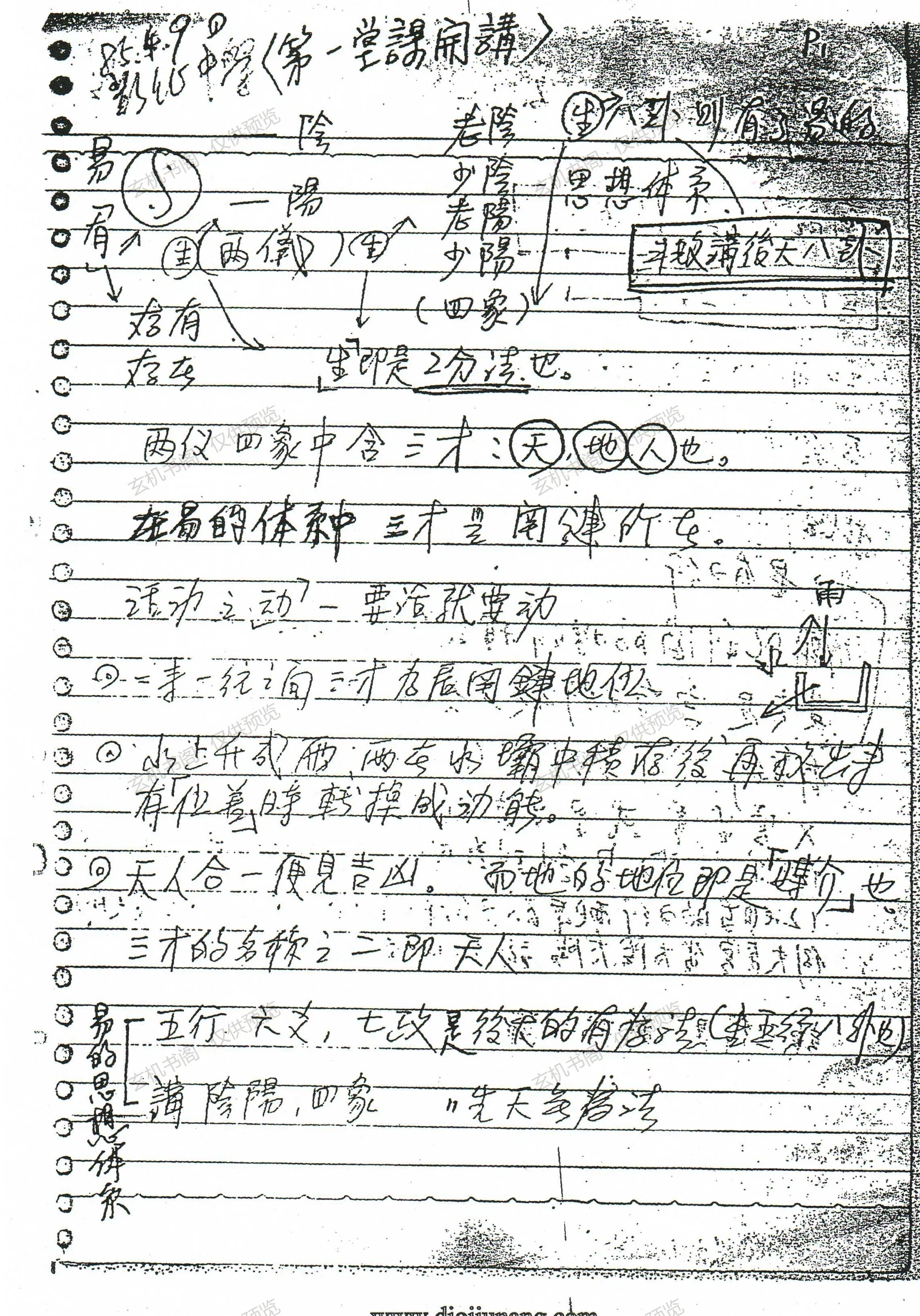
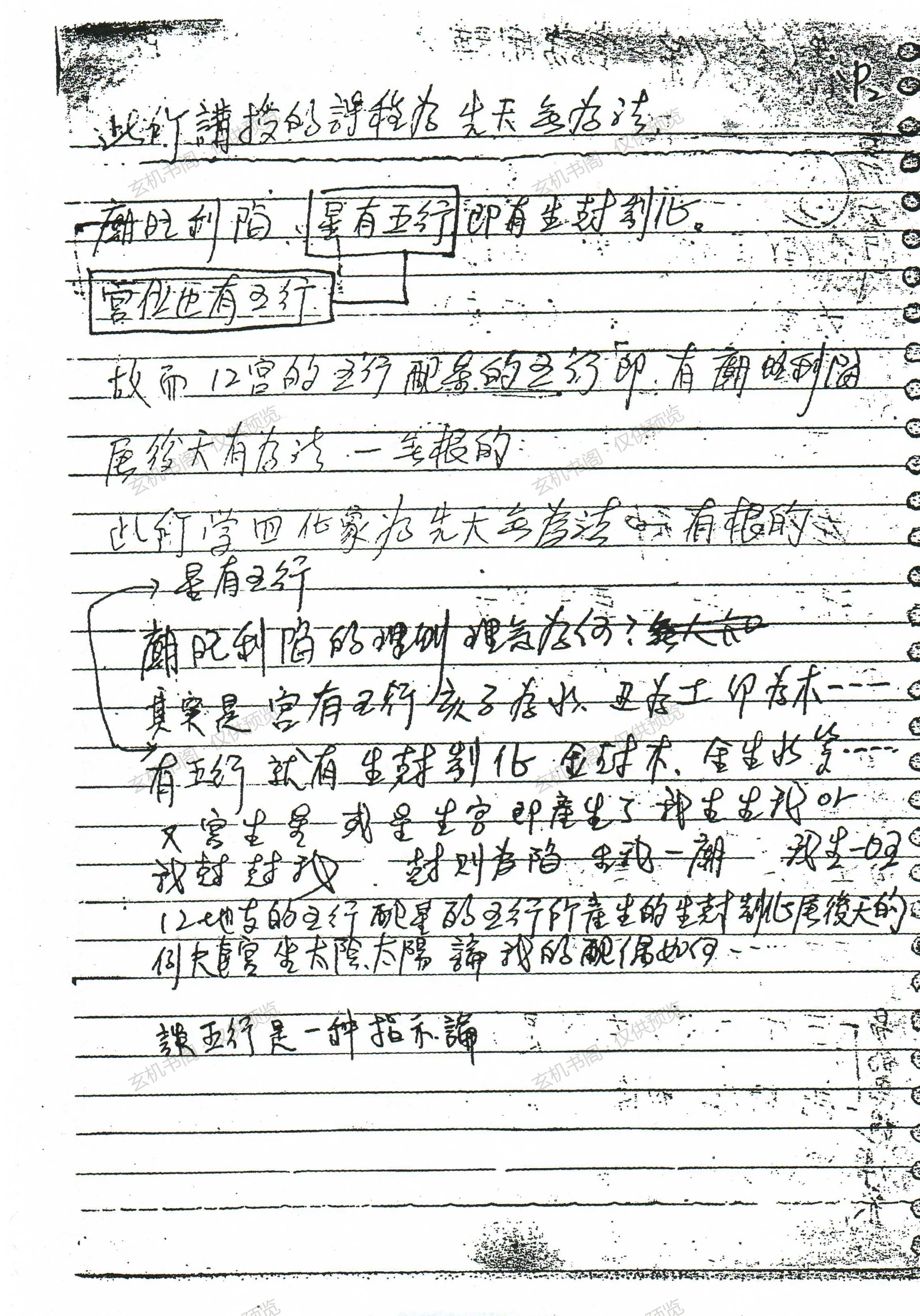
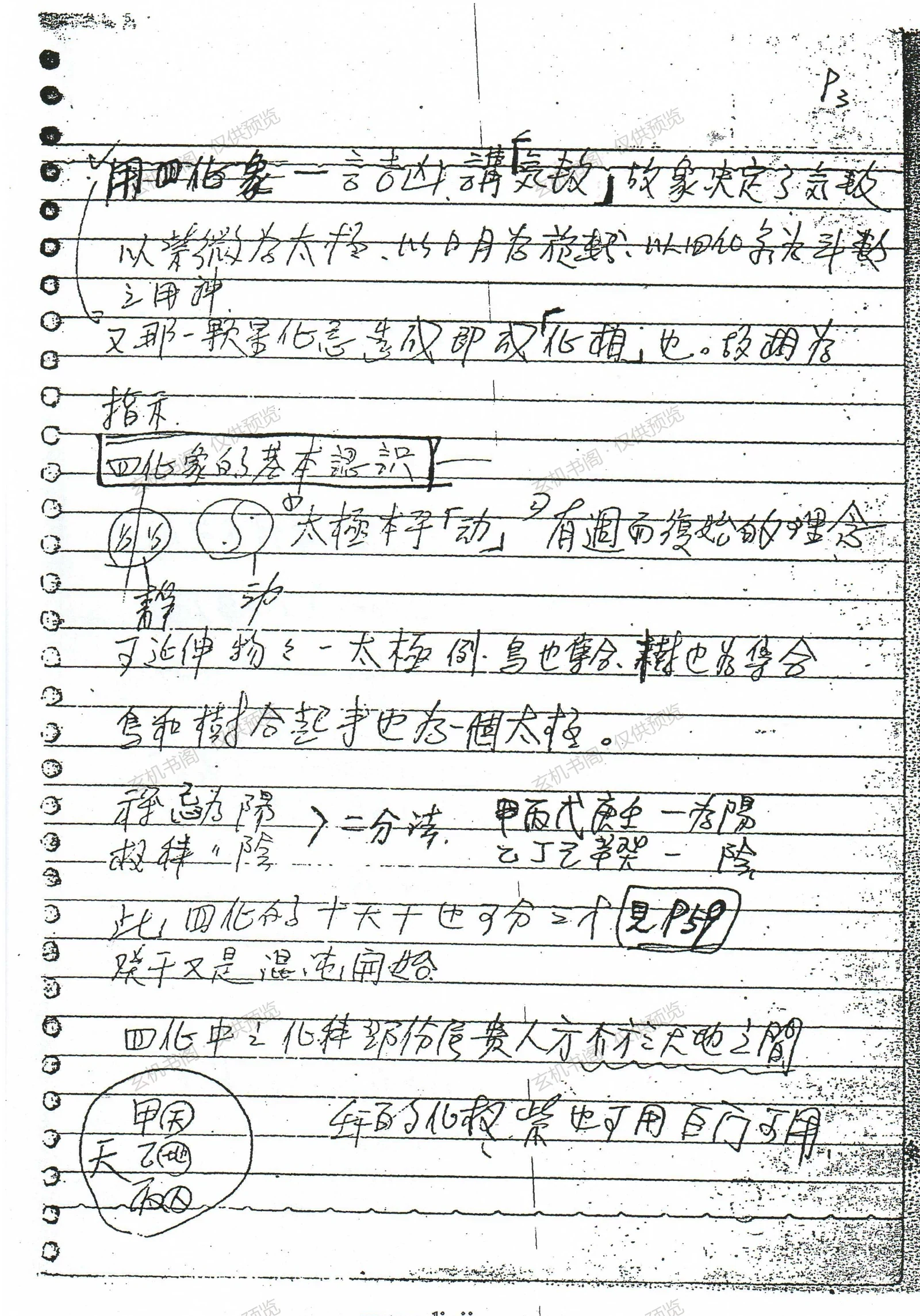
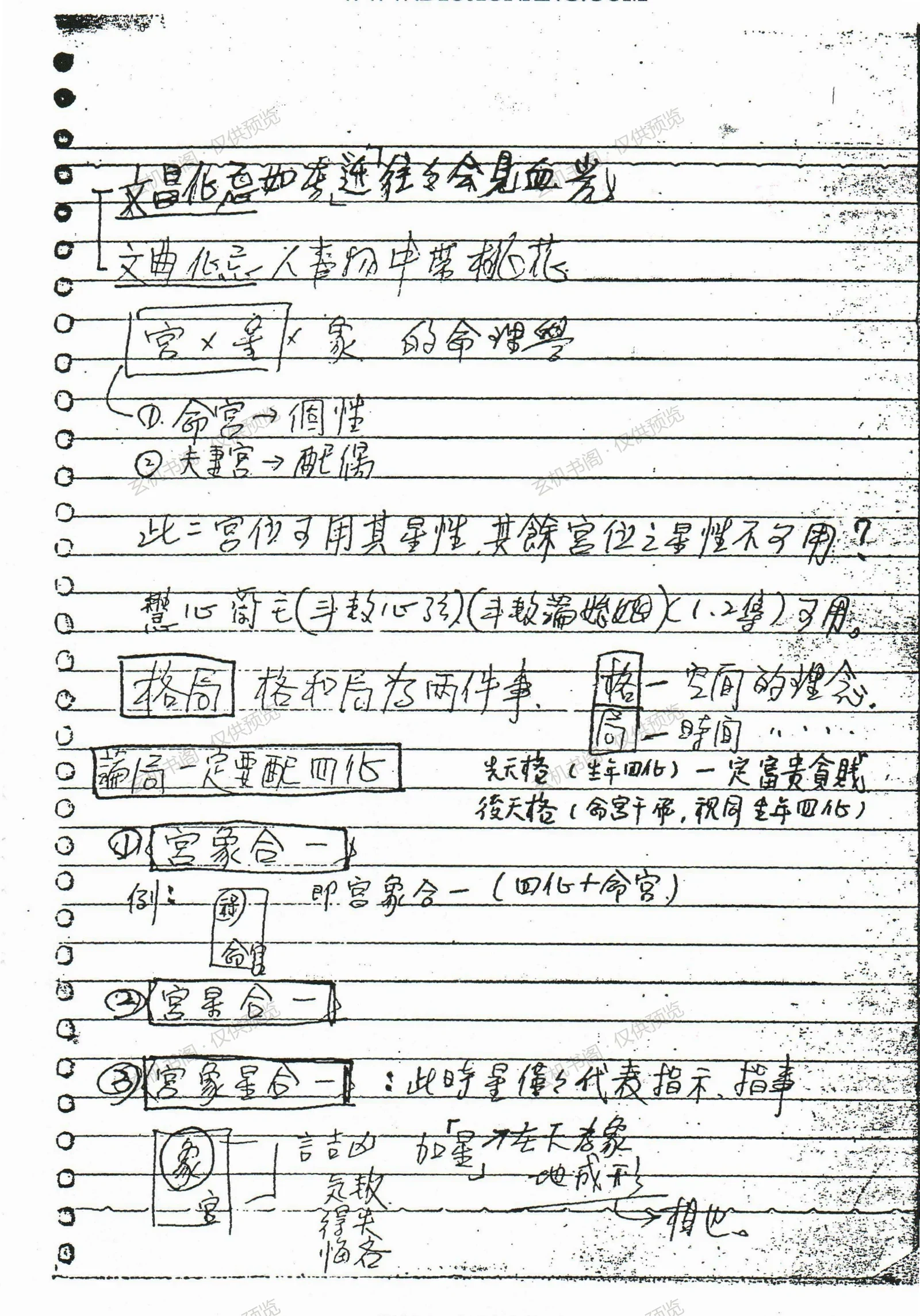
These handwritten class notes from Xu Quanren's advanced Zi Wei Dou Shu course open with Yijing-based theory—yin-yang, the two modes, four images, the three powers, and five-phase generation and restraint—as the foundation for the body and function of Dou Shu. They then move into the basic understanding of the Four Transformations, discussing the movement and stillness of the Taiji, the division of yin and yang, the yin-yang classification of the ten heavenly stems, and the imagery of the Four Transformations. The notes stress a reading method that unites palace, image, and star: the Life Palace indicates personality, the Spouse Palace indicates the partner, and pattern must be paired with the Four Transformations, with innate pattern determining wealth and status and acquired pattern read from the Life Palace stem. Concrete images such as Wen Chang transformation-taboo linked to bloodshed and Wen Qu transformation-taboo linked to romance are also noted. As rough classroom jottings with diagrams and arrows, the text suits readers with prior Zi Wei Dou Shu knowledge who want to study the Qin Tian Four Transformations flying-star approach.
Contents
Yin-yang, four images, and three powers in the Yijing
Five-phase generation and restraint in palaces
Basic understanding of Four Transformations
Ten stems, yin-yang, and transformation imagery
Palace-image-star unified reading framework
Patterns: innate and acquired
Wen Chang and Wen Qu transformation-taboo imagery
Key Points
Yijing yin-yang and four images ground Dou Shu theory
Palace five-phase restraint shapes transformation outcomes
Transformation imagery ties to Taiji movement and yin-yang division
Reading unites palace, image, and star
Patterns divide into innate and acquired, paired with Four Transformations
Wen Chang taboo suggests bloodshed; Wen Qu taboo suggests romance